


Sunscreen residue on a car interior should be treated as a surface-identification and restraint problem, not a reason to reach immediately for the strongest cleaner. Start by identifying whether the mark is on leather, coated leather, vinyl, plastic, fabric, glass, a screen, or an electronic control. Then test a small inconspicuous area, use a lightly dampened cloth rather than soaking the surface, and stop if the appearance changes without the residue improving.
Prompt attention is worthwhile. A Kia owner's manual advises wiping sun cream and similar products promptly because they may damage or discolor interior parts, while also warning users to keep water and cleaner away from electronics. Kia's vehicle manual also makes clear that interior-care instructions are vehicle-specific. Your own owner's manual takes priority over a general cleaning routine.
Identify the surface before touching the mark
A pale handprint on a black door panel, a shiny patch on a steering wheel, and a cloudy mark on a window may all be called sunscreen stains, but they are not the same cleaning task. The finish, texture, seams, perforations, coatings, and nearby electronics affect how much moisture and agitation are sensible.
- Leather or coated leather: Look for a natural or lightly textured finish, stitched panels, piping, and perforations. Treat the surface conservatively and do not flood seams or perforations.
- Vinyl or plastic: These commonly appear on dashboards, door panels, consoles, trim, and armrests. Their sheen can change if rubbed aggressively, so compare the test area with the surrounding surface.
- Fabric: Cloth seats and headliners can hold residue below the visible mark. Use minimal moisture, especially near seat controls, wiring, and edges.
- Glass: A sunscreen film on a window is a glass-cleaning task. It is separate from cleaning an instrument display, camera lens, or touchscreen.
- Screens and controls: Treat these as sensitive areas. Do not spray directly onto them, and follow the vehicle and component care instructions.
If you cannot confidently identify the material, begin with a dry, clean microfiber cloth and very light pressure. That is a diagnostic step, not a promise that dry wiping will remove the mark. If the mark remains, consult the vehicle manual or a qualified detailer before escalating.
Prepare a controlled cleaning test
Before cleaning the visible mark, set up a small controlled test. Park in a comfortable working area, remove loose dust, and use clean cloth sections so that grit and residue are not carried across the panel. Have a second dry cloth available for immediately removing excess moisture.
Read the vehicle owner's manual for the specific surface. One Kia manual cautions that interior surface cleaners require surface-specific care and recommends inconspicuous testing. The relevant Kia manual guidance should not be treated as a universal recipe for every vehicle, but its testing principle is sensible: the vehicle maker's instructions come first.
A simple test sequence
- Choose a hidden section of the same material, such as the lower edge of a panel or an area beneath an armrest.
- Apply the cleaner to the cloth, not directly to the interior surface.
- Use a small amount and one gentle pass.
- Allow the area to return to its normal appearance before judging it. Compare color, sheen, texture, and tackiness with the surrounding surface.
- If the test looks unchanged and the residue is transferring, proceed in small sections. If the finish changes, stop and reassess.
This process separates removable residue from a possible discoloration, finish change, or material reaction. Do not assume that a mark is cleanable simply because it is shaped like a handprint.

Use the least aggressive practical method
For a fresh, superficial mark, begin with a clean, lightly dampened microfiber cloth. Wipe in one direction or with short, controlled passes rather than scrubbing repeatedly in a circle. Follow with a dry cloth to remove remaining moisture. Work from the cleanest surrounding area toward the residue and change cloth sections as they become soiled.
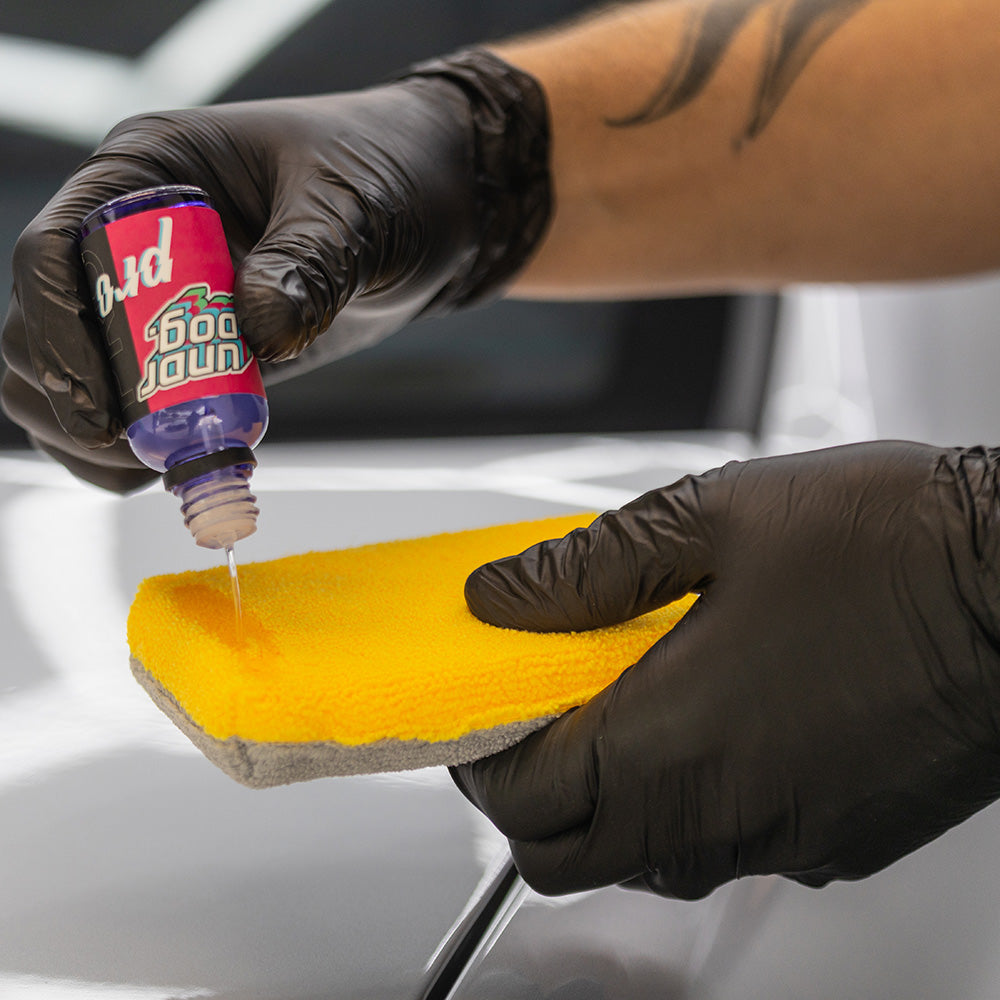
For residue that remains after the initial pass, use a purpose-made interior cleaner only after the surface test. Undrdog Interior Cleaner is a ready-to-use interior cleaner, distinct from the concentrate. Review its surface instructions and the vehicle manufacturer's care instructions, patch test, and avoid soaking.
“More product” is not the same as “more cleaning.” Excess liquid can migrate into seams, perforations, switches, and other areas that are difficult to dry. A damp cloth, controlled contact, and immediate removal of residue give you more control than spraying a panel generously.
Adjust the method to the interior material
| Surface | Starting approach | What to monitor | Stopping point |
|---|---|---|---|
| Leather or coated leather | Test first, then use a lightly dampened cloth or tested interior cleaner on a small section. | Change in sheen, color, texture, or feel; moisture near seams and perforations. | Stop if the finish changes or the residue does not improve after controlled passes. |
| Vinyl and plastic | Remove loose dust, test a hidden area, and clean in small sections. | Uneven gloss, hazing, tackiness, or a visible difference between the test area and the panel. | Stop before repeated rubbing creates a larger glossy or dull patch. |
| Fabric | Use minimal moisture and controlled blotting or short passes on the tested area. | Wicking, a spreading edge, damp padding, or nearby seat electronics. | Stop if the mark spreads or moisture moves below the visible fabric. |
| Glass | Use a glass cleaner on the glass only, with a clean cloth. | Streaking, remaining film, and the condition of tint or glass-specific treatments. | Stop if the issue appears to be etching, damage, or a tint-care concern rather than removable residue. |
| Screens and controls | Follow the component and vehicle instructions; keep liquid away from electronics. | Moisture at edges, buttons, seams, ports, and display joints. | Stop rather than improvising with an interior or glass cleaner. |
The table is a decision aid, not a substitute for the owner's manual. Surface labels can be misleading, and a vehicle may combine several materials in one panel.
How to handle leather, vinyl, and plastic marks
Begin with the least visible part of the affected area. For leather or coated leather, avoid saturating the hide, stitching, perforations, or adjacent trim. Use a small amount of tested cleaner on the cloth and lift residue in short passes. If the surface feels different or the shine changes, stop even if some sunscreen remains.
On vinyl and plastic, the main visual risk is creating an uneven finish while trying to remove a small mark. Keep the cleaning area defined, then blend only as far as needed to avoid a sharp transition. Do not use aggressive abrasion as a shortcut. The goal is to remove residue without turning a localized mark into a larger texture or sheen difference.
A sunscreen mark may also be sitting beside a previously altered area. If cleaning makes the original boundary more obvious, that does not necessarily mean the cleaner caused the original condition. Stop, document the appearance, and consider professional assessment rather than escalating pressure or chemistry.

How to approach fabric, glass, and sensitive electronics
Fabric requires moisture control. A small surface mark can spread when liquid travels through the weave or padding. Apply very little moisture to the cloth, work in a limited section, and watch the edges of the damp area. Do not continue simply because the cloth is picking up some residue. If the mark is spreading, pause and allow the area to be assessed using the vehicle's care instructions.
For windows, use a glass cleaner only on the glass. Undrdog Window Warsh is described by the maker as an ammonia-free, dye-free glass cleaner and tint-safe, but the specific tint and window manufacturer's instructions still apply. It is intended to clean glass. Do not treat that as a promise to remove mineral etching, create a durable coating, or make it suitable for screens or camera lenses.
For screens, buttons, cameras, and other electronics, do not transfer the glass-cleaning routine by assumption. Keep liquid away from edges and controls, and consult the vehicle instructions. If sunscreen is on a display or lens, the correct next step may be a component-specific cleaning method rather than a general interior product.
Know when to stop cleaning
Stopping is part of the process, not a failure to finish the job. Stop when any of the following occurs:
- The test area becomes lighter, darker, glossier, duller, tackier, or visibly different.
- The residue is not improving after a small number of controlled passes.
- The mark appears to be discoloration or material change rather than removable surface residue.
- Moisture is reaching seams, perforations, switches, controls, or electronics.
- A fabric mark is spreading beyond the original boundary.
- The surface identity remains uncertain and the next product would be more aggressive.
At that point, take a clear photograph in consistent light, note the surface and products used, and ask the vehicle maker, material specialist, or experienced detailer for direction. Respecting the point of diminishing returns protects the material and the time already invested.
A practical sunscreen-mark worksheet
For a repeatable job, record the decision before moving to the next panel:
- Location: ______________________________
- Suspected surface: _______________________
- Owner's manual instruction checked: yes / no
- Test location: ___________________________
- Cleaner used: ____________________________
- Result after one gentle pass: residue improved / unchanged / appearance changed
- Decision: continue in small sections / stop / seek specialist advice
For example, if a hypothetical cloudy handprint on a vinyl door panel improves during a hidden-area test and then transfers to the cloth with light passes, continuing carefully in small sections may be reasonable. If the same mark remains unchanged while the sheen becomes uneven, the correct decision is to stop rather than keep polishing the panel.
How Undrdog does it
Undrdog's ready-to-use Interior Cleaner is the straightforward option when its instructions and your vehicle's surface-care guidance support its use. Patch test first, apply it to the cloth, and avoid soaking. It is not a reason to skip surface identification or to assume compatibility with every leather, screen, coating, or interior material.
If you prefer to mix your own solution, Undrdog Interior Cleaner Concentrate currently specifies one part concentrate to eight parts water. That creates nine total parts, such as 100 mL of concentrate plus 800 mL of water for 900 mL of mixed solution. The concentrate is different from the ready-to-use Interior Cleaner, so do not substitute one instruction for the other.
For interior glass, Window Warsh is the relevant product among these options. Keep the job limited to glass, follow tint and window instructions, and do not use it as a general interior or screen cleaner.
Further reading
For a broader look at material-conscious interior cleaning, read Undrdog Interior Cleaner Deep Dive. If the sunscreen film is on a window, How to Get Streak-Free Glass on Your Car and Boat provides related glass-cleaning context.
The safest sunscreen-removal routine is controlled and patient: identify the surface, test discreetly, use minimal moisture, and stop when the material or finish begins to tell you that cleaning is no longer the right intervention. That approach gives DIY owners and professional detailers a defensible process without promising that every mark or discoloration can be reversed.
Frequently Asked Questions
What is the safest first step for sunscreen marks inside a car?
Identify the surface, remove loose dust, and test a clean, lightly dampened cloth on an inconspicuous area. If a product is needed, apply it to the cloth rather than spraying the panel. Follow your vehicle owner's manual first, because interior materials and cleaner instructions can be vehicle-specific.
Can I use Undrdog Interior Cleaner on car leather?
Use Undrdog Interior Cleaner only after reviewing its instructions, your vehicle's care guidance, and a hidden-area test. It is a ready-to-use interior cleaner, but that does not establish compatibility with every leather finish. Avoid soaking seams and perforations, and stop if color, sheen, texture, or feel changes.
What is the difference between Interior Cleaner and the concentrate?
Interior Cleaner is the ready-to-use product. The Interior Cleaner Concentrate currently specifies one part concentrate to eight parts water, producing nine total parts. Do not treat the concentrate and ready-to-use product as interchangeable instructions.
Can sunscreen permanently discolor a car interior?
It can be difficult to know whether a mark is removable residue or a change to the material or finish. A Kia owner's manual warns that sun cream and similar products may damage or discolor interior parts. If gentle, tested cleaning does not improve the mark, stop rather than promising that stronger scrubbing will reverse it.
Can I use glass cleaner on a car touchscreen?
Do not assume that a glass cleaner is suitable for a touchscreen, camera lens, or other electronic component. Window Warsh is intended for glass, even though the maker describes it as ammonia-free, dye-free, and tint-safe. Follow the vehicle and component instructions for screens and keep liquid away from electronics.
Should I spray cleaner directly onto a sunscreen mark?
For a controlled interior-cleaning process, apply a small amount to the cloth instead of spraying the panel directly. This limits moisture near seams, perforations, switches, and electronics. Use a hidden-area test first, then work in small sections and remove excess moisture with a dry cloth.
How do I know when to stop cleaning a sunscreen stain?
Stop if the finish becomes lighter, darker, glossier, duller, tackier, or otherwise different; if the residue does not improve after controlled passes; or if moisture is spreading toward electronics or below fabric. A spreading mark or unchanged discoloration is a reason to seek material-specific advice, not to increase pressure or product.
Can Window Warsh remove sunscreen haze from tinted windows?
Window Warsh is a glass cleaner that the maker describes as ammonia-free, dye-free, and tint-safe. Follow the specific tint and window manufacturer's instructions. Cleaning glass should not be equated with removing mineral etching, applying a durable coating, or confirming suitability for screens or camera lenses.
Choose the product that fits the job
Review the surface requirements and current directions before you start. Choose the right product for your project, not a bigger promise.
Explore Interior Cleaner: Naturally Scented Cleaning Agent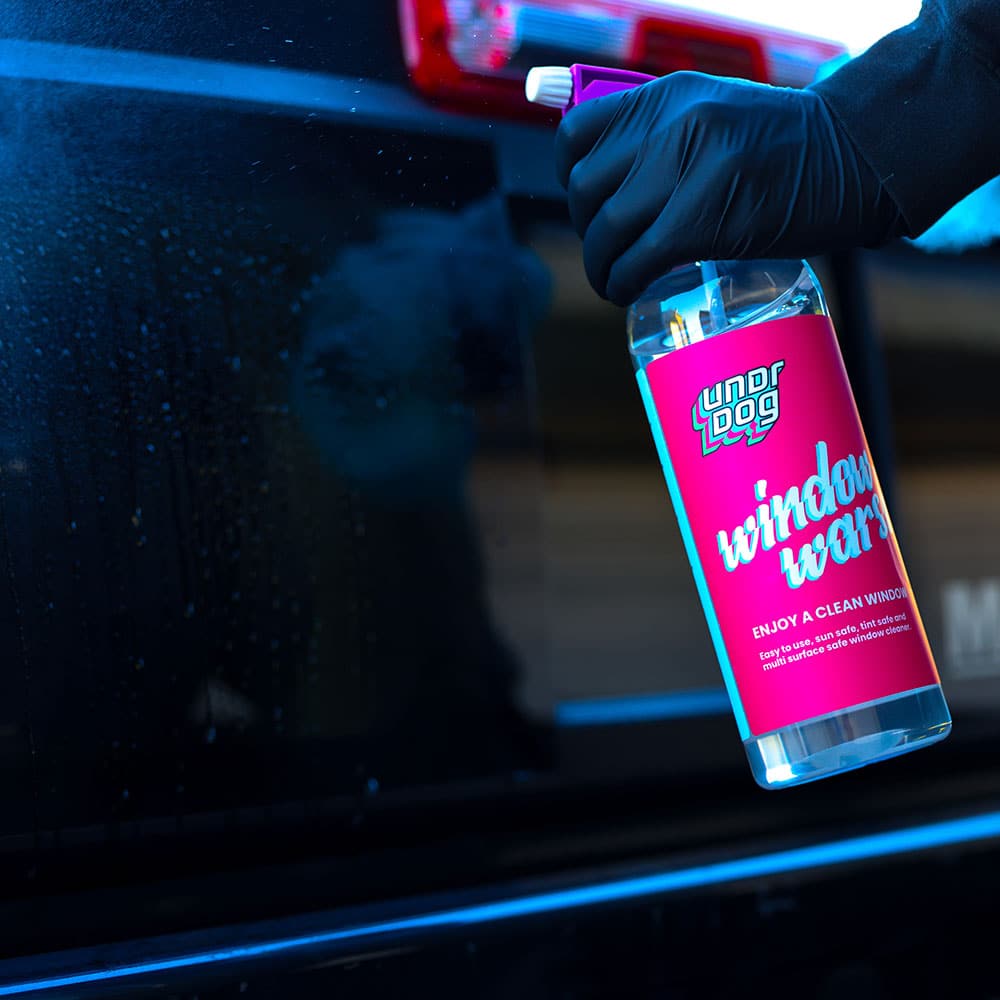

Leave a comment
This site is protected by hCaptcha and the hCaptcha Privacy Policy and Terms of Service apply.