
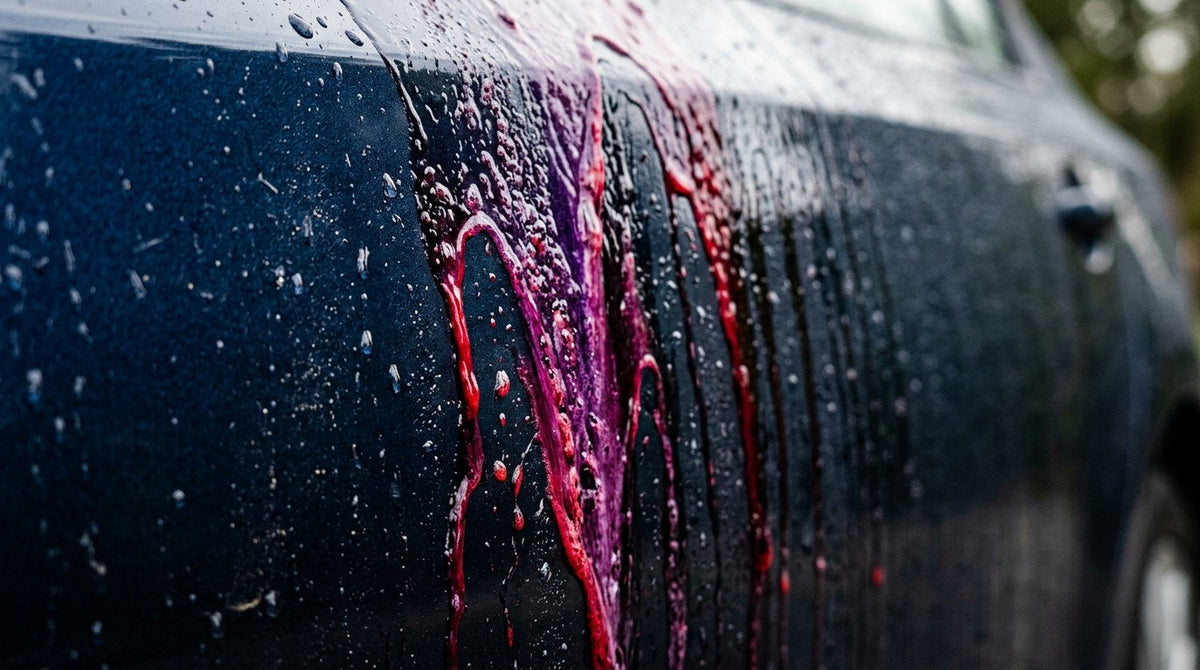
The Purps is Undrdog's iron, rust, and fallout remover. You spray it on wet paint or wheels, and where iron is embedded in your clear coat, it bleeds purple as thioglycolic acid chelates the iron into a water-soluble complex that rinses away. It's a fast, potent decontaminator built to strip real iron and rust — not a gentle acid-free spray you can wave around blindly. Use it right and it saves you a full clay-bar session; use it wrong and you'll damage chrome, glass, or your own skin.
This post covers exactly what The Purps is chemically, how it compares to acid-free iron removers, when you actually need it, how to apply it safely on paint, wheels, gel coat, and coated vehicles, and the mistakes that cause the handful of complaints you'll see online. If you've ever wondered whether your car has iron fallout, whether your ceramic coating will survive a decon wash, or whether you can skip iron remover entirely and just use a clay bar — this is the answer.

What Is Iron Fallout, and Why Should You Care?
Every time you or the car next to you brakes, brake pads and rotors shed microscopic, red-hot iron particles. Those particles fly through the air, land on your clear coat, and physically weld themselves into the paint surface. Rail dust, industrial fallout, and welding sparks do the same thing. Over months, your paint accumulates a layer of embedded iron you can't see — but you can feel it. Run a plastic sandwich bag over your paint after washing. If it feels gritty or crunchy instead of glassy smooth, you have contamination.
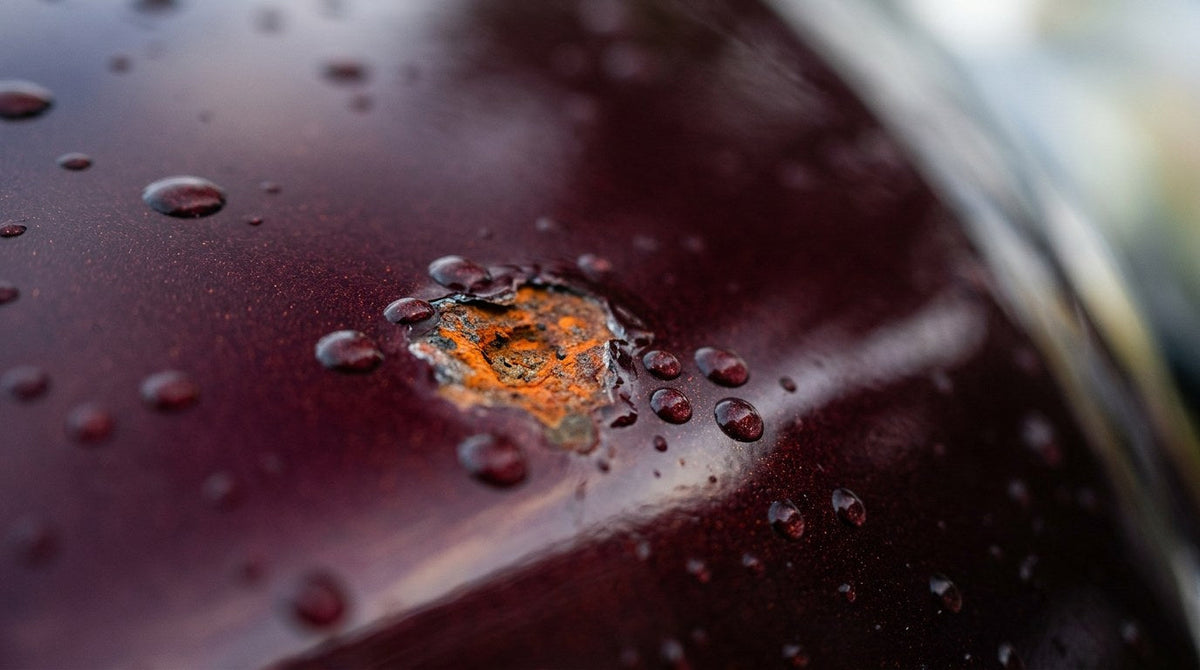
Left there, embedded iron does two things. It corrodes from the inside out, causing rust spots to bloom under the clear coat months later. And it prevents any wax, sealant, or ceramic coating from bonding properly — a coating applied over contaminated paint peels early, holds water spots, and loses gloss fast. That's why every serious detailer decontaminates before coating. Iron removal isn't optional prep; it's the difference between a coating that lasts and one that fails in a season.
The Chemistry: What's Actually In The Purps
The Purps lists five active ingredients: thioglycolic acid, ethylene glycol butyl ether, ammonium hydrogen fluoride, dodecylbenzene, and sulfuric acid. Thioglycolic acid is the star and the reason for the purple color change. When it hits iron, the sulfur-containing thiol group grabs the iron ion and forms a soluble iron-thioglycolate complex that shows up as red-purple bleed. McGill University's Office for Science and Society has a good explanation of the reaction — ferrous thioglycolate is purple, so the color you see is literally iron being dissolved off your paint.
The other ingredients matter. Ethylene glycol butyl ether is a solvent that helps The Purps wet out and penetrate. Dodecylbenzene is a surfactant that carries dissolved iron into suspension so it rinses cleanly. Ammonium hydrogen fluoride and sulfuric acid are the difference between The Purps and most commodity iron removers on the market — they make it aggressive on rust and heavy fallout, and they're also why it comes with hazard warnings that most acid-free competitors don't have. Sulfuric acid at low concentration accelerates the reaction on baked-in, oxidized iron that a pure thioglycolate spray struggles with.
How It's Different From Acid-Free Iron Removers
Most iron removers you'll see reviewed by chemistry blogs — Ethos, Griot's Garage, Sonax, and similar — use sodium or ammonium thioglycolate at pH 5 to 7 with no strong acid. They're safer to handle, safer on chrome, and gentle enough for weekly wheel maintenance. They're also slower and less effective on old, oxidized rust and heavy iron loads.
The Purps is deliberately hotter. That's the trade. You get faster reaction, deeper penetration into baked-in fallout, and real capability against rust bloom that acid-free formulas can't touch. In exchange, you must respect the safety warnings, avoid glass and chrome, and never let it dry on your car. This isn't a weekly maintenance spray — it's an annual or semi-annual decon that solves problems.

Do You Actually Need The Purps? A Quick Test
Not every car needs iron removal on every wash. The bag test is the gold standard. After a full wash and dry, slide your hand inside a clean plastic sandwich bag and glide it lightly over your paint. If the paint feels glass-smooth through the bag, your paint is clean and you can skip decon. If it feels gritty, sandy, or bumpy — anywhere from mild sandpaper to heavy pebble — you have surface contamination, and roughly 90% of that contamination is iron from brake dust.
Cars That Almost Always Need Iron Removal
- Cars over 12 months old that have never been decontaminated
- Cars parked near freeways, rail lines, or industrial areas
- Any vehicle before a ceramic coating application (mandatory prep)
- Wheels with baked-on brake dust or rust bloom
- Trucks, trailers, or gel coat with visible rust spotting
- Any car that fails the bag test
Cars That Can Probably Skip It
- Newer cars (under 12 months) that have been washed regularly and passed the bag test
- Garage-kept cars in low-brake-dust environments
- Cars decontaminated within the last 6 months that still pass the bag test
The Purps vs Clay Bar: When to Use Which
Clay bar and iron remover solve overlapping but not identical problems. Iron remover dissolves iron and rust chemically. Clay bar mechanically pulls off everything embedded in the clear coat — iron, but also paint overspray, tar bits, tree sap residue, and other non-ferrous contamination clay can grip. Serious decontamination uses both: iron remover first to dissolve iron without dragging it across the paint, then clay bar to pull whatever's left. If you jump to clay bar first with heavy iron contamination, you can grind those hard iron particles across your paint and create fine marring. Iron remover softens the load so clay glides.
| The Purps | Clay Bar / Mitt | Acid-Free Iron Remover | |
|---|---|---|---|
| Removes iron/rust | Yes, aggressively | Partial (mechanical only) | Yes, gently |
| Removes non-ferrous embedded grit | No | Yes | No |
| Speed | 2–5 min dwell | 20–40 min per side | 5–10 min dwell |
| Risk of marring paint | None (chemical) | Some if paint is dirty | None (chemical) |
| Safe on chrome | No — can discolor | Yes | Yes |
| Requires PPE | Yes — gloves + eye protection | Minimal | Gloves recommended |
| Best use | Real iron/rust, pre-coating prep | General decontamination polish | Regular maintenance decon |
How to Use The Purps Correctly (Step by Step)
The instructions on the bottle are short. The actual workflow that gives good results and doesn't damage anything has more detail. Here's the process I use.
Step 1: Wash the Car First
The Purps goes on clean, wet paint. Wash the whole vehicle with Undrdog Soap to strip surface dirt, road grime, and any old wax or sealant. Two-bucket method, grit guards, dedicated mitt. You want a clean canvas so The Purps reacts only with embedded iron, not with a layer of mud on top of your paint. See our complete 4-step decontamination guide for the full sequence.
Step 2: Get Out of Direct Sun and Wear PPE
Work in shade or a covered space. Temperature between 50°F and 80°F is the sweet spot — hot paint flashes off the water in The Purps and can leave residue in the clear coat. Put on nitrile gloves (not latex), splash-rated eye protection, and long sleeves. The Undrdog safety data classifies The Purps as capable of causing skin burns and eye damage — the label warnings are real. Work outdoors or in a well-ventilated garage; do not spray it in a closed space.
Step 3: Spray Evenly on Wet Paint and Wheels
Keep the vehicle wet from your wash. Spray The Purps evenly on paint and wheels, 8–12 inches from the surface, one panel at a time. Avoid glass — The Purps can etch it. Avoid chrome — it can discolor. Keep it off unpainted plastic trim and off carbon fiber wheels unless you've tested a hidden spot first. Do not dilute it. Undrdog specifically warns against diluting because you'll end up with incomplete decontamination and need to reapply.
Step 4: Watch the Bleed and Wait 2–5 Minutes
Within a minute or two, you'll see red-purple streaks bloom on the paint where iron is dissolving. Heavier contamination bleeds darker and faster. Lower rocker panels, rear bumper, wheel wells, and the front bumper will usually bleed the most because they catch the most brake dust and road iron. If you see almost no bleed on your paint but heavy bleed on your wheels, that's normal — wheels take the brunt of brake dust and paint often only shows light contamination.
Do not let The Purps dry on the surface. This is the single most important rule. Once it dries, the product crystallizes and can leave residue in the clear coat or discolor the surface. On a hot day, the dwell window shrinks fast. If a panel starts to look dry or the product is sheeting off, mist it with clean water to keep it wet, or move to the next panel and rinse the first one immediately.
Step 5: Rinse Thoroughly with a Pressure Rinse
Rinse from top to bottom with a sharp jet or pressure washer, then a clean-water flood. Get every trace of purple off the paint, wheels, and body seams. Check door jambs, wheel wells, and lower panels — any residue left in a seam can keep working on trim or corrode. After rinsing, wash the vehicle again with Undrdog Soap and dry it.
Step 6: Bag Test and Follow Up
Repeat the plastic bag test. If the paint is glass-smooth, you're done and ready for clay bar (for any remaining non-ferrous grit) or straight to HCC ceramic coating if you're on the pre-coating workflow. If a panel is still gritty, spot-treat with The Purps a second time on that area. Heavy contamination sometimes needs two passes.
Iron all over your paint? The Purps pulls it off in 5 minutes.
One bottle strips embedded brake dust, rail dust, and rust bloom from paint and wheels — chemically, with no risk of marring. See exactly where contamination sits as it bleeds purple.
Shop The Purps →Is The Purps Safe on Ceramic Coatings?
Undrdog states The Purps is safe to use on coated vehicles. That's consistent with how thioglycolate-based iron removers work — the chelation reaction targets iron specifically and leaves silica-based ceramic coatings intact. That said, The Purps also contains sulfuric acid at low concentration, so the rules are stricter than for an acid-free remover: keep dwell time under 5 minutes, don't let it dry, and rinse thoroughly. On a fresh coating (under 30 days), give it a light test on a low-visibility panel first. Once a coating is fully cured, weekly wheel decon with acid-free products is safer, and The Purps is reserved for heavier annual decons.
Common Mistakes That Damage Paint, Wheels, or Trim
Letting It Dry
The number one cause of complaints. Sun-baked panels flash off the water content in seconds, leaving the actives concentrated on the surface. That's when discoloration and residue happen. Work in shade, one panel at a time, and rinse before anything gets dry.
Spraying Chrome Rims
Chrome and The Purps do not mix. The sulfuric acid content can pit or discolor chrome plating. If you have chrome wheels or chrome trim, mask them off or work carefully around them.
Using It on Glass
The Purps can etch glass. Keep it off windshields, side windows, and mirrors. If overspray hits glass, rinse it immediately.
Diluting It
Some detailers try to stretch iron remover by diluting 1:1 with water. Undrdog explicitly recommends against this — a diluted solution reacts incompletely, so you end up with residual iron and a false sense of clean paint. Use it at full strength.
Skipping the Wash Step
Applying iron remover to a dirty car wastes product. The Purps reacts with iron, not with dirt or old wax. If your paint is coated in road film, the reaction happens under a layer of grime and you don't get full contact with the iron underneath.
Not Wearing PPE
Nitrile gloves and eye protection are non-negotiable. The Purps carries H314 (severe skin burns and eye damage) and H331 (toxic if inhaled) classifications. Overspray on skin in warm weather can cause a chemical burn within minutes.

The Purps on Wheels: The Real Sweet Spot
If you buy one bottle of iron remover, use it on your wheels first. Brake dust is the heaviest source of iron on any car, and it bakes into wheel finishes fast. Painted, powder-coated, and clear-coated alloys all benefit from an annual Purps decon. Spray while the wheels are wet from your wash, wait for the bleed to develop (usually 60 seconds on wheels because the iron load is heavy), agitate with a soft wheel brush if the contamination is severe, and rinse thoroughly. Do not use it on chrome or on brushed aluminum without a spot test first.
Marine and Gel Coat Applications
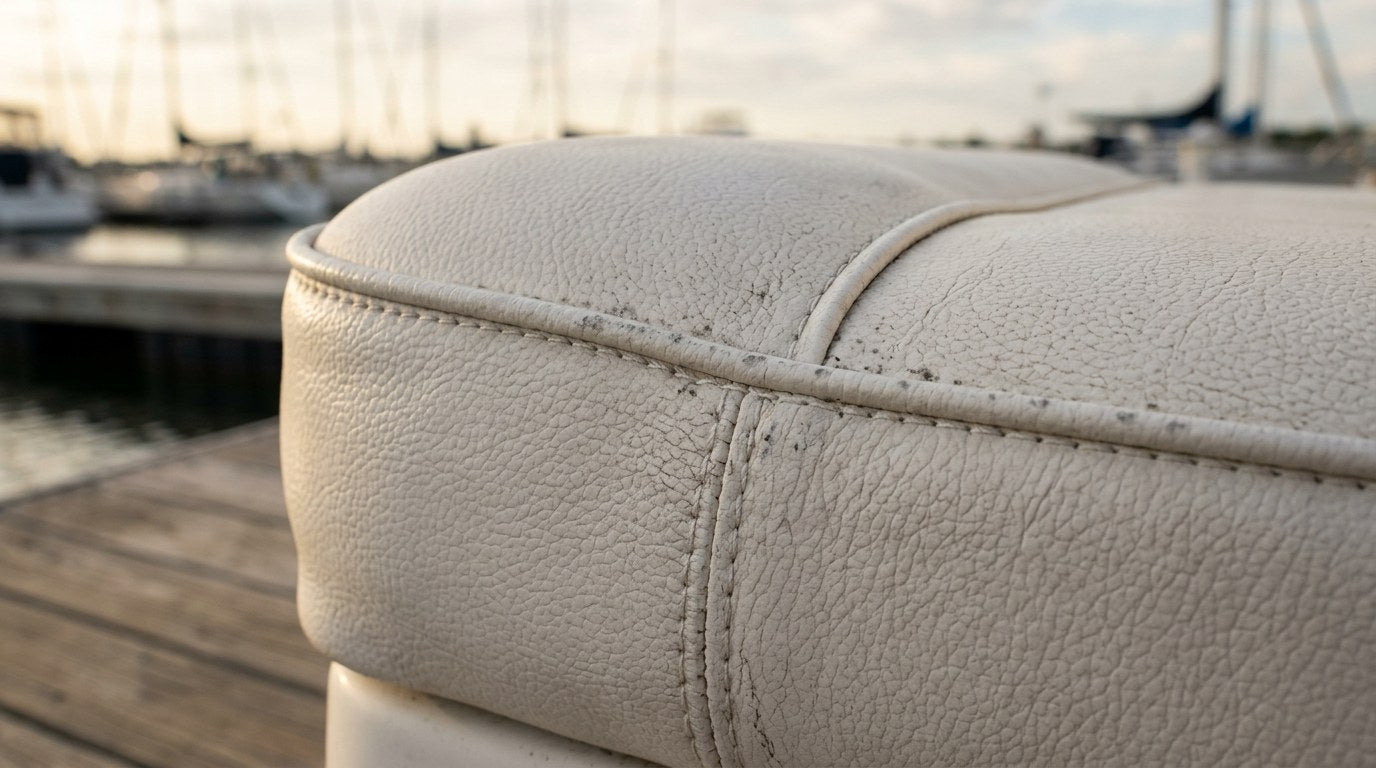
The Purps is listed as safe on gel coat, which means marine applications work — but the iron-fallout problem on boats is different from cars. Freshwater boats mostly deal with hard-water mineral spots (see our aluminum pontoon oxidation guide), not brake dust. Saltwater boats sometimes get rust weep from stainless hardware onto surrounding gel coat — that's where The Purps shines. Spray on the streaks, watch them bleed, rinse. Do not let it dry on a hot deck in the sun. For marine ceramic protection after decon, use Undrdog Marine or the flagship HCC if you want a single coating that works on the boat and the tow vehicle.
How Often Should You Use The Purps?
For daily drivers in normal conditions, once or twice a year is typical. If you live near a freeway, industrial zone, or rail line, or if you're preparing for a ceramic coating, use it as often as the bag test tells you to. Wheels can take it more frequently — every 3 to 6 months for daily-driven cars in heavy brake-dust environments. Garage queens might go 18 months between decons. The bag test is the answer to "how often" — the paint tells you when it's time.
Frequently Asked Questions
Is The Purps acid-free?
No. The Purps contains thioglycolic acid and low-concentration sulfuric acid, plus ammonium hydrogen fluoride. It's more aggressive than the acid-free thioglycolate-only iron removers sold by some competitors, and it works faster on baked-in iron and rust as a result. That's why the safety warnings (gloves, eye protection, ventilation) matter more than with milder products.
Will The Purps damage my ceramic coating?
Undrdog states The Purps is safe on coated vehicles, and thioglycolate chemistry doesn't attack silica coatings. Keep dwell time to 5 minutes maximum, don't let it dry, and rinse thoroughly. On a fresh coating under 30 days old, spot-test a hidden panel first.
Can I use The Purps on chrome wheels?
No. The Purps can discolor or pit chrome plating. Use it on painted, powder-coated, or clear-coated wheels only. If you have chrome trim or chrome rims, mask them off before spraying.
What happens if The Purps dries on my paint?
Dried product can leave residue or, in worst cases, cause discoloration in the clear coat. If a panel starts drying before you're ready to rinse, mist it with water immediately or rinse that panel right away and re-apply if needed. Work in shade and one panel at a time to prevent this.
How long does one bottle last?
A 16 oz bottle of The Purps typically covers 2–4 full vehicle decons depending on how heavily you spray. For wheels-only maintenance, one bottle can handle 6–10 sessions.
Do I still need a clay bar after using The Purps?
For a full pre-coating decontamination, yes. The Purps removes iron and rust chemically, but clay bar removes non-ferrous embedded grit — paint overspray, tar, tree sap residue, and other physical contaminants. The Purps first, then clay, then coating.
Can I use The Purps in the sun?
Not recommended. Warm paint flashes off the water content in the product, shrinking the dwell window and increasing the risk of the product drying before you rinse. Work in shade, in the morning or evening, and keep the paint temperature moderate.
What's the difference between The Purps and Undrdog Soap?
Two totally different products. Undrdog Soap is a pH-neutral wash concentrate — it cleans dirt, road film, and wax off the paint. The Purps is a chemical decontaminator — it dissolves iron and rust the soap can't touch. Wash with soap first, then decontaminate with The Purps, then rinse.
Is The Purps safe on my car's paint?
Yes, on painted surfaces including satin and matte finishes, provided you follow the instructions: keep it wet, don't exceed 5 minutes dwell, and rinse thoroughly. The thioglycolate reaction is selective for iron and doesn't attack the paint's polymer network.
What if I don't see any purple bleed?
Two possibilities. Either your paint has very little iron contamination (do the bag test to confirm), or the product isn't making contact with iron because the paint has a heavy wax or sealant layer on it. Wash more thoroughly to strip surface products, then reapply.
Bottom Line
The Purps is a serious iron and rust remover — hotter than the acid-free alternatives, faster on heavy contamination, and capable of stripping rust bloom that milder products can't touch. Used correctly on wet paint or wheels in the shade with proper PPE, it's the fastest way to decontaminate a car before coating or after a long spell without decon. Used carelessly on chrome, glass, or a hot panel in the sun, it can cause the damage the acid-free removers are marketed to avoid. Know which tool you're picking up, follow the process, and it'll save you hours over clay-only decon and dramatically extend the life of any coating you apply afterward.
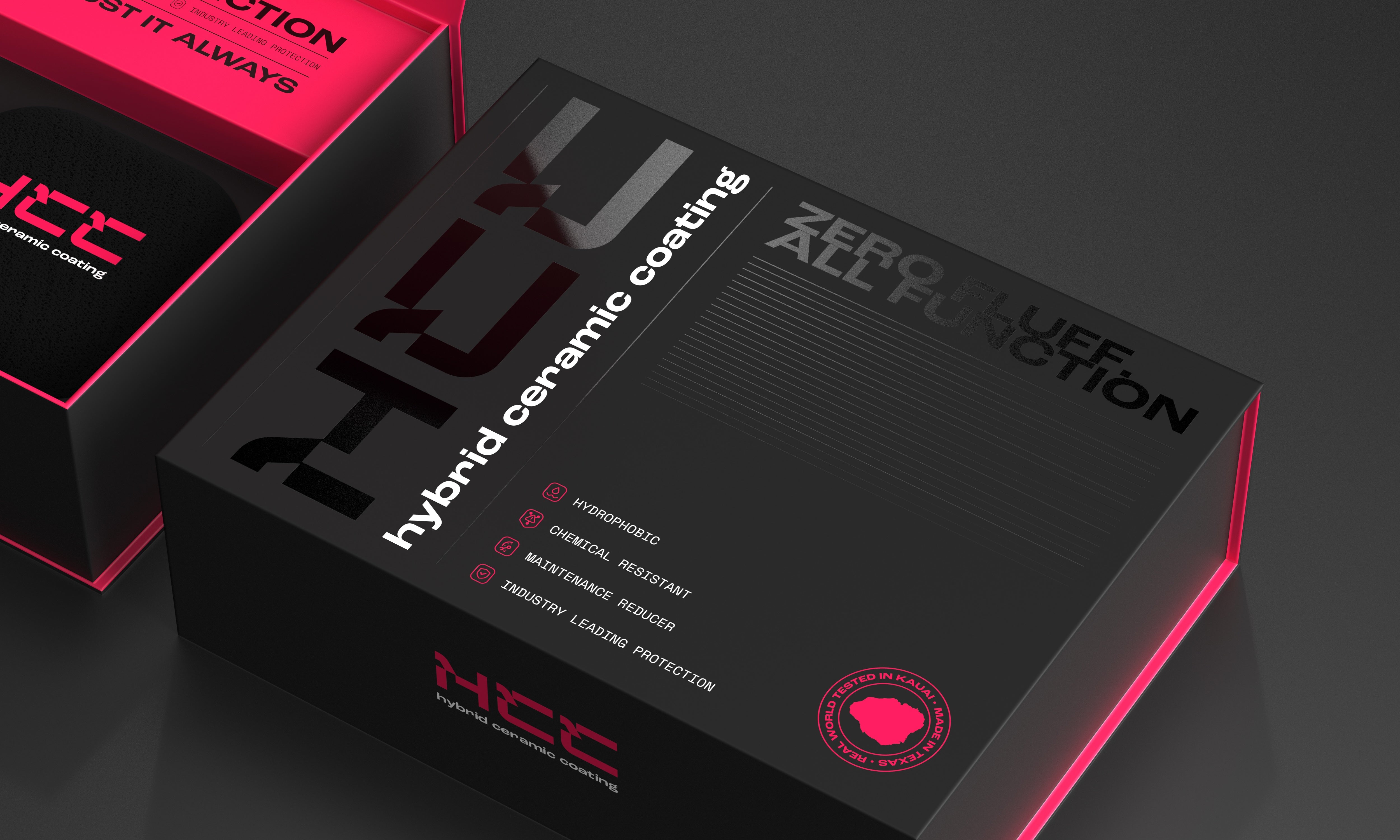
Ready for the follow-up step? Once your paint passes the bag test, seal it with HCC Hybrid Ceramic Coating — the flagship all-surface ceramic that works on cars, boats, planes, and bicycles.

Leave a comment
This site is protected by hCaptcha and the hCaptcha Privacy Policy and Terms of Service apply.