
The best car drying towel for most enthusiasts is a twisted-loop microfiber in the 1000–1200 GSM range with laser-cut edgeless borders — it soaks up an entire mid-size sedan in one pass without scratching. Weight, weave, and edge type matter more than color or brand, and the wrong towel is the single biggest cause of swirl marks on freshly washed paint. This guide walks you through GSM, weave, edges, technique, and the specific mistakes that leave water spots on coated cars.

Why the Drying Towel Is a Detailer's Most Underrated Tool
You can nail your two-bucket wash, use the right pH-balanced shampoo like Undrdog Soap, and even lay down a premium ceramic — but if you drag a scratchy old bath towel across your paint at the end, none of it matters. The drying step is where more scratches happen than any other stage of the wash. Water sitting on paint also mineralizes into hard water spots within minutes on a hot panel, so drying speed matters as much as drying safety.
A properly built microfiber drying towel does three things at once: it lifts water off the panel rather than smearing it, it releases dirt into the wash rather than trapping it against your clearcoat, and it does it fast enough to beat evaporation. The rest of this guide is about picking a towel that actually does all three.
Understanding GSM: The Number That Matters Most
GSM stands for grams per square meter — it's the areal weight of the fabric, and it's the single best predictor of how much water a towel will hold. Higher GSM generally means a thicker, denser, more absorbent towel, up to a point.
Here's the practical range:
- 300–500 GSM: Lightweight utility towels. Fine for interior glass, wheels, or engine bays. Not enough capacity for a full-car dry.
- 600–800 GSM: Solid mid-weight drying towels. Good on compact cars and motorcycles. Two passes needed on a full-size vehicle.
- 1000–1200 GSM: The sweet spot for most enthusiast use. A single 25" x 36" towel in this range will dry a mid-size sedan in one continuous pass. Analysis from AOSE textile engineers shows twisted-loop microfiber peaks in absorption efficiency around 1200 GSM, holding roughly 2–2.5 gallons per towel before saturation.
- 1500+ GSM: Diminishing returns. The towel gets heavier and slower to dry between washes without meaningfully increasing single-use capacity.
If you only own one drying towel, make it 1000–1200 GSM twisted loop. If you have two, add a 600 GSM waffle weave for finishing work.
Weave Types: Twisted Loop vs Waffle vs Plush
Weave changes how the towel interacts with water and paint. The three you'll actually see on the market are twisted loop, waffle weave, and plush pile (sometimes called "korean plush" or "coral fleece").
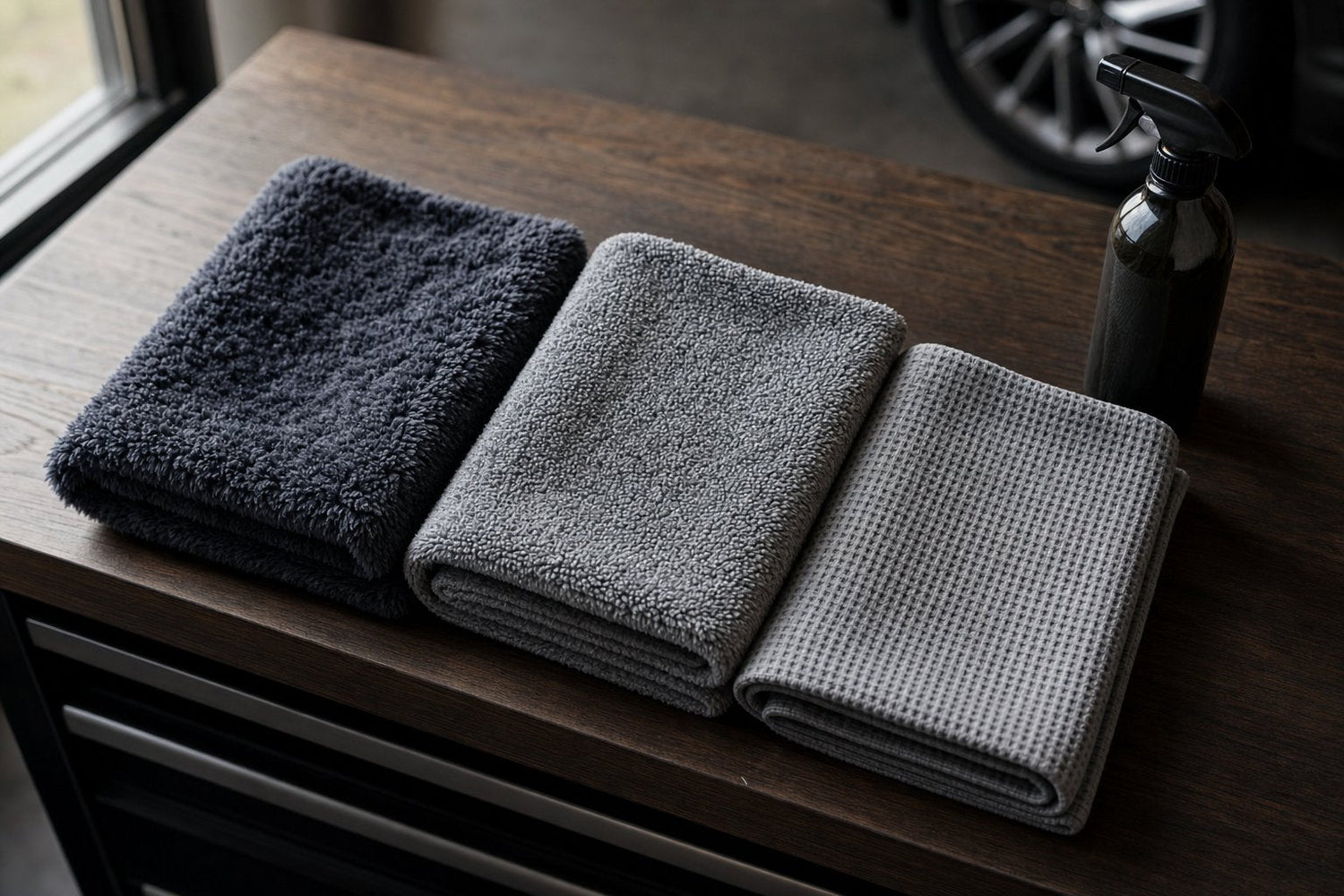
Twisted Loop
Twisted-loop microfiber uses double-strand yarn twisted into tall vertical loops. The twist creates capillary channels that pull water up into the fabric fast — this is why twisted loop dominates in high-GSM drying towels. According to The Rag Company, twisted-loop construction absorbs water roughly 30–40% faster than flat-weave equivalents of the same GSM. Best for: full-vehicle drying, dark paint, coated cars.

Waffle Weave
Waffle weave has a distinctive gridded texture that creates pockets to trap water. It's thinner and more flexible than plush towels, which makes it great for glass, wheels, and door jambs — anywhere you want to reach into tight spots. It's less absorbent per square inch, so you'll wring or swap towels more often on a full car.
Plush / Coral Fleece
Traditional plush microfiber has short dense fibers and a suede-like feel. It's softer to the touch but the shorter pile can't lift as much water as twisted loop at the same GSM. Plush 500–700 GSM towels are excellent finishing towels for coating application and quick-detailer wipe-downs — pair them with our Quick Detail Hydrophobic Spray for touch-ups between washes.
Twisted Loop vs Waffle vs Plush: At-a-Glance Comparison
| Attribute | Twisted Loop | Waffle Weave | Plush Pile |
|---|---|---|---|
| Typical GSM | 1000–1200 | 300–600 | 500–800 |
| Water capacity | Highest | Moderate | Moderate |
| Absorption speed | Fastest | Medium | Slower |
| Paint safety on coated cars | Excellent | Very good | Excellent |
| Best use | Full vehicle dry | Glass, wheels, jambs | Coating apply, QD wipe |
| Dry time between washes | Slow (heavy) | Fast | Medium |
Edge Type: The Overlooked Scratch Risk
The border of a microfiber towel is often stitched with polyester thread that's harder than automotive clearcoat. Drag that edge across paint under pressure and you'll leave fine scratches — the kind that show up as swirl marks under direct sunlight.
You've got three main choices:
- Silk-banded edges: A soft satin binding around the perimeter. Safe on paint, elegant looking. Adds cost.
- Laser-cut edges: The entire towel including the border is a single piece of microfiber, heat-sealed with no stitching. Zero risk of a hard thread contacting your clearcoat. This is what most detailers spec for coated cars.
- Standard hemmed edges: Stitched border with visible thread. Fine for wheels, engine bays, or utility work — keep them away from painted panels.
For anything you're pulling across paint or a ceramic coating like HCC Hybrid Ceramic Coating, buy laser-cut or silk-banded and reserve stitched-edge towels for the dirty jobs.
Proper Drying Technique for Coated and Uncoated Paint

Even the best towel will scratch paint if you use it wrong. Here's the technique that keeps coated and uncoated finishes looking their best:
1. Pat, Don't Drag
On a coated car with strong hydrophobic behavior, water beads and sheets off on its own. Lay the towel flat across a panel and lift it straight up — no side-to-side motion. This lifts the beads without dragging any residual grit across the surface.
2. Blow Water Off Panel Gaps First
Emblems, mirror bases, side skirts, and door handles trap water that will drip onto dry paint minutes later, leaving spots. A cordless leaf blower or a purpose-built car dryer clears these areas fast. If you don't own one, at least tilt the car slightly and open all doors before drying.
3. Work Top Down
Roof, hood, trunk, upper doors, then lower panels. Rockers and lower doors are the dirtiest zones — save them for last so you don't spread road film upward.
4. Fold and Rotate
Fold your towel into quarters. That gives you eight clean drying surfaces per towel. Rotate to a fresh face every panel or two.
5. Never Reuse a Dropped Towel
If a drying towel touches the ground, it's now a wheel towel or a shop rag. Silica and grit embed instantly into the pile and will scratch every panel you touch afterward.
Washing and Storing Your Drying Towels
A drying towel is a consumable that will last hundreds of washes if you treat it right and roughly 20 if you don't. Key rules:
- Wash separately from other laundry — especially cotton, which sheds lint that catches on microfiber loops.
- Use a dedicated microfiber detergent or a small amount of scent-free liquid soap. No fabric softener ever — it coats the fibers and kills absorption.
- Cold or warm water. Hot water is fine for drying towels but not for coating applicators, so keep loads consistent.
- Tumble dry low or air dry. High heat melts the loop tips and permanently reduces absorbency.
- Store folded in a sealed bin, not tossed on a garage shelf where they collect dust.
Common Drying Mistakes That Cost You Paint Correction Later
These are the mistakes we see most often on customers who show up asking why their paint has swirls despite doing "everything right":
- Using a bath towel or old T-shirt. Cotton is aggressive on clearcoat. It's the single most common source of DIY swirl marks.
- One giant drag from hood to bumper. Compresses grit against the paint and turns your towel into a scratch pad.
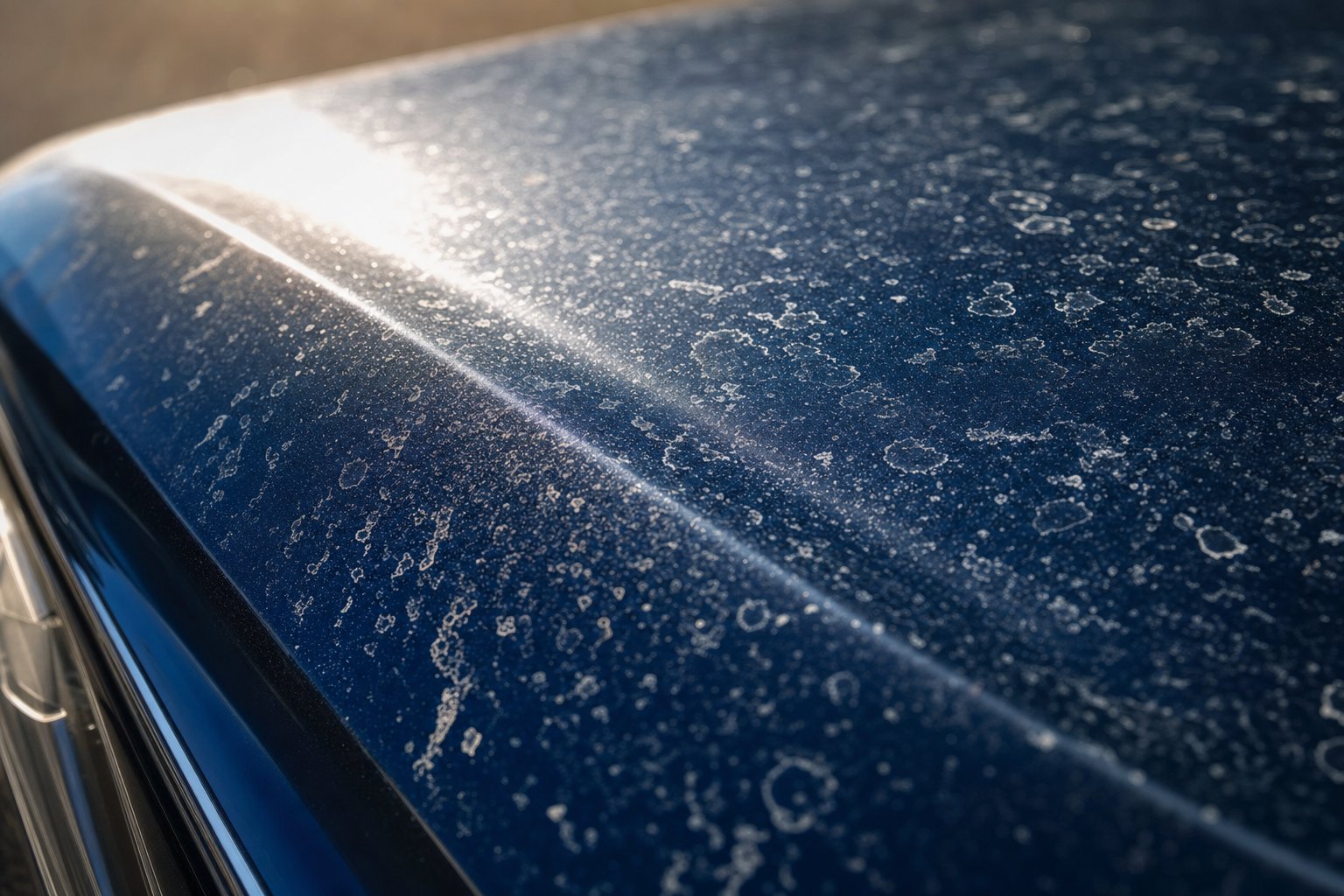
- Skipping the pre-blow on emblems. Water drips 30 seconds after you thought you were done, leaving hard water spots. If you missed spots, our Water Spot Remover can rescue them before they etch.
- Storing wet towels in a bin. Mildew forms inside 48 hours, and the smell never fully washes out.
- Drying in direct sun on a hot panel. Water evaporates faster than you can lift it, leaving mineral spots even with soft water.
For a deeper dive on preventing scratches during the wash itself, see our guide on ceramic-safe washing with Undrdog Soap, and if you're prepping paint for a coating, follow our correct decon order guide.
Do You Still Need a Drying Towel if You Have a Ceramic Coating?
Yes — but the towel does less work. A properly applied HCC coating creates strong hydrophobicity, so most of the water sheets off on its own during the rinse. The drying towel's job on a coated car is mostly to lift residual beads and clear panel gaps, not to soak up a soaking-wet vehicle. A 600–800 GSM plush or waffle towel is often plenty on a coated daily driver, and it dries faster between washes than a monster 1200 GSM twisted loop.
For coated show cars and dark paint, most detailers still keep a premium twisted loop on hand because it's the safest option when you're doing the final pat-down under critical lighting.
Frequently Asked Questions
What is the best GSM for a car drying towel?
For a single all-purpose drying towel, 1000–1200 GSM twisted loop is the sweet spot — it holds 2–2.5 gallons of water and dries a mid-size vehicle in one pass. Below 800 GSM you'll be wringing constantly; above 1500 GSM you get diminishing returns and long dry-out times between washes.
Is twisted loop or waffle weave better for drying a car?
Twisted loop is better for the main body of the vehicle because it absorbs water faster and holds more per square inch. Waffle weave is better for glass, wheels, and door jambs where its thinner profile lets you reach into tight spots. Most detailers own both.
Can I use a drying towel on a ceramic-coated car?
Yes. Ceramic-coated paint is actually easier on drying towels because water beads and sheets off on its own — you're mostly patting off residual beads. Use a laser-cut or silk-banded edge to avoid dragging hard thread across the coating, and pat rather than drag whenever possible.
How often should I replace my car drying towel?
A quality twisted-loop towel washed correctly lasts 100–300 uses before it starts losing loft. Signs it's time to retire it to wheel duty: reduced absorption, matted or laid-over loops, visible fraying at the edges, or persistent musty smell that won't wash out.
Should I use fabric softener on microfiber drying towels?
Never. Fabric softener leaves a hydrophobic coating on the fibers that dramatically reduces water absorption. Use a small amount of scent-free liquid detergent or a dedicated microfiber wash, and skip dryer sheets entirely.
What size drying towel is best?
For full-vehicle drying, 25" x 36" (roughly 63 x 90 cm) is the standard and hits the right balance of coverage and maneuverability. Larger 30" x 40" towels save you a pass or two on trucks and SUVs but become heavy and awkward when saturated. Smaller 16" x 24" towels are ideal secondary towels for glass, wheels, and detail work.
Is a car dryer or leaf blower better than a towel?
They work together, not against each other. A blower gets water out of panel gaps, emblems, mirror bases, and grilles that a towel can't reach. The towel handles the flat panels. Using both cuts drying time roughly in half and dramatically reduces the chance of dried-on water spots.
Can I machine-dry microfiber drying towels?
Yes, on low heat only. High heat melts the tips of the microfiber loops and permanently kills absorption. Air drying on a rack is even safer if you have the space and time.
Why does my drying towel leave streaks?
Three usual causes: the towel is contaminated with fabric softener residue from a prior wash, there's product residue on the paint that the towel is smearing (usually leftover soap or a spray sealant applied over dirt), or the panel is drying too fast in direct sun. Rinse the towel, ensure the panel is clean, and work in the shade.
What's the best drying towel for a black car?
A 1000–1200 GSM twisted-loop microfiber with laser-cut edges. Black paint shows every micro-scratch under sunlight, so the edge type matters as much as the fiber. Pat rather than drag, and always work on a shaded, cool panel.

Leave a comment
This site is protected by hCaptcha and the hCaptcha Privacy Policy and Terms of Service apply.