

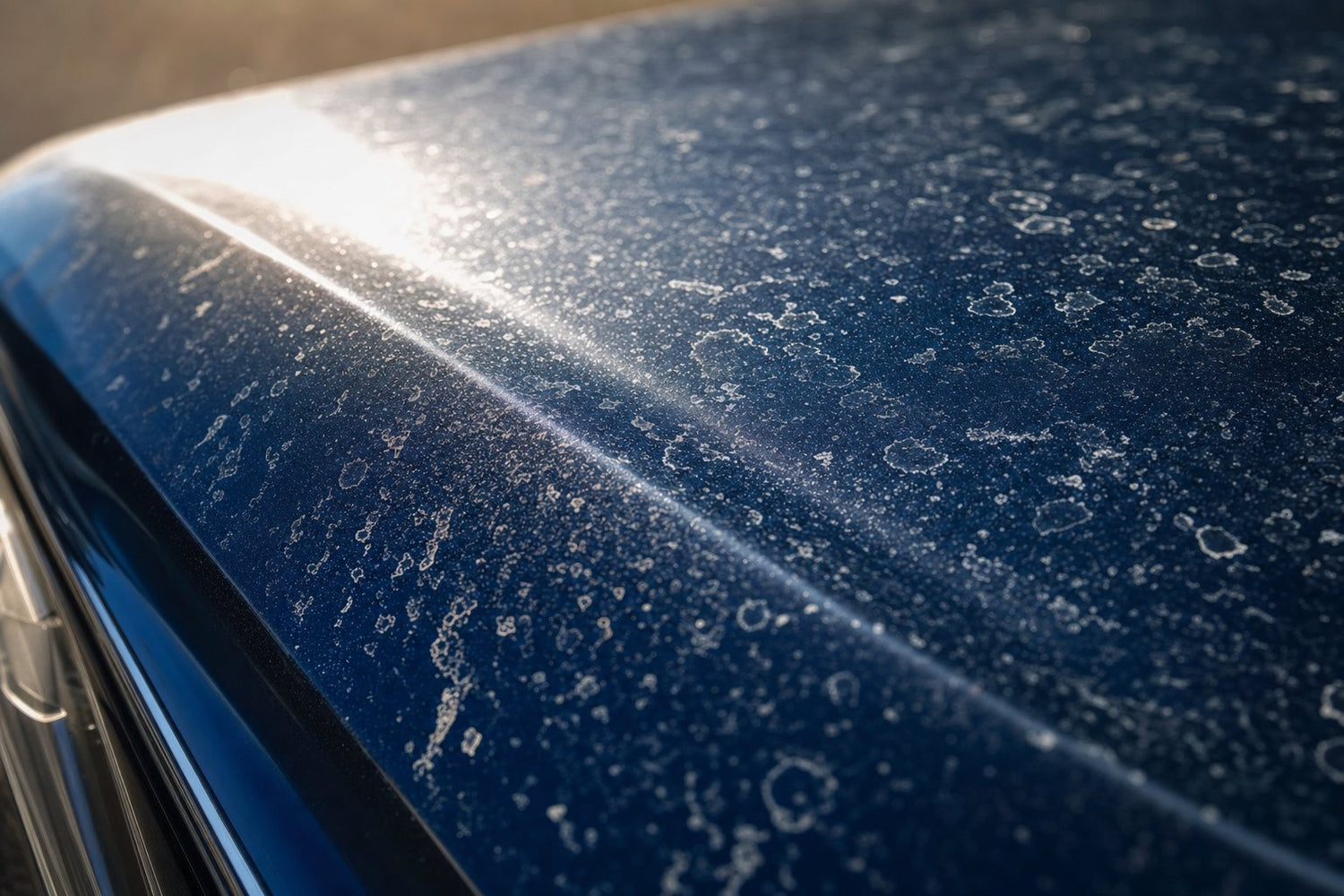
Water spots on car paint fall into two categories: mineral deposits sitting on top of the clear coat (removable with a dedicated acidic remover) and etched craters chemically bonded into the paint (removable only by polishing or wet sanding). To fix them, run the fingernail test first, treat surface deposits with a pH-balanced spot remover like Undrdog Water Spot Remover, and only reach for compound and polish once you have confirmed the damage penetrates the clear coat.
This guide breaks down the chemistry behind hard water spots, how to tell removable deposits from permanent etching before you waste product, when a dedicated remover beats vinegar or clay, and the maintenance routine that stops spots from coming back all summer.

Why Water Spots Form on Car Paint
Water spots are not water. They are the minerals left behind after water evaporates — mostly calcium and magnesium carbonates, sometimes iron and silica. According to The Detail Pros, the moment a droplet dries, those dissolved minerals crystallize into a ring or a spot on the paint surface.
The three most common sources on a daily driver:
- Sprinklers and irrigation — untreated well or municipal water is the worst offender, especially in Western states with hard groundwater.
- Rain — cleaner than sprinkler water but still carries airborne minerals, pollutants, and dust, which is why rain drying in the sun still leaves spots.
- Wash water — hot panels flash-dry water beads before you can wipe them, cementing minerals into the clear coat.
The US Geological Survey classifies water as hard when it exceeds 121 mg/L of dissolved calcium carbonate. If your municipal supply reports anything above that number, you are washing with water that is actively contributing to spotting.
The Three Types of Water Spots (and Why the Difference Matters)
Detailers group water spots into three categories. Getting the diagnosis right saves you hours of work and prevents damage from using the wrong tool.
Type 1 — Mineral deposits on the surface
Fresh, dried mineral residue sitting on top of your clear coat or existing coating. You can feel it with your fingernail. Removable with an acidic water spot remover or a mild acid solution.
Type 2 — Etched water spots
The minerals sat long enough, in high enough heat, that acidic residues chemically etched into the clear coat. The spot is now a shallow crater. Chemical removers will not fix these — you have to level the clear coat with polish or compound.
Type 3 — Reverse etching / paint failure
The clear coat has bubbled up or cracked around the mineral spot. You are looking at paint damage that usually requires repair or repaint, not detailing.

The Fingernail Test (Do This Before You Buy Anything)
Before you spend a dollar on chemistry, do the 60-second diagnostic:
- Wash and dry the affected area with a standard car wash — remove any loose contamination first.
- Run a clean fingernail lightly across the water spot in two directions.
- Look at the spot from three angles under direct light — overhead, low sun, and side raking light.
If the spot feels raised or textured, you have Type 1 mineral deposits. A dedicated remover will handle it. If the spot feels indented or below the surface, it's Type 2 etching — chemical removers will not touch it. If the paint feels bubbled or lifting around the ring, it's Type 3 and you're headed to a body shop, not a detailer.
What Actually Removes Type 1 Water Spots
You have three paths. They aren't equal.
| Method | Effective against | Risk level | Best for |
|---|---|---|---|
| Dedicated water spot remover (pH-balanced) | Fresh + moderately old mineral deposits | Low | Any panel, coated or uncoated paint |
| Distilled water + white vinegar (1:1) | Fresh spots only, less than a week old | Low if diluted, moderate if concentrated | Emergency touch-ups when you have no dedicated product |
| Clay bar with lubricant | Deposits that survived a chemical remover | Moderate — can mar if under-lubricated | After chemical treatment, before polishing |
| Polish or compound | Type 2 etching only | Higher — removes clear coat material | Confirmed etched craters |
A pH-balanced dedicated spot remover is the safest first move because it's formulated to dissolve calcium and magnesium salts without stripping wax or ceramic coating. Vinegar works for fresh spots but its acidity can hurt older waxes and some sealants if you leave it dwelling too long.
How to use a water spot remover the right way
- Work in shade on a cool panel. Never on hot paint in direct sun.
- Wash and rinse the panel first. Never apply remover over dust or road grime — you'll grind particles into the paint.
- Mist Undrdog Water Spot Remover onto the panel or your applicator microfiber. Small sections at a time.
- Let it dwell 30–60 seconds. Watch — do not walk away. If the paint starts drying, mist more product.
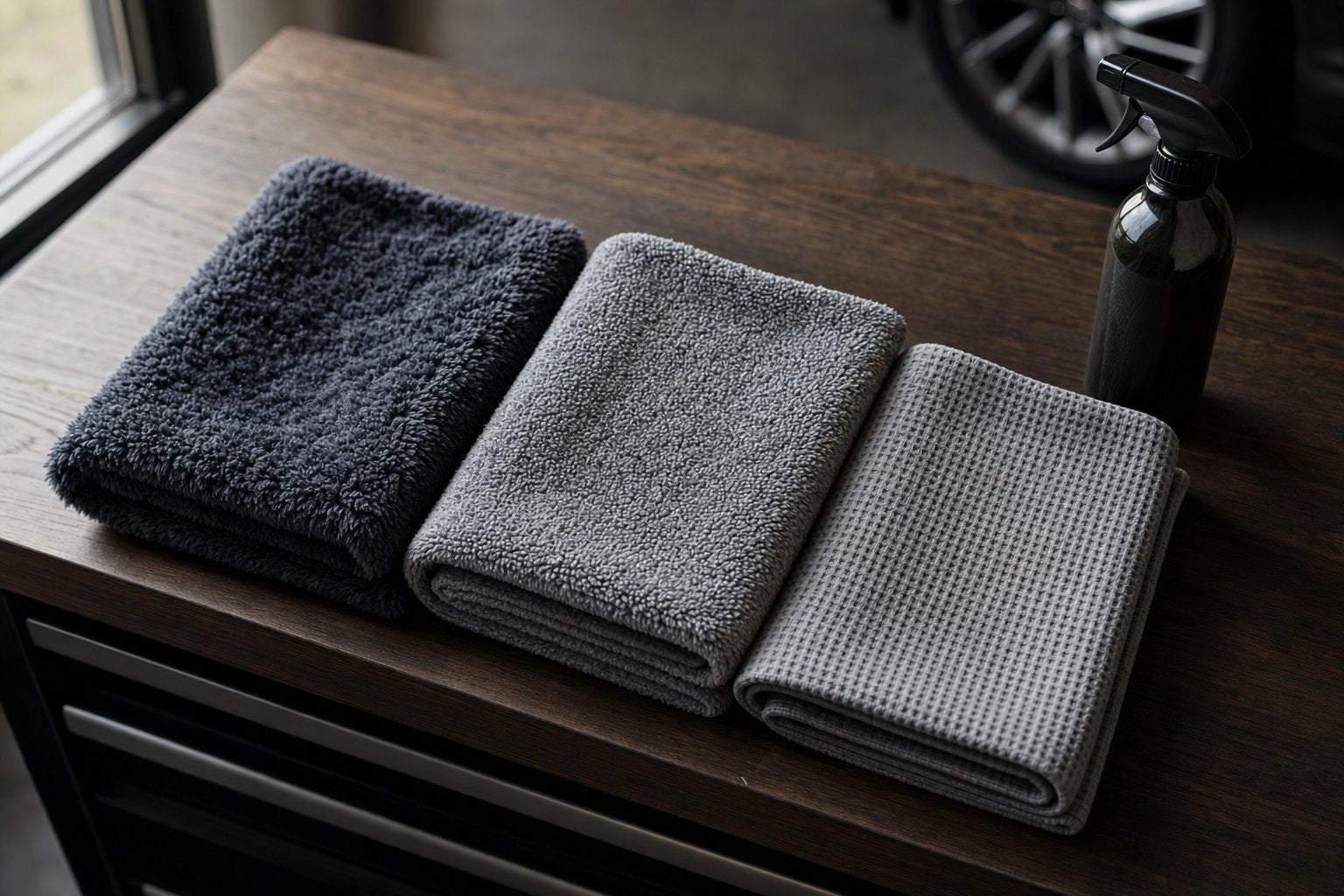
- Wipe with a clean plush microfiber in one direction. Flip the towel for a second pass.
- Rinse the panel with clean water and dry with a fresh microfiber.
- Re-check with the fingernail test. If any spot remains, repeat once. If it still remains, it's etched.
When to Escalate to Compound and Polish
If the fingernail test shows the spot is indented, or if two rounds of chemical remover haven't touched it, you're dealing with Type 2 etching. There's no chemistry that reverses etching — you have to physically level the clear coat.
- Very light etching — a fine polish on a soft foam pad, 4–6 passes, will usually restore gloss.
- Moderate etching — start with a medium-cut polish or a light compound, then refine with a fine polish.
- Heavy etching — a heavier compound and, in rare cases, wet sanding is required. Below that layer, you're into re-clearcoating territory.
Any time you compound or polish, you're removing microns of clear coat. You cannot undo it — so start with the least aggressive step and only escalate if necessary. Our paint decontamination guide covers what to do after correction and before re-sealing.
Prevention: The Only Long-Term Answer
Removing water spots is treating a symptom. If you don't change the routine that put them there, they'll be back next weekend.

Habits that stop water spots at the source
- Never let water dry on the paint. Dry with a plush microfiber or a leaf blower immediately after washing.
- Wash in shade on a cool panel. Hot paint flash-dries water beads before you can wipe them.
- Park away from sprinklers. Overnight lawn irrigation is one of the biggest sources of hard water damage in suburban driveways.
- Rinse promptly after rain. Rainwater carries dust and airborne minerals — flush them off with fresh water and dry the panels.
- Consider a wash-water filter or DI (deionizing) inline filter if your tap water tests hard. It's the cleanest final rinse you can do at home.
Ceramic coating drastically slows spot formation
A ceramic coating like HCC Hybrid Ceramic Coating creates a hydrophobic layer that causes water to sheet and bead off before it can dry in place. Mineral deposits still form on coated paint — physics is physics — but they sit on top of the ceramic rather than embedding in the clear coat, which makes them dramatically easier to remove. For coated vehicles, our ceramic maintenance guide covers the ongoing care routine.
Top-up with a hydrophobic spray after washing
Between full coatings, a spray like Quick Detail applied to a still-damp car pushes water off panels faster and adds a slick barrier that mineral deposits can't grip as hard.
Common Mistakes That Turn Removable Spots Into Etched Craters
- Waiting. A fresh mineral deposit is Type 1 for the first week. In summer heat, it can etch to Type 2 in under 30 days. Time is the enemy.
- Scrubbing with a household cleaner. Ammonia-based glass cleaners, dish soap, and bathroom scrub products don't remove mineral deposits — they damage waxes, sealants, and even the top of the clear coat.
- Using undiluted vinegar. White vinegar around 5% acetic acid is safe when cut 1:1 with distilled water. Straight from the bottle it can strip finish protection and dwell too aggressively.
- Rubbing with paper towels. Paper is abrasive to modern automotive clear coat. Always microfiber.
- Compounding first. Never compound a raised deposit — you'll drag mineral crystals across the clear coat and create swirls that are worse than the original spots.
- Skipping the wash. If there's dust or grit on the panel, a chemical remover just glues it to the paint. Always start clean.
Frequently Asked Questions
Can water spots damage car paint permanently?
Yes — if left long enough in heat, mineral deposits transition from surface residue to etched craters in the clear coat. Once etched, no chemical remover will fix them; you have to physically polish or compound the clear coat to level the damage.
Will a water spot remover harm my ceramic coating?
A pH-balanced dedicated remover won't degrade a properly cured ceramic coating in normal spot-treatment use. Acidic vinegar solutions and household descalers can shorten coating life if used regularly, which is why we recommend a formulated spot remover on coated cars.
How can I tell if a water spot is etched or on the surface?
Run a clean fingernail lightly across the spot. Raised or textured means Type 1 surface deposit that a remover can fix. Indented means Type 2 etching that requires polishing. Bubbling or cracking around the spot means Type 3 paint damage.
Does clay bar remove water spots?
Clay removes light surface contamination and some fresh mineral deposits, but it can't dissolve the calcium and magnesium bonds in an aged spot. Use a chemical remover first, then clay for anything left behind. Our clay bar technique guide covers the process.
Can I use white vinegar to remove water spots?
You can, if you dilute it 1:1 with distilled water and use it only on fresh spots less than a week old. It's harsher than a formulated spot remover and can weaken waxes if left dwelling too long. Rinse thoroughly and reapply protection afterward.
Why do I keep getting water spots on freshly washed cars?
Three usual causes: washing in direct sun or on hot panels, using hard tap water for the final rinse, or letting water bead sit and evaporate before drying. Fix any one of the three and spot frequency drops noticeably.
What water hardness level causes spotting?
Any hardness above roughly 60 mg/L calcium carbonate will leave visible spots on darker paint when water dries in place. Levels above 121 mg/L, which the USGS classifies as hard water, cause pronounced spotting even on lighter colors.
Is ceramic coating worth it just for water spot protection?
Ceramic doesn't prevent spots — it changes what happens to them. Instead of embedding in the clear coat, deposits sit on top of the hydrophobic layer and wipe off with a spray-and-microfiber routine. On coated paint, water spot cleanup goes from a 30-minute correction job to a 2-minute wipe.
How long does a water spot remover last on the shelf?
Most acidic formulations are stable for 2–3 years unopened if stored out of direct sun and freezing temperatures. Once opened, use within a year for best performance. Cloudy or separated product should be replaced.
Can I apply water spot remover in direct sunlight?
No — heat accelerates evaporation, dries the product before it can dissolve the minerals, and can cause streaking on darker paint. Always work in shade with a cool panel.
The Bottom Line
Water spots are one of the most preventable forms of paint damage — and one of the most permanent if you ignore them. Diagnose the type first with the fingernail test, use a pH-balanced dedicated remover on fresh deposits, escalate to polish only when etching is confirmed, and shift your wash routine so spots stop forming in the first place. Do that, and you'll spend a lot fewer weekends chasing rings off your hood.

Leave a comment
This site is protected by hCaptcha and the hCaptcha Privacy Policy and Terms of Service apply.