

A 9H ceramic-coating label does not mean a vehicle is protected from rock chips. ASTM D3363-22 is a test method for film hardness by pencil test. It addresses organic coating films on metal or similarly hard substrates. It is not an impact test, a rock-chip test, a promise that scratches cannot occur, or a Mohs mineral-hardness rating.
That distinction matters because hardness and impact protection answer different questions. A coating may resist a particular pencil mark under specified test conditions and still provide no established defense against a stone striking the front of a vehicle. Before treating any “9H” claim as meaningful, ask what method was used, what substrate was tested, who performed the test, and whether the result belongs to the exact product and tested system being offered.
What ASTM D3363 pencil hardness actually measures
ASTM D3363-22 is a test method for film hardness by pencil test, using organic coating films on metal or similarly hard substrates. In practical terms, the method addresses how a coated film responds to pencils of specified hardness under the procedure’s conditions.
That is a narrower question than many product labels suggest. A pencil-hardness result can be useful when comparing like-for-like coating-film results produced under comparable conditions. It can help describe one aspect of a cured or dried film. It cannot, by itself, answer whether a coating will stop a chip, prevent every scratch, or protect the underlying paint from every type of contact.
The number or letter combination should therefore be treated as a test claim only when the supporting details are available. A label alone does not tell you whether the test followed ASTM D3363, whether a different procedure was used, or whether the result belongs to the exact product and tested system being offered.
What a 9H claim does not prove
| Claim or question | What a pencil-hardness result can address | What it does not establish |
|---|---|---|
| Film hardness | Response of an organic coating film to the specified pencil test | That the film has a universal or identical hardness in every installation |
| Rock-chip protection | Nothing directly about impact from a stone | Resistance to impact, chipping, or front-end stone damage |
| Scratch prevention | One defined pencil interaction under the test method | Protection from every wash mark, tool, grit, key, branch, or other contact |
| Mineral hardness | Nothing about the Mohs scale | That the coating is a 9H mineral or has a Mohs rating of 9 |
| Product performance | Only the tested film under the reported conditions | That a specific Undrdog product received the same independent result |
The key distinction is the rock-chip question. A stone hitting paint is an impact event. The pencil test described by ASTM D3363-22 is not an impact or rock-chip-resistance test. Moving from “the film reached 9H in a pencil test” to “the vehicle is protected from chips” is therefore an unsupported conclusion.

Hardness, scratching, and impact are different problems
Customers often use “scratch protection” as shorthand for several different concerns. A pencil mark, a wash-induced mark, a sharp object, abrasive grit, and a flying stone do not apply force in the same way. A single hardness number cannot represent all of those situations.
Hardness is also not the same as toughness or impact resistance. ASTM D3363-22 is not a rock-chip test, and it does not turn a coating into a protective film designed to absorb stone strikes. If the customer’s primary concern is highway debris damaging the front of the vehicle, a pencil-hardness label is not the evidence needed to answer that concern.
This does not make a pencil test useless. It makes the test specific. A responsible explanation keeps the useful part of the result and removes the promise that the result cannot support.
What evidence should you request?
When a coating is marketed with a 9H claim, request a concise evidence record rather than relying on the label. The goal is to determine exactly what was tested and what conclusion is reasonable.
- Test method: Ask whether the result came from ASTM D3363 or another named procedure. “9H” without a method is incomplete.
- Tested product: Confirm the product name and whether the tested material is the same product being applied.
- Substrate: Ask whether the film was tested on metal or another similarly hard substrate, as described by the method.
- Test report: Request the report or a traceable statement identifying the testing party, date, sample, preparation, and result.
- Scope: Ask what the result is intended to show. It should not be presented as a rock-chip, impact, or universal scratch-prevention result.
- Independent status: Determine whether the test was independently performed. The existence of ASTM D3363 does not prove that any particular Undrdog product was tested.
A responsible answer may be: “This is a pencil-hardness result, not a rock-chip test. I can show you the documented scope, but I will not translate it into a chip-protection promise.” That answer is more useful than a larger number with no test context.
Never test a customer’s paint with a pencil
A home or shop scratching experiment is not a substitute for a specified test method. Do not take a pencil, key, blade, abrasive, or other object to a customer’s finished panel to demonstrate a hardness label. Such a test can mark the coating, paint, or clear layer, and it does not recreate a documented ASTM result.
Even a panel that appears to pass a casual test would not establish a reliable hardness rating. A casual experiment would not reproduce a documented ASTM test method or establish rock-chip resistance.
Use documentation for evidence and preserve the customer’s finish. If a customer asks for a demonstration, explain the boundary clearly: a coating can be discussed through its verified instructions and available test documentation, but customer paint should not be used as an experiment.

A practical evidence worksheet
Use the following blank worksheet when reviewing a 9H claim. It is a decision aid, not a test result.
| Question | Record |
|---|---|
| Exact product name | ____________________________ |
| Named test method | ____________________________ |
| Substrate described in the report | ____________________________ |
| Laboratory or testing party | ____________________________ |
| Does the report identify the tested product? | Yes / No |
| Does it measure impact or rock-chip resistance? | Yes / No |
| Permitted customer-facing statement | ____________________________ |
For a hypothetical example, a worksheet might show “ASTM D3363,” a named coating film, and a documented pencil result, while the impact-resistance field remains “No.” The correct customer explanation would be that the film has a documented pencil-hardness result within that test scope. It would not be correct to describe the coating as rock-chip protection.
Use the customer’s actual problem to choose the next step
Start by clarifying what the customer wants to prevent. If the concern is light surface marking or the behavior of a coating film under a defined pencil procedure, the test documentation may be relevant. If the concern is stones striking the front of the vehicle, stop using the 9H label as the decision point. The evidence does not answer that impact question.
This is also the point to distinguish a coating recommendation from a rock-chip barrier. A coating conversation can be appropriate when the customer understands the product’s intended role, the required preparation, and the maintenance expectations. It should be redirected when the customer is specifically asking for impact protection and is treating a coating as its replacement.
Questions to ask before repeating a hardness claim
- Is the customer asking about light surface marking, or about stones striking the vehicle?
- Is there a named test method, or only the phrase “9H”?
- Does the evidence identify the exact product?
- Was the result produced on a suitable hard substrate?
- Is the result being described as film hardness rather than mineral hardness?
- Are you making a claim about impact that the test did not measure?
- Would the statement still be accurate if the number were removed?
If the evidence is incomplete, use a narrower statement. “The manufacturer presents this as a coating with a 9H pencil-hardness claim” is materially different from “this coating prevents scratches and rock chips.” The first reports the claim. The second adds performance conclusions that that test's scope does not support.
How Undrdog does it
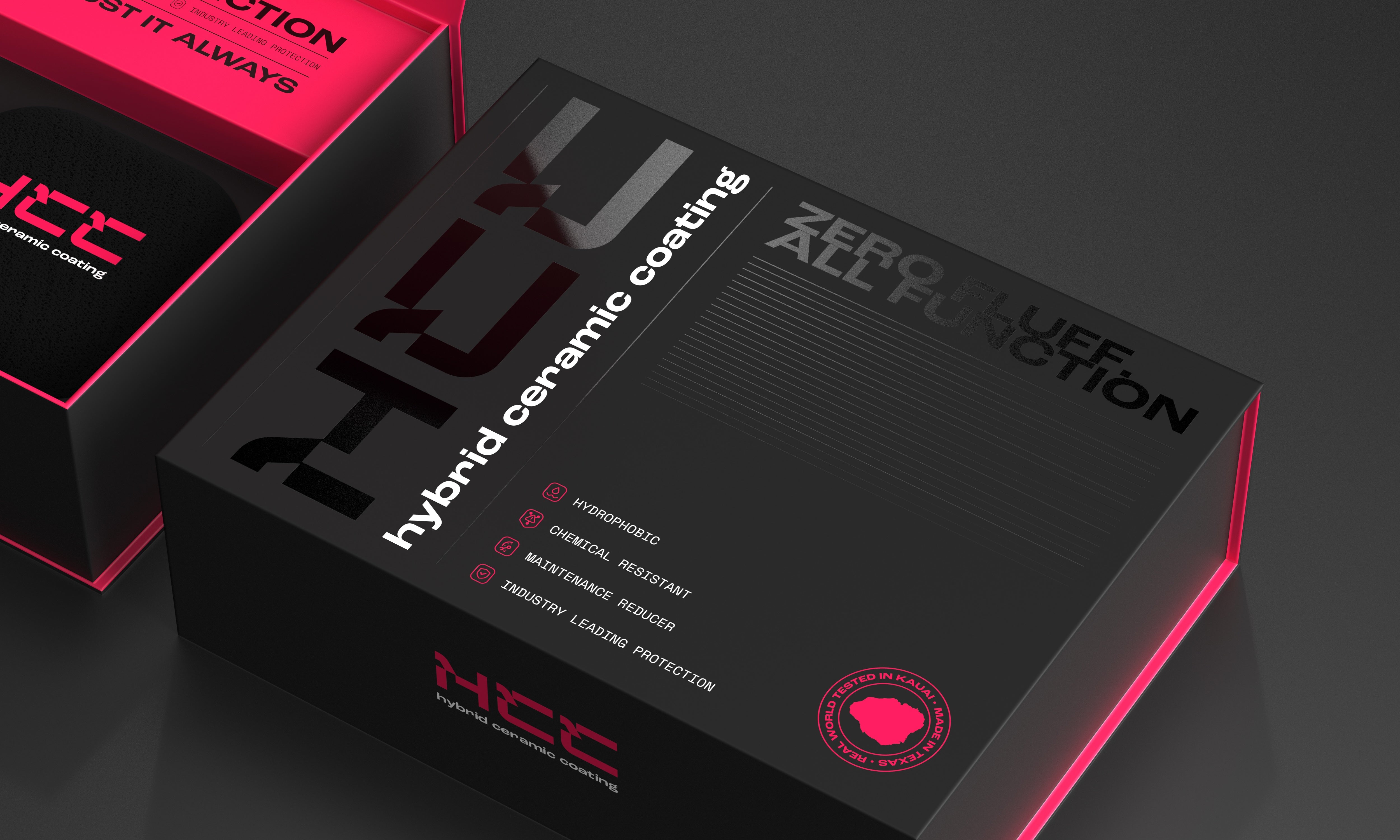
Undrdog’s product choice should follow the surface and the customer’s actual goal. HCC Hybrid Ceramic Coating is Undrdog’s flagship all-surface coating for cars, boats, planes, and bicycles. Its multi-year protection depends on preparation, exposure, use, and maintenance, rather than a promised fixed lifespan. Confirm suitability and the current application instructions for the exact surface before recommending it.
For a relevant exterior coating project, start with HCC and confirm the surface before discussing application. Undrdog Pro is available to detailers and DIYers and has its own current application and aftercare instructions. Pro Plus is a separate coating, also available to detailers and DIYers, with its own application instructions.
Both products are available to detailers and DIYers. Compare the current instructions and choose the product that suits the specific job. A coating recommendation is not a rock-chip guarantee, and a pencil-hardness result is not automatically a result for any of these products.
Further reading
For a separate discussion of terminology and chemistry claims, read Is Graphene-Infused Ceramic Coating Actually Better Than Ceramic? An Honest Chemistry Breakdown. For a practical discussion of durability expectations, see How Long Does Ceramic Coating Really Last? Why We Don’t Put a Year on the Bottle.
If a coating fits the surface and the customer’s expectations, review HCC Hybrid Ceramic Coating and its current instructions. If the customer needs protection from actual stone impact, do not let a 9H label make the decision for you. Ask for the evidence, state the limits, and recommend only what the documented performance can support.
Frequently Asked Questions
Does 9H ceramic coating protect against rock chips?
No. ASTM D3363-22 concerns film hardness by pencil test. It is not an impact or rock-chip-resistance test, so a 9H label cannot establish that stones will not chip the paint or coating.
What does ASTM D3363 measure?
ASTM D3363-22 is a test method for film hardness by pencil test, using organic coating films on metal or similarly hard substrates. It describes response to that specified pencil procedure, not impact resistance, rock-chip protection, universal scratch prevention, or a Mohs mineral-hardness rating.
Is 9H the same as Mohs hardness 9?
No. A 9H coating label associated with a pencil test should not be presented as a Mohs mineral-hardness rating. The terms describe different measurement systems and different questions. Treat the result as a film-hardness claim only when the named method and supporting documentation are available.
Can I test a coated customer panel with a pencil?
No. A shop or home pencil experiment is not a substitute for a documented test method and may mark the customer’s coating, paint, or clear layer. It also would not establish rock-chip resistance. Use product documentation and any traceable test report instead of performing a destructive demonstration.
What evidence should a detailer request for a 9H claim?
Request the named test method, exact tested product, substrate, testing party, date or report identification, and stated scope. Confirm whether the evidence is independent and whether it measures only pencil hardness. The existence of ASTM D3363 does not prove that a particular product was tested.
Does a pencil-hardness result prove scratch prevention?
No. It describes one defined pencil interaction under the test conditions. It does not promise prevention of every mark from washing, grit, tools, branches, keys, or other contact. Keep the claim limited to the documented film-hardness result rather than turning it into a universal scratch-prevention guarantee.
Which Undrdog coating should I consider for a relevant exterior project?
HCC Hybrid Ceramic Coating is Undrdog’s flagship all-surface coating for cars, boats, planes, and bicycles. Suitability and current instructions should be confirmed for the exact surface. Its multi-year protection depends on preparation, exposure, use, and maintenance, not a fixed promised lifespan.
Are Undrdog Pro and Pro Plus certification-gated?
No. Undrdog Pro and Pro Plus are available to detailers and DIYers. They are separate coatings with their own current application instructions. Their availability does not turn a pencil-hardness claim into impact protection or establish an unsupported comparison.
Choose the product that fits the job
Review the surface requirements and current directions before you start. Choose the right product for your project, not a bigger promise.
Explore HCC - Hybrid Ceramic Coating

Leave a comment
This site is protected by hCaptcha and the hCaptcha Privacy Policy and Terms of Service apply.