

A ceramic coating wash count is useful only when you know what counted as a wash and what was measured afterward. Ask for the washing method, the tested coating system, the assessment point, and any maintenance between checks before treating two numbers as comparable.
That is not a dismissal of testing. Recognized methods ask specific questions: ISO 20566:2020 describes a laboratory car-wash scratch-resistance test, while ASTM D2486-17(2025) concerns the scrub resistance of wall paints. Neither title alone tells you how many ordinary washes a particular ceramic coating will withstand on your car.
This guide is about reading the count, not turning your hood into a test panel. Use it to ask better questions before buying and to keep a useful record of normal care afterward.
Start by asking what one wash means
When you see a wash-resistance claim, request a definition of the unit being counted. Was it one complete cleaning and drying session, one machine cycle, one movement of a brush, or one application and rinse of a cleaner? Do not silently substitute your own weekly routine for the procedure in the report.
For a useful answer, ask the test provider to describe the cleaning product and dilution, contact tool, mechanical action, contact time, rinsing, drying, and timing of the assessment. These are questions to put to the provider, not a home-testing recipe or a claim that every named standard uses the same variables.
The distinction between methods is concrete. ISO's public abstract describes simulated machine washing with a rotating brush and synthetic dirt; ASTM's public scope describes erosion of wall paints through scrubbing. Those are different materials and test purposes, even though both involve repeated cleaning-related action (ISO public abstract; ASTM public scope).
For buying purposes, write a plain-language translation beside the headline: “This sample received this procedure this many times, and the reported observation was this.” If you cannot complete that sentence from the evidence supplied, leave the missing part blank rather than guessing.
Also ask whether the stated count is the point where testing stopped or the point where a defined failure occurred. A report of a sample still meeting a criterion at the last observation is not the same statement as a measurement of its eventual failure point.
Read the endpoint before comparing the totals
Ask what the tester decided to measure before the washing began. A photograph, a scratch assessment, an erosion measurement, and a cycles-to-failure result should not be treated as interchangeable answers.
ASTM D2486 makes the reporting distinction particularly clear: Method A reports cycles to failure for the test paint, while Method B reports a percentage ratio against a concurrently tested reference paint. Its public description therefore illustrates why even numbers associated with the same standard need their method and units attached (ASTM D2486 scope, sections 1.2.1–1.2.2).
| What you are shown | What to ask next | What not to assume |
|---|---|---|
| A wash count and a final photo | What was the starting condition, and what property was evaluated? | That an attractive photo establishes every kind of protection. |
| A sample still passing when testing stopped | What was the pass criterion, and why did the test stop? | That the last tested count is the actual failure point. |
| A cycles-to-failure number | How was failure defined, detected, and confirmed? | That another test uses the same failure definition. |
| A percentage relative to a reference | What reference and concurrent procedure produced that ratio? | That the percentage is a count of car washes. |
| Two products with different headline totals | Were the material, procedure, and assessment comparable? | That the larger number identifies the better choice for your use. |
Use this as a reading checklist, not a new rating scale. If a seller provides the complete method and a modest, clearly bounded result, that is more useful to your decision than an unexplained total.
Check whether the standard matches the claim
A laboratory car-wash method has a defined scope
ISO 20566:2020 specifies a procedure for assessing scratch resistance of organic paint coatings, particularly automotive paint coatings. Its abstract says that machine-based washing is simulated with a rotating brush and synthetic dirt, and that appropriately chosen parameters can also allow testing of protective plastic films and plastic components (ISO 20566:2020 public abstract).
Keep that scope attached to any discussion of the method. A scratch-resistance assessment is not automatically evidence of a coating's remaining water repellency, chemical resistance, or calendar service life. If a seller makes those additional claims, ask for the corresponding measurements rather than stretching the scratch-test description to cover them.
A wall-paint scrub test is not a car-wash forecast
ASTM D2486-17(2025) addresses resistance of wall paints to erosion caused by scrubbing. Its significance section also identifies brush-bristle stiffness, tester condition, and application and drying conditions as possible contributors to poor correlation in scrub testing (ASTM D2486 public scope and significance).
That does not mean an adapted experiment is automatically worthless. It means you should ask what was adapted, why it was appropriate for the tested material, and how the conclusion was limited. Do not accept the standard number by itself as proof that a retail automotive coating passed an applicable test.
We are discussing the publicly available scope and abstract, not reproducing the complete paid procedures or claiming to have tested any product to them. If you commission formal testing, have the laboratory identify the current method, applicable edition, any departures, and the exact result being reported.

Keep comparisons tied to the tested system
Before ranking two results, make a side-by-side record of the substrate, preparation, coating identity, application, cure instructions, washing procedure, and endpoint. Mark any difference you cannot resolve. Treat “not supplied” as missing information, not permission to assume the setups matched.
Then ask about the number of samples and the individual observations. If only one selected panel is shown, request the rest of the reported results before describing the outcome as consistent across samples. You do not need to invent a universal minimum sample count to ask whether the advertised example represents the available evidence.
Keep the test date and product version with the report. For an adapted procedure, ask whether all compared products received the same adaptation, and ask the provider to explain any differences rather than trying to correct the numbers yourself.
The reporting issues are not just administrative: ASTM's own discussion identifies equipment and specimen-preparation conditions that can affect correlation in its wall-paint scrub method. Use that as a reason to examine conditions, not as permission to apply that method's results directly to your car (ASTM D2486 significance, section 4.3).
If your first concern is whether a document is genuine and traceable to the product, start with our guide to verifying a ceramic coating lab test report. Once the document is identified, return to the washing procedure and the actual outcome it measured.
Separate maintenance history from a base-coating claim
Ask for a complete list of products applied between the first and final observations. If the record includes a maintenance spray, drying aid, topper, or another coating application, describe the tested sequence rather than silently crediting the base coating alone.
This is a comparison rule, not an argument against maintenance. A maintained system may be exactly what you want to evaluate; the question is whether the headline describes that system accurately. Ask the provider to distinguish observations made before additional treatment from observations made afterward.
Here is a hypothetical example, not a product test: one report describes washing a coating alone, while another describes washing it and applying an additional treatment before the final assessment. Even with identical wash totals, those descriptions do not establish that the original coatings produced the same result independently.
Do not turn the count into a calendar promise, either. For that separate evidence question, read why coating test hours are not a universal conversion to years. Keep a measured outcome under stated conditions separate from a forecast for your own vehicle.
Keep a normal-care log, not a destructive experiment
Your most practical contribution is a usable history. Record normal maintenance without adding aggressive cleaners, extra scrubbing, deliberate contamination, or repeated washing just to reach an impressive total. Do not borrow a laboratory brush procedure for finished vehicle paint.
Start with the installation date, coating identity, treated surfaces, installer or application notes, and the supplied care instructions. Keep those instructions with the log so you are not relying on a remembered cure interval or wash restriction from a different product.
For each ordinary wash, record the following items. The point is to make the next conversation with your detailer or product support more specific, not to award yourself a pass or fail.
- Date and service: note whether this was a normal wash, a professional maintenance visit, or a separately approved treatment.
- Products and directions: record the product names and the dilution actually used according to their instructions.
- Method: identify the wash approach, contact tools, rinse, and drying method without assuming another service used the same process.
- Intervening events: note a different wash provider, refinishing, polishing, repairs, or other work that changes the history you are evaluating.
- Additional treatment: record any topper or drying aid separately, including when it was applied relative to your observations.
- Observation: describe the specific area and what you noticed, without turning a visual impression into a measurement of remaining coating.
A useful entry might read, “Routine wash completed; photographed the same passenger-door area after drying; no additional treatment recorded.” That is a suggested format, not a report from an Undrdog customer or a claim about how a coating performed.
If something changes, send the dates, product names, photos, and affected-area description to the installer or product support. Ask what inspection or care step is appropriate before escalating to an unfamiliar chemical or polishing. Do not prescribe recoating from one photograph.
Take notes before asking for a verdict. A factual description such as “this area looked different at the latest wash” leaves room for investigation; “the coating is gone” states a conclusion your log may not establish.
How Undrdog does it
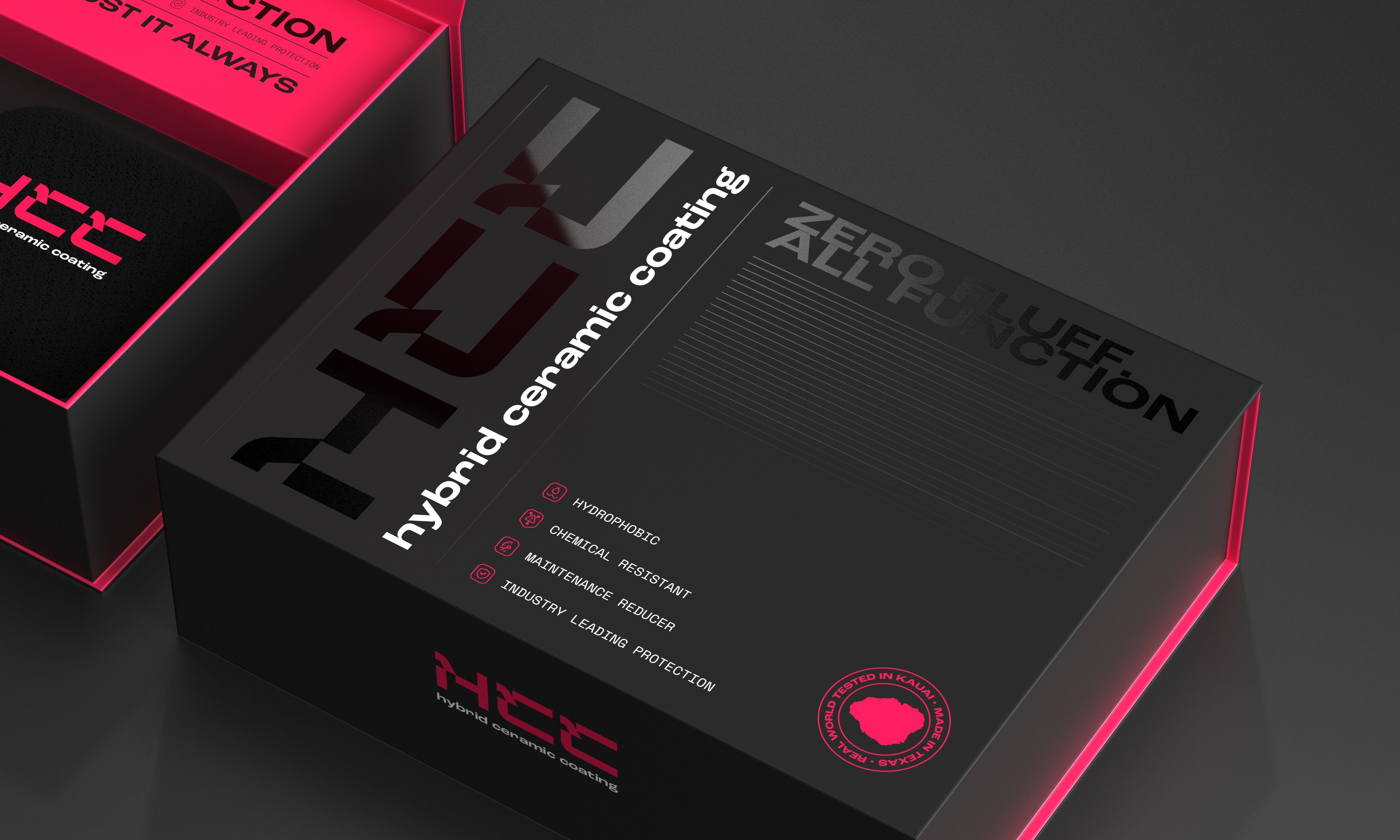
For a suitable new coating project, HCC Hybrid Ceramic Coating is Undrdog's flagship all-surface option, available to detailers and DIYers. Its intended uses include cars, boats, planes, and bicycles, subject to the actual surface and application requirements; its multi-year positioning is conditional on preparation, exposure, use, and maintenance, not a wash-count guarantee.
We are not presenting an HCC result under either standard discussed here. Ask the same questions of our evidence that you would ask of another product: what was tested, how it was treated, and what was measured? A product description and an application photograph should not be relabeled as an independent test report.
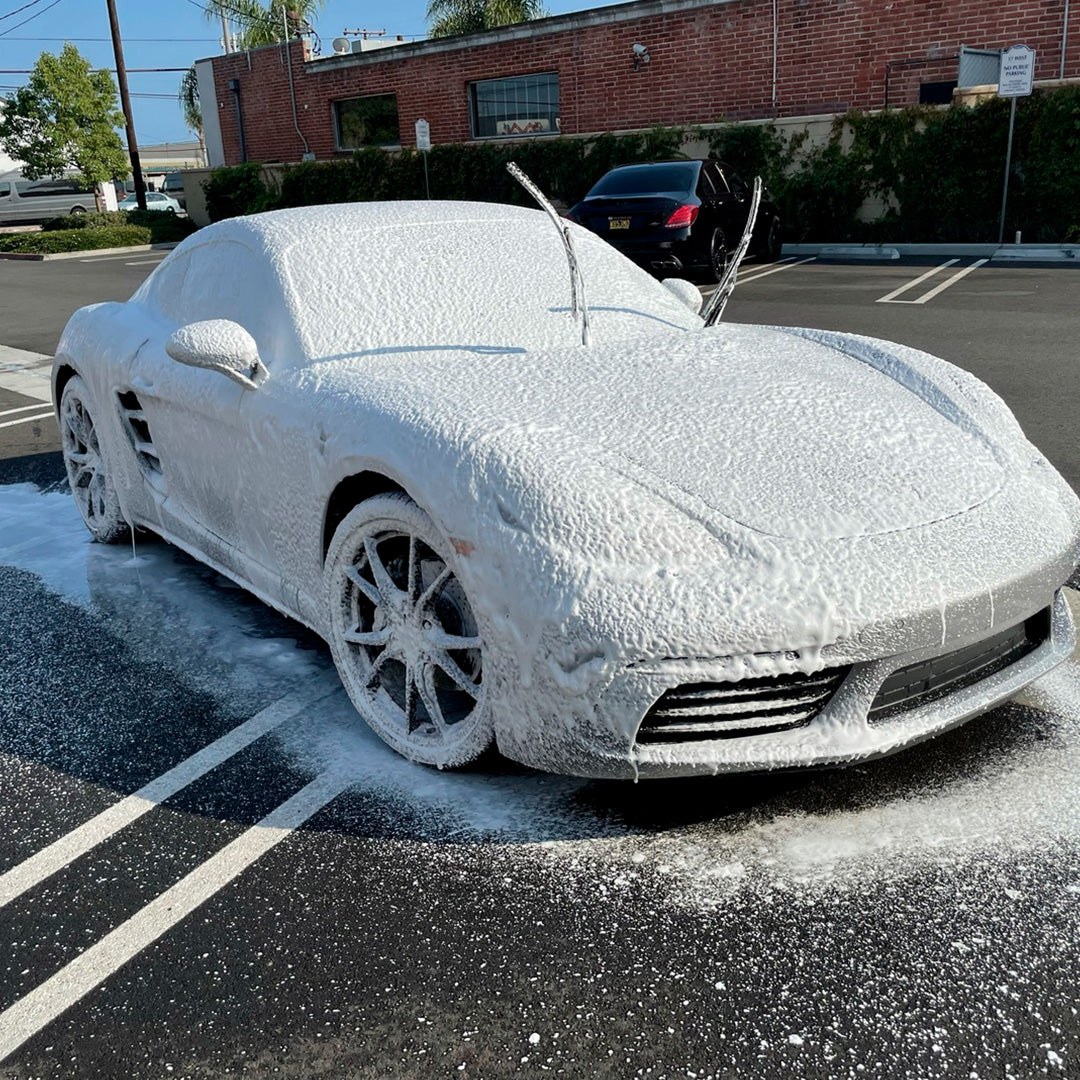
For ordinary washing rather than a new coating installation, Undrdog Soap is the task-relevant product. Follow its current directions, work in shade, do not let it dry on the surface, rinse away residue, and dry with clean microfiber towels; its safety information warns of serious eye irritation and harm if swallowed and calls for protective clothing and gloves (Soap directions and safety information).
Choose the service before the product. If you need help assessing an existing installation, a professional detailer's inspection and maintenance knowledge can be more useful than buying another coating without a diagnosis.

Choose a coating with a care plan, not just a count.
Planning a suitable new installation? Review HCC's current surface, preparation, application, and safety guidance. If your existing coating needs assessment, start there instead of automatically recoating.
Shop HCC Hybrid Ceramic CoatingFrequently asked questions
Does a higher wash count mean a ceramic coating is better?
Not by itself. Ask whether the counts describe comparable samples, washing procedures, maintenance histories, and measured outcomes. If those details differ or are missing, keep the numbers attached to their own tests instead of treating them as a universal product ranking.
What should count as one wash in a coating test?
Use the definition in the actual test procedure. Ask whether the count refers to a complete cleaning session, a machine cycle, or another repeated action. If the provider has not defined the unit, do not assume it means one wash in your own maintenance routine.
What does ISO 20566 test?
Its public abstract describes scratch-resistance assessment of organic paint coatings using a laboratory car-wash simulation with a rotating brush and synthetic dirt. That scope is not, by itself, a durability result or calendar-life certification for a retail ceramic coating (ISO 20566:2020).
Is ASTM D2486 a ceramic coating car-wash test?
Its published scope concerns wall-paint erosion caused by scrubbing. It includes cycles-to-failure and reference-paint-ratio reporting methods. If someone applies an adapted procedure to a different material, ask for the adaptation and its justification rather than assuming the standard establishes real-world automotive durability (ASTM D2486-17(2025)).
Does a sample passing at the final wash reveal its failure point?
No. A report that testing ended while the sample still met a criterion describes the last observation, not necessarily eventual failure. Ask why testing stopped, what the criterion was, and whether a failure point was actually observed before describing the count as the coating's limit.
Should maintenance sprays be recorded during a wash test?
Yes. Ask for all additional treatments and their timing relative to the measurements. A maintained system may be relevant to your purchase, but describe that sequence accurately rather than attributing its final observation to the original coating alone.
Can I test wash resistance by repeatedly scrubbing my hood?
Do not use your finished vehicle as an improvised laboratory panel. Keep normal maintenance records and follow the coating and vehicle-care instructions instead. If performance concerns arise, share the history and affected-area photos with your installer or product support before trying an aggressive treatment.
Does Undrdog publish an HCC wash-count result in this guide?
No. This guide explains how to read wash-count evidence and keep a useful care log; it does not present a new HCC test, standards certification, comparative ranking, or guaranteed wash total. Evaluate a suitable coating project using current product instructions and the evidence actually available.


Leave a comment
This site is protected by hCaptcha and the hCaptcha Privacy Policy and Terms of Service apply.