

A detailer’s certification and permission to install a particular coating answer different questions. To judge either, identify who issued it, what the person had to demonstrate, and whether it applies to the work you are buying. For a concrete example, the International Detailing Association distinguishes its written-exam Certified Detailer credential from the additional hands-on assessment required for Certified Detailer, Skills Validated (IDA certification program).
That distinction gives you a better starting point than counting logos on a shop window. A credential can be meaningful evidence, but you still need to connect it to the person preparing your vehicle, the exact coating, and the inspection and aftercare plan.
Ask what the credential is meant to establish
Start by asking the shop to name the credential precisely. “Certified” is incomplete information until you know the issuing organization and designation. Do not quietly replace a broad answer with an assumption that the person passed a hands-on coating installation test.
For this guide, use three separate questions: what knowledge was assessed, what practical work was assessed, and what product-specific permission or authorization is being claimed? Treat this as a buyer’s sorting method, not a universal description of every program. The issuer’s current requirements determine the actual scope.
| Evidence you are shown | What to clarify | What not to assume |
|---|---|---|
| Course attendance certificate | Was attendance the requirement, or was there a separate assessment? | That attending alone demonstrates a tested skill. |
| Knowledge-based certification | What subjects were tested and what designation was earned? | That the same credential necessarily includes an observed practical test. |
| Hands-on skills credential | Which tasks were assessed, by whom, and under what program? | That every specialized task or product was included. |
| Coating-brand authorization | Which exact product, person or business, and current program does it cover? | That it automatically establishes a separate third-party qualification. |
| Association membership logo | Is a distinct earned credential also being claimed? | That membership alone proves completion of an assessment. |
The point is not to dismiss training or membership. It is to give each piece of evidence the right job. You can value education, professional participation, and assessed skills without treating those descriptions as interchangeable.
Understand the IDA CD and CD-SV distinction
The IDA provides a useful published example. Its Phase I consists of ten written exams, and successful completion grants the Certified Detailer, or CD, designation. The IDA’s FAQ describes Phase I as an exam series rather than a study course (IDA program overview; IDA certification FAQ).
The published subjects include equipment, chemicals, glass, interior detailing, leather, paint correction and protection, wheels and tires, wash preparation, terminology, and safety and compliance. Each exam requires at least an 80 percent passing score (IDA Phase I requirements).
Phase II adds in-person, hands-on testing with an IDA Recognized Independent Trainer after Phase I has been completed. The published areas are Wash Bay/Prep, Interior, Exterior Correction, and Finishing Steps; successful completion earns the CD-SV designation (IDA Phase II explanation).
Those are substantive differences, not decorative letters. If practical assessment matters to your decision, ask whether the designation is CD or CD-SV and read the issuer’s explanation. There is no need to belittle the first phase to recognize the additional evidence supplied by the second.
The IDA also states that its certification events evaluate skills and are not training courses, and that attending does not guarantee certification (IDA event FAQ). That is why “I attended an event” and “I earned this credential” should remain separate statements.
Keep the inference narrow. These published requirements establish what the IDA describes for its program; they do not, by themselves, establish a manufacturer’s authorization for a particular coating. If a separate brand relationship is part of the sales pitch, verify that relationship separately.
Check coating authorization on its own terms
When a shop says it is authorized to install a coating, ask it to identify the brand program and the exact product included in your quote. Then ask where the issuing brand explains the status and how a customer can confirm it. A photograph of a certificate may be a starting point, but it does not answer every question about current scope.
Do not assume all manufacturer programs have the same requirements. Our recommendation is to ask which requirements actually apply: a course, written assessment, observed installation, prior experience, business requirements, or another condition. Let the issuer’s documents supply the answer rather than guessing from the word “professional.”
Keep product access and the work itself separate in your comparison. Ask what authorization permits, then ask how the shop will prepare, apply, inspect, and hand over your vehicle. You are looking for two understandable answers, not one credential used to close both discussions.
If a warranty or support arrangement is offered, request the actual terms for that exact product and installation. Ask who provides the promised support and what paperwork you receive. Do not let a conversation about credentials substitute for reading the agreement you are being asked to rely on.
You also do not need to turn this into an argument about whether restricted distribution is good or bad. The useful purchasing question is narrower: what evidence and service does this particular proposal provide for your particular job?

Verify the holder, designation, and current status
Ask whose name appears on the credential and what that person’s role will be on your appointment. Avoid jumping from “someone at this shop earned a credential” to “every person working on my vehicle holds the same credential.” You do not need to assume anything is wrong; you need a clear description of the team.
The IDA FAQ describes adding a successful candidate’s profile to the Certified Detailer group and updating it after Skills Validated testing. It also provides certification-maintenance requirements, including eight hours of detailing-related continuing education over a two-year period (IDA profiles and maintenance requirements).
Because the program has maintenance requirements, ask for a current confirmation rather than relying only on the date of an old photograph. Request the issuer’s verification route or contact the issuing organization when the information is unclear. Do not interpret a missing search result as proof that a credential is invalid.
Keep your own check simple: record the name, issuer, exact designation, confirmation date, and any scope limitation relevant to your job. You are not conducting an investigation into the detailer’s character. You are organizing the evidence behind a service decision.
If the shop uses a team, ask who performs preparation, who applies the product, and who conducts the final inspection. A useful answer explains the workflow and supervision without pretending that one name on a certificate tells you everything about the appointment.
Connect the credential to your vehicle and service plan
Once you understand the credential, move to the work. Ask the shop what it sees on your vehicle, what the quoted service includes, and what it does not include. A discussion of existing damage, intended finish, and agreed scope is more useful than asking for an unsupported promise of perfection.
Request examples of comparable work that the shop is permitted to share. Ask what preparation and correction were included in those examples, rather than judging only a bright reflection in a finished photograph. Do not demand private customer records or treat every photograph as evidence of the same procedure.
For a coating appointment, our recommended questions cover the preparation plan, product identity, included surfaces, installation setting, inspection, and written care instructions. If the service is mobile, use the separate mobile coating booking guide to discuss the location and conditions without assuming that mobile work is inherently better or worse.
Ask how changes in scope will be handled if inspection reveals work that was not visible in the initial inquiry. Agree on communication before the job begins. That respects both your budget and the detailer’s time instead of expecting additional correction or repair to appear inside an unchanged quote.
Finally, ask who will walk you through the result and aftercare. The coating pickup checklist covers that later stage. Credential checking happens before booking; it does not eliminate the value of a careful handover.
Compare two proposals without turning badges into a score
Consider a hypothetical comparison, not a description of any real shop. Shop A provides a current skills credential but gives you an unclear service scope. Shop B documents a specific product authorization and a detailed process, but you have not yet confirmed whether it claims any separate hands-on credential.
The right next step is not to award a winner based on one badge. Ask Shop A to explain the work included and ask Shop B to clarify its assessment evidence and the experience relevant to the job. Evaluate the answers you receive rather than inventing strengths or weaknesses to complete the comparison.
Likewise, do not decide that a detailer without a particular credential has no skill. Ask for the evidence they can provide: relevant experience, a clear process, appropriate product knowledge, and a defined inspection and support plan. A credential can add useful information without becoming the only possible information.
Professional preparation, correction, careful application, and communication are work worth evaluating and paying for. Open product availability does not make that labor unnecessary. The question is whether the proposal explains the value you are purchasing and keeps its claims within what the evidence supports.
Use a short credential-checking message before booking
You can ask for clarification without making the exchange adversarial. Send a short message that distinguishes the credential from the service scope:
Before I book, could you confirm the exact certification or authorization you are referring to, who issued it, whose name it is under, and how I can check its current status? Please also identify the coating in the quote, who handles preparation and final inspection, and what written application and aftercare information I will receive.
This is a suggested message, not a customer quote. Adjust it to what the shop actually claims; there is no reason to request proof of a designation it never advertised. Ask for clarification once, give the business a reasonable chance to respond, and base your decision on the information available.
If an answer remains unclear, narrow the question. “Which designation did you earn?” is easier to answer than “Are you really certified?” A precise question is also more likely to produce something you can verify.
Frequently asked questions
Is IDA certification the same as coating-brand authorization?
Do not treat them as interchangeable. The IDA publishes requirements for its detailing credentials; verify any separate coating-brand permission with the brand that issues it.
What is the difference between IDA CD and CD-SV?
CD follows successful completion of the IDA’s Phase I written exams. CD-SV adds the Phase II hands-on assessment after Phase I has been completed (IDA program requirements).
Does attending an IDA certification event guarantee certification?
No. The IDA states that its certification events evaluate skills and that attendance does not guarantee certification. Ask what designation was actually earned (IDA event guidance).
Does an association membership logo prove hands-on testing?
Do not infer an assessment from a membership logo alone. Ask whether a separate earned credential is being claimed and check that credential’s published requirements.
Should I ask who will work on my vehicle?
Yes. Ask how the credential holder relates to the appointment and who handles preparation, application, supervision, and inspection. Do not assume everyone at a business holds the same credential.
Is an old certificate photo enough to verify current status?
Ask for current confirmation through the issuer’s available process, especially when the program has maintenance requirements. A missing search result alone is not proof that the credential is invalid.
Should I reject a detailer without one particular credential?
Not automatically. Review the evidence relevant to your job, including experience, process, product knowledge, scope, and inspection. A specific credential is one input, not a substitute for the entire evaluation.
Can a DIYer buy the same coating that a detailer buys?
With Undrdog’s HCC Hybrid Ceramic Coating, yes. We sell it to professional detailers and DIYers without a certification purchase gate. Access to the bottle does not replace preparation, correct application, or the value of professional labor.
How Undrdog does it
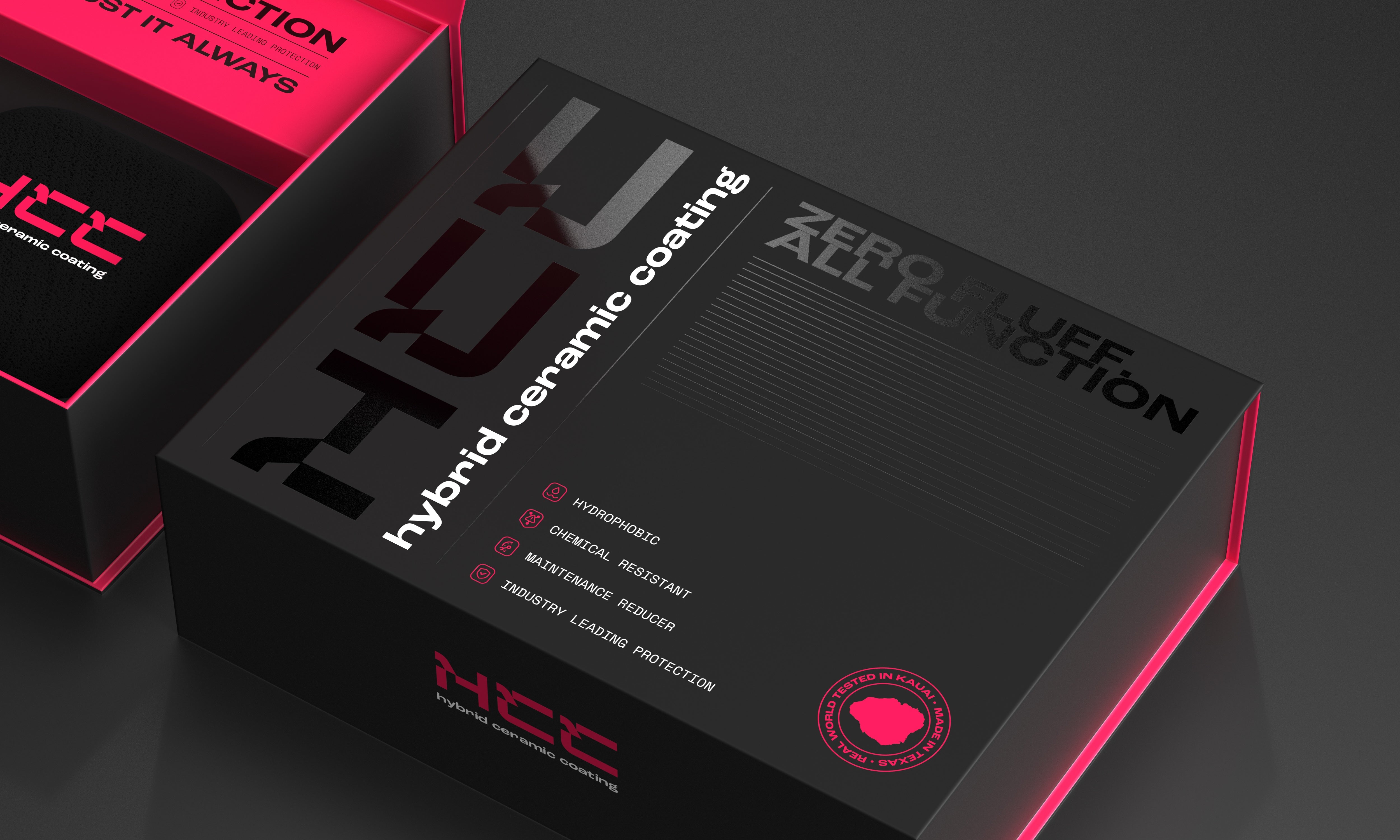
HCC Hybrid Ceramic Coating is Undrdog’s all-surface flagship for cars, boats, planes, and bicycles. We sell the same product to detailers and DIYers without requiring a certification class to purchase it; that is a product-access policy, not a claim that every buyer already has installation skills (HCC product information).
HCC’s multi-year protection depends on preparation, exposure, use, and maintenance. Confirm suitability and current application instructions for the exact surface, and choose professional help when the preparation or installation is beyond your equipment, setting, or experience (HCC guidance).
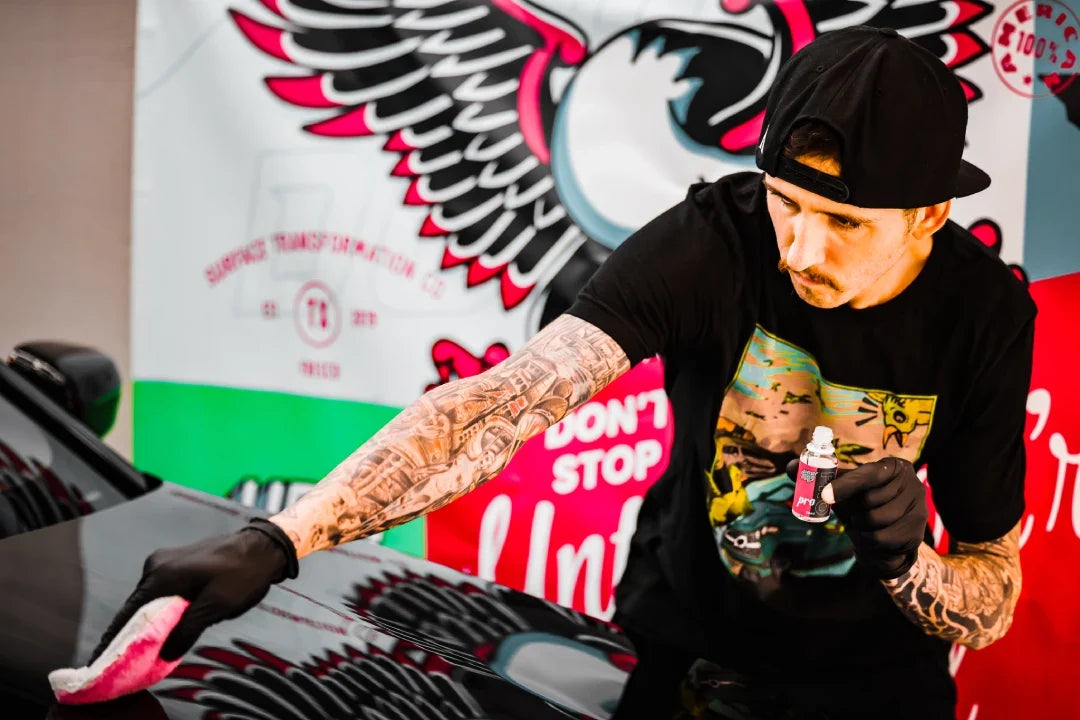
Undrdog Pro is also available to detailers and DIYers, with its own application requirements. Neither open purchase access nor an Undrdog product photograph establishes an installer’s credentials, and this article does not imply that the IDA endorses Undrdog or the people pictured here (Pro product information).

Choose the product, then plan the work.
Review HCC’s surface and application guidance, and decide whether your project calls for DIY installation or a professional detailer.
Shop HCC Hybrid Ceramic Coating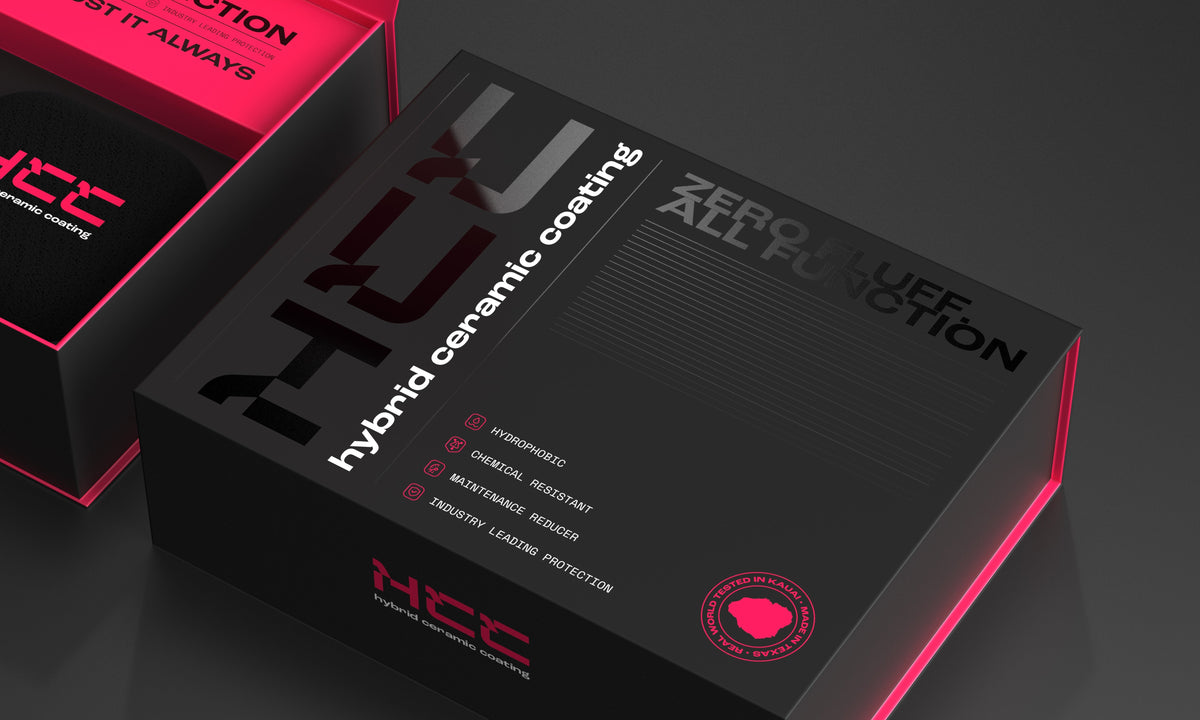

Leave a comment
This site is protected by hCaptcha and the hCaptcha Privacy Policy and Terms of Service apply.