

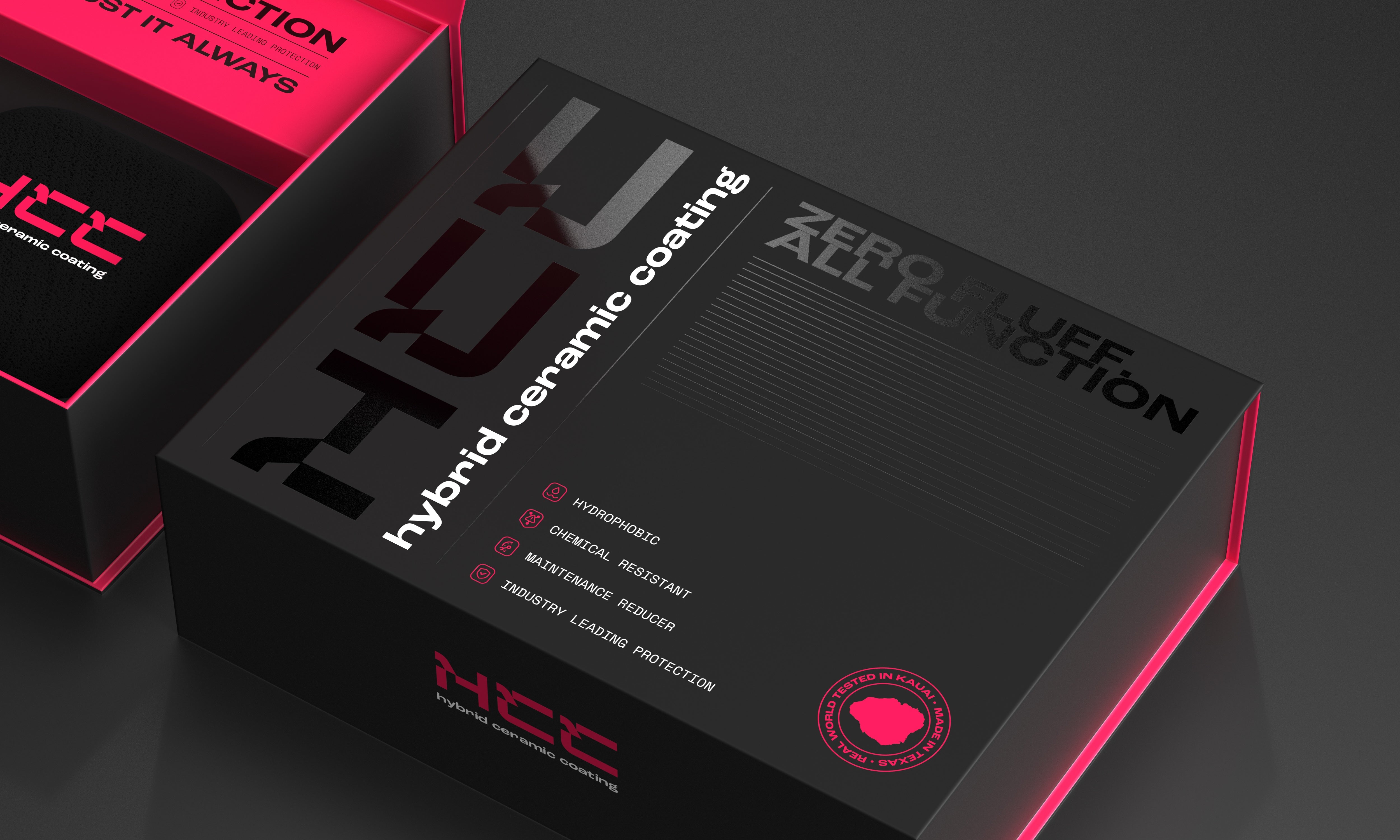
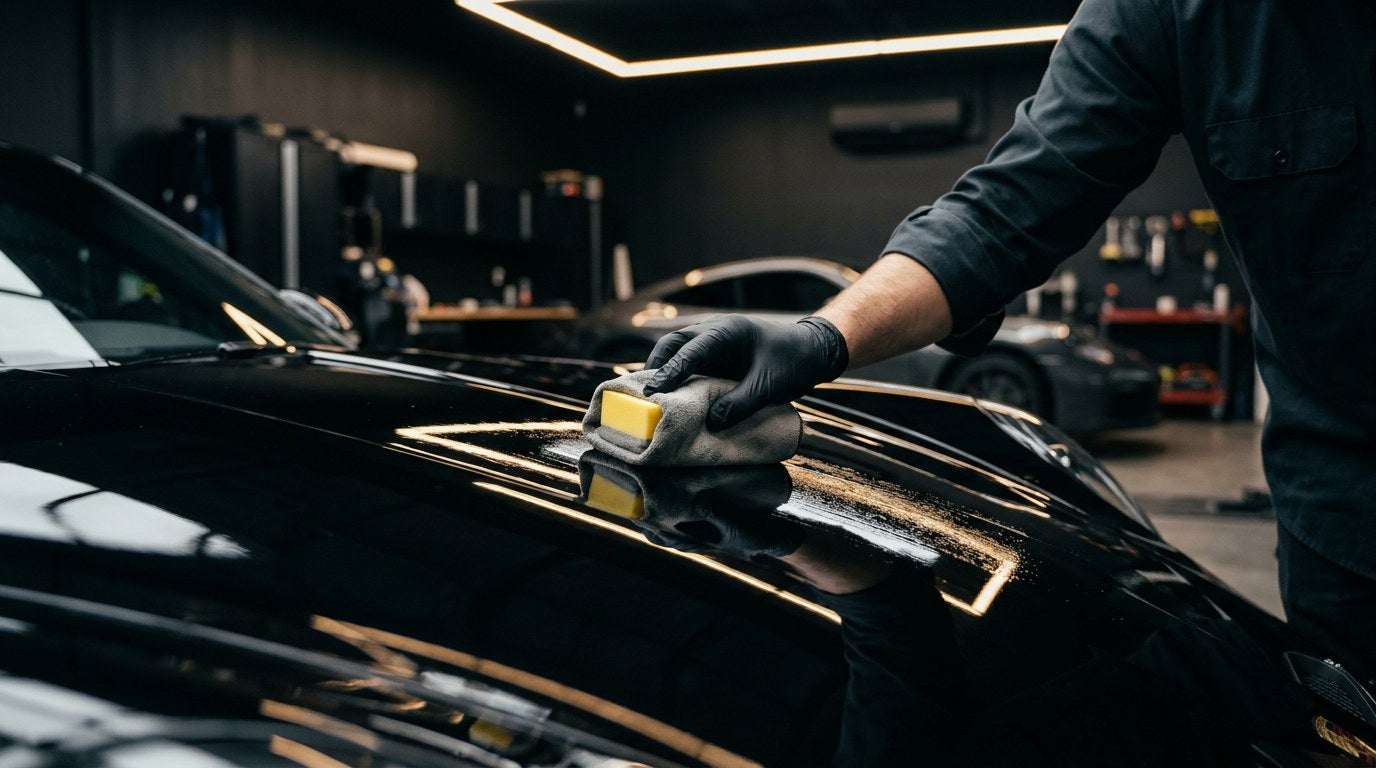
Short answer: HCC Hybrid Ceramic Coating is Undrdog's flagship — a high-solids hybrid ceramic engineered for detailers who want one bottle that handles paint, gel coat, metal, glass, PPF, vinyl, and trim across cars, boats, planes, and bikes. Undrdog Pro is the accessible, forgiving-to-install coating for DIY owners and shops that want a proven, easy-to-work ceramic on cars, trucks, RVs, and boats. HCC is the more advanced product; Pro is the more approachable one. This post breaks down where each one wins.

How to Read a Ceramic Coating Comparison in the First Place
Coating shopping is confusing because every brand rates their own products on their own scale — "5-year," "9H hardness," "graphene-infused." Before comparing HCC vs Undrdog Pro, it helps to know the actual measurable dimensions that matter.
Ceramic coating "layers" are microscopically thin. Each layer of a proper ceramic sits between 1 and 2 microns thick, per this breakdown of ceramic coating layer thickness. A human hair is about 70 microns. Even three layers of a modern ceramic are still thinner than a human hair. What that means practically: you're not building up "thickness" the way you would with paint or PPF. You're building up chemical density and crosslink completeness, which is where the differences between coatings actually live.
The dimensions that matter when comparing two ceramics from the same brand:
- Chemistry — hybrid resin vs pure siloxane, high-solids vs standard-solids.
- pH and chemical resistance — the actual range where the film survives contact with cleaners, road salt, and industrial fallout.
- Application window — how long you have to wipe, how forgiving the flash time is, whether the applicator locks up.
- Surface compatibility — paint only, or paint plus glass, metal, gel coat, vinyl, PPF, plastic trim.
- Thermal tolerance — the real-world temperature ceiling before the film starts to break down.
- Skill required to install — new-to-DIY vs experienced installer.
Both HCC and Undrdog Pro are actual crosslinked ceramic films, not "spray ceramics" or SiO2-boosted sealants. Our post on ceramic spray vs ceramic coating covers why that distinction matters.
HCC in One Paragraph
HCC is Undrdog's flagship high-solids hybrid ceramic. It uses a proprietary hybrid resin matrix that crosslinks into a dense, chemically resistant film with a pH resistance range of 2–13 and thermal tolerance up to 1,200°F on metal. Each layer runs approximately 1–1.5 microns thick. It's paint-safe, gel-coat-safe, metal-safe, glass-safe, PPF-safe, vinyl-safe, and trim-safe — the same bottle handles the whole car, boat, or plane. Application window at ~70°F and 30–60% humidity is 5–10 minutes; it does not crystallize in the applicator, and it flashes cleanly without high spots when installed correctly.
Undrdog Pro in One Paragraph
Undrdog Pro is the ceramic coating that put Undrdog on the map. It's a proven, forgiving-to-install ceramic that levels well ("levels like butter" is how installers commonly describe it), gives strong hydrophobic and gloss results, and works across cars, trucks, RVs, and boats. It's the coating you reach for when you want a straightforward DIY install without the tighter application discipline that a top-tier professional coating usually demands.

HCC vs Undrdog Pro: The Full Comparison
| Dimension | HCC Hybrid Ceramic | Undrdog Pro |
|---|---|---|
| Category | Flagship high-solids hybrid ceramic | Approachable full-strength ceramic |
| Best for | Detailers & enthusiasts who want the top-tier ceramic in the Undrdog line | DIY owners & shops wanting a straightforward install |
| Surfaces | Paint, gel coat, metal, glass, PPF, vinyl, plastic trim | Cars, trucks, RVs, boats (paint and gel coat) |
| Layer thickness | ~1–1.5 microns per layer | Similar range typical of full ceramic films |
| pH resistance | 2–13 | Broad pH tolerance typical of ceramic film |
| Thermal tolerance | Up to 1,200°F on metal | Automotive service temperatures |
| Application window | 5–10 minutes at 70°F / 30–60% RH; wider in dry environments | Forgiving, "levels like butter" |
| Pad behavior | Does not crystallize in the applicator; wide flash window | Levels easily during wipe-off |
| Dust-free / tack-free | ~4 hours | Similar range typical of ceramic coatings |
| Full chemical resistance | 5–7 days | Standard multi-day cure |
| Difficulty | Intermediate to advanced — rewards patience | Beginner-friendly |
| Wax/sealant comparison | Multiple-year ceramic film | Multi-year ceramic film |
Both are real ceramic coatings, not spray-boosted sealants. The chart above lists what's publicly documented for each — HCC's technical spec sheet is more detailed because it's the flagship, but both products are full ceramic films with real crosslink chemistry.
Where HCC Wins
1. Multi-Surface Range
HCC's supported surface list — paint, gel coat, metal, glass, PPF, vinyl, plastic trim — is meaningfully broader. If you have a car, a boat, a motorcycle, and a bike in the garage, HCC is the single bottle that covers everything from the paint on the sedan to the gel coat on the wakeboat to the anodized rims on the mountain bike.
2. Chemical & Thermal Extremes
The published pH range of 2–13 and thermal tolerance up to 1,200°F on metal means HCC handles brake rotors, exhaust tips, engine bays, boat gel line, and industrial vehicles where a standard ceramic might soften or degrade over time. If you're coating brake calipers, exhaust surrounds, or a fire truck, HCC is the right pick.
3. Application Control for Detailers
The wide flash window, no-pad-crystallize behavior, and pull-to-surface (rather than pull-to-pad) chemistry means an experienced installer can push HCC harder — work larger panels at once, extend the flash for a tighter film, and get a smoother wipe. That's why detailers running high volume tend to prefer HCC.
4. Density and Longevity
The high-solids formulation means more resin per installation. HCC targets a longer functional lifespan than a standard ceramic, particularly in extreme climates. It was tested in Hawaii, Texas, Florida, Michigan, and New York precisely to validate that behavior across UV, heat, cold, and salt exposure.
Where Undrdog Pro Wins
1. Approachability
Undrdog Pro is the coating you hand to someone doing their first ceramic install without watching them nervously for high spots. It levels well during the wipe-off phase, which is the single hardest technique for a new applicator to nail. If "levels like butter" sells you on a product, that's the value here.
2. Proven on the Vehicles You Own
Cars, trucks, RVs, and boats — the four categories where Undrdog Pro has years of documented DIY installs behind it. If you have a daily driver and a travel trailer, Pro has a track record on both.
3. Ownership Cost
Pro is positioned as the accessible, quality-first ceramic. For a first-time DIY installer who wants to try ceramic coating without committing to the flagship spec, Pro is the "try it, prove it to yourself" pick.
4. Available as Part of Kits
Pro shows up in bundled kits with accessories, prep chemicals, and instructions — a good format for a first install.
How to Pick: The Real Decision Framework
Pick HCC if any of these are true:
- You want the flagship, top-of-line Undrdog ceramic.
- You're coating multiple surface types (paint + gel coat + glass + wheels).
- You're a professional detailer or high-volume shop.
- The vehicle is subject to extreme heat, chemicals, or industrial fallout.
- You've applied ceramic before and are comfortable managing a wider technique window.
- You want a single bottle that covers cars, boats, planes, and bicycles.
Pick Undrdog Pro if any of these are true:
- This is your first DIY ceramic install.
- You want the most forgiving wipe-off experience.
- You're coating a car, truck, RV, or boat and don't need cross-surface versatility.
- You're buying a bundled kit with accessories.
If your vehicle is a boat and you're not sure between HCC and the dedicated marine line, our comparison of Undrdog Marine vs Marine Plus covers the below-waterline case.

What Doesn't Actually Change Between Them
A few things are consistent across both products — because they're the same brand's core chemistry philosophy:
- Real ceramic film, not an SiO2-boosted sealant. Both create a crosslinked layer that bonds to the clear coat rather than a top-layer that washes away.
- Prep matters more than the bottle you pick. Both HCC and Pro fail early if applied over contaminated, unpolished, or oil-contaminated paint. Read our 6-step pre-ceramic paint prep before either install.
- Application technique matters. Thin, even, in-shade, buffed within the flash window. Our post on applying ceramic coating without streaks or high spots covers the technique that works for both.
- Maintenance keeps them alive. A ceramic-safe pH-balanced soap and periodic top-ups with a hydrophobic booster extend the life of any ceramic film.
Pairing Either Coating With Undrdog Accessories
Whichever bottle you pick, the accessory stack is the same:
- The Purps for iron decon before coating.
- Undrdog Soap for ceramic-safe wash maintenance.
- Quick Detail as a hydrophobic booster every few washes to keep beading tight.
- Water Spot Remover for hard-water etching that occasionally sneaks past the coating.
Which One We'd Actually Buy
If you're reading this post because you're deciding between the two, the honest guidance:
- First-time DIY ceramic on a daily driver, and you want the safest install experience → Undrdog Pro.
- Multiple vehicles, mixed surfaces, or you want the top-tier flagship → HCC.
- Boat-only application → look at Undrdog Marine or Marine Plus first — those are tuned for gel coat and constant water exposure.
- You want one bottle for a car and a boat and a motorcycle and a bike → HCC. That multi-surface range is the whole flagship pitch.
Not sure which coating fits your project?
HCC is our flagship all-surface hybrid ceramic — the same bottle for cars, boats, planes, and bikes. Start there if you want the top-tier Undrdog coating.
Shop HCC →Frequently Asked Questions
Is HCC just Undrdog Pro with a new label?
No. HCC is a separate, more advanced high-solids hybrid ceramic formulation with a documented pH range of 2–13, thermal tolerance up to 1,200°F on metal, and a broader supported surface list (paint, gel coat, metal, glass, PPF, vinyl, trim). Undrdog Pro is the proven, DIY-friendly ceramic that started the line.
Can I use HCC and Undrdog Pro on the same car?
Yes, though on the same panel you'd pick one or the other. Some installers use HCC on high-heat and multi-surface parts (wheels, exhaust surrounds, glass) and Pro on the paint. In practice, most owners pick one product for the whole vehicle.
Which one lasts longer?
HCC is the higher-spec flagship and is engineered for the longer end of the real-world durability range. Both are multi-year films when applied correctly and maintained; prep and maintenance drive longevity as much as the bottle you pick.
Is Undrdog Pro discontinued?
No. Undrdog Pro is still a current product and has years of DIY track record. HCC was launched as an additional flagship rather than a replacement.
Which is easier to apply for a first-timer?
Undrdog Pro is the more forgiving install and is commonly recommended for a first ceramic coating. HCC rewards a bit more application discipline — if you're willing to work in shade, watch the flash window, and buff off within the correct timing, it delivers the flagship result.
Do I need to buy a kit or can I buy just the bottle?
Both are available as standalone bottles and in bundled kits. Kits add the prep chemicals, applicator, and microfibers most installers want on hand. If you already have prep supplies and microfibers, the bottle-only path saves money.
Can I ceramic-coat wheels with either one?
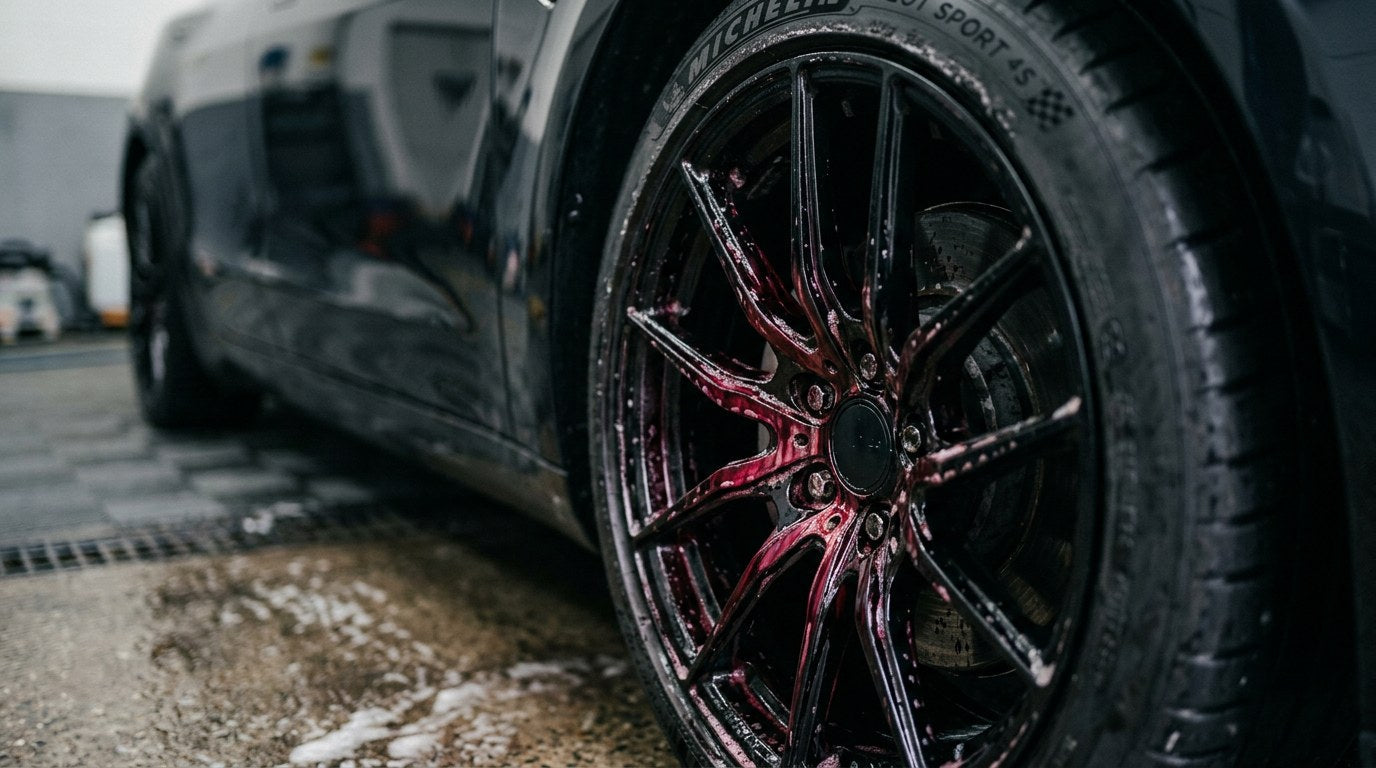
HCC is the better pick for wheels because of the higher thermal tolerance — wheels get hot fast from brake heat. Our full guide to cleaning wheels safely covers the prep step that makes wheel coating actually last.
Which one is safe on plastic trim and vinyl?
HCC lists vinyl and plastic trim as supported surfaces. That's one of the main practical advantages of the flagship — you're not switching bottles to coat the black plastic around the headlights or the vinyl on a hardtop convertible.
Do I need to polish before applying either coating?
Any real ceramic coating — HCC or Pro — is optically clear, which means it reveals whatever finish it's applied over. Polish first (or at least a proper decontamination and IPA wipe on newer paint), then coat. This is the single biggest driver of the final result on either product.
Can I top HCC or Pro with a ceramic spray booster?
Yes. A Si-based hydrophobic booster like Undrdog Quick Detail applied every few washes refreshes the beading and slickness of either coating and adds meaningful working life on top of the base ceramic layer.

6 comments
inmydreamsiholdaknlaf
lamicagenialepdflaf
Elena Ferrante ha creato un universo narrativo in cui è facile perdersi, fatto di speranze disattese e piccole vittorie quotidiane. Il primo capitolo della saga introduce i personaggi che ci accompagneranno per tutta la vita. Spesso si cerca L’amica geniale pdf online per la comodità di avere un capolavoro del genere sempre a portata di mano, magari da leggere durante il tragitto casa-lavoro. La comodità del digitale permette di apprezzare ancora di più la densità della trama, potendo tornare indietro facilmente per rileggere i passaggi chiave che definiscono il rapporto simbiotico e talvolta distruttivo tra le due ragazze. Un libro che scuote le coscienze e rimane impresso nella memoria. https://lamicagenialepdf.site/ L’amica Geniale Libro Pdf Download Gratis
unavitanuovapdflaf
Il viaggio on the road è un’esperienza che cambia chi la vive, e questo romanzo ne cattura perfettamente lo spirito. Tra imprevisti e scoperte, i protagonisti crescono e si evolvono. Per chi ama la tecnologia, trovare una vita nuova pdf è il modo più semplice per leggere questa storia. La versione digitale ti permette di portare il libro con te in ogni spostamento, rendendo ogni attesa meno noiosa. Lasciati conquistare dalla prosa di Volo e scopri come un semplice viaggio possa diventare la metafora perfetta di una rinascita interiore, capace di dare un nuovo senso a tutto. https://unavitanuovapdf.site/ Una Vita Nuova Volo
thekissingboothpdflaf
A fun, flirty, and fantastic read awaits you. The Kissing Booth focuses on the bond between Elle and Lee, and how Noah complicates everything. The writing is fresh and energetic, reflecting the youth of the author when she wrote it. Fans often look for the PDF version to read the bonus content or sequels that follow. It is a story that proves love is worth fighting for, even if it causes a little trouble along the way. Prepare to fall in love with the Flynn boys just like Elle did. https://thekissingboothpdf.site/ The Kissing Booth Pdf File
nessunotornaindietlaf
L’eredità letteraria di Alba de Céspedes è racchiusa in pagine che vibrano di vita vera e sentimenti autentici. In questo romanzo, il lettore viene trasportato in un mondo fatto di speranze giovanili che si scontrano con la durezza della vita adulta. La diversità delle protagoniste permette a chiunque di trovare un personaggio in cui rispecchiarsi o con cui empatizzare. La fruizione digitale dei testi classici ha reso più semplice avvicinarsi a capolavori del genere; non è raro infatti che si cerchi “Nessuno torna indietro” in versione pdf per poter godere della lettura su tablet o e-reader. Lasciati guidare dalla mano esperta dell’autrice attraverso i vicoli di Roma e i meandri dell’animo umano, in un viaggio letterario che non ti lascerà indifferente. https://nessunotornaindietropdf.site/ La Medusa Degli Italiani Alba De Cespedes-Nessuno Torna Indietro 1952
Leave a comment
This site is protected by hCaptcha and the hCaptcha Privacy Policy and Terms of Service apply.