
Short answer: paint protection film (PPF) is a thick clear urethane film that physically shields paint from rock chips and light scratches, while ceramic coating is a chemical bond that adds gloss, water repellency, and chemical/UV resistance. They protect against different threats and aren't substitutes for each other — on high-impact zones like the front bumper, hood, and mirrors, PPF wins; everywhere else, ceramic gives you the biggest gloss and easy-clean upgrade for the money. Most enthusiasts end up combining them.

What Each Product Actually Is
Paint Protection Film (PPF)
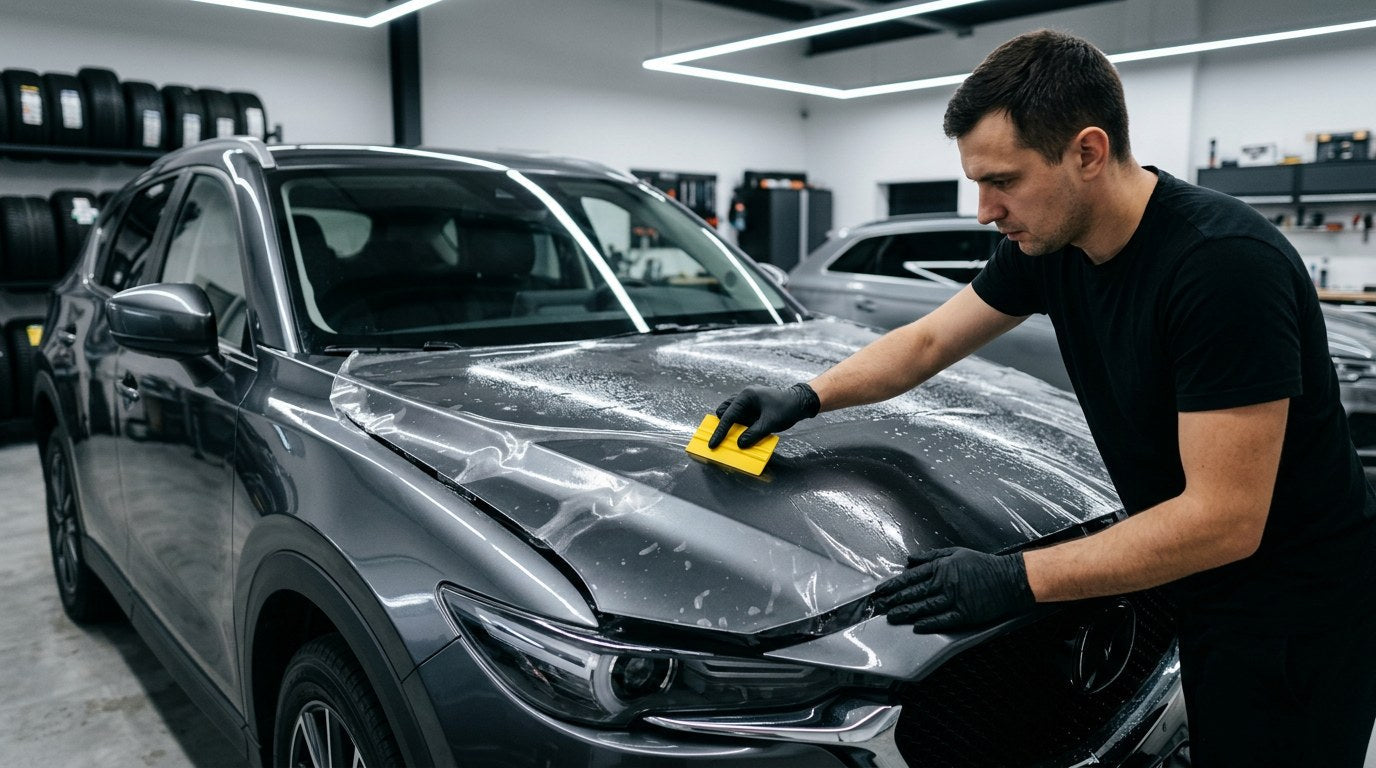
PPF is a clear thermoplastic polyurethane (TPU) film about 6–10 mils thick (roughly 0.15–0.25 mm) applied over the painted surface. Modern PPFs are "self-healing" — when the film gets a light surface scratch or swirl mark, heat from the sun or hot water causes the top layer to flow back to smooth. Underneath the topcoat is the elastomeric layer that absorbs rock impacts, and beneath that is the pressure-sensitive adhesive holding it to the paint.
Because PPF is a physical film, it takes the hit — a stone that would have chipped your paint instead scuffs the film. Most quality PPF brands come with a 10-year warranty against yellowing, cracking, and delamination.
Ceramic Coating
Ceramic coating is a liquid silica- or silicon-carbide-based chemical that bonds to the clear coat and cures into a hard, glass-like layer typically 1–5 microns thick. It's optically clear and enhances gloss, resists chemicals (bird droppings, tree sap, road salt), sheds water hydrophobically, and slows UV oxidation. It does not stop rock chips, and it does not fully prevent swirl marks — it just makes them less likely to occur during wash.
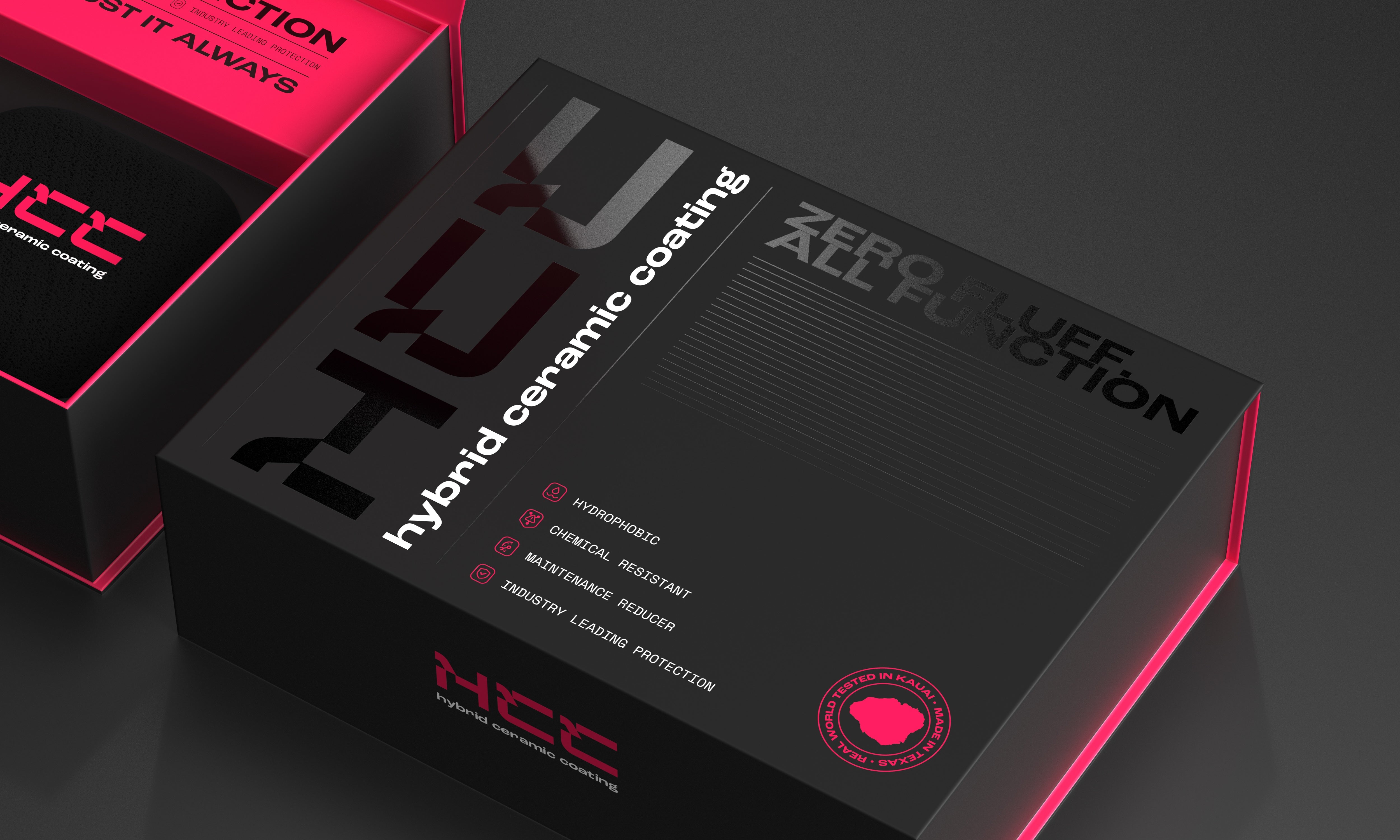
Our flagship HCC Hybrid Ceramic Coating is a hybrid SiO2-plus-graphene formulation that gives you multi-year gloss, hydrophobicity, and chemical resistance across cars, boats, aircraft, and bicycles.
What PPF Protects Against (That Ceramic Can't)

- Rock chips and stone impacts — the number-one reason people install PPF, especially on the front bumper, hood leading edge, mirrors, and A-pillars.
- Light scratches and scuffs — from bags, keys brushing the door, luggage in the trunk area, or kids' feet on the rocker panels.
- Insect etching resistance — bug guts can etch clear coat if left overnight; on PPF, they wipe off the film top layer instead.
- Track-day and driving-school damage — debris kicked up by other cars.
- Off-road and gravel-road brush — branches, gravel, and trail debris.
Ceramic coating gives you approximately zero of this. It's a chemical layer measured in microns. A rock traveling at 50 mph doesn't care about a 3-micron ceramic film.
What Ceramic Coating Protects Against (That PPF Can't Do Well)

- Hydrophobicity and water beading — makes water sheet off cleanly, minimizing water spots.
- Chemical etching — from bird droppings, tree sap, honeydew, industrial fallout, and road salt. Our tree sap and honeydew guide covers exactly why chemical resistance matters in tree country.
- UV oxidation — slows the sun-driven fading and chalking that turns single-stage and clear-coat paints dull.
- Gloss enhancement — ceramic adds visible optical depth. PPF is neutral to slightly gloss-adding.
- Ease of cleaning — dirt and dust release with less friction, meaning fewer swirl marks over time.
- Whole-vehicle coverage — ceramic coats every painted panel plus wheels, glass, trim, and interior at a fraction of what full-vehicle PPF costs.
PPF can be hydrophobic on its top layer (some brands do this well), but full-vehicle PPF is prohibitively expensive for most people, and PPF doesn't add the same optical gloss punch.
PPF vs Ceramic Coating: Side-by-Side Comparison
| Category | PPF | Ceramic Coating |
|---|---|---|
| Thickness | 6–10 mils (150–250 µm) | 1–5 µm |
| Rock chip protection | Strong — primary purpose | Effectively none |
| Scratch resistance | Self-healing top layer | Reduces marring during wash, not impact-scratch resistant |
| Chemical/etching resistance | Very good | Excellent (bird droppings, sap, salt) |
| UV protection | Good under film | Very good across coated area |
| Hydrophobicity | Moderate (varies by brand) | Strong |
| Gloss enhancement | Neutral | Adds visible depth and gloss |
| Cost (installed) | $600–$8,000+ | $700–$6,000+ pro; DIY under $150 |
| Typical lifespan | 5–12 years | 2–10 years |
| DIY friendly? | Very difficult — pro install strongly recommended | Yes, with proper prep |
| Removable? | Yes — heat gun + slow peel | Requires machine polishing to remove |
For a deeper dive into the numbers behind these tiers, DetailFlowPro's 2026 breakdown is a useful reference on labor and film costs.
Cost: Where the Money Actually Goes
PPF Pricing Tiers (2026, U.S.)
- Partial front (front bumper, partial hood, mirrors, headlights): $600–$1,500
- Full front (full hood, fenders, bumper, mirrors, A-pillars): $1,500–$3,500
- Full-body PPF: $5,000–$8,000+ on a standard sedan or SUV; more on exotics
The variance is driven by film brand (SunTek, XPEL, 3M, STEK, LLumar), installer skill and shop overhead, and how much film is used per panel. 70–80% of the cost is labor because PPF is genuinely hard to install cleanly.
Ceramic Coating Pricing Tiers
- DIY (bottle only): $50–$150 for a quality coating like HCC, plus prep supplies
- Entry pro coating (single-stage polish, 2–3 year rating): $700–$1,500
- Premium pro coating (multi-stage correction, 5-year rating): $1,500–$3,000
- Flagship pro coating (heavy correction, 10-year system): $3,000–$6,000+
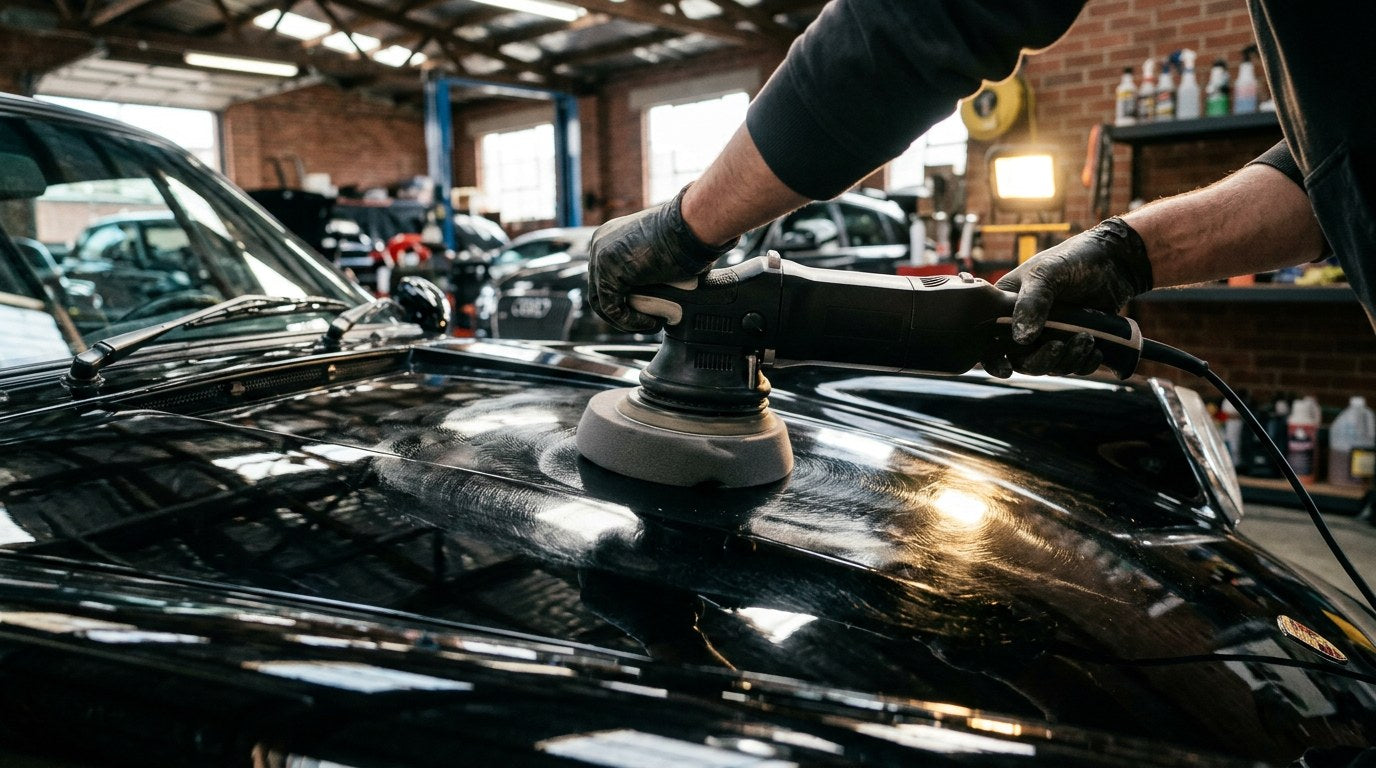
On the pro side, most of that cost is paint correction labor before the coating goes on — typically 8–12 hours of polishing to remove existing swirls and scratches. Our swirl-mark removal guide and pre-ceramic prep guide walk through what that prep work actually looks like.
Which One Should You Get?
Choose PPF if:
- You drive on highways, gravel roads, or behind trucks that kick up stones.
- The car is expensive or has soft OEM paint that shows every mark.
- You plan to keep the car long-term or you want to preserve resale value.
- You've already lost sleep over the first rock chip on your last car.
Choose Ceramic Coating if:
- You want deeper gloss and easy-cleaning behavior across the whole car.
- Your priorities are UV, chemical resistance (bird droppings, sap, salt), and water-spot prevention.
- You want the biggest visual and maintenance improvement per dollar spent.
- You wash your own car and want washes to take half the time.
Choose Both (Combo Package) if:
- You want long-term protection against both physical and chemical threats.
- You're willing to invest in a "buy once" solution that maintains showroom-level condition.
- You're driving a vehicle where the payoff at resale justifies the outlay.
PPF on the high-impact zones (partial or full front) plus a full-vehicle ceramic coating is now the standard enthusiast approach. Ceramic applied over PPF also protects the film itself — it slows PPF yellowing, adds hydrophobicity so debris doesn't stick, and lets you clean the whole vehicle with the same wash technique.
Can You Layer Ceramic Over PPF? Yes.
Applying a ceramic coating over PPF is not only allowed by most manufacturers — it's recommended. Benefits:
- Ceramic's hydrophobic behavior reduces water-mineral staining on the film.
- UV blocking helps slow yellowing on the film's top layer.
- Dirt releases more easily during wash, meaning less friction on the film.
- Gloss uniformity across coated paint and coated PPF, so the eye doesn't see a transition.
Application prep is the same as coating painted panels: decontaminated, oil-free, and completely dry film surface. Use the same coating you'd use on paint — HCC bonds well to PPF, glass, and paint alike.
Common Myths to Ignore
"Ceramic Coating Makes My Car Rock-Chip Proof"
It does not. A ceramic coating measured in microns cannot stop a stone. If a shop tells you their coating protects against rock chips, walk out.
"PPF Yellows Fast"
Old-generation vinyl films did. Modern polyurethane PPFs from major brands are rated 10 years for yellowing resistance under normal conditions. Cheap knockoff film still yellows.
"9H Hardness Replaces PPF"
The "9H" pencil-hardness spec is a coating industry marketing term. Real-world impact resistance from a micron-thin coating is not the same as physical impact resistance from a film measured in mils. Don't let a hardness number convince you the coating substitutes for PPF.
"PPF Ruins Resale by Removing the Original Paint"
Quality PPF from a professional installer removes cleanly and does not damage OEM clear coat, provided it's removed before the film exceeds its rated lifespan. Old, brittle film is what damages paint on removal.
Aftercare: Keeping Both Protection Layers Working
The wash technique that keeps ceramic coating alive is the same technique that keeps PPF looking new. Two-bucket wash, plush wash mitt, top-down, no automatic tunnel washes. Skip harsh degreasers and alkaline all-purpose cleaners on PPF — they can dry the film and accelerate yellowing.
Between full washes, our Rinseless Wash Concentrate is safe on ceramic-coated paint, PPF, and vinyl wraps. A quick pass of Undrdog Quick Detail after each wash keeps hydrophobicity fresh on both surfaces.
Get the gloss and easy-clean side of the equation for under $150.
HCC is our flagship hybrid ceramic. Apply it yourself over paint, glass, wheels, and even over PPF for full-vehicle hydrophobicity and multi-year gloss.
Shop HCC →Frequently Asked Questions
Is PPF or ceramic coating better for a new car?
It depends on what you want protected. If your top concern is rock chips and physical damage on the front of the car, PPF wins. If your top concern is gloss, easy cleaning, UV, and chemical etching across the whole car, ceramic wins. Most people combine PPF on the front end with ceramic everywhere else.
Can I put ceramic coating over paint protection film?
Yes. Ceramic over PPF is a common and recommended combo. The ceramic adds hydrophobicity, slows PPF yellowing, and gives you a uniform easy-clean surface across paint and film.
How long does PPF last compared to ceramic coating?
Modern PPF is rated 5–12 years depending on brand and tier. Ceramic coatings range from 2 years for basic sprays to 10 years for flagship pro-installed systems. Both need proper wash care to hit their full rated lifespan.
Will ceramic coating fix existing scratches or chips?
No. Ceramic is optically clear and reveals whatever's underneath. Paint correction (compound and polish) removes swirl marks and light scratches before coating. Rock chips need touch-up paint or PPF over them — ceramic will not fill them.
Is DIY ceramic coating actually worth it?
Yes, if you're willing to do the prep. A quality DIY ceramic like HCC applied to a properly decontaminated and IPA-wiped surface gives you 90% of pro coating performance at 10–20% of the cost. The gap is in the paint correction step, not the coating chemistry.
Can I install PPF myself?
Technically yes, practically no. PPF installation involves precise cutting, wet application, squeegee technique, edge wrapping, and post-heat curing — and mistakes on a $500 sheet of film are expensive. Almost every enthusiast who tries DIY PPF ends up paying a pro to redo it.
Does ceramic coating protect against bird droppings and tree sap?
Yes — that's one of its strongest use cases. The ceramic layer resists chemical etching, meaning bird droppings or sap sit on top of the coating instead of eating into the clear coat. You still need to remove them promptly, but a coated surface gives you far more grace time before damage occurs.
Will PPF hide swirl marks that are already in my paint?
No. PPF is optically clear like ceramic — anything underneath is still visible through the film. Correct swirl marks before installing PPF, same as you would before coating.
Which is more common: full PPF or ceramic on new cars?
Ceramic is far more common because it's more affordable and covers the whole vehicle. Full-body PPF is rare outside of exotic cars and high-mileage protection builds. Partial-front PPF plus full ceramic is the most common enthusiast configuration.
Can I get PPF removed if I don't like it?
Yes. A professional installer can heat-and-peel modern PPF cleanly if it's within its rated lifespan and hasn't been abused with harsh chemicals. Old, brittle film is much harder to remove and can pull clear coat with it — which is why yearly PPF inspection matters.

Leave a comment
This site is protected by hCaptcha and the hCaptcha Privacy Policy and Terms of Service apply.