

To reduce the chance of car doors freezing shut, clean the seals according to your vehicle's instructions, dry the seals and their contact areas thoroughly, and use a seal-care product only if the vehicle maker permits it. Moisture trapped around a door seal can freeze and hold the door closed, so drying deserves as much attention as washing. If a door is already frozen, do not yank the handle or force it open; AAA Club Alliance warns that excessive force can damage seals and handles.
The useful winter habit is a short inspection and drying routine before the temperature drops, not a last-minute spray of whatever happens to be in the garage. This guide separates prevention, approved product selection, and cautious first steps when access is already blocked. It does not promise that any treatment will prevent freezing in every condition.
Is it the door seal, handle, or lock?
A frozen seal and a frozen mechanical lock are different problems. ADAC's frozen-door guidance starts by distinguishing a door that unlocks but will not open from a key that cannot enter or operate the lock. It also warns that forcing a frozen door can tear the seals or damage the door and handle. Treat those symptoms as clues, not a complete diagnosis of every modern door mechanism. ADAC frozen-door guidance.
Before trying anything, check the normal unlocking method and the cold-weather section of your owner's manual. A door that does not respond normally could have a problem other than ice. If the handle, lock, window, or power-opening mechanism behaves unexpectedly, do not keep escalating force while assuming the weather explains everything.
| What you notice | Conservative next step | What to avoid |
|---|---|---|
| The vehicle unlocks, but one door will not open normally. | Check the manual and try another door without forcing it. | Repeated hard pulls on the handle or prying the door gap. |
| A mechanical key will not enter or turn normally. | Check approved lock-deicing guidance and request help if needed. | Forcing the key or heating a modern key with a flame. |
| A seal is torn, loose, or coming away. | Stop treating it as a routine cleaning problem; arrange inspection. | Covering the damage with dressing or improvised adhesive. |
| The door opens but will not latch normally. | Keep the vehicle parked and arrange assistance. | Driving with a partly closed or unsecured door. |
| The problem returns after every wet or freezing night. | Record the symptoms and ask a qualified technician to investigate. | Adding more products without identifying the cause. |
Use the table as a decision aid, not as a repair procedure. Your vehicle's instructions take priority, especially if the door or window needs a specific sequence to open. If someone is trapped or needs urgent assistance, contact emergency services rather than working through a detailing checklist.
Prepare door seals before the first freeze
Choose a time and place where the door openings can be cleaned and dried without water freezing as you work. Have clean soft cloths, separate drying cloths, the owner's manual, and only the care products approved for the relevant surfaces. Our recommendation is to postpone the wet work if you cannot finish the drying stage safely.
Open each door normally and inspect the visible seal and the area it contacts. Look for accessible loose debris, persistent dirt, splits, sections that are coming away, or an area that seems repeatedly wet. You are not trying to pull the seal out, lift its adhesive, or expose hidden channels. If something is loose or damaged, photograph it and ask for repair advice before applying a treatment.
Next, follow the seal-specific cleaning directions, not the directions for nearby paint or interior trim. As one model-specific example, the 2014 MINI Countryman/Paceman manual says to treat rubber seals only with water or a rubber care product and prohibits silicone sprays or other silicone-containing care products. That instruction belongs to those vehicles; it illustrates why a general internet recommendation cannot replace your exact manual. MINI owner's manual, printed page 188.
For the surrounding painted opening, use a separate appropriate method. Our door-jamb cleaning guide covers controlled cleaning around trim, labels, hinges, and electrical areas. Do not turn seal preparation into a pressure-washing session with the doors open, or remove functional lubricant simply to make the opening look uniformly dry and shiny.
Work one opening at a time so you can track what has been cleaned, what still needs drying, and where you found a problem. Use a fresh cloth face when it becomes dirty. If routine gentle cleaning does not remove a deposit, stop rather than reaching automatically for a solvent or abrasive pad.

Dry the contact areas after washing
ADAC specifically recommends drying the inner door surfaces and seals after a frozen door has been opened to reduce the chance of it freezing again. AAA likewise identifies moisture around rubber door seals as the source of seal-related freezing. Those are good reasons to make drying part of your normal winter wash finish rather than waiting for the first stuck door. ADAC drying advice; AAA moisture guidance.
After washing, open each door only when it can be operated normally. Use a clean, dry, surface-appropriate cloth on accessible wet areas, including the seal contact surfaces and door edges. Check the lower accessible areas as well as the obvious upper edge. Replace a saturated cloth instead of moving the same water around the opening.
Our recommended finish is inspection rather than a timer. Look and feel for accessible remaining moisture using a clean cloth, check that the seal is seated normally, and close the door gently. There is no universal number of minutes in this guide that guarantees a dry opening across different vehicles and conditions.
Do not probe hidden passages, inject compressed air into mechanisms, or force a cloth behind a bonded seal as part of this routine. If you find standing water, recurring dampness, or a suspected drainage problem, get model-specific guidance. Removing what you can safely reach is different from diagnosing or repairing the water path.
Do the same basic inspection for other accessible openings you regularly use, while following their own instructions. A hatch, sliding door, frameless window, or powered door is not automatically serviced like a conventional framed door. Stop if its movement is restricted or unusual.
Choose seal-care products by the vehicle instructions
ADAC recommends cleaning the seals and using a suitable automotive care product before the first frost, while advising against household fats for this purpose. The MINI example above gives a narrower restriction on silicone-containing products. Together, these sources support a careful selection process, not a one-product-for-every-car recipe. ADAC prevention guidance; MINI seal restrictions.
Before buying, identify the exact model and year, and check whether replacement seals have their own care requirements. Ask the vehicle maker or seal supplier what product, if any, is appropriate. If a generic rubber-care label appears to conflict with the vehicle instructions, get clarification instead of deciding that the broader label overrides the narrower restriction.
Once suitability is confirmed, follow the product's directions for preparation, application, excess removal, and drying. Do not assume that a thicker layer is more protective. Keep the task limited to the approved surfaces rather than spraying locks, electrical parts, glass, upholstery, or adjacent trim indiscriminately.
Our recommendation is not to substitute tire dressing, household grease, a paint coating, or an unidentified lubricant for an approved seal-care product. We are not establishing compatibility for those substitutes here. An attractive gloss on a rubber part is not the goal of this job; normal seal condition and door operation are.
Also keep lock care separate. A product intended for a mechanical lock is not automatically a seal treatment, and a seal product is not automatically appropriate inside a lock. If your manual specifies a lock-care procedure, follow that exact procedure or have a technician handle it.
What to do if a car door is already frozen shut
Start with the least forceful options. Both ADAC and AAA advise against yanking and describe gentle pressure against the door as a possible way to release ice at the seal; ADAC also suggests checking another door. Use only actions compatible with your vehicle's instructions, and stop if the handle, window, or panel is resisting in an unfamiliar way. ADAC first steps; AAA first steps.
Do not hit the glass, pry the gap with a tool, or pull on a seal to try to separate it. If another door opens normally, use it only if you can enter safely and restore normal operation before driving. Getting into the cabin is not the same as resolving a door problem.
For a mechanical lock, consider only a lock-deicing product whose instructions and vehicle compatibility are clear. Keep it somewhere accessible outside the locked vehicle, such as at home, as AAA recommends. This guide does not recommend a homemade vinegar or alcohol mix, a heated key, or spraying a deicer across an unidentified finish. AAA advice on keeping deicer accessible.
We recommend skipping poured-water and improvised-heating methods. ADAC warns that boiling water can damage paint, water on cold glass can cause cracking, and a heat gun can damage the door finish; it also notes the need to dry afterward and manage refreezing water on the ground. Rather than turning those cautions into a home heating procedure, use vehicle-approved guidance or call roadside assistance. ADAC water and heat warnings.
Once the door opens, inspect for visible damage and dry accessible wet areas before closing it. Check normal latching and opening before departure. ADAC specifically says the driver's door must be openable from outside before driving so that assistance remains possible after an accident; do not treat entering through a different door as the final fix. ADAC pre-drive precaution.
Finish the wash without confusing it with seal protection
For an ordinary exterior wash in suitable conditions, Undrdog Soap is the relevant wash product. Its current instructions call for drying with clean microfiber towels and removing soap residue completely. Use it for the appropriate exterior wash according to its directions and your vehicle's finish requirements, not as a leave-on seal dressing or a deicer.
Winter planning includes the bottle, too. The current Soap safety instructions say not to store it below 32°F or above 90°F. That is a storage restriction for the product, not a recommended wash-temperature range or a guarantee that conditions just above freezing make outdoor washing sensible. Current Soap application and safety information.
A ceramic coating is not a required purchase for this task, and this guide does not establish one as an anti-freeze treatment for rubber seals. Keep any separate paint-protection project separate from door access and seal care. Once the doors work normally, our windshield frost-removal guide covers the next visibility problem without treating a glass cleaner as a deicer.

When repeated freezing needs a professional inspection
Our recommended stop points are a damaged or displaced seal, abnormal door movement, a latch that does not work normally, or moisture that repeatedly returns to the same area. Do not promise yourself that another application of dressing will correct a problem you have not identified. A technician can evaluate the door and seal in the context of the actual vehicle.
Make that visit more useful by noting which door is affected, whether it unlocks, whether the problem follows washing or rain, and what products have already been used. Photographs of visible damage or moisture can help describe the issue without disassembling anything. Ask for an explanation of the recommended repair and the care procedure afterward.
Before the next freeze, keep a simple checklist: approved cleaning completed, accessible contact areas dry, seals visibly intact, door operation normal, and emergency supplies reachable outside the vehicle. Prevention is a routine you can repeat, not a guarantee that severe weather will never cause trouble.
Frequently asked questions
What causes a car door to freeze shut?
Moisture around the rubber door seal can freeze and hold the door closed. A mechanical lock can also freeze, which is a separate problem. Check the symptoms and your owner's manual rather than assuming every door that will not open has the same cause. AAA frozen-door guidance.
Should I spray silicone on every car door seal?
No. Check the exact vehicle instructions first. The 2014 MINI Countryman/Paceman manual specifically prohibits silicone sprays and silicone-containing care products on rubber seals. Do not turn another vehicle's recommendation into a universal rule. MINI manual, page 188.
What should I do after a winter car wash?
Dry the accessible door edges, seal contact areas, and other wet areas according to the vehicle instructions before closing up. Use clean drying cloths and check normal door operation. If you cannot clean and dry safely without freezing water, change the wash setting or timing instead of rushing.
Can I pull harder if the door is frozen?
Do not yank the handle or force the door. ADAC warns that frozen seals can tear and that the handle or door can be damaged. Try only gentle, vehicle-compatible first steps, then seek assistance if normal opening cannot be restored. ADAC precautions.
Can I pour boiling water on a frozen door?
No. ADAC warns that boiling water can damage paint and that a sudden temperature change can crack cold glass. Our recommended approach avoids poured-water methods altogether and uses approved guidance or roadside assistance instead. ADAC water warnings.
Is car wash soap a seal conditioner or deicer?
No such use is established here. Use the wash product for its instructed cleaning job and follow separate vehicle-specific seal and lock guidance. Undrdog Soap's current instructions require complete residue removal and drying, not leaving it on seals for winter protection. Soap directions.
Can I drive if I entered through another door?
Entering the cabin does not finish the safety check. Restore normal door opening and secure latching before departure. ADAC specifically says the driver's door must be openable from outside before driving; if normal operation cannot be restored, arrange assistance. ADAC pre-drive guidance.
When should I stop applying products and get help?
Stop when a seal is damaged or loose, the door or latch behaves abnormally, moisture keeps returning, or you cannot identify a suitable care product. Keep the vehicle parked if a door will not close securely. Record the symptoms and ask for vehicle-specific inspection rather than attempting an improvised repair.
Plan the wash. Leave time to dry.
Use Undrdog Soap for the appropriate exterior wash, then finish with careful drying and your vehicle's separate seal-care instructions.
Shop Undrdog Soap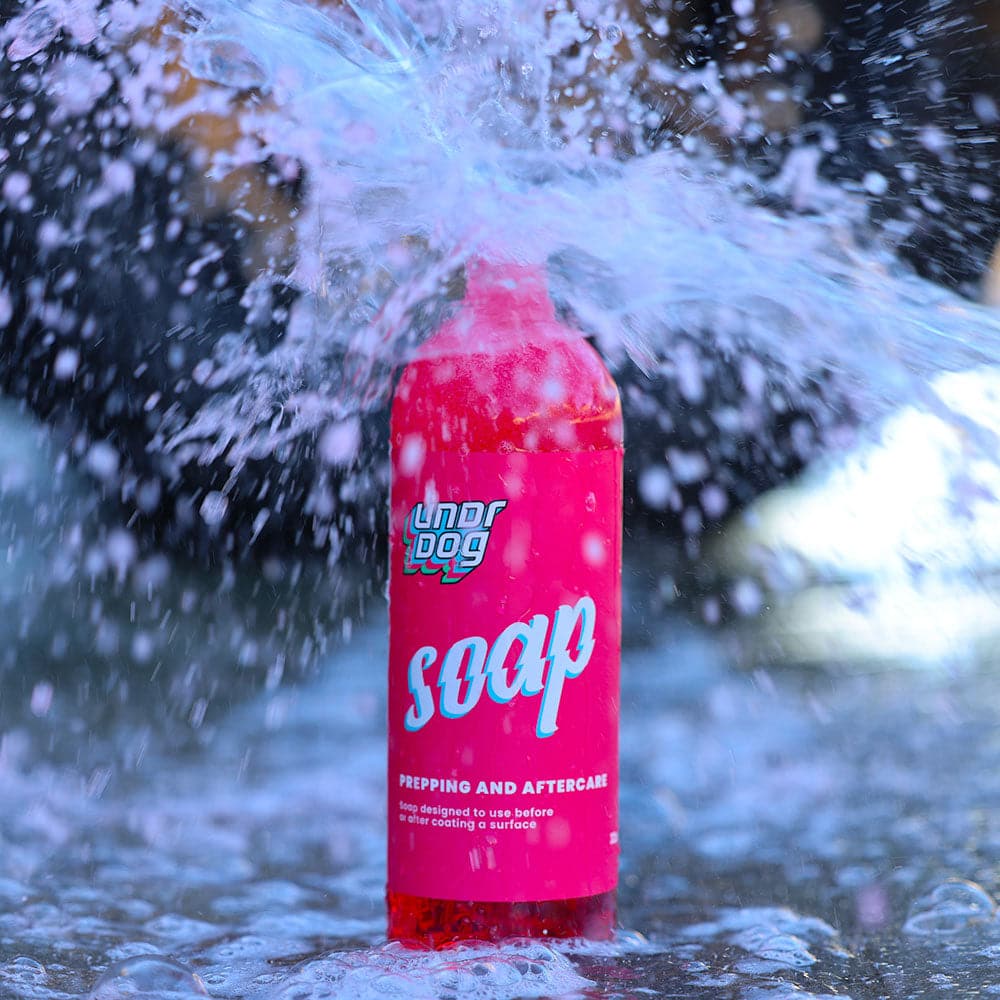

Leave a comment
This site is protected by hCaptcha and the hCaptcha Privacy Policy and Terms of Service apply.