

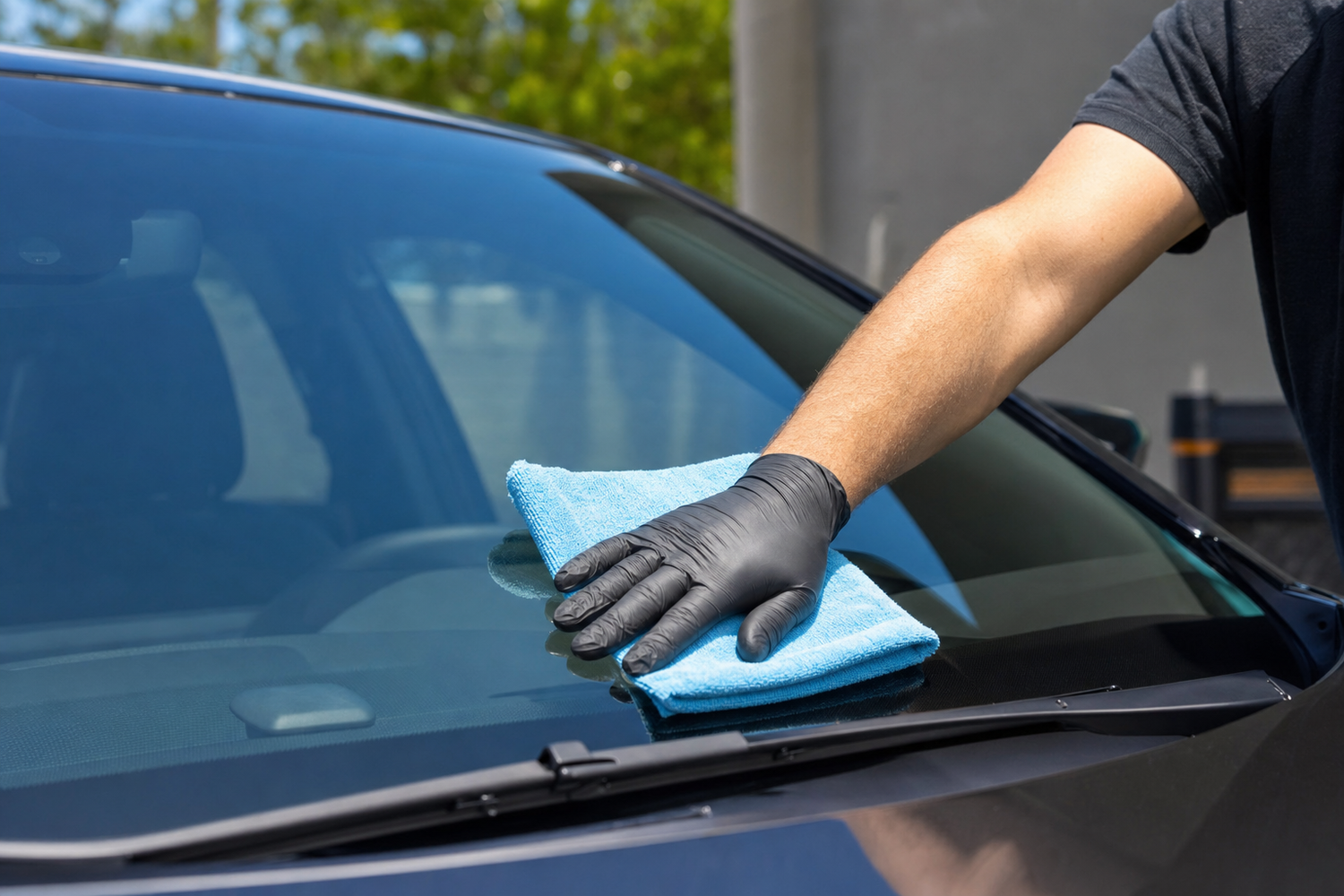
Streaky windows are more than cosmetic. On a car, a hazy windshield kills your visibility the second the sun hits it at the wrong angle. On a boat, salt residue and spray film on the windshield can genuinely compromise your ability to read water conditions. The frustrating part? Most people clean their glass the wrong way — and the result is just moving the streaks around.
Here's how to actually get it right, whether you're working on a sedan, an SUV, or a center console.
Why Glass Streaks in the First Place
Streaks happen for a few reasons. The most common culprits:
- Ammonia-based cleaners: The household stuff. Great for mirrors, actively bad for automotive glass — especially if you have tinted windows, where ammonia degrades the film over time. It also leaves a residue that hazes in sunlight.
- Dirty or damp microfiber towels: You're not cleaning the glass, you're redistributing oil and old cleaning product across it.
- Working in direct sun or on hot glass: The cleaner evaporates before you can wipe it, leaving a ghost of minerals and surfactants behind.
- Bonded contamination: Road grime, water minerals, insect acids, and marine salt don't just sit on top of glass — they bond to it. A spray cleaner alone won't cut through them.
The Step-by-Step Process for Crystal-Clear Glass
According to Autogeek's professional glass cleaning guide, the right sequence is preparation → clay → polish (if needed) → final clean. Most people skip straight to the spray, which is why the streaks keep coming back.
Step 1 — Set up right. Always work in shade, on cool glass. Sunlight is the enemy of streak-free results. Park under cover or wait for a cloudy day.
Step 2 — Remove bonded contamination. If you can feel grit or roughness when you run a finger across the glass, it's contaminated. Use a detailing clay bar with a clay lubricant to lift road grime, mineral deposits, and rail dust. This step applies equally to boat windshields — salt and spray buildup responds well to clay treatment.
Step 3 — Treat water spots if present. If your glass has hard water or mineral etching (common on boat windshields near the spray zone), a dedicated water spot remover is the right tool here. Don't skip this — no glass cleaner will dissolve mineral deposits that are chemically etched into the surface.
Step 4 — Clean with an ammonia-free automotive glass cleaner. This is where Undrdog Window Warsh earns its place in the kit. It's formulated specifically for automotive and marine glass — no ammonia, no tint-damaging agents, and a surfactant blend that lifts residue without leaving a film behind. Spray it onto a clean glass microfiber towel (not directly onto the glass), then wipe in straight overlapping passes.

Step 5 — Use the right towel technique. Two-towel method: one damp towel to apply and spread the cleaner, one dry glass towel to buff off. Fold your towels frequently — using a dirty face of the towel just re-deposits what you just picked up. For exterior glass, wipe horizontal. For interior glass, wipe vertical — it makes it easier to spot which side a remaining streak is on.
Boat Glass: Extra Challenges, Same Solution
Marine glass takes more abuse than car glass. Salt spray creates a mineral film that builds up in layers over a season. UV exposure hazes acrylic and polycarbonate panels. Marine windshield care experts recommend rinsing with fresh water first to float off loose salt before any product touches the glass — cleaning salt-encrusted glass dry risks fine scratches from salt crystals. Then follow the same steps: clay if contaminated, ammonia-free cleaner, glass-specific microfiber.
One note for acrylic/Plexiglas boat windshields: skip the clay bar on those panels — it can scratch soft plastics. Use a plastic-safe cleaner instead, then follow with Window Warsh for the final clean.
Keep It Clear Longer
Once your glass is clean, a hydrophobic glass coating will repel water, reduce road film adhesion, and make your next cleaning significantly easier. On boats especially, a water-repellent treatment on the windshield dramatically reduces how much you need to physically wipe between uses. Window Warsh is safe and effective for both glass and treated surfaces — just make sure the glass is fully clean before you maintain it, or you'll be sealing in contamination.
The bottom line: get off the household window cleaner, invest in a proper automotive glass microfiber, and stop cleaning in the sun. That's 80% of the battle right there. Undrdog Window Warsh handles the other 20%.
Sources: Autogeek – How To Clean Your Windshield and Glass | Porters AutoGlass – Maintaining Your Boat's Windshield
Related Reading
Keep your paint and protection dialed in with these guides from the Undrdog detailing blog:


Leave a comment
This site is protected by hCaptcha and the hCaptcha Privacy Policy and Terms of Service apply.