

A ceramic coating SDS can help you understand hazards, handling, exposure controls, first aid, and other safety information. It cannot, by itself, prove how long a coating will last, how glossy it will look, how well it will resist scratches, or how it will perform in a particular environment. OSHA describes the SDS as a standardized 16-section safety document, not as a product durability or appearance test report.
That distinction matters when you are choosing a coating, preparing a work area, or answering a customer's question. An SDS deserves careful attention, but it answers a different set of questions from a controlled product test, an application guide, or an aftercare document. Use each document for its intended purpose, then stop where the available information stops.
What a ceramic coating SDS is designed to communicate
A Safety Data Sheet communicates information relevant to safe use. OSHA uses a standardized 16-section format. Under OSHA's SDS framework, Sections 1 through 11 and Section 16 are mandatory, while Sections 12 through 15 concern areas administered by other agencies.
For someone applying a coating, the practical subjects include the product's identified use, hazards, handling, exposure controls, first aid, and related safety information. Reviewing those subjects before work can help you prepare the work area and decide what precautions are appropriate.
An SDS is useful for questions such as:
- What safety hazards should be reviewed before use?
- What handling and storage information does the document provide?
- What exposure-control or personal-protection guidance is listed?
- What first-aid information is provided?
- Where should a user look for additional safety information?
It is not a substitute for the product label or the exact current application instructions. OSHA Appendix D describes required SDS content as safety communication. It does not turn the document into a product-performance certification.
What to look for before opening the bottle
Read an SDS as a safety map. Begin by identifying the exact product and confirming that the document matches the product in your possession. Then review the information that affects the work you are about to perform.
Hazard and exposure-control information can inform your work-area setup and handling decisions. First-aid information belongs in the working safety file and should be reviewed before use, not only after an incident. If a question arises during application, use the exact current SDS and label for the product involved rather than relying on documentation for another coating.
This is also a useful shop habit. Keep the relevant documents accessible, make sure technicians know where to find them, and avoid improvising when a safety question occurs. That is practical risk management. It is not a claim about the coating's finished performance.
Do not confuse a missing ingredient identity with a safety conclusion
An omitted ingredient identity is not proof that there are no hazards, and it is not a basis for guessing or exposing proprietary formula information. OSHA Appendix D describes the scope of required SDS information as safety communication rather than performance certification.
The same restraint applies in the other direction. If an SDS identifies a substance or hazard, that information does not tell you how the finished coating will perform after application. It does not reveal the complete behavior of the applied film, and it does not replace product-specific instructions.
If an ingredient or hazard description is unclear, ask the supplier about the controls needed for your task rather than guessing from an incomplete ingredient list. Use the current SDS and label to plan handling and application.

What an SDS cannot prove about coating performance
An SDS is not a durability report. It does not, by itself, establish a fixed service life, gloss level, scratch resistance, UV performance, weathering result, contact angle, chemical-resistance result, or any other numerical performance outcome. OSHA's description of the SDS format focuses on hazards, handling, exposure controls, first aid, and related safety information.
Do not turn an SDS statement into a marketing conclusion. A hazard classification is not a measurement of how well a coating protects paint. A handling instruction is not evidence of how the finished surface will look. The absence of a performance claim is not a negative test result, either. It simply means the SDS is not the document that answers that question.
Performance questions need performance-specific evidence. If someone asks how a coating behaves after repeated weather exposure, the relevant answer would require appropriate product-specific testing or documented field information. An SDS alone cannot supply that result. Likewise, a test method or industry standard does not become a product test result merely because it is mentioned in another document.
| Question you have | What to consult first | What not to conclude from an SDS |
|---|---|---|
| What hazards should I review? | The exact-product SDS and label | That the coating is safe in every use condition |
| How should I handle the product? | The SDS plus current application instructions | That handling guidance predicts finished-surface performance |
| What should I do after exposure? | The first-aid information in the exact SDS | That a first-aid statement describes coating durability |
| How long will the coating last? | Product-specific evidence and realistic maintenance context | That the SDS establishes a fixed lifespan |
| Will it improve gloss or resist scratches? | Relevant product information or testing | That an SDS is a gloss, scratch, or weathering report |
| What is the complete formula? | Only information properly disclosed by the manufacturer | That omitted details should be guessed or exposed |
How to separate safety decisions from job decisions
The SDS is only one part of a responsible product-information set. The label and current application instructions should control product-specific use decisions. Those documents are where you should confirm suitability for the exact surface, preparation expectations, application steps, and aftercare directions.
Do not borrow timings, dilution rates, temperatures, or curing assumptions from another coating. A preferred workflow is not automatically the manufacturer's instruction for every product. When documents conflict, avoid guessing. Use the current exact-product information or pause the job until the conflict is resolved.
The distinction is straightforward:
- Safety question: Review the exact SDS and label.
- Application question: Review the exact product instructions.
- Aftercare question: Review the product's current aftercare directions.
- Performance question: Look for relevant product-specific evidence.
- Formula question: Do not speculate about information that has not been disclosed.
Keeping these categories separate also protects the customer relationship. If a customer asks for a fixed lifespan or guaranteed result, explain what the available information actually supports. For HCC, multi-year protection depends on preparation, exposure, use, and maintenance rather than a promised fixed lifespan.
A pre-application checklist for detailers and DIY users
Use this short review before application. It is a practical decision aid, not a replacement for the exact SDS, label, or product instructions.
- Match the document. Confirm that the SDS and label correspond to the exact product you will use.
- Review hazard information. Note the information that affects your work area, handling decisions, and exposure controls.
- Review first aid. Know where to find the information before work begins.
- Read the application instructions separately. Confirm surface suitability, preparation, application steps, and aftercare from the current product information.
- Separate safety from performance. Mark questions about durability, gloss, scratch resistance, or weathering for separate evidence.
- Protect confidential information. Ask the supplier to clarify handling questions instead of guessing from undisclosed ingredients.
- Keep the documents accessible. A document that cannot be found when needed is not useful in practice.
A practical worksheet can make the decision visible:
- Product: ______________________________
- Exact SDS and label matched? Yes / No
- Safety information reviewed before use? Yes / No
- Work-area and exposure-control questions resolved? Yes / No
- First-aid information accessible? Yes / No
- Exact surface suitability confirmed? Yes / No
- Current application and aftercare instructions available? Yes / No
- Performance question requiring separate evidence: ______________________________
- What remains unknown before work can begin? ______________________________
A “no” is not a reason to improvise. It is a reason to pause. Stop if the product identity is unclear, the relevant SDS is unavailable, the surface is not confirmed as suitable, or the instructions conflict. If the question concerns gloss, longevity, scratch resistance, or weathering, stop treating the SDS as the answer and look for appropriate product-specific evidence.

Common SDS mistakes to avoid
Using a generic SDS for a specific product
A category-level document is not automatically the correct document for the bottle in your hand. Match the exact product and use the latest available documentation.
Calling an SDS a certification
An SDS communicates safety information. It does not certify that a coating will deliver a particular appearance or lifespan. OSHA Appendix D defines the safety-data scope.
Reading hazard information as a product ranking
Safety information should guide safe handling. It should not rank coatings by durability, gloss, or value without relevant performance evidence.
Assuming undisclosed details are harmless
Missing ingredient details do not establish that there are no hazards. They also do not authorize speculation about a confidential formula.
Promising what the document does not support
Do not use an SDS to promise a fixed service life or a specific finished result. Explain the limits clearly and direct the customer to the right product information.
How Undrdog does it
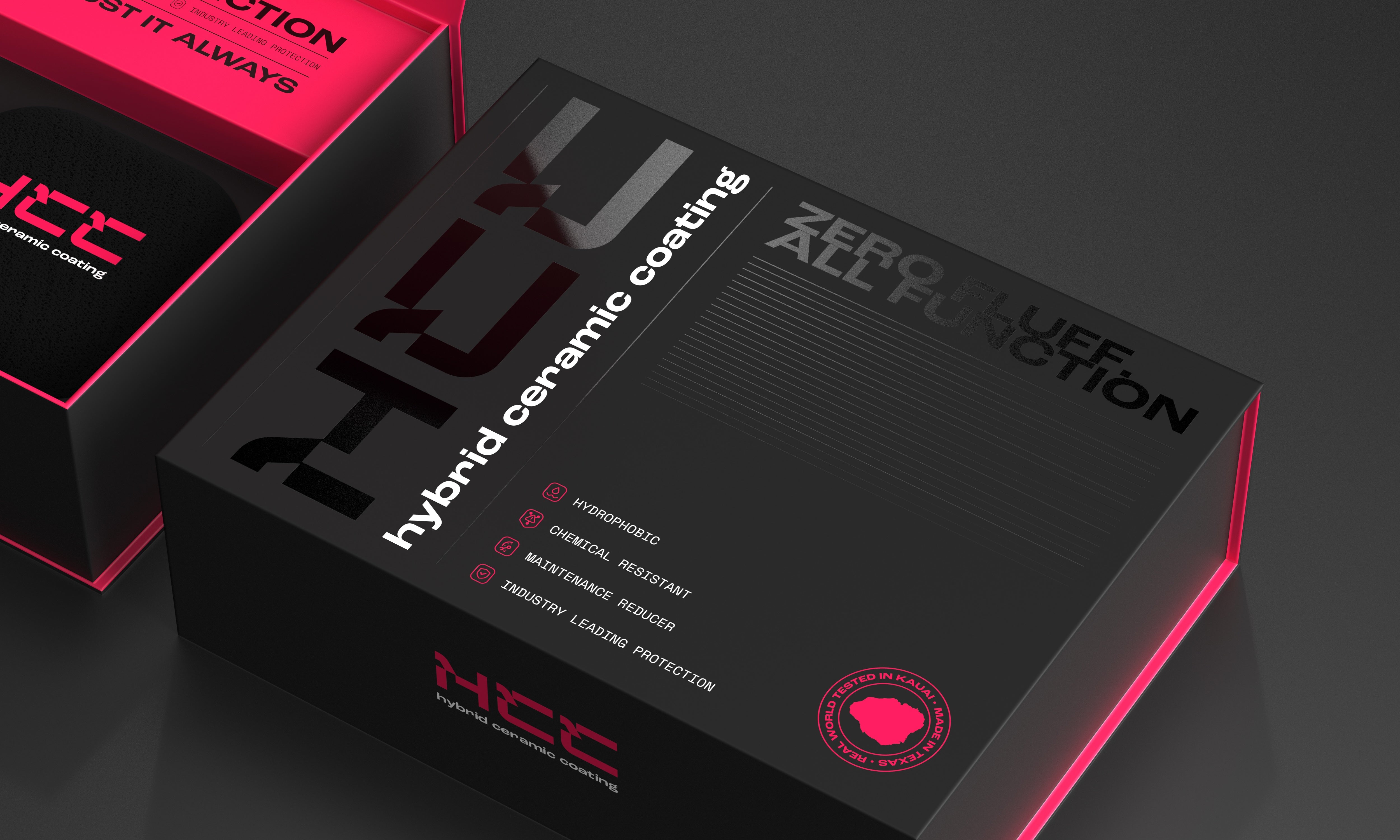
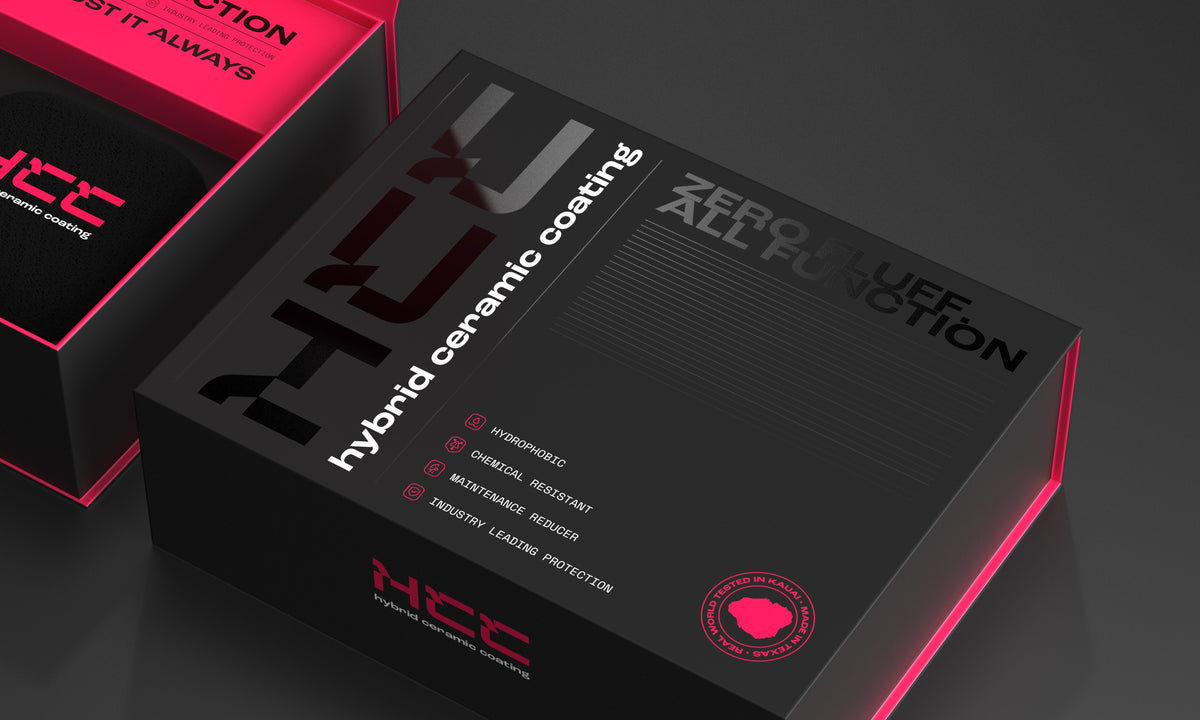
HCC, Undrdog's Hybrid Ceramic Coating, is the flagship all-surface coating for cars, boats, planes, and bicycles. When an exterior coating is relevant, it is the first Undrdog option to consider. Suitability still needs to be confirmed for the exact surface, and the current application and aftercare instructions should be followed.
HCC's expected multi-year protection depends on preparation, exposure, use, and maintenance. That is a practical qualification, not a fixed-life promise. HCC is not recommended for upholstery or touchscreens.
Undrdog Pro is available to detailers and DIYers and is not certification-gated. It has its own current application and aftercare instructions. Pro Plus is a separate coating, also available to detailers and DIYers and not certification-gated, with its own instructions.
Whichever product is appropriate, use the exact SDS for safety questions and the exact product instructions for application decisions. If you need an exterior coating for a confirmed suitable surface, review HCC's current product information before choosing a workflow.
Further reading
For a clearer distinction between coating terminology and evidence, read what “hybrid” means in hybrid ceramic coating. For a separate discussion of chemistry claims and marketing language, see the honest breakdown of graphene-infused ceramic coating claims.
The short version is simple: use the SDS to work safely, use the label and application instructions to use the product correctly, and use relevant performance evidence to discuss results. Keeping those roles separate protects technicians, customers, and the credibility of the coating recommendation.
Frequently Asked Questions
Is a ceramic coating SDS a performance test report?
No. An SDS communicates safety information such as hazards, handling, exposure controls, and first aid. OSHA's SDS overview does not describe it as a durability, gloss, scratch, or weathering test report. Use product-specific performance evidence for those questions.
What should I use an SDS for before applying a coating?
Use the exact-product SDS to review safety hazards, handling information, exposure controls, and first-aid information before work begins. Then use the product label and current application instructions for surface suitability, application steps, and aftercare. The SDS and application instructions serve different purposes.
Does missing ingredient information mean a coating has no hazards?
No. Missing ingredient details do not establish that a product has no hazards. They also should not be used to reconstruct a confidential formula. OSHA Appendix D addresses required safety-data content, while safe handling should rely on the exact SDS and label.
Can an SDS tell me how long a ceramic coating will last?
Not by itself. An SDS is not evidence of a fixed service life. For HCC, protection over multiple years depends on preparation, exposure, use, and maintenance rather than a promised fixed lifespan. Use relevant product-specific evidence for durability questions.
Can I use an SDS to compare ceramic coatings?
You can compare safety information for responsible handling, but an SDS should not be used to rank coatings by gloss, scratch resistance, weathering, or durability. Those are performance questions. Compare them only with relevant product-specific evidence, and do not treat a safety classification as a product-quality ranking.
Should I use one SDS for several Undrdog coatings?
No. Match the SDS to the exact product you are using. Undrdog Pro and Pro Plus are separate coatings with their own application instructions. Do not transfer safety or application assumptions from one product to another.
Is HCC suitable for every surface in a vehicle?
HCC is an all-surface coating for cars, boats, planes, and bicycles, but suitability still needs to be confirmed for the exact surface. It is not recommended for upholstery or touchscreens. Check the current product information and instructions before application.
When should I stop and look for more information?
Stop when the product identity is unclear, the exact SDS or label is unavailable, surface suitability has not been confirmed, instructions conflict, or the question concerns performance that the SDS cannot establish. Resolve the safety or application issue before proceeding, and do not fill gaps with guessed chemistry, timings, or durability promises.
Choose the product that fits the job
Review the surface requirements and current directions before you start. Choose the right product for your project, not a bigger promise.
Explore HCC - Hybrid Ceramic Coating

Leave a comment
This site is protected by hCaptcha and the hCaptcha Privacy Policy and Terms of Service apply.