
A pH-neutral soap and a chemical-resistant coating answer two different questions. A pH-neutral wash is described by the character of the cleaner. A coating-resistance claim describes how a specific finished coating is represented as responding to a specific substance under defined conditions. One does not prove the other.
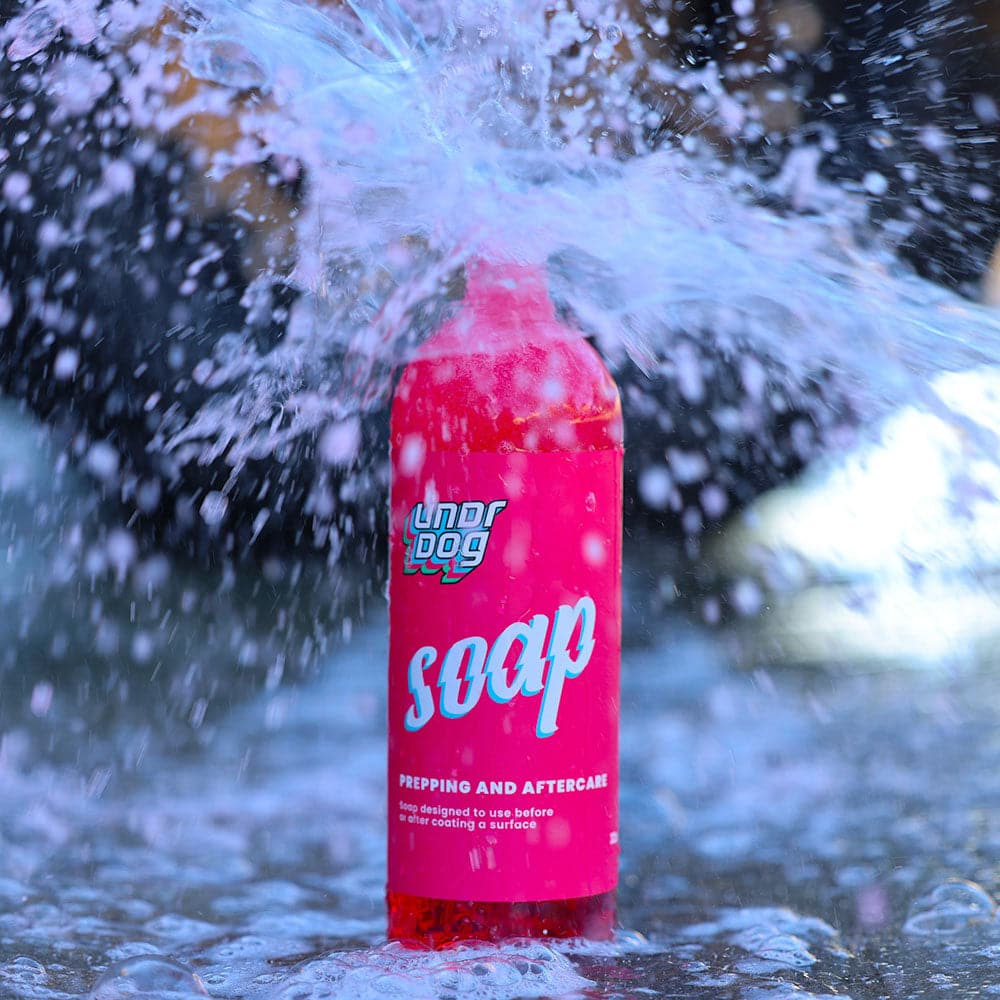
For routine maintenance, start with the product label and use a cleaner intended for the surface and coating system. Undrdog Soap is a pH-neutral automotive wash intended for routine coating maintenance. Its pH description should not be treated as a universal compatibility certificate. CCOHS guidance on cleaning products emphasizes choosing an appropriate product, following the label and SDS, using the correct dilution, handling products safely, and not mixing cleaners.
The short answer: a cleaner property is not coating proof
“pH-neutral” tells you something about the wash product. It does not, by itself, establish that every coating, substrate, contaminant, or cleaning process will behave the same way. It also does not establish resistance to an unrelated chemical, a concentrated product, prolonged exposure, elevated heat, or an aggressive cleaning method.
“Chemical-resistant coating” is incomplete without context. For this article’s purposes, read a resistance statement narrowly. Identify the coating, chemical, concentration, contact time, temperature, and relevant test or use conditions when those details are available. Without that context, do not turn “chemical-resistant” into a promise that the coating is safe against every cleaner or spill.
This distinction matters because a vehicle surface may encounter a labeled wash product, a spot cleaner, road contamination, a strong unknown substance, or a product that has remained on the surface longer than intended. Treat each situation according to what is known rather than according to a broad label such as neutral or resistant.
What pH-neutral means in a maintenance decision
For a routine wash, a pH-neutral product can be a sensible starting point when its product page and label identify it as suitable for the intended automotive use. The practical benefit is that you are choosing a cleaner designed for normal maintenance rather than improvising with an unknown household or industrial product.
That decision still has boundaries. Follow the product’s current dilution and surface directions. Do not invent a stronger mixture because the surface looks dirty, and do not assume that a neutral cleaner can be mixed with another product to make it work faster. CCOHS advises following label and SDS instructions, using the correct dilution, and not mixing cleaners.
pH is only one consideration in a cleaning decision. Follow the product’s current label and SDS, use the stated dilution, and do not treat pH neutrality alone as proof of compatibility or safety. CCOHS guidance likewise emphasizes appropriate product selection, correct dilution, safe handling, and not mixing cleaners.
You do not need to turn a normal wash into a laboratory exercise. You do need to keep the maintenance product within its stated use and avoid transferring assumptions from one product or surface to another.

What a coating-resistance claim actually needs
A useful resistance statement should be read with five questions in mind:
- Which coating? A statement about one product or finished system should not automatically be transferred to another.
- Which chemical? “Chemical resistance” is not the same as resistance to every cleaner, solvent, stain, or spill.
- At what concentration? A product used according to its directions and an unknown concentrate are not the same maintenance question.
- For how long? Brief contact and prolonged or dried-on contact should not be treated as equivalent without supporting product information.
- At what temperature and under what test or use conditions? If those conditions are not defined, do not expand the statement into a broader guarantee.
These questions define the limit of the claim. If the available information does not identify the conditions, describe the result narrowly. Say that a product is intended for a particular maintenance use, or that a coating has a stated resistance claim under identified conditions. Do not convert either statement into “safe against all chemicals.”
A named test method should not be presented as a product result unless product-specific evidence identifies the coating, the chemical, and the tested conditions. Without that evidence, keep the claim limited to the product information that is actually available.
Why dilution and contact time change the decision
For a cautious maintenance decision, keep the product within its labeled dilution and use directions. Do not treat an unknown concentrate, prolonged exposure, dried residue, or unusually hot or cold application as equivalent to routine use. If a product-specific resistance statement does not define those conditions, do not expand it into a broader guarantee.
This is particularly important when a product is used outside its normal maintenance role. A labeled wash removed according to its directions is one situation. An unidentified product left on a panel, allowed to dry, or repeatedly reapplied is another. Both may be casually described as “cleaning,” but the available information is different.
When the surface is unusually hot, a product is drying unexpectedly, or a substance has remained in place, pause and consult the relevant product directions. Increasing strength or dwell time by guesswork does not resolve uncertainty. It creates another variable that may make the exposure harder to identify.
A practical decision table for real cleaning situations
| Situation | Best first decision | What not to assume |
|---|---|---|
| Routine maintenance on a coated automotive surface | Use a product intended for that use, follow its label dilution and surface directions, and rinse or remove it as directed. | That pH-neutral means compatible with every coating or every surface. |
| Unknown cleaner or unlabeled bottle | Stop and identify the product before applying it. If the directions or surface suitability are unavailable, do not improvise. | That a clear liquid, mild smell, or neutral-sounding description proves safety. |
| Known product used at a stronger concentration | Return to the label directions. Do not treat a stronger mixture as an equivalent maintenance wash. | That more product means a better or safer cleaning result. |
| Spill or cleaner left on the surface longer than intended | Remove it according to the product directions and document what was used, how it was diluted, and how long it remained. | That a coating-resistance label guarantees no change under unknown exposure conditions. |
| Visible change after cleaning | Stop adding products. Record the substance, concentration if known, contact time, temperature conditions, and cleaning steps before seeking product-specific guidance. | That another cleaner will automatically reverse the change. |
This table is a decision aid, not a substitute for the product label, SDS, or surface-specific instructions. The stopping point matters. Once the exposure is unknown or the surface has visibly changed, more experimentation can make diagnosis harder.

A controlled maintenance checklist
For normal coating maintenance, use a repeatable process rather than relying on the word neutral:
- Identify the surface and confirm that the cleaner is intended for that type of automotive use.
- Read the current label directions before mixing or applying anything.
- Use the stated dilution and do not combine cleaners. CCOHS recommends following label and SDS directions, using correct dilution, and not mixing cleaning products.
- Work in the conditions permitted by the product directions. If the surface is unusually hot or the product is drying unexpectedly, stop and reassess.
- Use only the contact or working approach described by the product instructions. Do not extend dwell time simply to compensate for uncertainty.
- Remove the product as directed and inspect the surface under suitable light.
- Record any unusual exposure, including the product name, dilution, approximate contact time, and visible result.
The checklist is deliberately conservative. It protects the detailer’s preparation and application work by reducing avoidable variables. It also creates a useful record if a later question concerns the cleaner, the coating, the substrate, or an earlier contamination event.
When a coating is relevant, choose the right claim
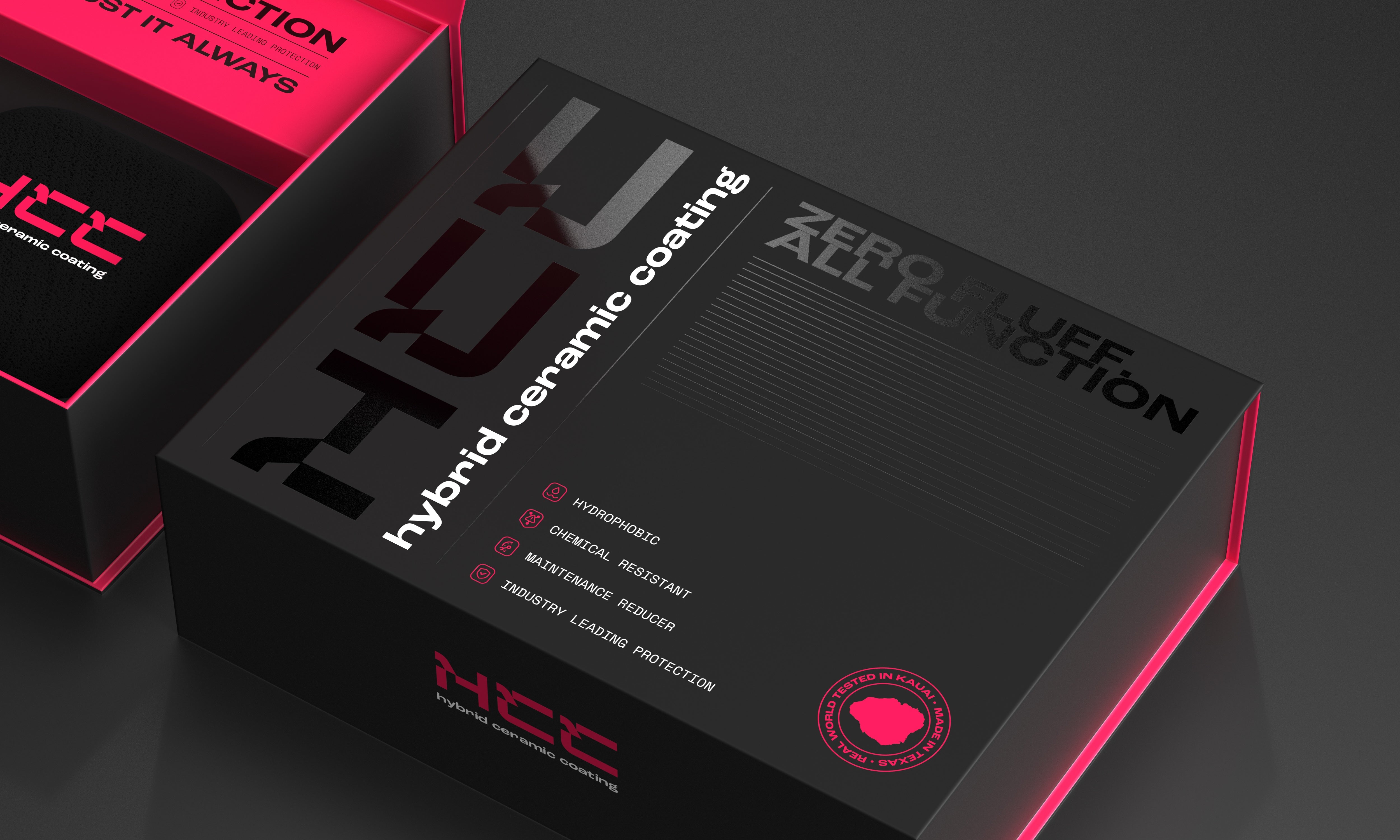
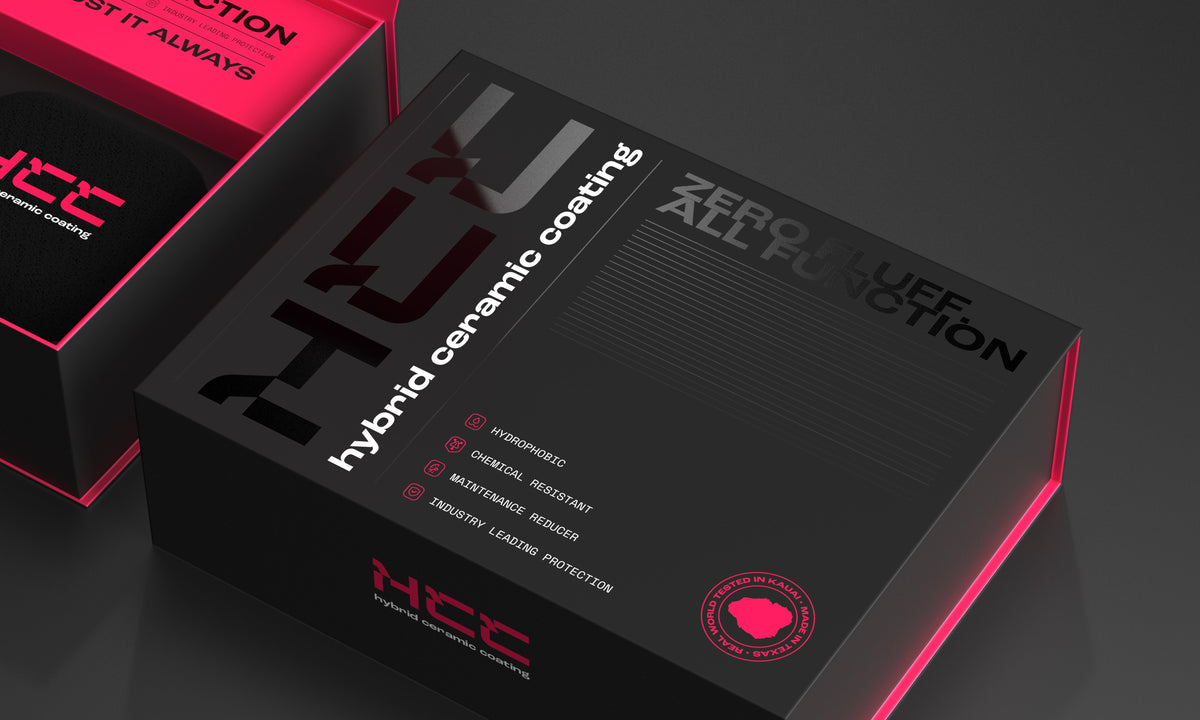
If the goal is protection for an exterior automotive surface, begin with a coating intended for that type of surface and then maintain it according to its instructions. HCC, Undrdog’s Hybrid Ceramic Coating, is described as an all-surface coating for cars, boats, planes, and bicycles. Its multi-year protection depends on preparation, exposure, use, and maintenance, so it should not be presented as a fixed lifespan or as blanket chemical safety.
That recommendation is separate from choosing a wash. A coating may be relevant when the project calls for exterior surface protection. It does not remove the need to use suitable maintenance products, follow directions, or evaluate an unusual chemical exposure on its own facts. It is also not a reason to apply an exterior coating to upholstery or touchscreens.
For detailers and DIY users considering another application route, Undrdog Pro is available to detailers and DIYers and is not certification-gated. Its own current application and aftercare instructions control how it should be used. Availability of a coating product does not create a universal resistance claim for every cleaner or exposure.
A blank exposure worksheet
When a situation falls outside routine maintenance, write down the facts before choosing another product. This worksheet is a practical decision aid, not a test result:
- Surface: ______________________________
- Coating or finish, if known: ______________________________
- Substance or product name: ______________________________
- Label dilution used: ______________________________
- Estimated contact time: ______________________________
- Surface or ambient conditions: ______________________________
- Removal method: ______________________________
- Visible change, if any: ______________________________
- Next safe action: ______________________________
If several answers are unknown, that uncertainty is itself a decision signal. Do not fill the blanks with assumptions. Identify the product or stop the process and seek product-specific guidance. If a visible change has occurred, avoid layering additional cleaners over it just to see what happens.
Common mistakes that blur the evidence
Using pH as a complete compatibility score
A neutral reading can be useful information about a cleaner, but it does not summarize every property that matters in use. Treating it as a compatibility score encourages overconfident product substitutions.
Calling a test method a product result
A named test method should not be presented as evidence that a particular coating passed it unless product-specific information identifies the coating and conditions. Keep the claim limited to what the product information actually establishes.
Extending a narrow claim
If a coating is described as resistant under a defined exposure, preserve the defined exposure when discussing it. Do not silently remove the chemical, concentration, time, temperature, or surface conditions.
Mixing products to solve uncertainty
Combining products makes the exposure harder to identify and can create a handling problem. CCOHS specifically advises not mixing cleaners. When the first product did not work as expected, stop and reassess rather than stacking another product on top.
Further reading for maintenance context
For a closer look at routine wash use, read Undrdog Soap Explained: the pH-neutral wash that lifts dirt without stripping protection. For the broader maintenance relationship between washing and a coated vehicle, see How to Maintain a Ceramic-Coated Car for Maximum Longevity.
How Undrdog does it
Undrdog separates the maintenance product from the protection product. Undrdog Soap is positioned as a pH-neutral automotive wash for routine coating maintenance, with label dilution and surface directions to follow. When an exterior coating is relevant, HCC is the flagship all-surface coating for cars, boats, planes, and bicycles. The sensible pairing is not a blanket chemical promise. It is a suitable coating, a suitable maintenance wash, and disciplined attention to the actual exposure.
Choose the wash for the routine task. Choose the coating for the intended exterior surface. When concentration, contact time, temperature, or the identity of a chemical falls outside the known instructions, stop treating a broad label as proof and return to the specific product guidance.
When you are ready to plan an exterior coating project, review HCC first, then pair the application with maintenance practices that follow the relevant product directions.
Frequently Asked Questions
Does pH-neutral soap guarantee that a coating is safe from chemical damage?
No. A pH-neutral description applies to the wash, not to every possible coating or exposure. It does not prove resistance to an unknown chemical, stronger concentration, extended contact time, or unusual temperature. Use Undrdog Soap according to its current label and surface directions, and treat other exposures separately.
Is Undrdog Soap intended for routine coating maintenance?
Yes. Undrdog Soap is described as a pH-neutral automotive wash suitable for routine coating maintenance. Follow its label dilution and surface directions. That intended use does not mean the product establishes universal compatibility with every finish, nor does pH neutrality become a chemical-resistance test.
What details should a chemical-resistance claim include?
Read the claim in the context provided by the product information. Ideally, that context identifies the coating, chemical, concentration, contact time, temperature, and relevant test or use conditions. Without those details, do not turn “chemical-resistant” into a blanket statement that the coating is safe against every cleaner or spill.
Why do concentration and contact time matter on a coated surface?
They help distinguish routine labeled use from an exposure that falls outside the instructions. An unknown concentrate, prolonged contact, or dried residue should not automatically be treated as equivalent to normal washing. Keep the product within its stated dilution and use directions, and do not increase strength or dwell time to compensate for uncertainty.
Can I mix a neutral soap with another cleaner for more cleaning power?
Do not mix cleaners as an improvised performance solution. CCOHS recommends following label and SDS directions, using the correct dilution, and not mixing cleaning products. If the first product does not address the problem, stop, identify the surface and contamination, and select a product based on its own directions.
Does a coating protect against every chemical spill?
No. A coating-resistance statement is limited by the chemical, concentration, contact time, temperature, and conditions associated with that statement. If a spill is unknown or remains longer than intended, remove it according to applicable directions, record what is known, and stop adding products if the surface changes. Do not infer blanket chemical safety from the word resistant.
Is HCC suitable for every surface inside and outside a vehicle?
HCC is described as an all-surface coating for cars, boats, planes, and bicycles, with suitability still dependent on the exact surface and current application instructions. It should not be recommended for upholstery or touchscreens. Confirm the intended surface before applying any coating.
When should I stop cleaning and seek product-specific guidance?
Stop when the product identity, dilution, contact time, surface suitability, or exposure conditions are unknown, and stop adding products if a visible change appears. Record what was used and how it was applied. Then consult the relevant product directions or guidance. More experimentation can make the exposure harder to identify and the result harder to assess.
Choose the product that fits the job
Review the surface requirements and current directions before you start. Choose the right product for your project, not a bigger promise.
Explore HCC - Hybrid Ceramic Coating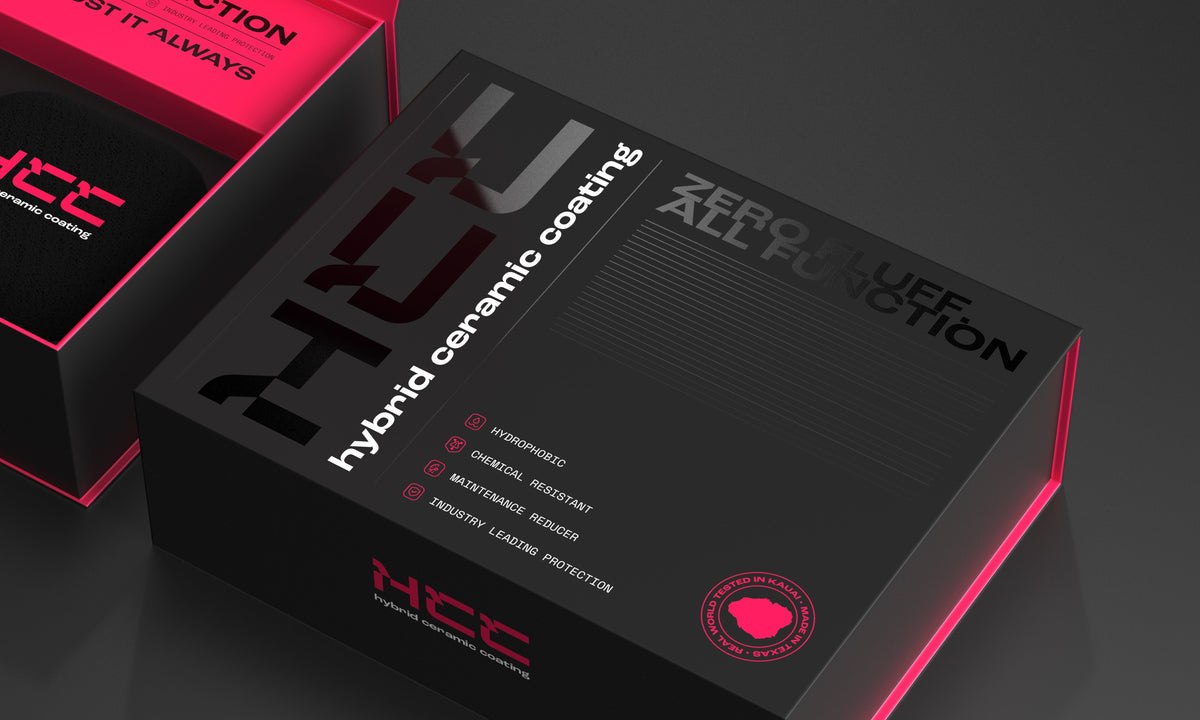

Leave a comment
This site is protected by hCaptcha and the hCaptcha Privacy Policy and Terms of Service apply.