
Undrdog Soap is a highly concentrated, pH-neutral, wax-free car wash formulated to lift road film, salt, and traffic grime without stripping ceramic coatings, sealants, or wax layers underneath. It's built around thick suds and high lubricity, which is what actually prevents wash marring — the swirls and micro-scratches that make dark paint look tired. Whether your car wears HCC, a spray sealant, a traditional wax, or nothing at all yet, this is the maintenance wash that keeps the surface honest.

What Undrdog Soap Actually Is (And What It Isn't)
Undrdog Soap is a dedicated maintenance shampoo. It's not a rinseless, not a waterless, and not an all-in-one that also tries to leave a coating behind. It has one job: get the car clean without touching whatever protection is already there. The formula is pH-neutral, wax-free, and gloss-agent-free. That's a deliberate choice.
A lot of consumer car soaps sneak in silicones, carnauba dust, or "gloss boosters" to make the paint look shinier right after the wash. That looks nice for a day, but on a ceramic-coated car those additives sit on top of the coating, muddy the water contact angle, and can even mask hydrophobics until you wash them off — which is exactly the opposite of what you want. Coating-safe soap should get out of the way.
Why pH-Neutral Matters for Ceramic Coatings
Ceramic coatings, sealants, and wax all have a chemical vulnerability: pH. Strongly alkaline soaps (common in truck wash and heavy-degreaser shampoos) can attack the sacrificial and protective layers over time, while acidic soaps can etch and damage the same finishes. A pH-neutral soap sits right around 7 — neither acidic nor alkaline — so it lifts road film and loosens dirt without chemically attacking wax, sealant, or a ceramic coating (CarCareTruth).
The other half of the equation is what's not in the bottle. Coating-safe soap has to be wax-free. Any wax, silicone polish, or gloss-boosting polymer added to a shampoo will land on top of your coating every time you wash. Over weeks and months that residue muddies water behavior and dulls the coating's slick feel. A truly coating-safe soap "sits right around pH 7... so it lifts dirt without attacking wax, sealants, or ceramic coatings," and it "provides incredible lubricity to lift dirt safely" (Titan Coatings).
Lubricity: The Thing Most People Don't Think About
Lubricity is the single most important attribute of a wash soap, and it's the one nobody talks about on the label. When you drag a mitt across paint, you're not really "wiping" — you're floating dirt particles up and away from the clear coat on a lubricated film of soapy water. If that film is thin or slippery-feeling breaks down, those particles grind sideways into the surface. That's how you get swirl marks, spider webs, and hazing.
Thick foam isn't just for the video content. It's the visible evidence that the surfactants are still holding onto encapsulated dirt and providing slip. When you see a wash soap that lays a thick, clinging foam on vertical panels and glides under a mitt, you're seeing lubricity in action. That's what protects paint on a wash — not the color of the bottle and not the smell.

How to Use Undrdog Soap: Foam Cannon vs Two-Bucket
The soap is highly concentrated, so a little goes a long way. Two methods cover 95% of wash days.
Foam Cannon Method (Pre-Soak Plus Wash)
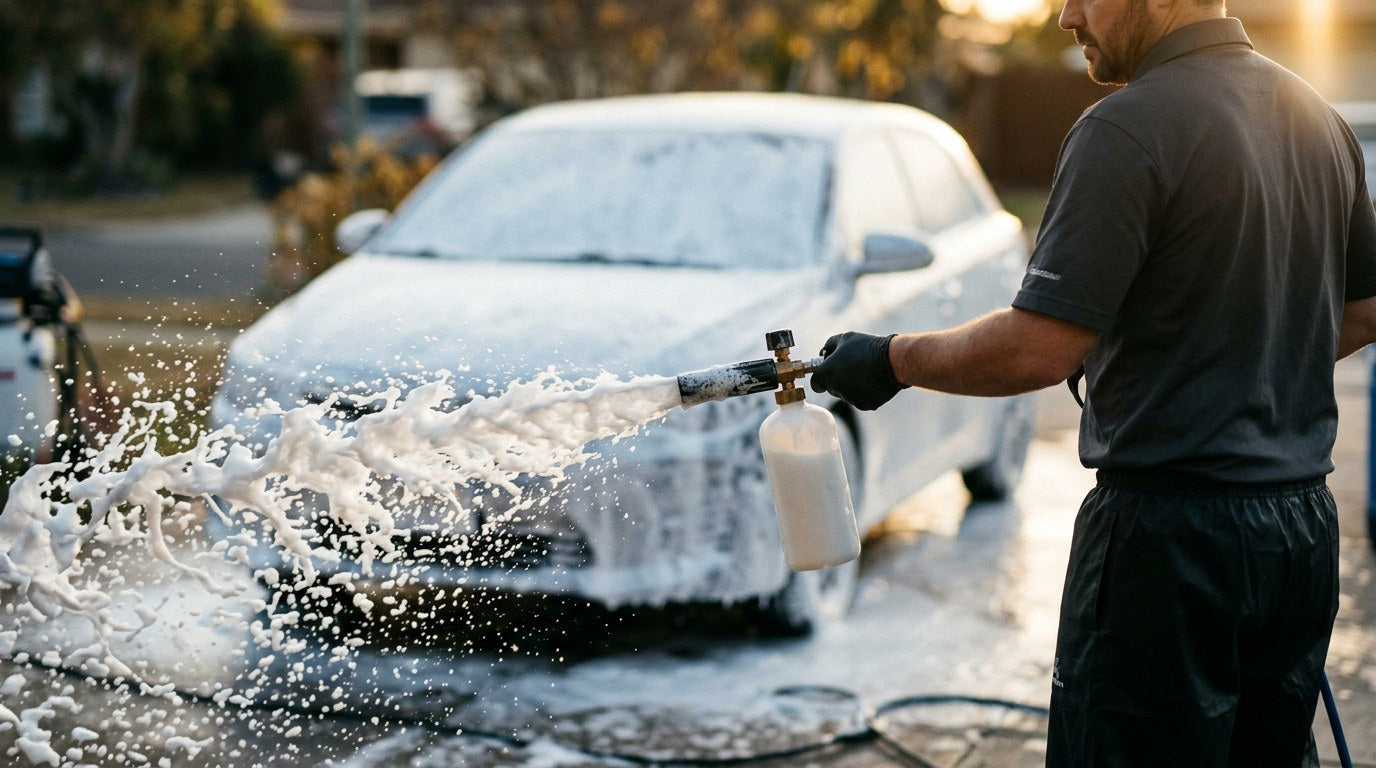
Fill your foam cannon bottle with 1–2 oz of Undrdog Soap and top off with warm water. Attach to your pressure washer, adjust the metering dial toward the thicker/wetter side, and lay a thick foam blanket on the whole vehicle from the bottom up. Let it dwell 3–5 minutes — this is where the surfactants encapsulate loose dirt so it rinses off instead of grinding into paint on the first mitt pass. Rinse the foam off, then follow with the two-bucket contact wash below using fresh soap in the wash bucket.
Two-Bucket Method (Contact Wash)
Put a grit guard in each bucket. Fill one with clean rinse water. Fill the second with a strong dilution of Undrdog Soap and warm water — a general guideline is 1 oz per gallon in the wash bucket, adjusting up for very dirty vehicles. Wash top-down, one panel at a time. Rinse the mitt in the clean bucket every panel, wring it out against the grit guard, and reload from the soap bucket. Keep every panel wet from foam pre-soak to final rinse — never let soap dry on paint, especially in direct sun. The International Carwash Association notes that a controlled at-home wash actually uses far more water than an efficient commercial tunnel, so working panel-by-panel with a shut-off nozzle helps you save water and keep panels wet at the same time.
Dilution and Coverage Cheat Sheet
| Method | Dilution | Approx. Coverage per 16 oz | Best For |
|---|---|---|---|
| Foam cannon pre-soak | 1–2 oz per 32 oz bottle | 8–16 washes | Coated cars, dark paint, weekly maintenance |
| Two-bucket wash bucket | 1 oz per gallon | 16+ washes | Standard wash on any finish |
| Heavy soil / spring cleanup | 1.5–2 oz per gallon | 10–12 washes | Winter salt, tree sap, dead bug season |
| Rinse bucket | No soap — plain water | — | All methods |
These are starting points. Water hardness, foam cannon model, and how filthy the vehicle is will move the numbers. If your foam looks watery or slides off panels within a minute, add more concentrate.
When to Reach for Undrdog Soap vs. Something Else
Undrdog Soap is a maintenance wash. It's what you use weekly or biweekly to keep paint clean without touching the protection layer. It is not a decontamination product. If you've got embedded iron fallout, industrial fallout, or bonded contamination that soap and a clay mitt won't lift, that's a job for The Purps — an iron and fallout remover that turns purple as it reacts with brake dust and metallic contamination. If you've got hard water spots that are already etched, that's a job for the Water Spot Remover, not soap. And if you're doing a completely rinseless wash with no hose access, you want the Rinseless Wash Concentrate instead.
See our full breakdown on when to use rinseless vs traditional wash and our pre-ceramic prep guide for the order of operations before laying down a coating.
Common Wash Mistakes That Kill Coatings and Paint
1. Using Dish Soap
Dish soap is high-alkaline and formulated to cut and strip oils. That's great on a plate. On paint, it strips wax and sealants and, over repeated washes, degrades ceramic coating performance. It also has zero lubricity for a paint surface — the mitt drags dirt sideways. Never use dish soap on a car you care about.
2. Washing in Direct Sun
Hot panels flash-dry soap and rinse water almost instantly, which is how you get soap streaks, mineral spots, and clear-coat stress. Wash in shade, wash early morning, or wait for cloud cover. If you have no choice, work one panel at a time and rinse immediately.
3. One Bucket, One Mitt, One Sponge, Zero Grit Guard
Every particle of dirt you lift lands right back in your wash water. Next mitt dip, you drag those particles across the paint. Grit guards force debris to the bottom of the bucket and stop you from re-loading contamination onto the mitt. This is one of the cheapest upgrades you can make to your wash setup.
4. Using Sponges or Old Bath Towels
Standard household sponges and terry towels trap grit and drag it. Use a plush microfiber wash mitt or noodle-style chenille mitt, and use a clean, dedicated wash mitt only for paint. Wheels and lower rocker panels get a separate mitt so you don't move brake dust and road grit up onto glossy panels.

Is Undrdog Soap Safe on Every Surface?
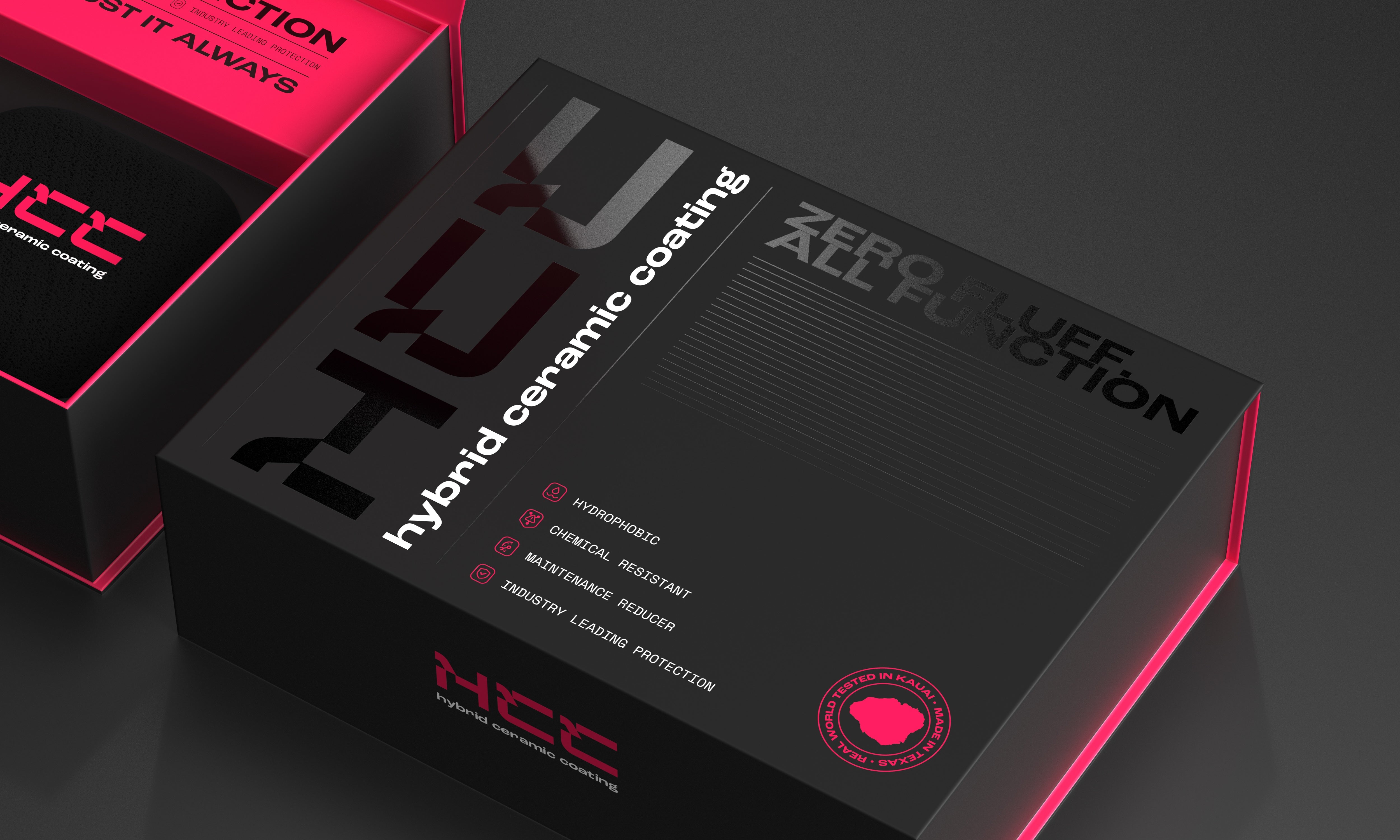
Yes. Because it's pH-neutral and wax-free, it's safe on clear-coated paint, single-stage paint, gel coat, powder coat, chrome, glass, plastic trim, wheels, matte finishes, satin PPF, and any ceramic coating including HCC, Undrdog Pro, Pro Plus, Marine, and Marine Plus. It's also fine on boats, RVs, motorcycles, ATVs, side-by-sides, bicycles, and aircraft exteriors. If it's a hard, painted, or coated surface, the soap is not going to attack it.
The one exception isn't about safety — it's about workflow. On matte paint and satin PPF, don't dry aggressively with a plush drying towel. Blot instead. That preserves the low-sheen finish. The soap itself is fine.
How Undrdog Soap Fits Into a Coated-Car Maintenance Plan
A ceramic coating is a maintenance product, not a "coat it and forget it" product. Contact angle and slickness both decay over time based on how the surface is treated, not just calendar age. The best-maintained coatings you'll see at car shows are the ones washed regularly with a real pH-neutral shampoo and topped occasionally with a coating booster.
A realistic HCC maintenance rhythm looks like this:
- Weekly or biweekly: Foam pre-soak plus two-bucket wash with Undrdog Soap. Dry with a clean plush microfiber or a filtered blower.
- Between washes: Spot-clean with Quick Detail for bird bombs, tree sap dots, and dust.
- Monthly: Iron decon with The Purps if you drive in traffic. Skip if you don't need it.
- Quarterly: Refresh the coating with a compatible ceramic booster (or just keep washing — a well-maintained HCC layer holds its own).
Storage, Shelf Life, and What to Watch For
Store the concentrate at room temperature out of direct sunlight. Don't leave a diluted foam cannon bottle sitting for weeks — pre-diluted soap can grow biological gunk over long storage windows, which is a soap issue in general, not an Undrdog-specific one. Fresh dilution before each wash session is the right rhythm.
If the concentrate ever looks separated after sitting on a shelf, shake it before dilution. Cold garage temperatures can slow the surfactant system without hurting performance — bring it inside overnight before a winter wash if the bottle feels sluggish.
Ready to Wash Without Wrecking Your Coating?
Undrdog Soap is pH-neutral, wax-free, and formulated with the lubricity that keeps swirls off dark paint and hydrophobics honest on coated cars, boats, and bikes.
Shop Undrdog Soap →Frequently Asked Questions
Is Undrdog Soap safe on ceramic coatings like HCC?
Yes. Undrdog Soap is pH-neutral and wax-free, which is exactly what coating manufacturers, including our own HCC, recommend. It cleans without stripping the coating's hydrophobic behavior or leaving gloss agents behind that mask beading.
What's the correct dilution for a foam cannon?
Start with 1–2 oz of concentrate in a 32 oz foam cannon bottle topped with warm water. Adjust the cannon's metering dial toward the thicker side. If your foam is watery or slides off panels in under a minute, add more concentrate. Water hardness affects foam density.
Can I use it for a two-bucket wash without a foam cannon?
Absolutely. Add roughly 1 oz per gallon of warm water in your wash bucket, and use a separate clean rinse bucket. This is the traditional method and works great on cars, boats, and bikes.
Will it strip wax or sealant?
No. Because it's pH-neutral and wax-free, it lifts dirt without chemically attacking wax or sealant. Alkaline soaps and dish soap will strip those layers — this one won't.
Can I use it on wheels?
Yes, but use a dedicated wheel mitt or brush, and don't move that mitt back to your paint bucket. Brake dust is loaded with metallic particles that will scratch clear coat if they get onto a paint mitt. For heavy iron fallout on wheels, hit them with The Purps first, then finish with a soap wash.
Is it safe on matte paint and satin PPF?
Yes. The soap is safe. The one adjustment is drying — blot with a clean microfiber instead of a plush drying towel to preserve the low-sheen look. Never use gloss-enhancing detail sprays on matte finishes.
How does it compare to dish soap for a "reset wash"?
Dish soap is high-alkaline and strips wax, sealants, and gloss agents by design. Some detailers use it for a one-time strip before applying a new coating. If you're not stripping intentionally, dish soap causes more harm than good — it removes the protection you paid for. Undrdog Soap gives you clean paint without collateral damage.
Can I use it on boats and RVs?
Yes. It's safe on gel coat, marine ceramic coatings like Marine and Marine Plus, RV painted panels, aluminum, and clear coats. Rinse thoroughly and dry to avoid mineral spotting, especially in hard-water regions. See our pontoon boat oxidation guide for the full marine maintenance workflow.
How long does one bottle last?
Because the concentrate is used at roughly 1 oz per gallon or 1–2 oz per foam cannon bottle, a single 16 oz bottle typically covers 8–16 full washes depending on method and soil level. A quart lasts most enthusiasts a full season.
Does it smell like anything?
It has a clean, mild scent that dissipates on rinse. There are no heavy fragrance oils that could leave residue behind — that's a deliberate coating-safety choice.

Leave a comment
This site is protected by hCaptcha and the hCaptcha Privacy Policy and Terms of Service apply.