

A 2-part ceramic coating (also called 2K, two-component, or base-plus-activator) is a car paint coating that arrives in two separate bottles — a resin/base and a hardener/activator — that you mix together, or apply in sequence, so a chemical cross-linking reaction cures the film. Most enthusiast-facing DIY ceramic coatings sold to car owners are single-part (1K) — one bottle, one wipe-on, cures by reacting with ambient moisture and oxygen. 2-part chemistry is more common in industrial and pro-installer systems, and it isn't automatically "better" for every car owner. The right choice depends on your surface, how long you want protection to last, whether you have a controlled cure environment, and whether you actually want to mix chemicals to a stoichiometric ratio on your driveway.
This is the honest, chemistry-first breakdown: what "2-part" actually means, how it differs from single-part hybrid ceramics like HCC, what you gain, what you give up, and how to decide.

What "2-Part" Actually Means in Coatings Chemistry
In the broader coatings industry, "2K" (two-component) is a well-defined term. According to KTA-Tator's technical guide on multi-component coatings, "the most basic multi-component coatings consist of a base material and an activator. The addition of the activator to the base is what begins the chemical reaction." That reaction — cross-linking — is what turns two flowable liquids into a hard, chemically resistant solid film.
KTA-Tator's companion piece on incorrect mixing of multi-component coatings puts it this way: the optimal chemical balance in a 2K system "may not always translate to a mixing ratio of one part base to one part activator, or even a somewhat convenient ratio of two parts base to one part activator." The mixing ratio isn't arbitrary — it's dictated by stoichiometry, meaning the exact chemical balance where every reactive site on one component finds a partner on the other.Get the ratio wrong and you get a soft, sticky, or under-cured film that never reaches its rated hardness or chemical resistance. This is why 2K systems in industrial paint shops are mixed on scales, not by eyeball.
Single-Part (1K) Cures a Different Way
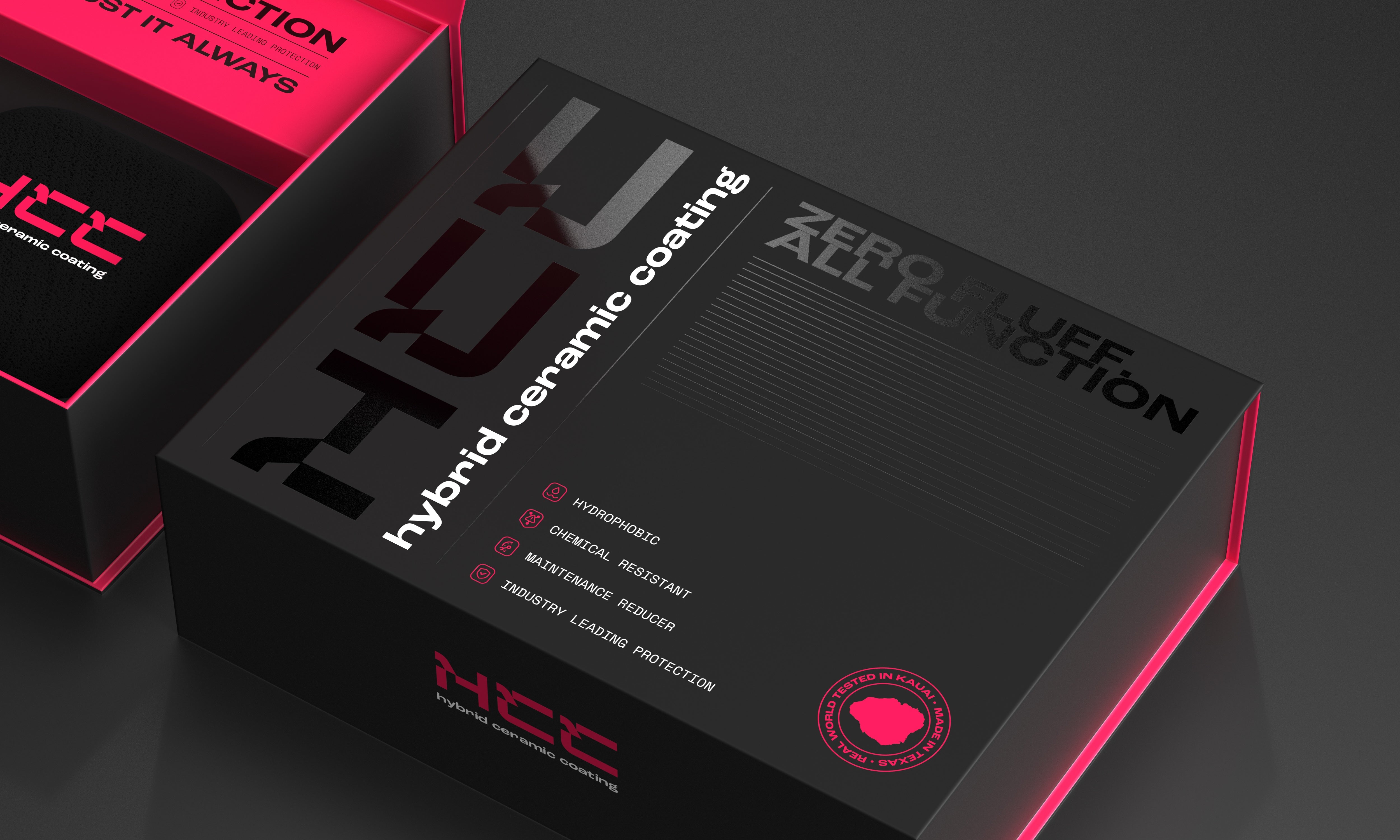
Single-part ceramic coatings for cars — including hybrid ceramics like HCC Hybrid Ceramic Coating — don't need a mixed activator. They cure through moisture-triggered condensation of silane groups (Si-O-Si network formation) with ambient humidity and air. You wipe them on, level them, and the film builds density on its own over hours to days.
Both routes can produce a durable, hydrophobic, chemically resistant film. They just get there differently.
How 2-Part and Single-Part Ceramic Coatings Differ in Practice

| Attribute | 2-Part (2K) Ceramic | Single-Part (1K) Hybrid Ceramic (e.g. HCC) |
|---|---|---|
| Bottles / packaging | Base + activator (2 or more bottles) | Single bottle, ready to apply |
| Cure mechanism | Chemical cross-linking after mixing | Moisture-triggered silane condensation |
| Pot life after mixing | 15 minutes to a few hours | Not applicable — no mixing |
| Ratio sensitivity | Stoichiometric (must be exact) | None |
| Typical DIY difficulty | Higher — mixing, wet-on-wet timing, waste | Lower — wipe on, level, walk away |
| Rated durability window | 2–5+ years (industry claims vary) | Multi-year — depends on prep, environment, and maintenance rather than a stamped bottle number (see our position on why we don't put a year on the bottle) |
| Where you find it | Pro installers, industrial, some enthusiast kits | DIY consumer market, some pro shops |
| Environmental sensitivity during cure | High — temperature affects pot life | Moderate — humidity helps, panel temp matters |
Pot Life Is the Big Constraint With 2-Part Systems
Once you mix a 2K coating, a clock starts. Trade documentation on ceramic-loaded 2-part epoxy shows pot life ranging from 15–25 minutes at room temperature — shorter in heat, longer in cold. The Finitec technical article on 2-component finishes notes typical open times of a few hours for polyurethane systems with isocyanate hardeners.
What this means in the real world: if you're doing an entire SUV on your driveway and it takes you 90 minutes, and your mixed pot life is 30 minutes, you're mixing three separate batches — with all the waste and timing risk that implies. Pros with heated bays and workflow planning manage this fine. DIY on a Saturday morning is a different story.
What 2-Part Ceramic Actually Buys You (And What It Doesn't)
Real Advantages
- Denser cross-linked film. With correctly mixed 2K chemistry, every reactive site cures. That can produce a harder, more chemically resistant film than a moisture-cured 1K system of similar chemistry.
- Less dependence on ambient moisture. 1K silane systems cure faster in higher humidity. 2K systems drive their own reaction and are less sensitive.
- Higher rated durability windows. When applied correctly by trained installers, some 2K systems carry 5+ year performance claims — though see the warranty caveat below.
Real Disadvantages
- Zero forgiveness on mixing. KTA-Tator's follow-up piece on incorrect mixing of multi-component coatings makes it clear: the "optimal chemical balance may not always translate to a mixing ratio of one part base to one part activator, or even a somewhat convenient ratio of two parts base to one part activator." If you're off, the film is off.
- Waste and cost per session. Mixed material you don't apply in the pot life is trash. You can't cap it and use it next weekend.
- Not automatically longer real-world life. Manufacturer durability claims — 1K or 2K — are almost never independently validated. What actually determines real-world life is prep quality, cure environment, layer thickness, and maintenance. A well-prepped 1K hybrid ceramic like HCC on a garaged car will outlast a rushed 2K install on a daily driver kept outside, and the math on multi-year protection favors the coating that was actually applied correctly, not the one with the bigger year number on the box.
- Warranty math often obscures real coverage. "Lifetime" and "10-year" durability claims frequently come with maintenance requirements that void coverage if missed. The Magnuson-Moss Warranty Act requires clear warranty terms, but "as long as you own the car" claims should be read side-by-side with the maintenance clause.
When 2-Part Ceramic Coating Actually Makes Sense
- You're paying a trained pro installer with a temperature-controlled bay and a documented process. In that setting, 2K's advantages line up with the environment it needs.
- You need documented chemical resistance for a specific use case — hangar aircraft finishes, marine applications with heavy solvent exposure, or industrial equipment.
- You want a coating that's less dependent on ambient humidity during cure and you don't mind paying the installer premium.
- You're comfortable with a fixed cure window that ties up your car in a controlled space for 24+ hours.
When Single-Part Hybrid Ceramic Is the Smarter Choice
- You're doing the work yourself in a garage or driveway on your own timeline.
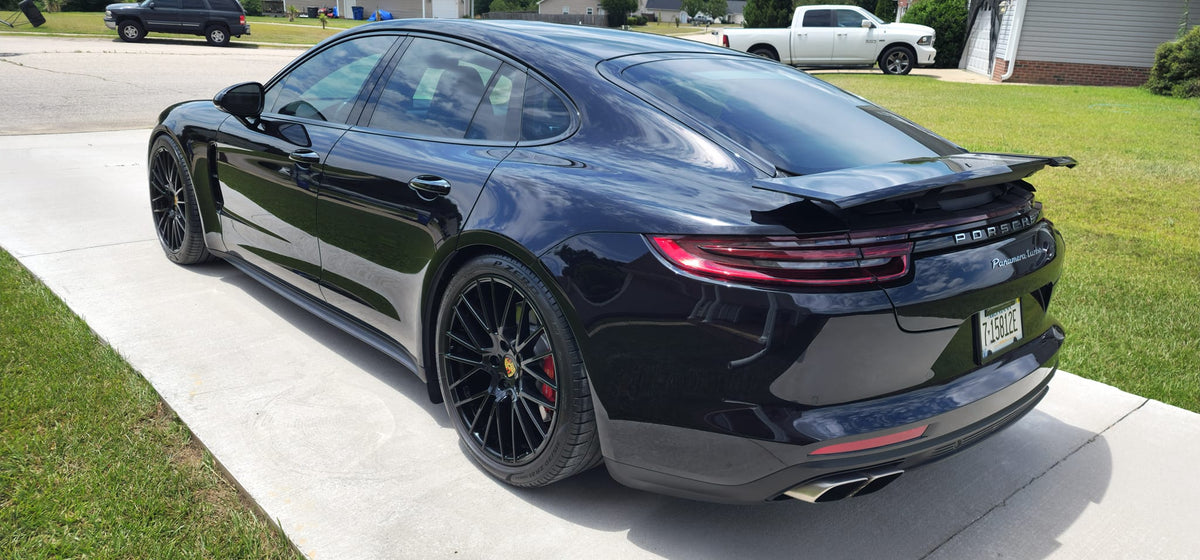
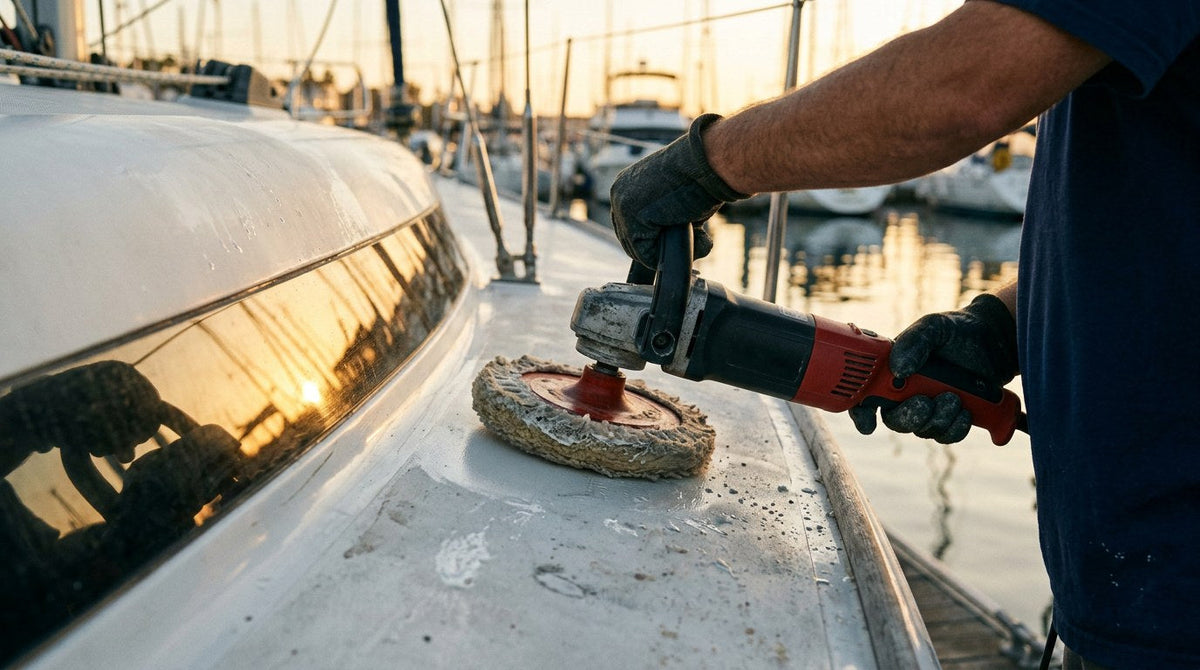
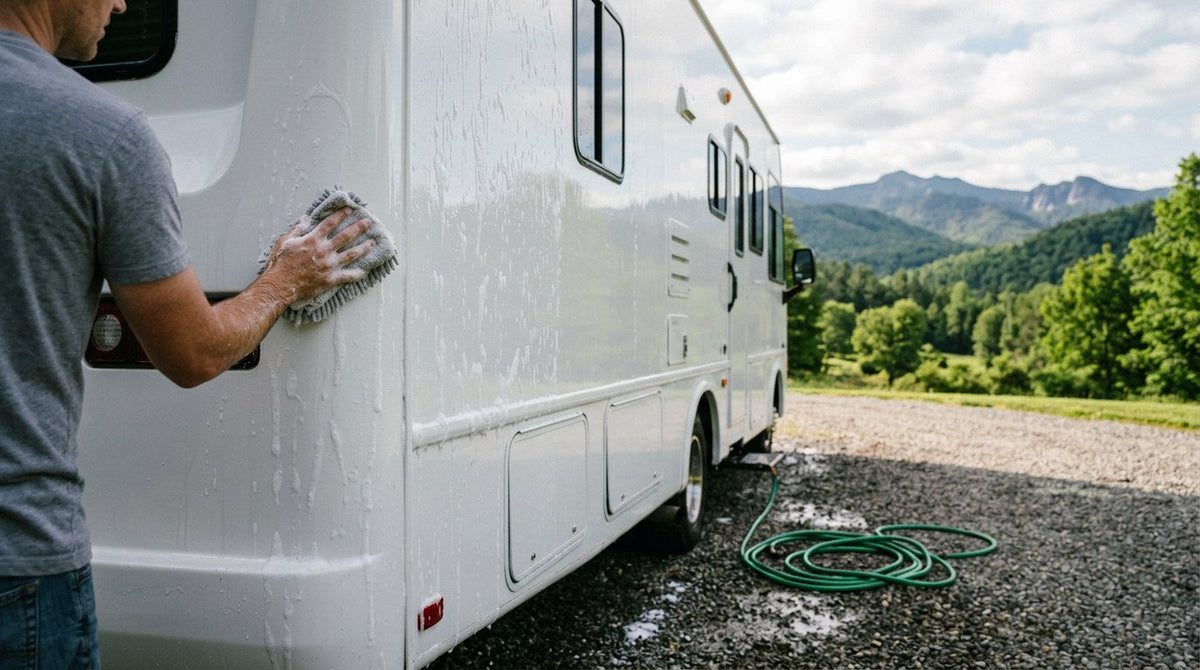
- You want to coat multiple surfaces — car, boat, motorcycle, bicycle — with one product. HCC is designed as an all-surface flagship for exactly this.
- You'd rather run a strong 1K coating you can top up when you want than commit to a single 2K installation with a rigid maintenance schedule to keep any warranty valid.
- You value the ability to do touch-ups. Adding another wipe-on layer to a 1K hybrid ceramic is trivial. Touching up a fully cross-linked 2K film means correction first.
- You prefer transparent pricing on the bottle rather than an installer quote that varies by shop and package tier.

Prep Matters More Than Whether It's 1K or 2K
The single biggest predictor of coating longevity — regardless of whether you chose a 1K or 2K product — is what happens before the coating goes on. Iron-fallout decontamination, tar removal, clay-bar mechanical decon, IPA panel wipe, and any needed paint correction all determine whether the coating bonds to fresh clear coat or to a layer of embedded contaminants sitting on top of clear coat.
Our 6-step pre-ceramic prep process covers this in detail. Skip prep and the fanciest 2K install in the world starts failing at the substrate level.
The Undrdog Approach: 1K Hybrid + Optional Boosters
Undrdog's flagship product line is single-part by design. HCC Hybrid Ceramic Coating is a single-bottle hybrid ceramic engineered to protect paint, glass, wheels, plastic trim, gel coat, aluminum, and composite finishes across cars, boats, motorcycles, RVs, and bicycles. It cures through the standard silane-condensation route in ambient conditions and doesn't require mixing, weighing, or bay control.
For owners who want more longevity, Undrdog Pro is a higher-solids 1K ceramic designed for automotive paint that goes on with a proper cross-hatch application and cures over 24 hours. Pro Plus layers on top of Pro to add a slicker, more hydrophobic top layer — functionally similar to a "base + top" system, but each product is stable in its own bottle rather than requiring stoichiometric mixing.
Compare our lineup in HCC vs Undrdog Pro and Pro vs Pro Plus to see which fits your goals.
How to Choose: A Practical Decision Framework
- Are you doing the work yourself? Yes → 1K hybrid ceramic. No → either works; pick a pro who documents prep, temperature, and cure protocol.
- Do you have a temperature-controlled garage where the car can sit 24+ hours? No → 1K. Yes → either.
- Are you coating multiple surfaces (car + boat + bike)? Yes → 1K all-surface product like HCC. No → either.
- Do you want the option to top up on your own schedule instead of a warranty-gated inspection? Yes → 1K hybrid ceramic. No → pro-installed 2K with a documented maintenance program.
- Do you want to layer/top-coat over time? Yes → 1K systems accept top-ups easily. 2K systems don't.
For most car owners doing the work themselves — or getting one done by a general-purpose detail shop rather than a specialty coating installer — a well-prepped 1K hybrid ceramic gives more real-world protection per dollar than a rushed 2K install.
Realistic Application Steps (1K Route)
If you decide a single-part hybrid ceramic is the right call, the process is straightforward:
- Wash with a pH-neutral shampoo and rinse thoroughly.
- Iron-fallout decontamination and clay-bar mechanical decon.
- Address any water-spot etching with a dedicated water spot remover before coating.
- Panel wipe with an IPA solution to remove any residues.
- Apply coating in a shaded, low-dust environment in 2ft × 2ft sections, cross-hatch, then level with a clean microfiber.
- Allow 24 hours before exposing to water; 5–7 days for full chemical resistance.
For the full step-by-step, see How to Apply a DIY Ceramic Coating Without Streaks or High Spots.
Frequently Asked Questions
Is a 2-part ceramic coating always better than a 1-part?
No. It depends on how it's applied, by whom, and in what environment. A rushed 2K install in bad conditions can perform worse than a careful 1K install in a properly prepped garage. Prep and cure environment matter more than which category the product falls into.
How long does 2-part ceramic coating last on a car?
Manufacturer claims range from 2 to 10+ years, but real-world durability depends on climate, storage, wash technique, and maintenance compliance. Independent long-term third-party testing of ceramic coatings is rare. Treat any "lifetime" claim with the same skepticism you'd apply to any consumer warranty — read the maintenance clauses.
Can I apply a 2-part ceramic coating myself at home?
Some enthusiast kits exist, but the risk profile is meaningfully higher: stoichiometric mixing, short pot life, and unforgiving cure windows mean errors cost you the whole install. For most DIYers, a 1K hybrid ceramic like HCC delivers better real-world outcomes.
What is the difference between a base coat and a top coat in a 2K system?
In many 2K systems (like those with base + top architecture), the base coat is a higher-solids resin that bonds to the paint and provides most of the protection. The top coat is a lower-solids finish that boosts hydrophobicity and slickness. Some products mix an activator into both bottles; others have the top coat function as the activator.
Do I need a 2-part ceramic if I have a garage-kept car?
No. A garage-kept car with regular maintenance will get excellent multi-year protection from a well-applied 1K hybrid ceramic. Garage storage is the single biggest longevity multiplier for any coating.
Are 2-part coatings VOC-compliant and safe for home use?
Varies by product. Some 2K systems use isocyanate hardeners (highly reactive, requires PPE). Others use lower-hazard activators. Read the SDS before any 2K install and use appropriate respiratory protection, especially in enclosed spaces.
Can I layer a 2K ceramic over an existing 1K ceramic?
Not directly. A cured ceramic film is intentionally chemically inert. To move from a 1K to a 2K system, the existing coating needs to be removed with polishing or specialized coating removers, then the surface re-prepped from scratch.
Why does Undrdog focus on single-part hybrid ceramics?
Because for the vast majority of car, boat, motorcycle, RV, and bicycle owners doing their own protection, single-part chemistry delivers strong real-world durability without the failure modes of stoichiometric mixing, short pot life, and environmental sensitivity that 2K systems bring.
What should I look for when comparing ceramic coatings — 2K or 1K?
Look for: transparent chemistry disclosure, honest durability windows (not "lifetime"), clear application instructions, published Safety Data Sheets, and a maintenance protocol you can actually follow. Products that hide behind marketing buzzwords ("9H nano-graphene-quartz-ionic") without technical specs are worth less than transparent products with modest, verifiable claims.

Leave a comment
This site is protected by hCaptcha and the hCaptcha Privacy Policy and Terms of Service apply.