

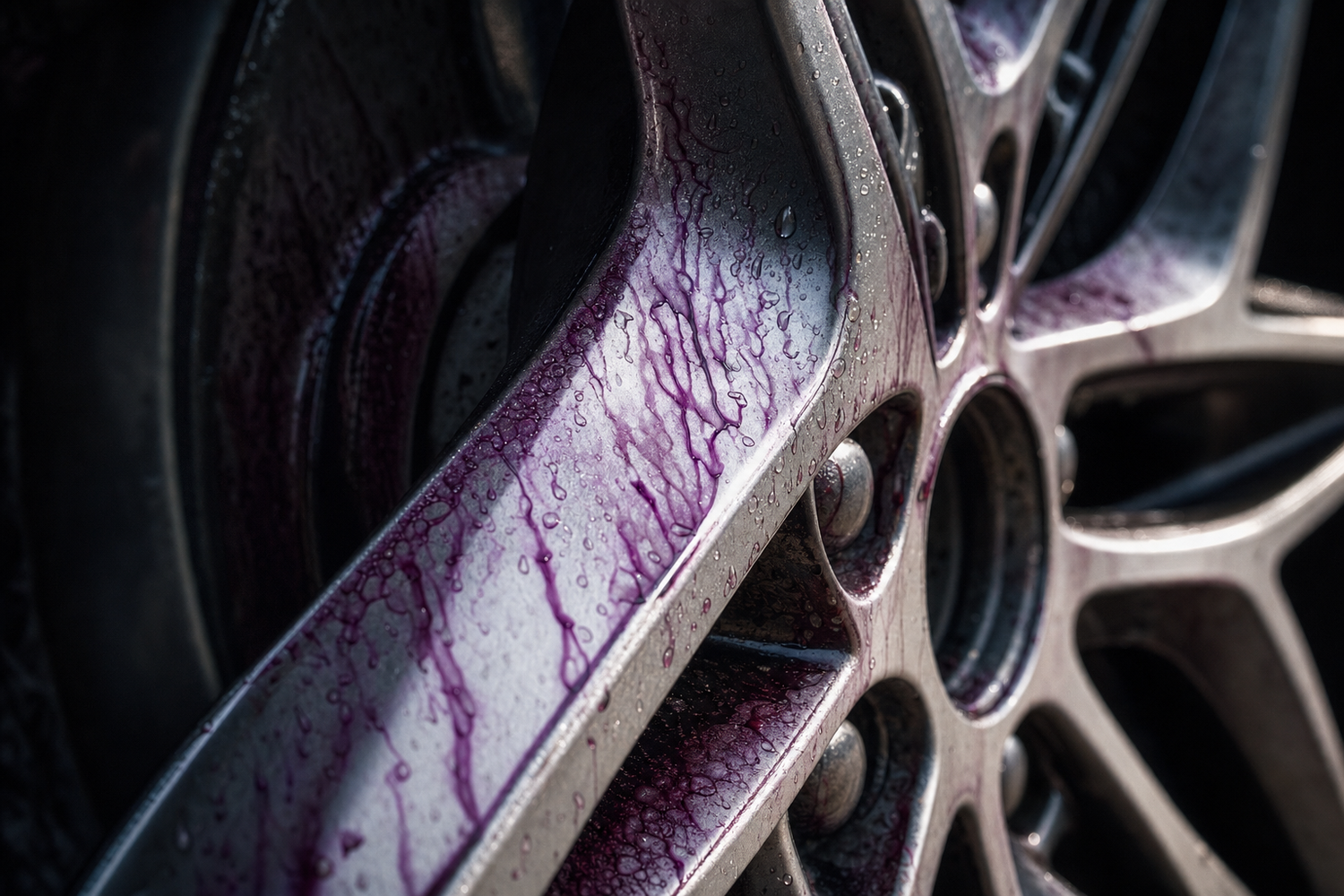
The purple streaks you see when spraying The Purps on wheels or paint are a real chemical reaction, not a dye effect for show — the color change happens as the product actively dissolves embedded ferrous (iron) contamination like brake dust and rail dust. The deeper and faster the purple bleeds, the more embedded iron was actually there. Here's what's happening, when to use it, and how often it belongs in your routine.

What The Purps Actually Does
The Purps is an iron and fallout remover designed to pull embedded ferrous contamination out of paint, wheels, and other hard surfaces. Brake dust is the biggest daily contributor — every time your brakes engage, they shed microscopic iron particles that land on your wheels and, over time, on lower body panels too. Rail dust and industrial fallout from driving near train tracks or factories work the same way. These particles don't just sit on top of the surface like dirt; they oxidize and bond into the clear coat or wheel finish, which is why plain soap and water can't fully remove them. Our guide to wheel and brake dust management goes deeper on why brake dust specifically is such an aggressive contaminant.
Why It Turns Purple
The Purps starts as a clear liquid. When it contacts iron contamination embedded in the surface, it reacts chemically and turns a deep purple within about 2 to 5 minutes. That reaction is the product actively breaking down the iron so it can be safely rinsed away — the more contamination present, the more dramatic the color change. It's genuinely useful as a visual diagnostic: if a panel or wheel barely changes color, it's relatively clean of iron fallout. If it turns dark purple almost immediately, that's a sign there's more embedded contamination than you probably realized. If that iron contamination has already progressed to visible etching or rust spotting, our guide on getting iron fallout and rust off your paint safely covers the recovery process.
The Purps at a Glance
| Property | Detail |
|---|---|
| Targets | Embedded ferrous (iron) contamination — brake dust, rail dust, industrial fallout |
| Reaction time | ~2–5 minutes to bleed purple where iron is present |
| Safe on | Coated surfaces, gelcoat (spot test first), satin/matte finishes, carbon fiber wheels |
| Use caution on | Chrome rims (possible discoloration); keep away from glass |
| Does NOT remove | Tar, tree sap, bug residue, general grime (needs separate decon step) |
| Typical frequency | Every few months for garage-kept cars; more often for daily drivers in heavy traffic |
When to Reach for It
The Purps fits into two main situations:
- Pre-coating prep — before applying any ceramic coating, including HCC, running an iron remover ensures the surface is free of bonded ferrous particles that would otherwise block proper adhesion. It's one step in the broader sequence we cover in the correct paint decon order before coating.
- Regular maintenance — even on a coated vehicle, periodic use (many detailers run it every few months, more often for daily drivers in high-brake-dust environments like stop-and-go city traffic) keeps wheels and lower panels from accumulating contamination the coating alone won't dissolve.

How to Use It Correctly
The process is straightforward, but skipping steps or diluting the product undercuts the result:
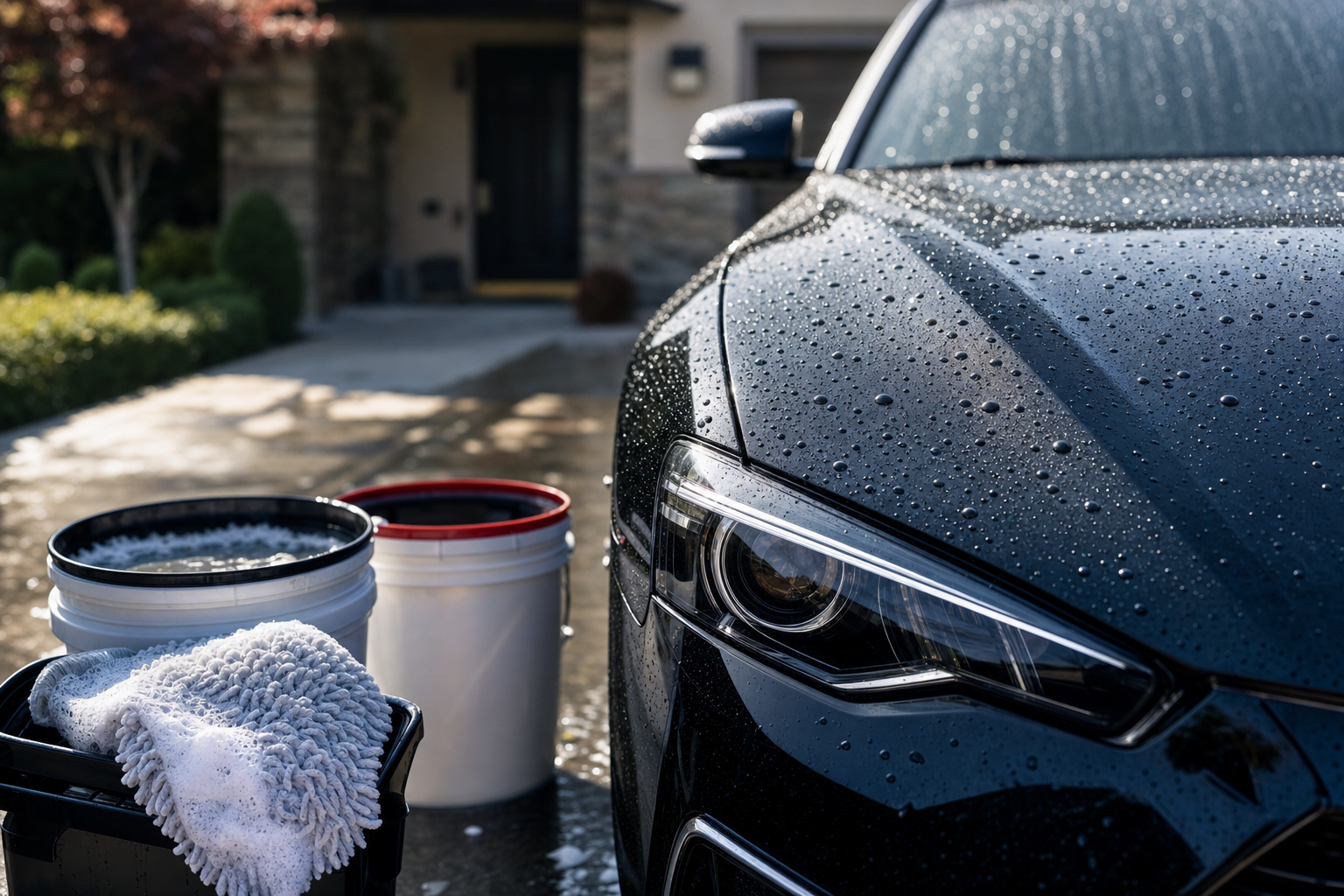
- Wash the vehicle first with a pH-neutral soap while it's still wet, removing loose dirt before the iron remover goes on.
- Spray The Purps directly on paint and wheels — don't dilute it, since diluting can leave contamination only partially removed, meaning you'll likely need to reapply.
- Wait 2 to 5 minutes and watch for the purple reaction where iron is embedded.
- Rinse thoroughly to wash away the now-loosened contaminants.
Always work outdoors or in a well-ventilated area, wear gloves and eye protection, and don't let the product dry on the surface — it's a genuinely reactive chemical product, not a rinseless spray you can leave and forget.

What It Won't Do
The Purps targets iron and ferrous fallout specifically — it won't touch tar, tree sap, bug residue, or general grime. Those need a separate decon step, typically a clay bar or clay-alternative treatment, after the iron remover has done its job. Think of it as one tool in a decon sequence rather than an all-in-one deep clean.
Frequently Asked Questions
Is the purple color permanent or does it wash off?
It rinses away completely once you wash the vehicle after treatment. The color is part of the active reaction, not a stain, and it disappears along with the dissolved contamination.
Can I use The Purps on a freshly coated car?
Yes — it's safe on coated surfaces and is actually a useful part of ongoing maintenance to prevent iron fallout from building up on top of or around your coating over time.
How often should I use it?
It depends on your driving environment. Daily drivers in heavy traffic or near industrial areas benefit from more frequent use, while garage-kept weekend vehicles might only need it every few months or as a pre-coating step.
Is it safe on chrome wheels?
Use extra caution — the product can cause discoloration on certain metals like chrome. Always spot-test an inconspicuous area first.
Can I use it on gelcoat or carbon fiber wheels?
Yes, both are generally safe, though gelcoat should be spot-tested first since formulations and gelcoat conditions vary.
What should I do if it doesn't turn purple at all?
That's a good sign — it means there's minimal embedded iron contamination on that surface. No further action is needed beyond your normal rinse.
Does diluting The Purps save product without losing effectiveness?
No — diluting can leave contamination only partially removed, which often means reapplying anyway. Use it undiluted for reliable results.
That purple bleed isn't theater — it's chemistry doing exactly what it's supposed to do. If your wheels or paint haven't seen an iron treatment in a while, The Purps is worth adding to your next wash day.


Leave a comment
This site is protected by hCaptcha and the hCaptcha Privacy Policy and Terms of Service apply.