

A ceramic coating water-spot test is useful only when you know the water, exposure, surface, cleaning steps, and outcome being assessed. Do not treat an immersion result as automatic proof against dried spots: ASTM D870 covers immersion in distilled or de-mineralized water, while ISO 2812-4 describes spotting methods for assessing the effects of liquids or paste-like products on coating systems (ASTM D870 scope, ISO 2812-4 abstract). Ask what was tested before deciding what was proved.
That distinction matters whether you are shopping for a bottle, comparing installation packages, or trying to understand a demonstration. The useful question is not simply whether a panel looked good afterward. It is whether the result answers the water-spot question you actually have.
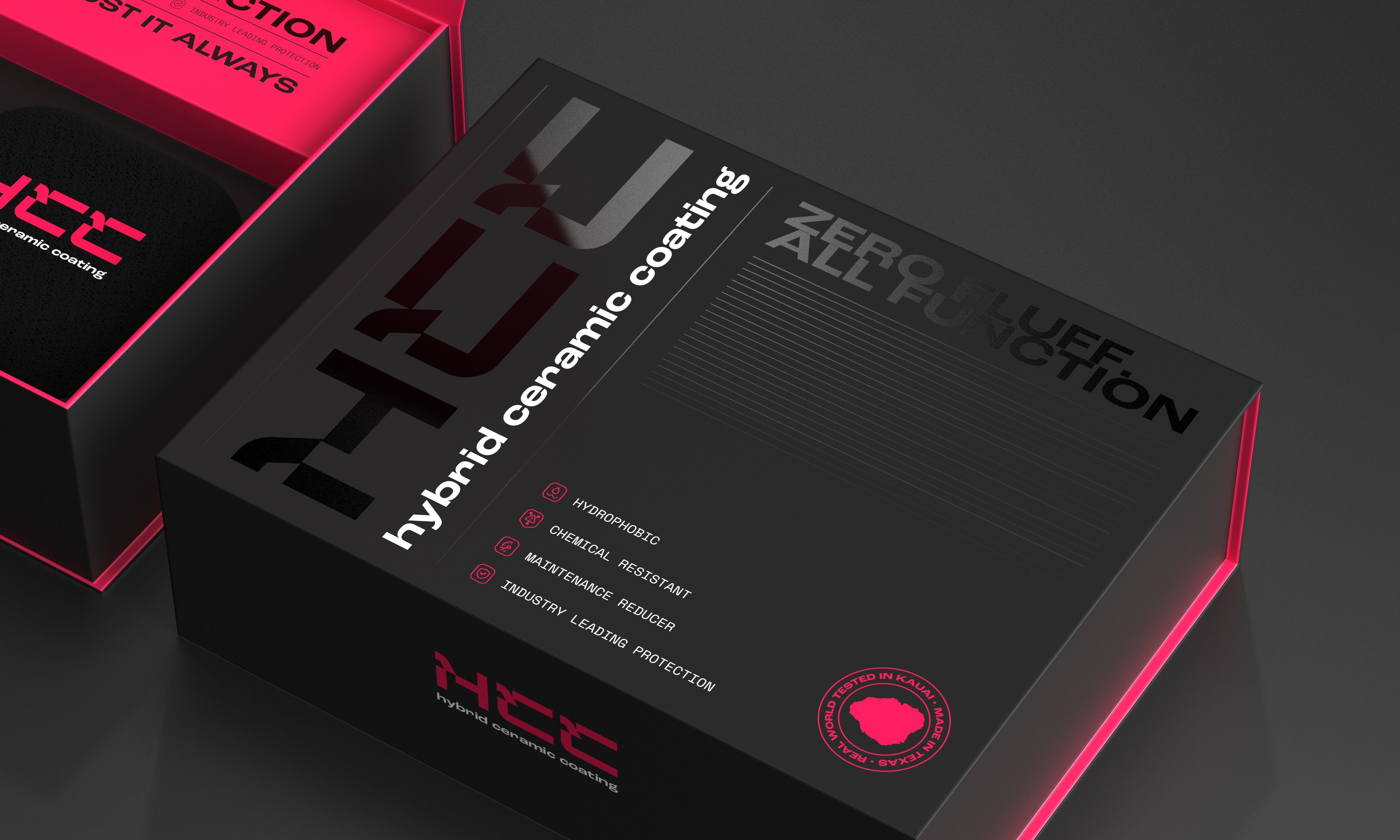
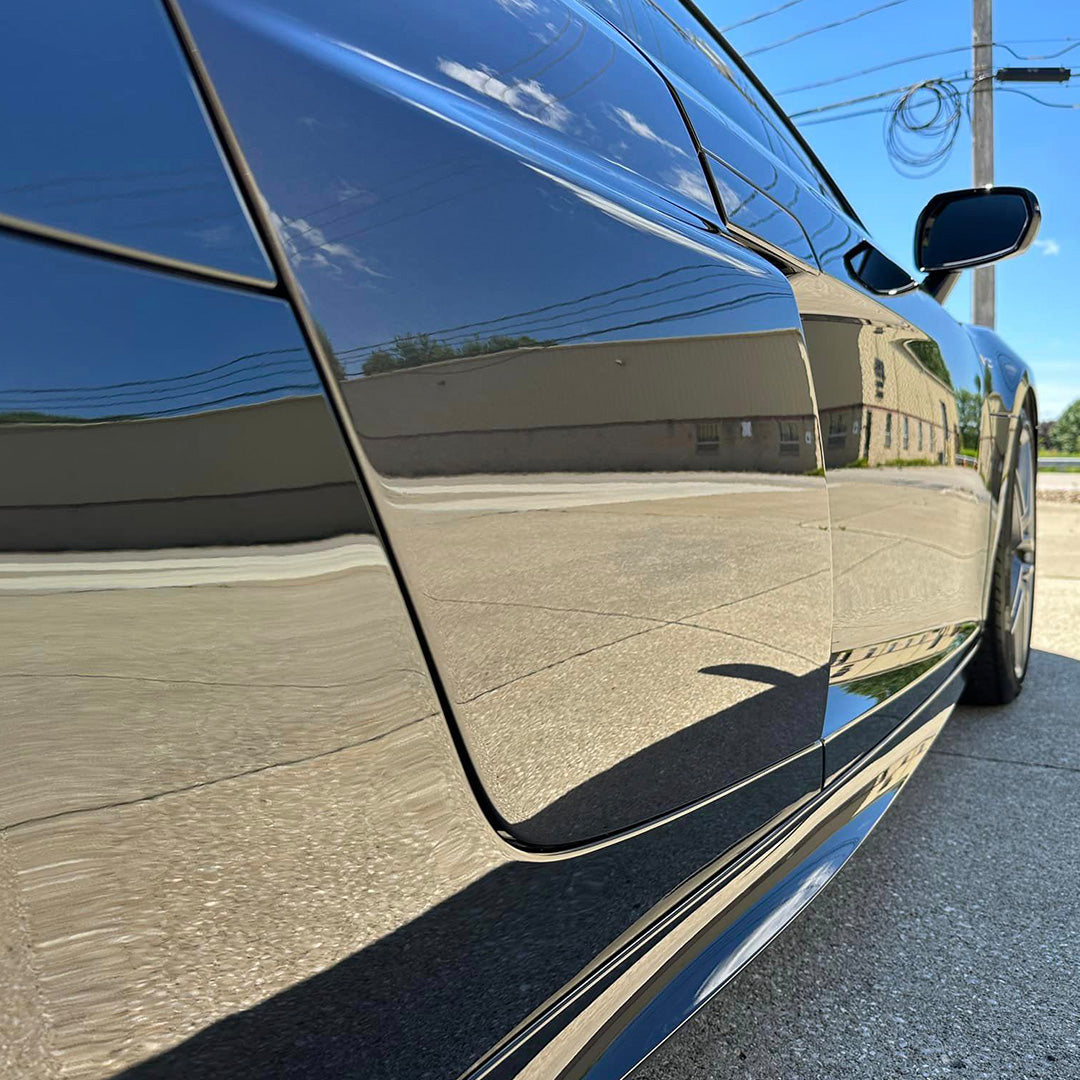
Photography note: the hero and body photographs show general Undrdog vehicle-care context. They are not a before-and-after sequence, a controlled water-spot test, or evidence that a particular product won a comparison.
Define what “water-spot resistance” is supposed to mean
Before asking for a score, ask for a definition. Does the claim concern how much visible residue remains after drying, how easily that residue cleans away, or whether the underlying coating or finish changes? We recommend treating those as separate questions instead of accepting one attractive image as the answer to all three.
The water itself deserves attention: USGS describes hardness primarily in terms of dissolved calcium and magnesium and identifies spots and film on glassware as examples of hard-water residue (USGS water-hardness explanation). Its glossary also describes evaporite deposits as minerals formed through evaporation of water containing salts (USGS glossary).
Those references explain why water composition belongs in the discussion; they do not establish an automotive clear-coat damage threshold or a safe cleaning recipe. Do not turn a general water-chemistry explanation into a claim that every mark on your vehicle has the same composition or needs the same treatment.
For a buyer, the practical distinction is between an observation and an interpretation. “A ring is visible” records what you can see. “The clear coat is etched” identifies a material condition that needs supporting assessment, not just stronger wording.
Separate deposits, cleanup, and lasting surface change
Use the following table as a proposed reading checklist, not as an official test standard. The point is to make the seller or reviewer identify the question and the stage at which the answer was recorded.
| Question being asked | Evidence to request | Conclusion to avoid |
|---|---|---|
| How much visible spotting appeared? | Comparable views before exposure and after the specified drying or exposure stage. | No visible spot in one image means no possible surface change. |
| How easily did the marks clean away? | The actual cleaning product, method, and before-and-after observations. | A post-polishing image proves ordinary washing was sufficient. |
| Did a coating or substrate change? | A defined assessment, identification of the affected layer, and the stated evaluation time. | Every persistent mark is automatically paint etching. |
| Which tested system performed better? | Matched preparation, exposure, cleaning, and assessment across the comparison. | Different panels under different conditions establish a product ranking. |
ISO's public abstract explicitly distinguishes effects on the coating from possible assessment of damage to the substrate, which is why identifying the affected layer matters (ISO 2812-4). When a report says “damage,” ask what was examined and how that conclusion was reached.
A result can still be useful when it is narrow. If the evidence shows easier cleanup under a stated procedure, describe it as easier cleanup under that procedure. Do not quietly expand it into a promise of no deposits, no damage, or no maintenance in every setting.
Check the water and the exposure before comparing coatings
Ask which water was actually used
“We used water” is not enough detail for a mineral-spot comparison. USGS defines water hardness using dissolved mineral content and cautions that regional hardness maps are not intended to make decisions for an individual property; it directs readers toward locally relevant information from a water utility or other appropriate local provider (USGS interpretation guidance).
Our recommended evidence request is straightforward: identify the water source and any measured composition that the test relies on. If a value is not available, record “not reported” rather than substituting a national map, a guess based on where the reviewer lives, or the appearance of the water.
Ask whether the water stayed wet or dried
ASTM D870 describes partial or complete immersion of coated specimens in distilled or de-mineralized water at ambient or elevated temperatures (ASTM D870 scope). That exposure is not the same description as droplets drying on a panel, so an immersion result alone does not answer a dried-mineral-spot question.
Ask the reviewer to identify the actual exposure instead of supplying missing steps yourself. Was there one exposure or a series? Was the panel left wet, dried, rinsed, or cleaned between observations? Our recommendation is to keep those details beside the result so the conditions do not disappear when the image is shared.
Ask about the surface and preparation
ASTM notes that immersion-test failure can involve the coating, substrate contamination, or inadequate preparation, and describes the practice as useful for evaluating coatings or complete coating systems (ASTM significance and use). This supports asking about the prepared system rather than assuming that the bottle alone explains the outcome.
Request the substrate, finish, preparation process, coating identity, application instructions followed, and condition at the start. Ask whether another maintenance product was present. These are our recommended comparison fields, not a claim that the public abstracts specify a universal automotive test recipe.
Read the cleaning step as carefully as the exposure
For evidence review, separate the result before cleaning from the result after cleaning. Ask to see both stages when the claim depends on removability. A clean final picture without the intervening method leaves an important part of that claim unreported.
We recommend recording the cleaner identity and its actual use, whether the procedure was a routine wash or a different treatment, and whether abrasive correction occurred. Do not treat “wiped clean” as a complete method. If one side received additional work, describe the comparison as including that difference rather than assigning the entire outcome to the coating.
Also ask how the finished surface was judged. Our guide to gloss photographs versus measurements explains the separate appearance-measurement question. For this topic, insist that the chosen observation matches the claim: a general shine image is not automatically a documented assessment of the original spot.

A professional's assessment and careful cleaning are legitimate services. Asking for the method is not an accusation that the work has no value. It is how you distinguish the value of the coating, the maintenance process, and any corrective labor instead of bundling all three into one unexplained result.
What a named test standard does and does not establish
ISO 2812-4 describes spotting methods for determining the resistance of individual-layer or multi-layer coating systems to liquids or paste-like products (ISO public abstract). That identifies a relevant family of methods; the abstract is not a result for a retail coating and does not identify the sample offered to you.
ASTM D870 also states that its practice does not specify specimen preparation, specific test conditions, or evaluation of results (ASTM scope, section 1.2). A method number therefore does not eliminate the need to read the conditions and the actual report.
Keep the source boundary clear. We reviewed the publicly available scope and significance information, not the full purchased standards, and this article does not provide a standards-compliant laboratory procedure. For a formal test, use the applicable complete method and qualified testing support.
ASTM further cautions against representing immersion-test results as equivalent to a period in the natural environment without establishing quantitative correlation for the coating or system (ASTM section 4.3). Do not convert a favorable water test into an invented number of years.
Once the exposure makes sense, use our lab-report verification checklist for the separate issuer, sample, and document-traceability checks. Here the priority is narrower: does this test actually address the water-spot claim?
A non-destructive owner observation routine
You do not need to create damage to keep useful records. We recommend observing ordinary use and following the vehicle, coating, and maintenance-product instructions rather than deliberately drying hard water on paint, heating a panel, or challenging it with an improvised chemical mixture. Do not extend exposure for the sake of a photograph.
This is a service log, not a controlled laboratory experiment. It can help you explain a recurring issue to your installer or product supplier without pretending that one vehicle establishes a universal ranking.
- Identify the area: Note the panel, existing condition, coating history if known, and whether you are looking at paint, glass, film, or another surface.
- Record the event: Note when you first noticed the marks and any known recent exposure, such as a wash or nearby irrigation. Separate what you know from what you suspect.
- Take comparable photographs: Keep the location, viewing angle, lighting, and panel condition as consistent as practical. Save the original images rather than only a cropped comparison.
- Follow normal approved care: Record the products and steps actually used. Do not add a new chemical challenge to make the observation seem more scientific.
- Describe what remains: Record whether the visible marks changed, disappeared, or remained. Avoid diagnosing the affected layer from a phone image alone.
- Escalate uncertainty: If marks persist or damage is suspected, ask for a qualified assessment before repeating stronger treatments.
For example, “marks on the hood after a known sprinkler event; some remained after the approved wash” is a useful hypothetical record. “The coating has no chemical resistance” is a much broader conclusion than that record supports. Keep the observation specific enough that someone can investigate it.

A short request you can send before buying
Keep the conversation focused enough that a seller or reviewer can answer it. Our suggested request is: “When you describe water-spot resistance, do you mean fewer visible deposits, easier cleaning, or less lasting surface change? Please share the tested surface, water specification, exposure, cleanup method, evaluation criteria, and the result for the exact coating being offered.”
Then ask what the evidence does not cover. If the answer concerns one prepared panel under one set of conditions, preserve that limitation. Missing information is a reason to keep a claim unverified, not proof of bad intent or proof that the product cannot work.
As a hypothetical comparison, imagine one demonstration shows a surface immediately after rinsing while another shows a dry surface after a specified exposure and cleaning process. We would not rank the coatings from those two final images. First ask for comparable stages and conditions; there may be a useful answer, but those images alone do not supply it.
How Undrdog does it
HCC Hybrid Ceramic Coating is Undrdog's all-surface flagship for cars, boats, planes, and bicycles. Its long-term positioning is multi-year protection, with service life dependent on preparation, exposure, use, and maintenance rather than a fixed year count that this article invents (HCC product information).
Use the same evidence standard on our claims. This article does not present an HCC water-spot test result, a comparative ranking, or certification under either method discussed above. An official product photograph and a technical-standard link are not substitutes for a product-specific result.
For a suitable new coating project, HCC is our starting recommendation; it is not a diagnosis or repair for an unexplained mark. Identify the surface and its condition, confirm the current preparation and application guidance, and decide whether you need professional assistance before buying a treatment.
Read the current handling precautions as well: HCC's safety information specifies ventilation, protective equipment, and separation from heat and ignition sources (HCC safety directions). Do not turn a question about resistance into an uncontrolled experiment with the liquid product.
Frequently asked questions
Does a water-resistance test prove water-spot resistance?
Not automatically. ASTM D870 describes immersion in distilled or de-mineralized water, while ISO 2812-4 covers spotting methods involving liquids or paste-like products; check which exposure and outcome were actually assessed (ASTM scope, ISO abstract).
Why does the water source matter?
USGS describes hardness primarily through dissolved calcium and magnesium and identifies hard-water residue as a cause of spots or film on glassware (USGS explanation). Ask which water was used rather than assuming every sample represents the same exposure.
Does a visible ring prove that the paint is etched?
No; record the visible mark without automatically assigning it to a damaged layer. ISO's abstract distinguishes effects on a coating from assessment of substrate damage, so request an appropriate assessment when the condition is uncertain (ISO 2812-4).
Should I deliberately let hard water dry on my car to test it?
We do not recommend deliberately creating a spotting challenge on your vehicle. Document ordinary use, follow approved maintenance instructions, and seek a qualified assessment of persistent marks rather than increasing exposure to produce a dramatic result.
What if the test panel was polished afterward?
Treat that as a different reported cleanup process, not as evidence that ordinary washing achieved the result. Ask to see the observation before correction and keep the corrective work separate when interpreting the coating claim.
Can an immersion-test result predict years of protection?
Do not make that conversion without supporting correlation. ASTM D870 expressly cautions against equating immersion results with a period in the natural environment until quantitative correlation is established for the coating or system (ASTM section 4.3).
What is the most useful evidence to request?
Request the exact product and prepared surface, water specification, exposure, cleaning method, evaluation criteria, and results at the relevant stages. This is our practical evidence checklist, not a replacement for a complete laboratory method or proof that any named coating passed it.
Does this article establish an HCC water-spot ranking?
No. It explains how to evaluate evidence and does not report an HCC comparison test; ask for product-specific support for the particular claim you need to assess. Choose HCC for a suitable coating project, not on the assumption that this guide demonstrates a result it never tested.
Choose protection with clear expectations
Review HCC for your next suitable coating project, and keep preparation, maintenance, and evidence part of the decision.
Shop HCC Hybrid Ceramic Coating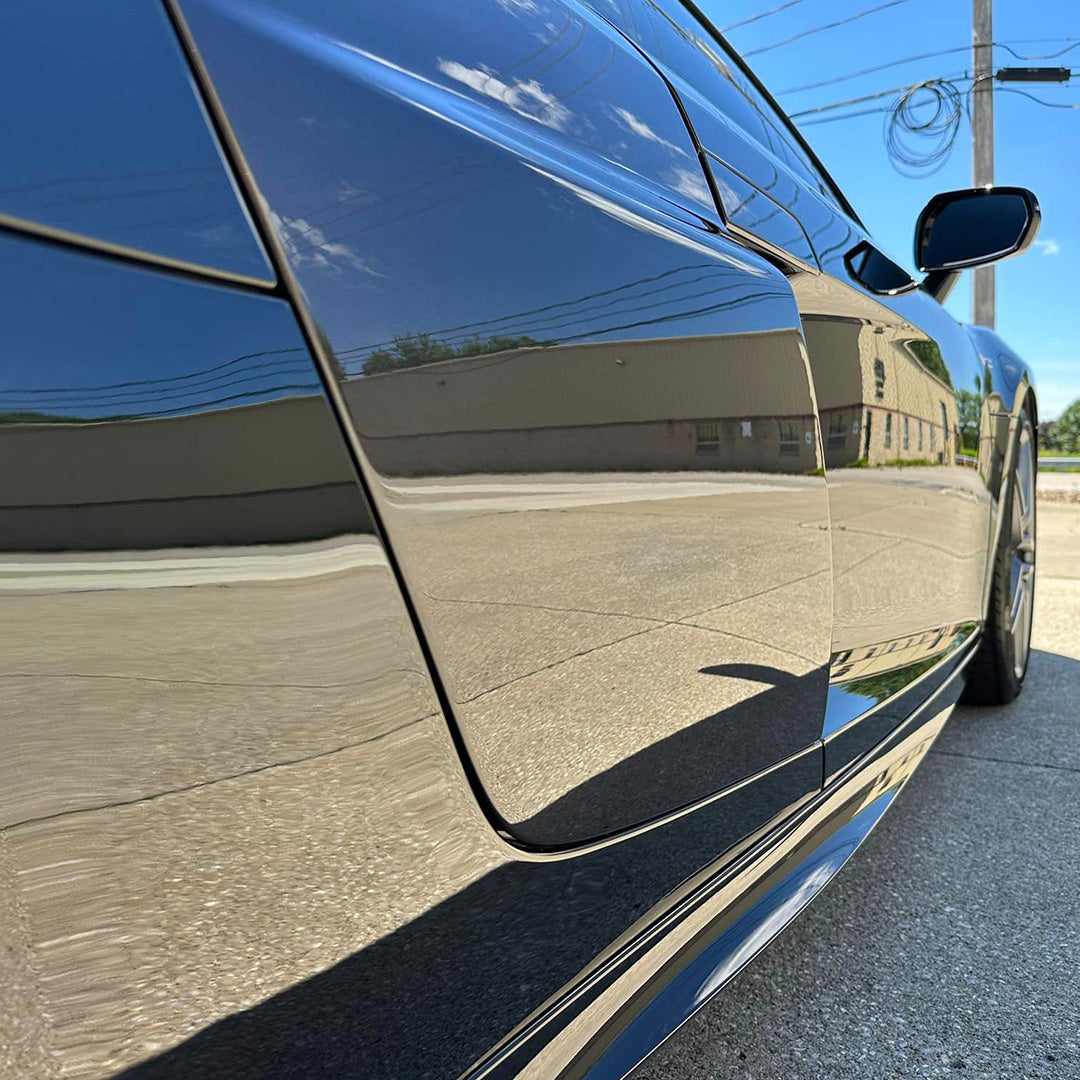

Leave a comment
This site is protected by hCaptcha and the hCaptcha Privacy Policy and Terms of Service apply.