

Your coating either works or it doesn't. The problem is the industry has trained you to trust the sales pitch instead of the surface, and most "my coating failed" panic comes down to one of three things: a dirty coating, an unrealistic expectation, or a real failure that the installer's warranty conveniently excludes. This post gives you a five-minute, no-tools DIY test kit that separates those three, plus one lab-style method a science-minded owner can run at home with a phone. No brand names in the headers. No opinions dressed up as measurements. Just what the water is telling you.

The one-line answer
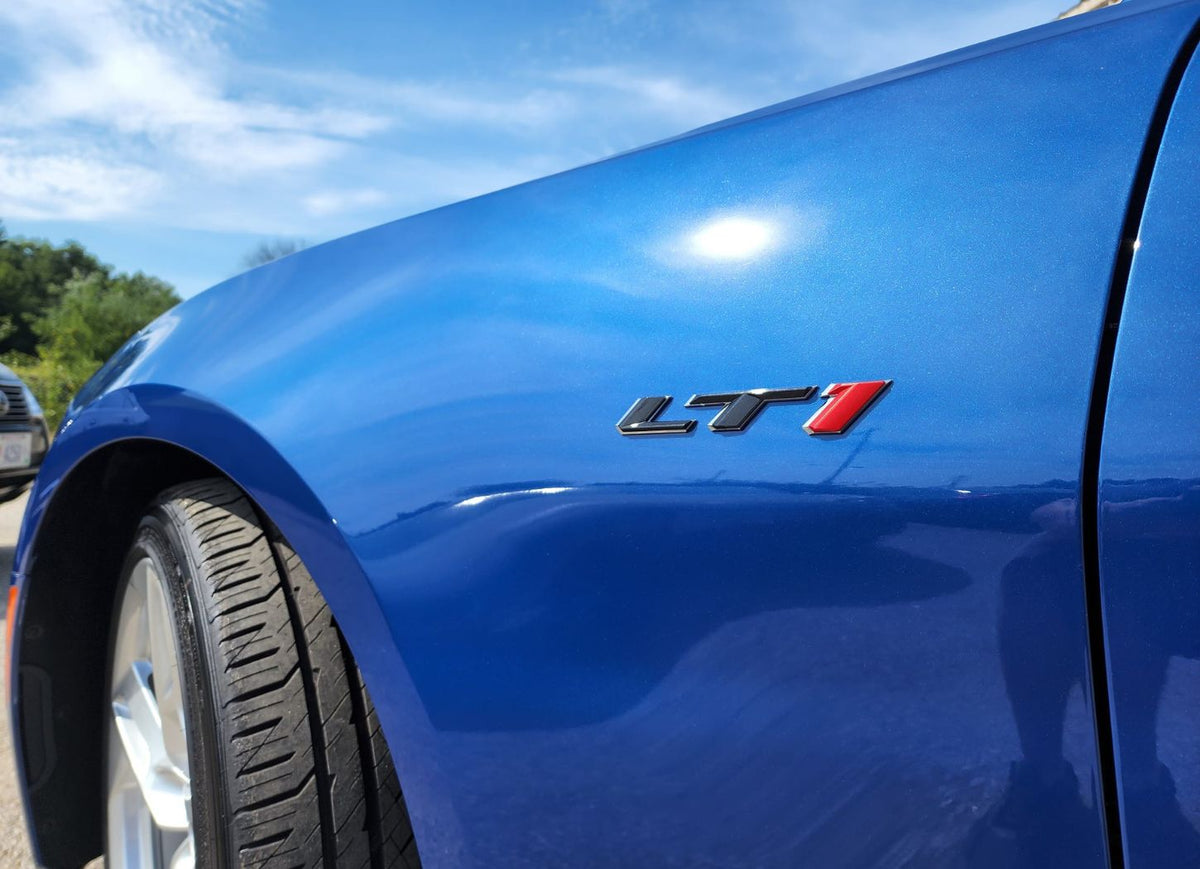
A working ceramic coating pulls water into tight, round beads and sheds sheets of water off a tilted panel fast; the paint under it feels slick, and dirt rinses off with pressure alone. If any one of those three signs is missing, the coating might be failing — but nine times out of ten, it's the coating that is dirty, not dead. That is not our opinion. That is the working consensus from paint-protection specialists and a point New Again's paint-protection team makes bluntly: "loss of beading is far more often dirt than damage."
What "hydrophobic" actually means (the number that matters)
The industry throws around the word "hydrophobic" like it's a feature. It is a measurement, and it has a number. That number is called the water contact angle, and it is the angle a droplet forms where it meets a surface. On a perfectly hydrophilic surface, water spreads out flat and the angle is near zero. On a hydrophobic surface, the droplet balls up.
The thresholds are agreed on across chemistry and materials science:
- Under 90°: hydrophilic. Water spreads and stays. Wikipedia's contact angle entry defines this outright: "if the water contact angle is smaller than 90°, the solid surface is considered hydrophilic and if the water contact angle is larger than 90°, the solid surface is considered hydrophobic."
- 90° to 150°: hydrophobic. Water beads. This is where working ceramic coatings sit — a 2025 peer-reviewed overview of automotive coatings puts "normal" silica ceramic coatings in the 90°–150° range and notes that "a coating that results in a contact angle of more than 90° will cause the water to bead."
- Above 150°: superhydrophobic. Water forms nearly perfect spheres and rolls at the slightest tilt. That same review places top-end formulations here.
Real-world numbers from the detailing side track the theory: Eurolux Detailing's technical write-up states that "professional-grade ceramic coatings routinely achieve contact angles of 110 degrees or higher when freshly applied, with premium formulations reaching 115 to 120 degrees." OCD Car Care's chemistry breakdown puts it in visual terms: "At a very high contact angle, say 145 degrees, water almost appears as three quarters of sphere sitting on top of a surface."
Why this matters for you: you don't need a lab. You need a camera and a clean panel. If your droplets look like flat pancakes, the coating is either buried under contamination or worn through. If they look like marbles standing on the paint, it is working.
The five-minute Zero Fluff test kit
Run these in order. Start non-invasive, escalate only if something looks wrong. Every one of these can be done on a clean, freshly rinsed panel with tap water and a phone.
Test 1 — The rinse bead test
Wash the panel with a pH-neutral shampoo. Rinse it. While it is still wet, mist a light spray of clean water across the top and watch what happens.
- Pass: water pulls into tight, discrete beads that stand up above the paint. Beads are typically 2–4 mm across on a working consumer ceramic. Under gravity, they slide down clean lines.
- Marginal: beads form but they are flattened, oval, and slow to move. Slickness is soft.
- Fail: water spreads into wide puddles or leaves behind a thin, wetting film. The panel looks "wet" instead of "beaded."
Important caveat before you panic on a marginal or fail: the New Again knowledge base notes plainly that "almost anything that lands on top of it (traffic film, wax residue from an automatic car wash, hard-water spots, tree sap, tar, bonded fallout) sits on the coating, not in place of it, and any of those can flatten the beading and make the paint feel rough." That is Test 2's job.
Test 2 — The sheeting test
Take a garden hose off the trigger nozzle. Let a low-pressure, open flow of water run over a rinsed panel at the top and watch how it leaves. Sheeting is not the opposite of beading — the two are separate hydrophobic behaviors. OCD Car Care defines it directly: "Water sheeting is the surface condition where water tends to form into pools and the pooled water falls off a surface together like a sheet."

- Pass: water peels off the panel in one fast, continuous sheet, leaving the paint mostly dry within seconds. Very little residual water clings to horizontal surfaces.
- Fail: water clings, streaks, and leaves fingers of standing water. On a horizontal panel, puddles sit rather than run.
A car that beads well but doesn't sheet well is usually a contaminated top-surface issue, not a base-coating failure. That is a strong signal to move to a decon wash, not to strip and reapply.
Test 3 — The bag slickness check
Put your hand inside a thin plastic sandwich bag. Run it flat across the coated panel and then across an uncoated reference surface (a headlight, a plastic trim piece, or the inside of a fender well). Slide slowly. This is the classic detailer feel test and it isolates surface texture from optical shine.
- Pass: the panel feels glass-slick, with no drag, no bumps, no grabbing.
- Marginal: minor tick-tick-tick of bonded fallout or road film. The coating is still there; the contamination is on top of it.
- Fail: the panel drags rough all the way across, including panels that aren't horizontal. Combined with a failed sheet test, this points to a real coating problem.
If Test 3 is marginal or failing, treat the paint before you retest anything. The Purps iron and fallout remover pulls embedded iron out of the clear coat; a decontamination wash with a clay bar or clay towel removes the bonded organic film. Under a coating, bonded fallout can look identical to a failing coating. It is not the same thing.
Test 4 — The dirt release test
Skip a wash. Drive the car for a week. Then rinse it with plain water — no soap, no touching the paint. On a working ceramic, the majority of loose dust and film should leave with the water. Bonded contamination will not. Bird droppings and tree sap will not. Those are separate problems that a coating can slow but not eliminate.
Test 5 — The dyed-water contact angle test (for the science kid in you)
This is the closest you can get to lab measurement at home. On a clean, dry, level panel, put a single drop of water dyed with a few drops of food coloring so it's visible in a photo. Set your phone flat on the panel at the same level as the drop. Photograph the drop's side profile against a plain background. Use a free online protractor overlay or a slope-measurement app to estimate the angle between the panel and the tangent of the droplet edge.
- 90°+ means a hydrophobic surface — you have a working coating.
- 110°–120° range is what a fresh consumer ceramic typically measures, per the numbers cited above.
- Under 90° on a clean panel means the hydrophobic layer is gone — the coating has worn through or was applied to a contaminated surface.
Two important honest caveats: home phone-camera contact angle is not laboratory data. The Wikipedia page on contact angle notes that "contact angles are extremely sensitive to contamination; values reproducible to better than a few degrees are generally only obtained under laboratory conditions with purified liquids and very clean solid surfaces." Your reading is directional, not certified. It is still more useful than an installer's mood.
The interpretation table
| What you see | Most likely cause | What to do first |
|---|---|---|
| Tight beads, fast sheeting, slick feel | Coating working normally | Wash, dry, enjoy. Retest quarterly. |
| Flat oval beads, slow sheeting, slightly rough feel | Top-surface contamination or wax residue | Decon wash + iron remover. Retest. |
| Wetting film, rough panel, dulled reflection | Bonded fallout + top-surface film | Clay bar or clay towel. Iron remover. Then retest. |
| Wetting film, panel still slick, no visible dulling | Auto-wash wax topper masking hydrophobics | Strip with a decon shampoo. Retest. |
| Wetting film on clean, freshly decontaminated paint | Coating layer has actually worn or was misapplied | Correction + fresh coating. Not a topper. |
Notice how many rows land on "clean it first." That is not an accident. Jim Bo's Detailing's write-up on this puts it plainly: "over time, your coating can get covered by road film, oils, soap residue, or hard water minerals. These create a layer that blocks the hydrophobic properties — even though the coating is still there underneath." A working coating that has been buried under six months of drive-thru wash wax will look exactly like a dead one until you strip the top.
Why the water lies — and how to make it stop
Here are the five most common reasons a working ceramic coating looks broken. These matter because if you don't rule them out, you will replace a coating that didn't need replacing, and pay for it twice.
1. Wax and drive-thru "sealant" toppers
Almost every automatic car wash sprays an add-on wax or "sealant." Those products sit on top of your coating and change how water behaves. Some coatings, some toppers, some soaps make water sheet rather than bead — Jim Bo's Detailing notes that "sheeting water is often a sign the slick top layer is dirty — not that the base coating has failed."
2. Hard-water minerals
Rinse with mineral-heavy tap water, park it in the sun, and you're leaving behind a limescale-thin film. It kills beading instantly. The New Again team describes this exact scenario: "as it dries in the morning sun it bakes on as a faint, limescale-like film across the horizontal panels. That film stops water beading completely."
3. Bonded iron fallout
Brake dust, industrial rail dust, and airborne metallic particles bond to the clear coat. Even sitting on top of a coating, they roughen the surface and stop water from moving cleanly. An iron remover reacts with those particles and rinses them off.
4. Bird droppings and tree sap
These are acidic and reactive. A coating slows the etch; it does not stop it. If you leave them on for days, the coating still does its job but the panel will look wrong exactly where the deposit sat.
5. Actual coating wear
Every hydrophobic layer wears. It wears faster on horizontal panels that eat UV and rain, on lower doors that catch grit, and on cars that live outside. Eurolux's overview is candid: "all hydrophobic coatings experience some reduction in contact angle over time." The question is whether the loss is on top of the coating or of the coating itself. Tests 3 and 5 give you the answer.
The "installer says my warranty is voided" trap
If you paid for a professionally installed coating and it's failing early, here is what the warranty language will usually try to do to you. This is category-level, not brand-specific — pull the PDF for your specific product and read every exclusion:
- Annual "certified inspection" requirement. If you missed one, coverage is often void.
- Approved-wash-only requirement. Automatic car washes, drive-thrus, and non-approved shampoos frequently void coverage.
- Environmental exclusions. Salt, industrial fallout, tree sap, bird droppings, water spots, rock chips, and UV damage are almost always excluded — which covers most reasons a coating fails.
- Correction-only remedy. Coverage may pay only for reapplication labor at the original installer's shop, not a refund and not a portable repair.
The Magnuson-Moss Warranty Act (the federal law governing consumer warranties) requires warrantors to make warranty terms available before purchase, and prohibits certain tie-in provisions — but it doesn't stop a company from writing narrow coverage. The FTC's summary of the Magnuson-Moss Act is the primary source. Read the warranty before you sign, and take a photo of your installer's copy the day the coating goes on. Then run this five-minute test yourself at every wash. You'll know months before they will.
How Undrdog does it
Zero Fluff is not marketing on top of marketing. Here is the plain version.
Undrdog does not stamp a year figure on HCC Hybrid Ceramic Coating or on Undrdog Pro and Pro Plus. We don't add years to coatings because no one knows how long a coating will last any more than a car manufacturer can tell you how many miles your engine is guaranteed to run. Engine life depends on how it is driven and how it is maintained. Coating life depends on prep, environment, wash habits, and what the car eats — road salt, UV, industrial fallout, bird droppings. A year printed on a bottle is a marketing decision, not a measurement. Anyone who tells you a coating will last exactly ten years on your car is telling you a number, not a fact.
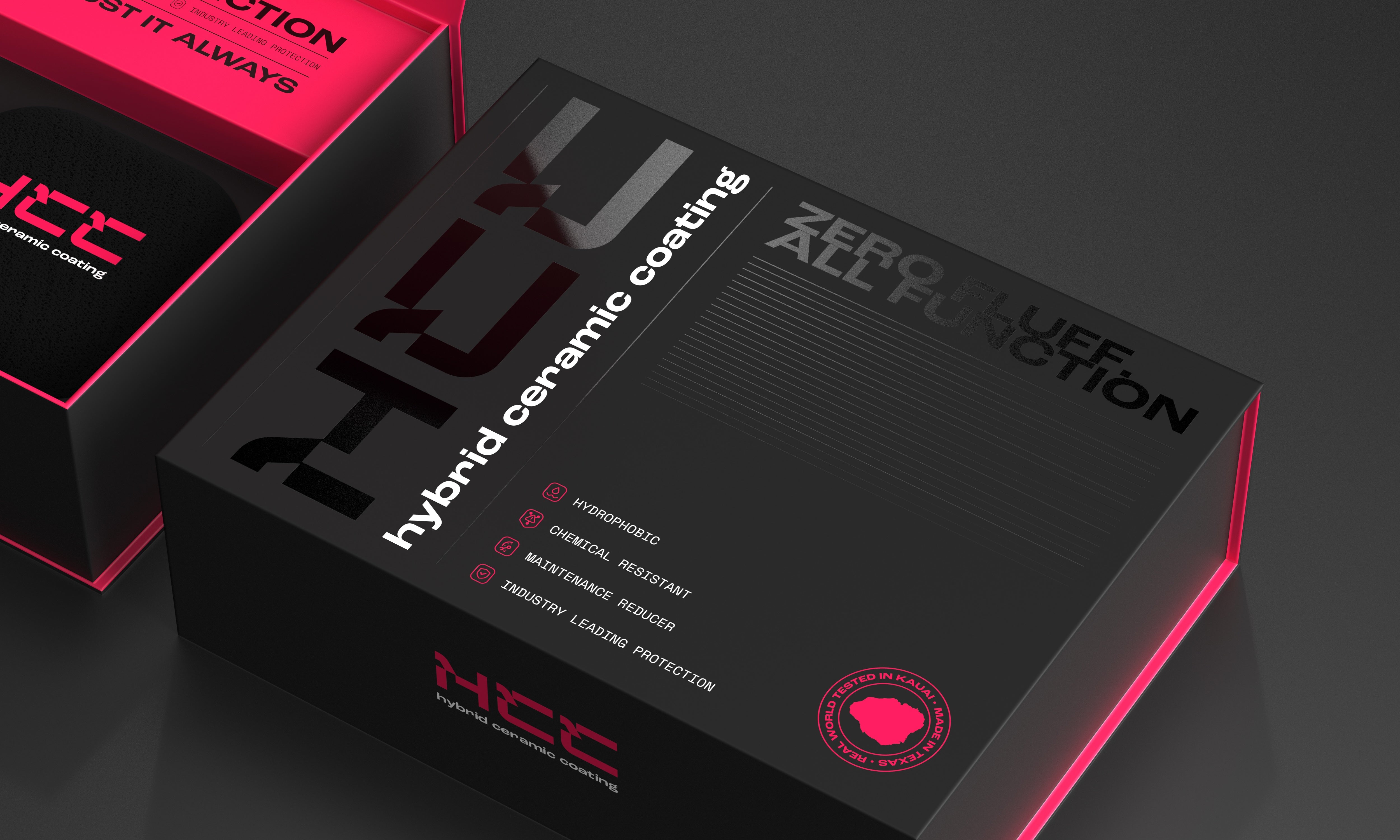
What we do say is what the coating is. HCC is engineered as a high-solids, crosslinked hybrid resin matrix for film build and chemical resistance, with a tunable flash and wipe window that lets a DIY installer or a pro get an even coat without fighting the product. Pro is a PTFE + silicon + paraffin blend with a 7–10 minute flash time. Pro Plus is the professional-tier coating with double the chemical resistance of Pro, a 24-hour dry, and a 5-day cure. All three are sold to detailers and DIYers at the same product page, at the same price, no certification and no minimum order. Certified installers are our partners and customers — the critique is not of the people doing the work; it is of the exclusivity-and-warranty model that trains you not to test your own paint.
Then we tell you how to test it yourself. That is this post. If your beading and sheeting go marginal on HCC after a few months of hard driving, run the decon wash and iron-remover pass first. If those tests still fail on clean paint, message us and tell us exactly what happened. That is not a warranty run-around. That is what "Zero Fluff, All Function" is supposed to mean.

Coat your car with a coating that respects your test.
HCC Hybrid Ceramic Coating — the flagship, all-surface, DIY-and-pro coating from Undrdog. No secret handshake. No inspection appointments. No year printed on the bottle. Just chemistry that holds up when you run this five-minute test on your own driveway.
Frequently asked questions
How often should I test my ceramic coating?
Monthly for the first six months, then quarterly. Test after every long road trip, after fall/spring pollen, and after every automatic wash. If beading and sheeting are consistent month over month, the coating is fine. If they drop off sharply between one test and the next, contamination is the likely cause — clean before you conclude.
My car beads great but doesn't sheet. Is that a problem?
Usually no. Some formulations are engineered to bead aggressively; others are engineered to sheet aggressively; a few do both. What matters is that at least one of the two behaviors is strong and that the slickness (Test 3) is intact. If beading is strong but sheeting is weak and the panel doesn't feel slick, you probably have a wax topper from an auto wash sitting on top of the coating.
What contact angle should I expect from a working ceramic coating?
For a well-applied consumer ceramic, roughly 100°–120° when new, per independent write-ups from working detailers. Anything at or above 90° meets the technical definition of hydrophobic, per standard chemistry sources. Below 90° on genuinely clean paint means the coating has worn or was misapplied.
Do I need a real contact-angle goniometer to know if my coating works?
No. A goniometer is a lab instrument. The five-minute test kit above is what practitioners use in the field. The phone-camera version of Test 5 gives you a directional estimate. If you want lab-grade certainty, a materials-testing lab will do it for a fee — but that is overkill for owner-level triage.
My installer says my warranty is void because I used an automatic car wash. Is that legal?
Warranty terms are contractual. If the exclusion was disclosed in the written warranty at the time of sale, and the language is not misleading under state UDAP statutes, the exclusion is generally enforceable. The FTC's Magnuson-Moss summary is the starting point for consumer warranty rights. Pull your written warranty and read every exclusion — you will usually find that automatic-wash use is called out.
I ran the decon wash and my beading came back. Was the coating actually failing?
No. That is the whole point of this post. A working coating buried under road film and wax topper looks identical to a failed coating until you clean it. If a decon wash brings the beading back, the coating was working the entire time.
Does a ceramic coating fail all at once, or gradually?
Gradually, and unevenly. Horizontal panels that catch UV and rain go first. Lower doors and rockers that catch grit go next. Vertical panels last longest. A "spot failure" on a hood is normal wear on the panel with the hardest life; it is not evidence that the entire coating is dead.
Can I just spray a ceramic topper to bring the beading back on old paint?
You can, and it will look like the coating is working — for a while. But if the beading came from the topper and not the underlying coating, you will be re-topping every couple of months instead of every year or two. Strip and decon first. Retest. Then decide whether you need a topper or a new base layer.
Where do I start with Undrdog if my coating just failed a real, clean-paint retest?
Start with HCC Hybrid Ceramic Coating. It is our flagship all-surface coating and it is sold at the same page and price to detailers and DIYers. If the vehicle is a daily-driven work truck or a boat that needs the maximum chemical resistance, look at Pro Plus. For maintenance in between, our The Purps iron and fallout remover pulls the bonded iron that most owners never realize is why their coating "stopped working."


Leave a comment
This site is protected by hCaptcha and the hCaptcha Privacy Policy and Terms of Service apply.