

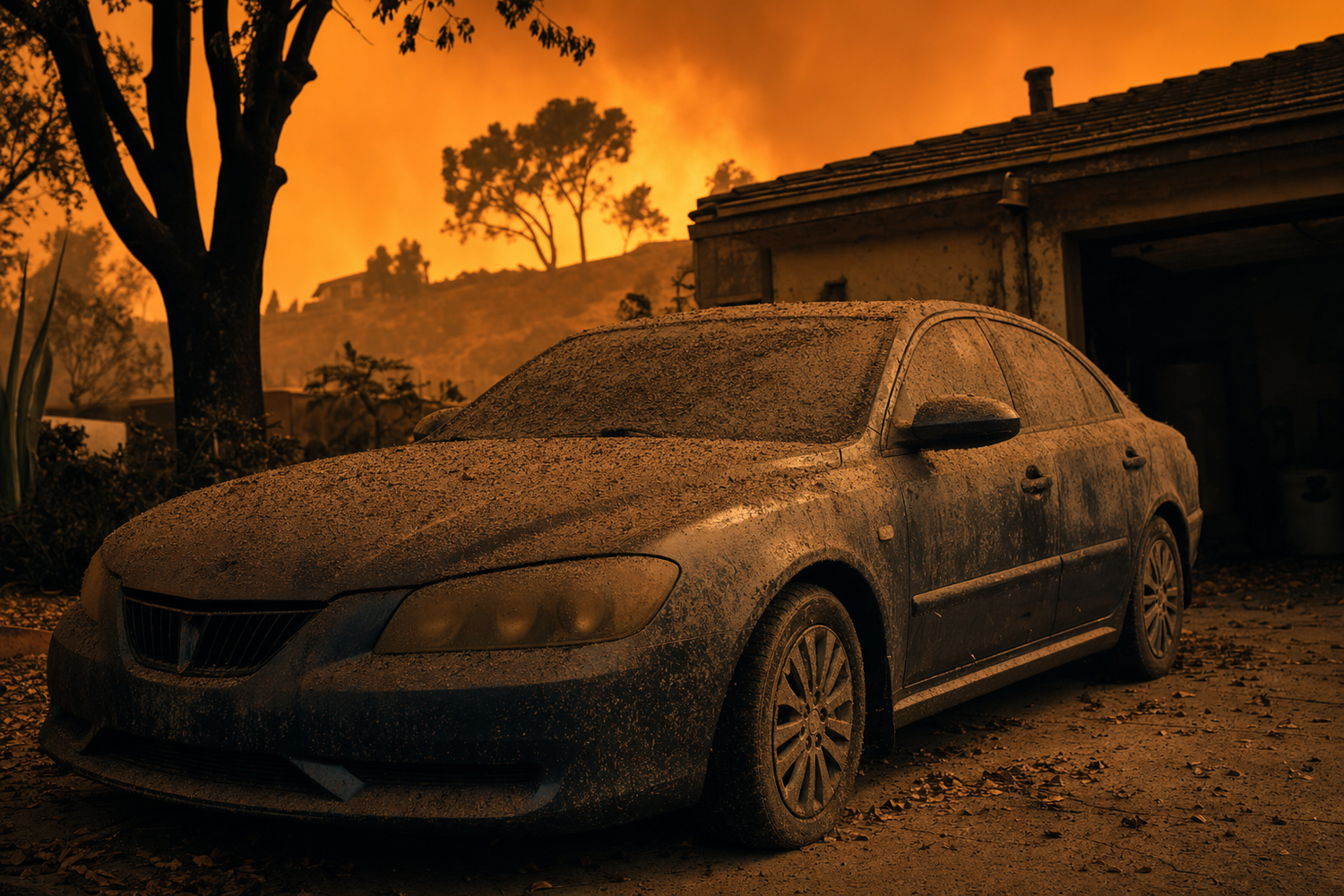
Wildfire ash on your car needs to be blown or rinsed off first — never wiped dry with a towel — because ash is abrasive grit that scratches paint on contact and turns corrosive once it mixes with water or dew. The right order is: blow off loose ash, rinse top-down, wash with pH-neutral soap, then dry gently. Skipping straight to a wipe-down is the single biggest cause of fine scratching during a smoky week.

Why Ash Is More Dangerous Than It Looks
Ash isn't just gritty dust — it's chemically reactive. According to a guide on removing wildfire ash from cars, ash becomes highly corrosive when it mixes with water, which can lead to etching on paint and damage to the clear coat. Wildfire ash is also acidic, which means regular detergent or generic cleaning products can actually make the damage worse rather than better. That combination — abrasive particles plus acidic chemistry — is why the wrong cleaning method causes more harm than just leaving the car dirty for an extra day while you gather the right supplies.
The Right Order of Operations
Skipping steps here is what causes swirl marks and etching, so follow this sequence in order:
- Blow off loose ash first. Use a leaf blower or air compressor to remove as much dry ash as possible before any water or cloth touches the surface. This step alone prevents most of the scratching risk, since you're not dragging particles across paint.
- Rinse thoroughly before washing. Hose the car down from roof to lower panels, working top-down so you're not redistributing ash onto sections you've already rinsed. Pay attention to crevices, badges, mirrors, and anywhere ash tends to collect.
- Wash with a pH-neutral soap. A foam cannon or a soft microfiber mitt with a pH-neutral soap helps neutralize the acidic properties of ash while lifting remaining residue safely. Skip anything harsh or acidic — it reacts poorly with ash chemistry and can accelerate etching. Our guide to washing your car without scratching it covers the two-bucket method that pairs well with this step.
- Dry gently. Use a clean, soft microfiber towel or an air dryer rather than dragging a towel across the surface repeatedly. Any grit left behind after rinsing will scratch on contact if you press hard while drying.
Never dry-wipe ash off with a rag, a shirt sleeve, or a dry microfiber — that single habit causes more fine scratching during wildfire season than almost anything else drivers do.

Where a Coating Helps During Smoke Season
A ceramic coating doesn't stop ash from landing on your car, but it changes how that ash interacts with the surface underneath. A coated panel gives ash less to bond to chemically, which means the acidic reaction described above has less opportunity to actually etch into the clear coat before you get a chance to rinse it off. It also makes the rinse-and-wash step faster and more effective, since contamination releases more easily from a slick, coated surface than from bare paint. If you're anywhere near wildfire-prone terrain seasonally, that's a meaningful advantage over an uncoated car sitting exposed for days at a time. Acidic contamination isn't unique to wildfire season either — our guide to removing bird droppings and tree sap before they etch covers a similar race-against-the-clock scenario.
Don't Forget the Interior and Air Intake
Ash finds its way past door seals and into cabin air filters faster than most people expect. If you've been driving through smoke, check and replace your cabin air filter sooner than your normal schedule, and wipe down interior surfaces with a slightly damp microfiber rather than blowing ash around with compressed air inside the cabin — that just relocates fine particles onto seats and electronics.

Frequently Asked Questions
Can I just leave ash on my car until the smoke clears?
Not for long. The longer ash sits, especially with any moisture (dew, light rain, sprinklers), the more time it has to react chemically with the surface. Rinse it off as soon as reasonably possible rather than waiting out the whole event.
Is it safe to use a regular car wash during heavy wildfire smoke?
Touchless or foam-brush automated washes are generally safer than manual washing with unknown-quality equipment, but a careful hand wash using the steps above, with your own clean tools, is usually your best option for full control over the process.
Will ash damage a ceramic-coated car less than an uncoated one?
A coating reduces how readily ash bonds to the surface, which helps limit etching risk and makes cleanup easier, but it doesn't eliminate the need to rinse ash off promptly. Prompt, correct cleaning still matters regardless of coating status.
Can I use a leaf blower on my car's paint?
Yes — a leaf blower or air compressor on a low setting is one of the safest ways to remove loose ash before any water or cloth contact, since it avoids dragging particles across the surface.
Does wildfire ash damage glass and windshields too?
Yes — treat glass with the same blow-off-then-rinse approach. Dry-wiping ash off a windshield with wipers or a cloth can create fine scratches on glass just as it does on paint.
How urgent is cleaning the cabin air filter after a smoky drive?
Check it sooner than your normal maintenance interval if you've been driving through heavy smoke or ash — fine particulate can clog filters and reduce airflow faster than typical driving conditions.
What's the single worst thing you can do to a car covered in ash?
Wipe it with a dry towel or your hand. That single action grinds abrasive ash particles directly into the clear coat and is the number one cause of wildfire-season fine scratching.
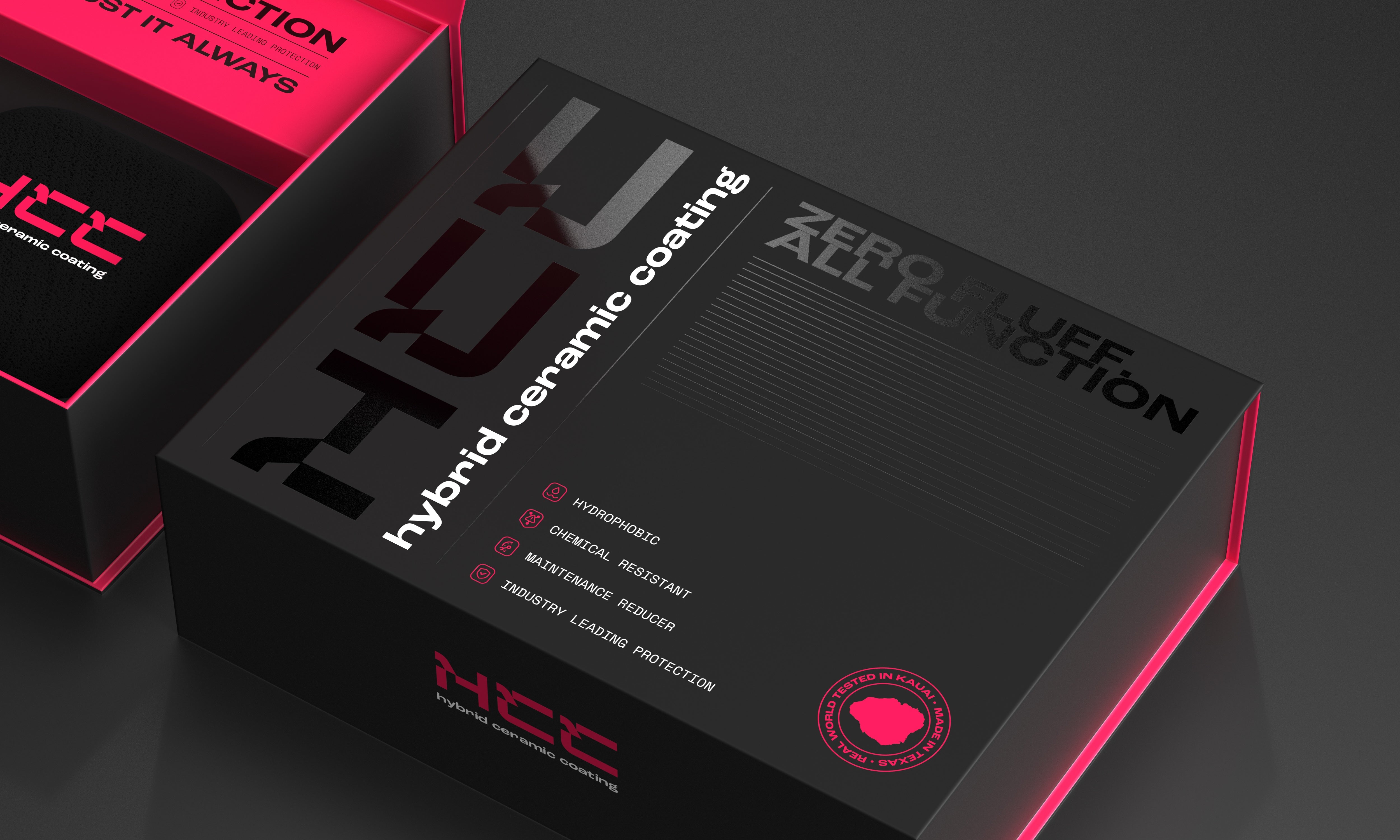
Wildfire season is unpredictable, but your cleaning routine doesn't have to be. Blow it off, rinse it off, wash gently, and if you're coated with HCC, that whole process goes faster and with less risk to your finish.
Ready to make ash cleanup easier next time?
HCC gives ash less to bond to, so rinse-and-wash goes faster with less risk to your finish.
Shop HCC →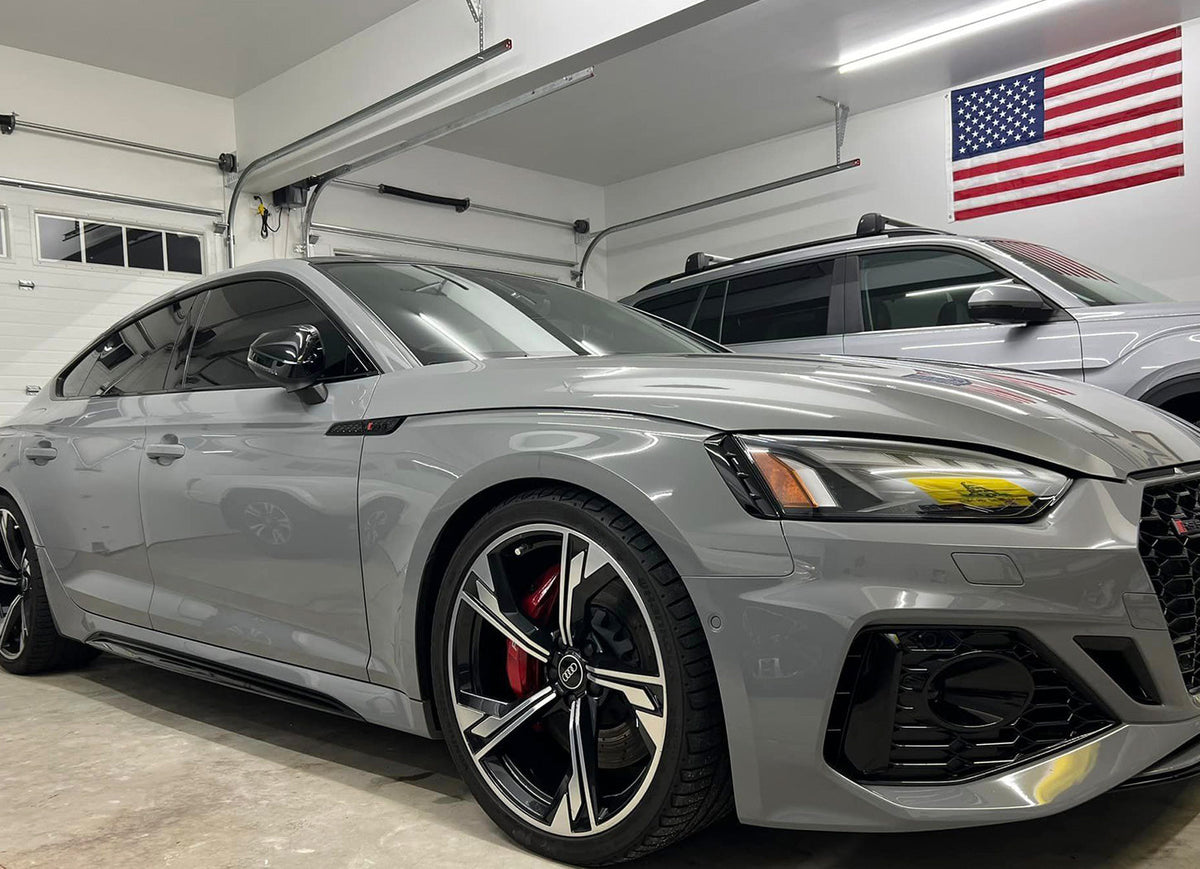


Leave a comment
This site is protected by hCaptcha and the hCaptcha Privacy Policy and Terms of Service apply.