

To remove winter road-salt marks from car carpet, start with loose-debris removal, check the carpet's care instructions, test a suitable cleaner, and lift the released soil with clean towels before drying thoroughly. Treat that as a controlled cleaning process, not permission to soak the footwell or promise that every pale mark will disappear. Stop if the material changes color, the floor remains wet, or another pass is no longer helping.
Salt-stained carpet needs a different approach from a removable rubber liner. This guide covers carpeted floor mats and accessible fixed carpet, with clear limits for unknown materials, deeply wet floors, and persistent stains. The aim is a cleaner, usable interior without turning a small winter cleanup into a larger repair.
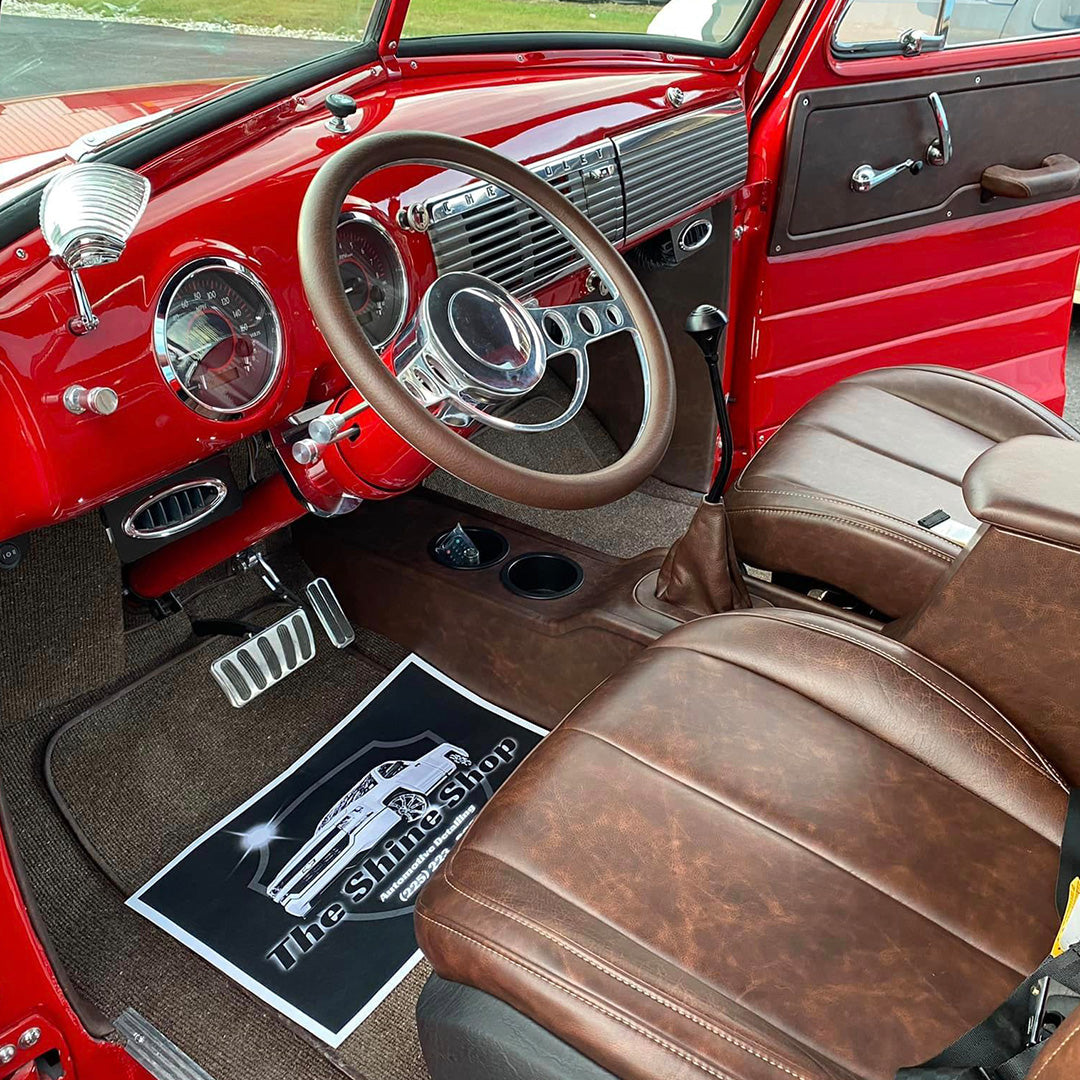
The hero photograph shows a real carpeted cabin from Undrdog's media library, not a salt-removal test or before-and-after result. Its temporary paper floor protector is not an example of a driving-ready mat installation.
Identify the winter mess before choosing a cleaner
Salt stains and moisture can accumulate in carpets and mats during winter, a problem also identified in Turtle Wax's seasonal interior-care guidance. But a white edge or pale patch alone is not a reliable identification of everything in your carpet. Start with what you know: recent snowy trips, wet footwear, a spilled drink, or a previous cleaning attempt.
Photograph the area before working and note which products have already been used. Look beneath the removable mat without taking apart seats or trim. If you find a broadly wet floor, an unexplained recurring damp patch, or visible damage, treat that as a reason to investigate rather than simply adding stain remover.
Use the following table as a triage checklist, not a diagnosis from appearance. You are deciding whether routine cleaning is a reasonable next step or whether the car needs a different kind of attention.
| What you find | Reasonable next step | Do not assume |
|---|---|---|
| Dry grit and loose debris | Vacuum before introducing cleaner | Scrubbing wet will make debris removal easier |
| A localized winter mark on otherwise sound carpet | Check material directions, test, and clean a manageable area | Every pale mark is only salt |
| A removable molded liner | Use the liner manufacturer's cleaning method outside the vehicle | A carpet method also suits its rubber or plastic material |
| A wet floor or dampness that returns | Arrange inspection and an appropriate drying plan | Another fragrance or cleaning pass solves the underlying problem |
| Color transfer, damaged backing, or changing texture | Stop and seek material-specific advice | More product or harder brushing will restore it |
Separate carpet mats, fixed carpet, and rubber liners
Remove carpet mats according to the vehicle's retention instructions, keeping the driver's mat identified for correct reinstallation. Volvo's published 2014 S60 interior-care guidance specifically calls for separate cleaning of the removable mats and the floor carpet, followed by secure refitting of the driver's mat. That is a model-specific example, not a universal clip-release procedure.
Fixed carpet stays in the cabin for this routine. Plan to work only on the accessible surface, keeping cleaning solution away from nearby controls, openings, and wiring. Do not copy a hose-rinse demonstration for a removable mat and flood the assembled vehicle.
If your main problem is a molded liner rather than textile carpet, follow our separate guide to cleaning rubber car floor mats without a slick finish. It addresses that material and its cleaning, drying, and retention checks. Do not stack a second mat over the first as a shortcut for winter protection.
Vacuum before wet cleaning
Start with the driest practical work: remove loose objects and vacuum the carpet and removed mats. Ford's cleaning guidance puts vacuuming first and describes brush and crevice attachments for loosening dirt and reaching tight areas. Follow your vacuum's own restrictions; an ordinary dry vacuum is not automatically suitable for a wet footwell.
Work methodically around the heel area, mat edges, and accessible corners. Use a gentle hand tool where the carpet construction allows it, rather than starting with a powered brush. Watch how the fibers respond and stop if the material begins to pull or distort.
Keep footwell tools separate from the clean towels you use on paint or glass. Prepare several clean, absorbent cloth faces before starting the wet stage so you can switch as they become dirty. That preparation is more useful than discovering halfway through the job that your only towel is already loaded with grime.
Choose a suitable cleaner and test it first
Read the vehicle's care section before buying or applying a chemical; Ford explicitly recommends that compatibility check in its vehicle-cleaning instructions. An aftermarket carpet, replacement mat, or unusual trim material may also have its own requirements. Where the maker specifies a particular product or excludes a treatment, respect that narrower direction.
Choose a product intended for the material, not simply the strongest cleaner available. Mothers' carpet-care guidance emphasizes appropriate carpet and fabric cleaners, gentler handling where needed, and repeated cleaning rather than one aggressive attempt. It does not establish that another brand's cleaner is approved for every vehicle.
For suitable interior-cleaning jobs, Undrdog Interior Cleaner is an option to consider after checking the material and testing; its current instructions call for controlled application, gentle wiping or agitation, and removal of excess moisture, while excluding delicate surfaces. Do not interpret that positioning as a guaranteed salt-removal result or vehicle-manufacturer approval.
Test a small, inconspicuous area using the same product and technique you intend to use on the visible section. Inspect it after drying, not only while it is wet. Stop for unexpected color transfer, a change in texture, or an appearance you cannot explain.

Clean a small section and lift the residue
Once the care instructions and test support proceeding, work on a section you can control. Apply the cleaner as its label directs, use only the agitation appropriate to that carpet, and have a clean towel ready to collect the loosened material. Do not invent a dwell time, dilution, or extra chemical to make the process seem stronger.
- Apply deliberately. Keep the treatment on the intended textile and away from nearby components. Avoid unnecessary spray drift onto pedals, trim, or seat controls.
- Work gently. Use the tested towel or brush technique. If the fibers start changing appearance in an unwanted way, stop instead of increasing pressure.
- Lift, rather than redistribute. Blot or wipe as appropriate to the product directions, turning to a clean towel face frequently. Replace the towel when it can no longer collect residue cleanly.
- Inspect before repeating. Compare the treated section with the original photograph. Repeat only while there is useful improvement and the material remains stable.
- Complete the label's cleanup step. If the selected product requires rinsing or another removal step, follow that instruction with controlled moisture. Do not leave an unapproved product film behind for the sake of finishing faster.
For Undrdog Interior Cleaner specifically, the current application directions say to rinse the cloth or sponge frequently in clean water and finish with a clean, dry cloth to remove excess moisture. That is not an instruction to pour water through the vehicle's carpet. Keep the product method distinct from the requirements of an extraction machine.
There is no universal number of passes that makes a winter carpet clean. If a stain remains after careful treatment, reassess the material and contamination instead of escalating automatically to acids, solvents, steam, or a drill brush. A professional detailer's inspection and equipment may be the sensible next purchase.
Dry and inspect before putting the mats back
Plan the drying stage before you start, particularly when cold or wet weather limits your workspace. Keep cleaned removable mats out until they are dry, and leave the accessible carpet uncovered while you assess it. Do not promise yourself an arbitrary overnight deadline if the conditions or depth of wetting are uncertain.
Compare the dry result in consistent light and check both appearance and feel. Mothers advises vacuuming after cleaned carpet and upholstery have dried in its interior-care guide. Follow that step only once it is appropriate for the cleaner and your vacuum, rather than trying to collect wet residue with unsuitable equipment.
Refit the correct mats using the vehicle's prescribed anchors and check pedal clearance before driving. The Volvo S60 instructions explicitly warn that the driver's mat must be secured so it does not catch beside or beneath the pedals. Remove any temporary paper protector, loose towel, or cleaning tool before returning the car to use.

When to stop and book a professional
Stop ordinary spot cleaning if the floor is broadly wet, the moisture keeps returning, the carpet or backing appears damaged, or the product test is unsatisfactory. For unexplained wetness, arrange vehicle inspection rather than assuming the problem is only footwear. Do not remove seats, disconnect wiring, or open floor drains as part of this general routine.
When booking a detailer, describe the history and send your before photographs. Ask whether the proposed work includes stain assessment, suitable extraction if needed, drying, and a final inspection. Make clear that you want a realistic improvement, not a promise that every old mark can be erased.
For ongoing winter use, check beneath the mats after messy journeys and remove loose debris before it accumulates. Use the correct, properly secured mats for the vehicle and clean them according to their own instructions. A simple inspection habit is more useful than repeatedly hiding a damp floor under another layer.
Keep product choice and safety straightforward
The standard Interior Cleaner and the concentrate require product-specific handling; our Interior Cleaner Concentrate dilution guide explains the separate mixing workflow. Do not borrow a concentrate ratio for a different bottle, or apply a leather-specific instruction to carpet simply because both surfaces are inside the car.
The current Interior Cleaner safety section warns of serious eye irritation and harm if swallowed, and directs users to wear protective clothing and gloves. Natural-origin wording is not a reason to disregard those warnings. Read the label and applicable safety sheet, protect nearby surfaces, and keep the work focused on cleaning rather than adding an unrelated coating.
Frequently asked questions
Can I remove road-salt stains with vacuuming alone?
Start by vacuuming loose, dry debris, then inspect what remains. If a visible mark persists, check the carpet's care requirements and test a suitable cleaner rather than assuming more dry scrubbing will solve it.
Should I use vinegar on salt-stained car carpet?
Do not make a household-acid recipe the default. Use a method approved for the actual carpet and adjacent materials, and ask the vehicle or material supplier when compatibility is uncertain.
Can I hose down the carpet inside the car?
No hose-rinse procedure is recommended here for assembled cabin carpet. Keep removable mats separate, control moisture on fixed carpet, and seek professional help for deeply wet floors.
Is every white carpet mark a salt stain?
Do not identify a deposit solely by its color or outline. Review winter exposure, spills, and previous cleaning products, and stop if the surface changes or the stain does not respond as expected.
Will Undrdog Interior Cleaner remove every salt stain?
No universal removal result is promised. Confirm suitability for the material, follow the current product directions, test first, and reassess any mark that persists after careful cleaning.
How long should car carpet take to dry?
Do not use a fixed time from this guide as proof of dryness. Inspect the actual condition before covering the carpet or reinstalling mats, and arrange appropriate help when the floor remains wet.
Can I use the same method on rubber mats?
Use the exact mat maker's instructions rather than assuming textile-carpet directions apply. Remove molded liners for their separate cleaning process and check correct retention and pedal clearance before driving.
When is professional carpet cleaning worth it?
Consider professional assessment when stains persist, the material is uncertain, the test fails, or you cannot provide suitable cleaning and drying conditions. Recurring unexplained wetness also warrants checking the vehicle for an underlying problem.
Choose your interior cleaner deliberately
Review Interior Cleaner's current directions and surface restrictions, then test before treating a suitable interior surface.
Shop Interior Cleaner


Leave a comment
This site is protected by hCaptcha and the hCaptcha Privacy Policy and Terms of Service apply.