

Late-summer tree sap and aphid honeydew turn from sticky nuisance to permanent paint etch in as little as a week of hot sun. Remove fresh drops with an isopropyl-alcohol-soaked microfiber or a dedicated sap remover, tackle hardened deposits with a detailing clay bar and light polish, then reseal with a ceramic coating so the next round rinses off instead of etching in. Here's the full late-August-through-October protocol — what causes the sticky mess, how to remove it without damaging clear coat, and how to make your car sap-proof for the rest of the season.

Why Late Summer Is Peak Sap and Honeydew Season
Two different sticky messes hit your paint from August through October, and most drivers don't realize they're dealing with both.
Tree Sap
Actual tree sap is the sticky resin that oozes from bark cuts, insect wounds, and stressed branches on maple, pine, oak, walnut, birch, and poplar trees. Late-summer heat pushes these trees to defensive sap production, and shorter nights combined with cooler mornings cause resin to drip more freely from wounded bark than in peak summer. If you park under a mature maple or pine in September, you're going to get sap on the hood.
Honeydew (The Sneakier One)
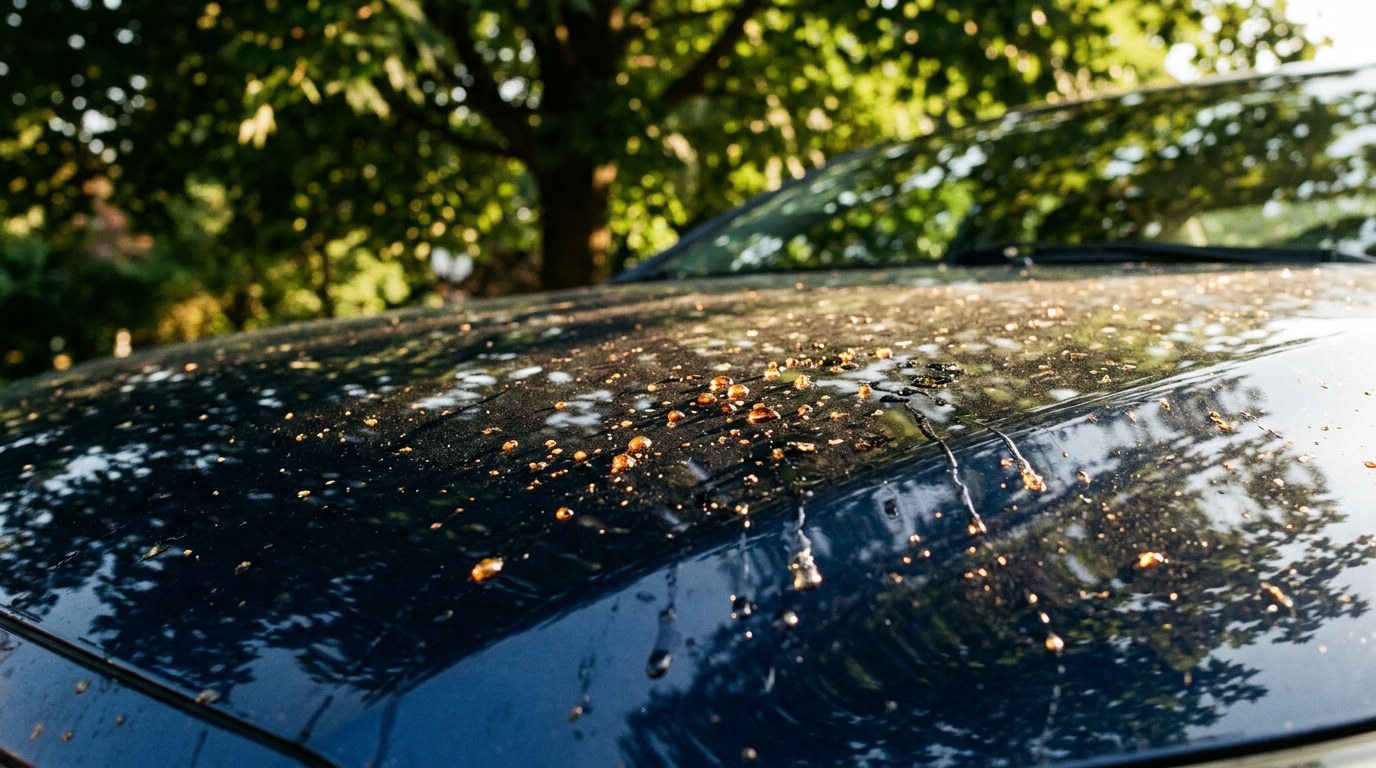
Honeydew isn't tree sap. It's the sugary excretion of aphids, scale insects, and whiteflies that colonize tree leaves in massive numbers by late summer. As these insects feed on plant sap, they excrete a clear, sticky, sugar-rich liquid that rains down onto anything below them — including your car. Honeydew looks like a light mist of clear sticky drops, dries into a glossy shell, and grows a black sooty mold if left long enough.
Honeydew is often mistaken for morning dew or bird spit. It's neither. It's the reason your car feels tacky after being parked under a "clean-looking" tree for two days.
Why Sap and Honeydew Damage Paint So Fast
Both substances share three properties that make them dangerous for clear coat:
- Acidic pH. As sap and honeydew dry and oxidize, they become mildly acidic. Sitting on hot paint at 130°F+, that acidity attacks the clear coat and etches microscopic pits into the surface ([Auto Express](https://www.autoexpress.co.uk/tips-advice/356779/how-remove-tree-sap-your-car)).
- Bond aggressively. Fresh sap is water-thin. As it cures in sun, it polymerizes into a hard resin that mechanically bonds to clear-coat pores. Once cured, it doesn't wash off — you have to break the bond.
- Trap contaminants. Sticky honeydew catches pollen, dust, and pollutants, then bakes them into the paint as one hard composite layer.
The etching stage happens fast. Fresh drops on cool paint in shade can sit for days without damage. The same drops on a black hood at 140°F in direct sun etch clear coat within 24–48 hours.
The Chalk Test: Assess How Bad It Is
Before you touch a bucket, run your fingertips across the affected panels after washing.
- Smooth paint, no residue on finger: Wash removed it all. Done.
- Rough or bumpy paint, faint stickiness: Moderate contamination — needs solvent + clay bar.
- Visible amber dots, hard bumps, tacky feel: Severe. Solvent + clay + polish + reseal required.
- Dull spots or rings where drops used to be: Etching has already occurred. Paint correction (compound + polish) required to restore gloss.

Step 1: Two-Bucket Wash With Warm Water
Before you get aggressive, try the least invasive step first. A high-foaming pH-neutral car soap plus warm water (not hot — no more than 100°F) removes 60–80% of fresh sap and most of the honeydew that hasn't hard-cured yet.
Use Undrdog Soap at a strong concentration, apply with a plush wash mitt, and gently agitate the affected areas without hard rubbing. Rinse the mitt frequently to avoid dragging particulates. Warm water softens the sap; hot water risks flash-drying soap and streaking. Full technique in our pH-neutral wash guide.
Whatever comes off in the wash, comes off. Whatever's left is the hard-cured layer that needs a solvent or mechanical removal.
Step 2: Solvent Removal for Hardened Drops
For cured sap and honeydew that survived the wash, you need to break the polymer bond chemically. Three options that all work:
Isopropyl Alcohol (70%)
Cheap, safe on clear coat when used briefly, and dissolves fresh-to-moderately-cured sap effectively. Soak a corner of a plush microfiber, hold it on the sap drop for 30–60 seconds to let the alcohol penetrate, then wipe gently. Don't scrub — soak and wipe.
Dedicated Bug and Tar Remover
Purpose-built solvents like bug and tar sprays cut through sap and honeydew faster than isopropyl. Spray, let dwell 30–60 seconds, wipe with a plush microfiber, rinse thoroughly.
Mineral Spirits or Pre-Wax Panel Prep
For the worst hardened drops, mineral spirits or automotive panel prep dissolves cured sap fast. These are more aggressive — use minimal quantity on a microfiber, work one drop at a time, and rewash the panel immediately after to remove any solvent residue.
Do not use gasoline, acetone, brake cleaner, WD-40, or nail-polish remover. All of these can strip clear coat or leave residues that damage paint over time.
Step 3: Clay Bar for Embedded Contamination

Once solvent has softened and lifted the visible sap, a detailing clay bar removes what's left embedded in the clear coat's microscopic pores. This is what makes the paint feel glass-smooth again.
Clay Bar Technique
- Wash and dry the car first — never clay dirty paint.
- Knead a golf-ball-sized piece of clay in your hands until pliable.
- Mist the panel with clay lubricant or a strong soap-water mix in a spray bottle.
- Glide the clay in straight lines across the panel with light pressure — never circles, never scrubbing.
- Fold the clay to a fresh face when the contact surface loads up.
- Wipe with a plush microfiber and inspect. Paint should feel silky-smooth with zero drag.
Never reuse a clay bar you've dropped on the ground — the smallest grit particle turns your clay into sandpaper.
Step 4: Address Any Etching
If you find dull rings or hazy spots where sap drops etched the clear coat, wash and clay first, then evaluate depth. Light etching often polishes out with a medium-cut compound and finishing polish. Deep etching that survives polishing has actually removed clear coat and can only be masked cosmetically or repainted.
For light etching, our DIY paint correction guide walks through the compound-and-polish workflow that also removes light sap etching.
Step 5: Reseal With a Ceramic Coating (This Is the Point)
Now you have clean, smooth, correction-ready paint. Don't stop here — coat it.
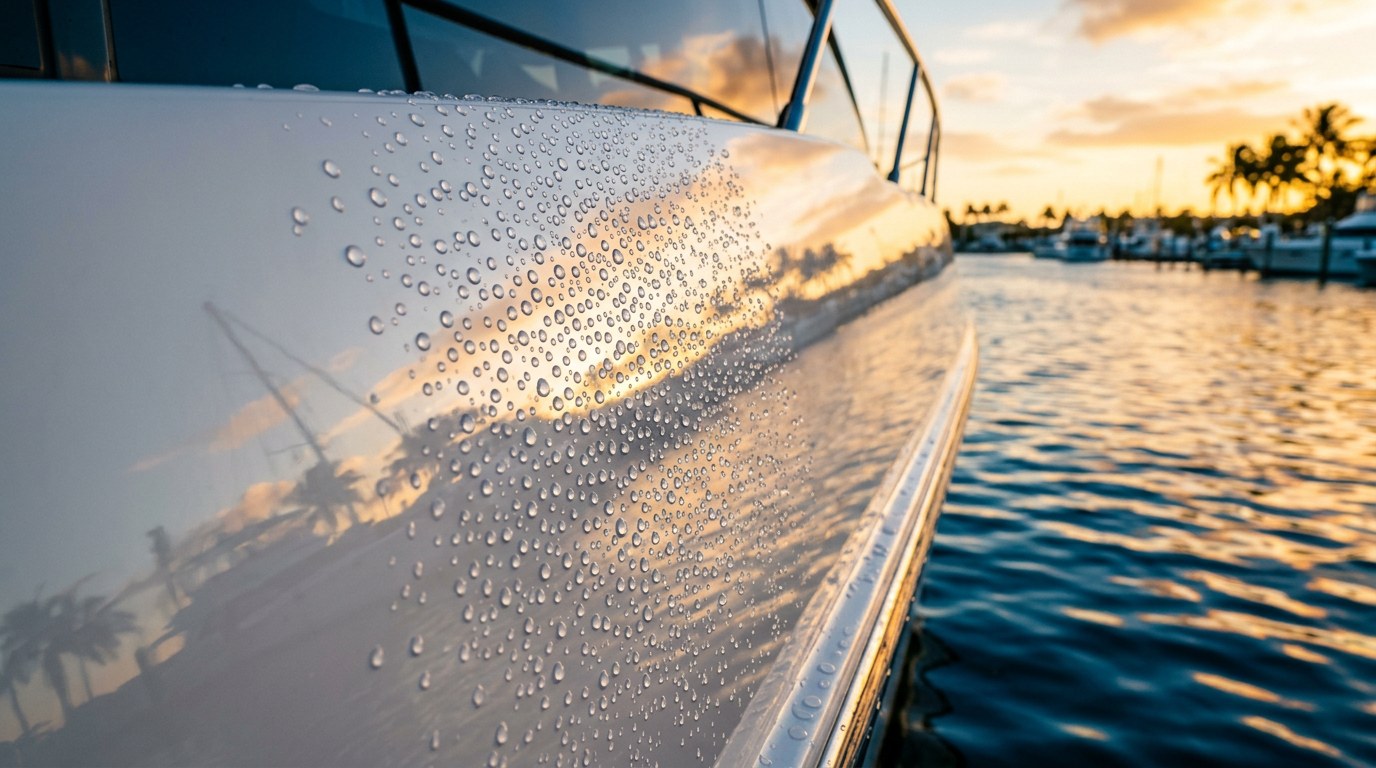
The reason most drivers deal with sap damage year after year is that unprotected clear coat has open pores and no chemical barrier. Sap and honeydew bond directly into the paint. A properly applied ceramic coating changes the physics: sap sits on top of a hydrophobic, chemically-resistant SiO2 layer instead of bonding into clear-coat pores. Next time it drips, a rinse takes it off.
Why HCC Is the Right Move Here
HCC Hybrid Ceramic Coating is the flagship all-surface Undrdog ceramic — cars, trucks, boats, bikes, planes. It's a DIY-friendly hybrid formulation that gives you the sap-shedding hydrophobic barrier, UV resistance to protect against the tan-line effect where sap has been baking, and 12–18 months of protection from a single application.
Apply after correction with a suede applicator in a cross-hatch pattern, watch for the rainbow flash, and level with a plush microfiber before it cures too hard. Our streak-free ceramic application guide covers technique.
Interim Protection: Quick Detail Spray
Between full ceramic applications, top up hydrophobic properties with Quick Detail after each wash. This is what keeps beading strong through peak sap season.
Removal Approach by Sap Age Comparison
| Sap Age / Condition | Removal Approach | Time Per Panel | Reseal Required? |
|---|---|---|---|
| Fresh, still tacky, hours old | Warm water + pH-neutral soap | 2–5 min | Only if coating due for refresh |
| Dried but not hardened, 1–3 days | Wash + isopropyl alcohol wipe | 10–15 min | Recommended if no coating present |
| Hardened glossy shell, 1–2 weeks | Wash + bug/tar solvent + clay bar | 20–40 min | Yes — clear coat pores exposed |
| Baked in with dull rings, 2+ weeks in sun | Wash + solvent + clay + polish | 60–120 min | Yes — mandatory to prevent recurrence |
| Etched into clear coat | Full paint correction with compound | 2–4 hours | Yes — full ceramic application |
Why Parking Location Matters More Than Any Product
The best sap defense is not parking under aphid-infested trees when possible. High-risk species in late summer:
- Maple — massive aphid populations, prolific honeydew producer in August-September
- Linden / basswood — heavy honeydew from linden aphids, particularly bad late summer
- Oak — scale insects and gall wasps produce honeydew, plus sap from wounds
- Pine — resinous sap that cures rock-hard, worst offender for permanent etching
- Poplar / aspen — sticky bud resin drops from spring through early fall
- Walnut — juglone-rich sap that stains paint yellow-brown
Lower-risk trees: honeylocust (usually cleaner canopy), most conifers other than pine, and mature fruitless flowering trees. If you must park under a maple, park at the outer edge of the canopy rather than the center — drip density drops noticeably a few feet out.
What NOT to Do
Don't Scrape With a Fingernail or Card
Physical scraping of cured sap drops takes clear coat with it. Every scratch you put in the paint is worse than the sap you removed.
Don't Use Household Solvents
Nail polish remover (acetone) strips clear coat. Gasoline dissolves paint binders. WD-40 leaves an oil film that blocks coating bond. Brake cleaner is aggressive enough to damage rubber and plastic trim adjacent to the paint.
Don't Wait "One More Week"
Every day sap sits on hot paint in sun accelerates etching. Same-week removal is the difference between a wash-and-forget job and a full paint correction.
Don't Skip the Reseal
Removing sap without resealing the paint is job half-done. The pores you just cleaned are open and ready to bond to the next round of sap.
Stop Fighting Sap Every Fall. Coat Once and Rinse It Off.
HCC is the DIY-friendly hybrid ceramic coating that gives your paint 12–18 months of hydrophobic, chemically-resistant protection. Sap and honeydew sit on top instead of bonding in — a rinse takes them off.
Shop HCC Hybrid Ceramic Coating →Frequently Asked Questions
Will tree sap damage my car paint permanently?
Fresh sap won't damage paint if you remove it within a few days. Left on hot paint in direct sun for 1–2 weeks, sap etches microscopic pits into clear coat that require polishing to remove. Multi-month neglect can leave permanent dull spots that only respring paint correction or repainting can fix.
What's the fastest way to remove tree sap from a car?
Warm water and pH-neutral car soap for fresh drops. Isopropyl alcohol on a plush microfiber for dried drops. Bug and tar solvent plus a clay bar for hard-cured spots. Follow with a ceramic coating so it doesn't happen again.
Can I use rubbing alcohol on car paint?
Yes, 70% isopropyl alcohol is safe on clear coat for brief contact — 30 to 60 seconds soak-and-wipe. Don't leave alcohol pooled on paint or use it in direct sun. Rewash the panel with car soap after to remove residue.
Does WD-40 remove tree sap from cars?
It softens sap and lifts it, but leaves an oil film that blocks ceramic-coating bond and can attract dust. Use isopropyl alcohol, a dedicated sap remover, or bug and tar solvent instead. If you already used WD-40, wash thoroughly with pH-neutral soap before any coating work.
What is honeydew on my car and where does it come from?
Honeydew is the sugary sticky excretion of aphids, scale insects, and whiteflies feeding on tree leaves above where you parked. It looks like a mist of clear sticky drops, dries into a glossy shell, and turns your paint tacky. It's not tree sap and not bird spit — it's aphid waste. Maples and lindens are the worst offenders.
How do you remove sooty mold from car paint?
Sooty mold grows on old honeydew as black flaky patches. Wash first with pH-neutral soap to soften the honeydew underneath, then treat with a solvent like isopropyl alcohol. Clay bar removes any remaining residue. Reseal with ceramic to prevent recurrence.
Will a ceramic coating protect my car from tree sap?
A ceramic coating dramatically reduces sap and honeydew damage by creating a hydrophobic, chemically-resistant barrier that keeps contaminants sitting on top of the coating instead of bonding into clear-coat pores. Fresh sap rinses off with a hose instead of etching in. Coating doesn't make you immune to sap — just makes removal a rinse instead of a project.
How long does it take for tree sap to etch clear coat?
Fresh sap on cool shaded paint can sit for 3–5 days without damage. The same sap on a black hood at 140°F in full sun can etch clear coat in 24–48 hours. Heat, sun, and paint color all accelerate etching.
Can I clay bar my own car?
Yes. Detailing clay is safe on clear coat when used with proper lubricant (clay spray or diluted car soap) and light pressure in straight lines. Never clay dry paint, never clay dirty paint, and discard any clay bar you drop on the ground.
Should I remove tree sap before or after washing my car?
Wash first with pH-neutral soap and warm water. That removes fresh sap and softens the rest. Then tackle whatever survives the wash with solvent and clay. Trying to spot-remove sap on a dirty car risks grinding grit into the paint.


Leave a comment
This site is protected by hCaptcha and the hCaptcha Privacy Policy and Terms of Service apply.