

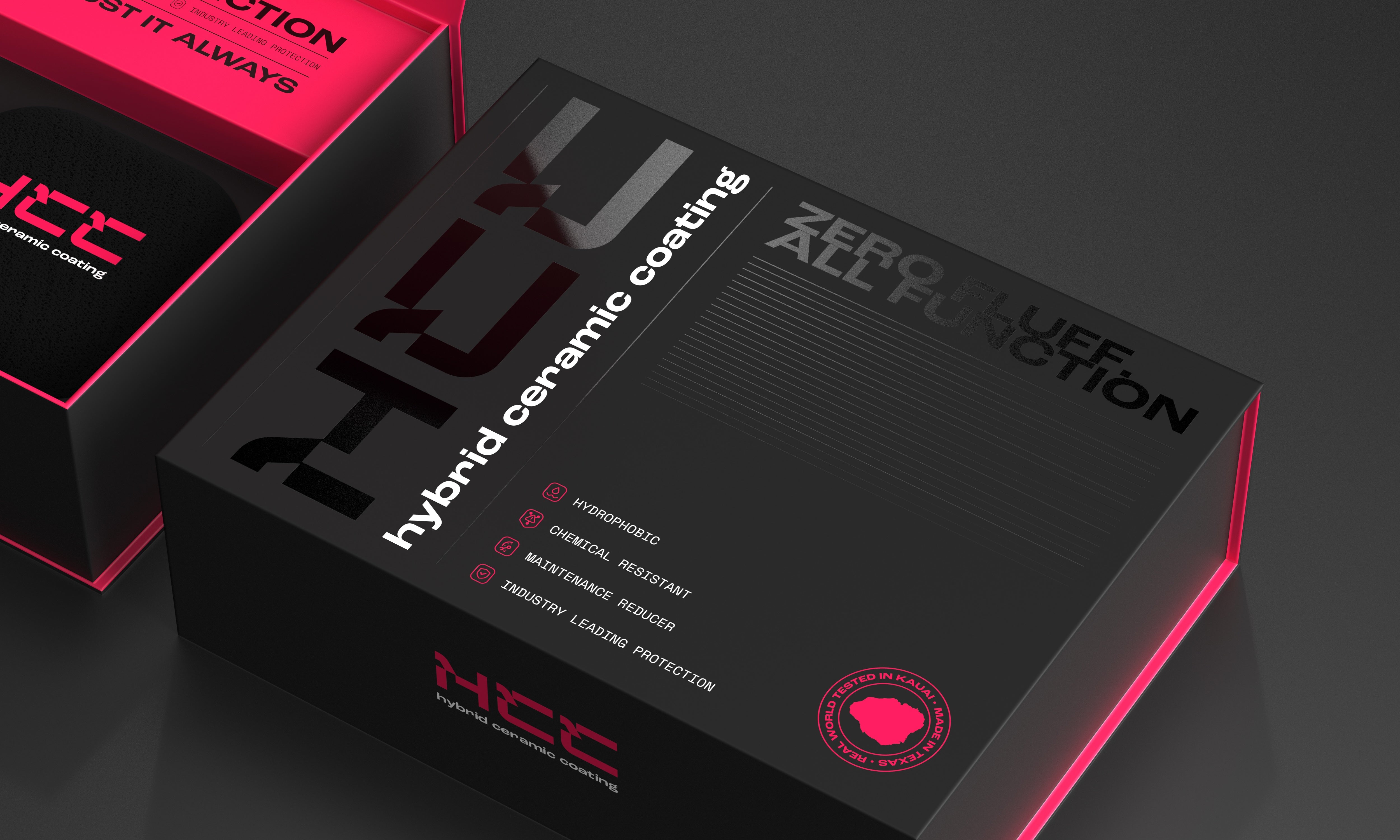
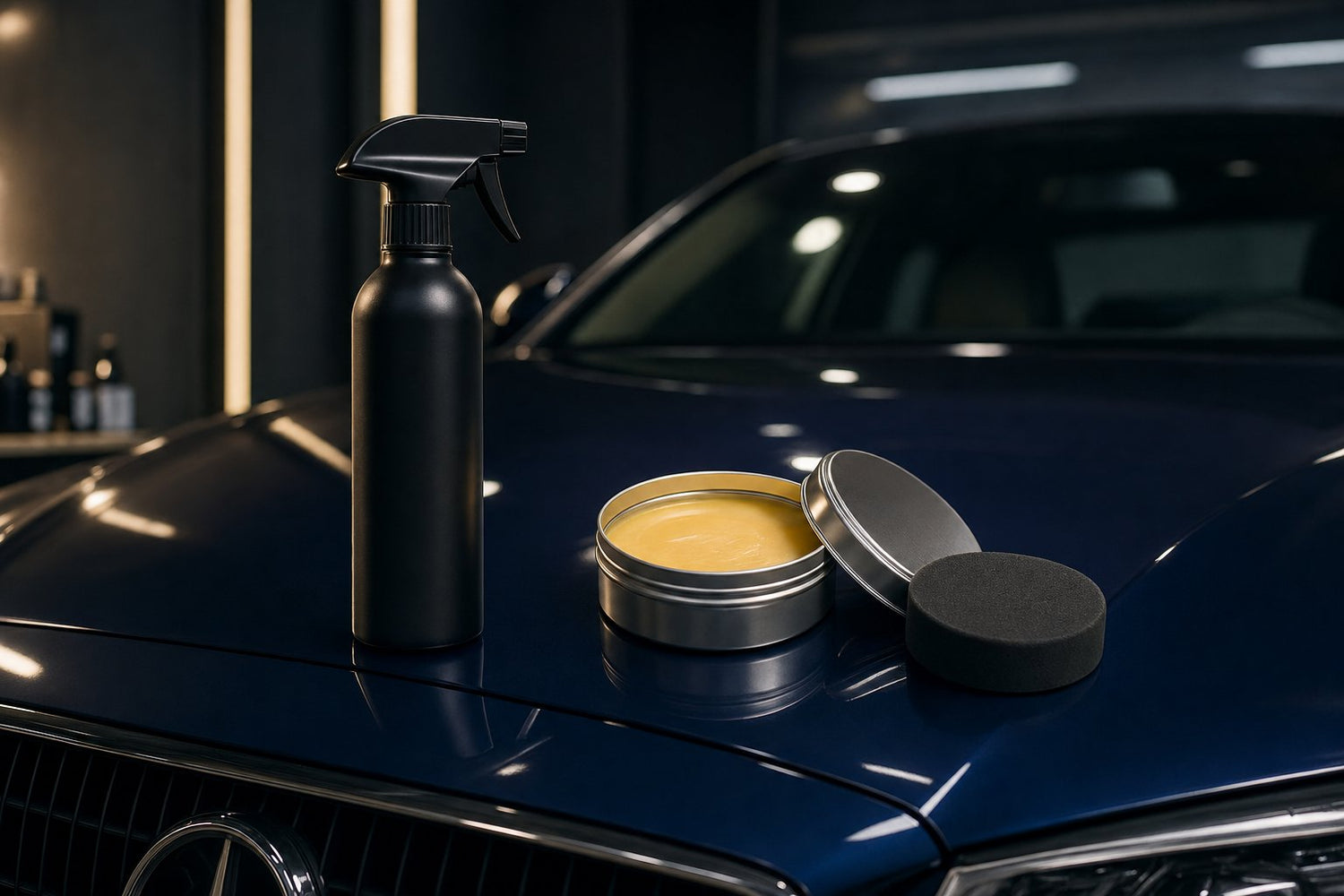
Spray sealant wins on durability, ease, and daily-driver protection — typically 3 to 6 months of real-world life versus 4 to 12 weeks for paste wax. Paste wax still wins on one specific thing: the warm, deep glow it lays down on dark paint that shows well at a car show. This guide breaks down the chemistry, durability, look, cost per year, and the exact car owner each product is actually right for — plus where a modern ceramic like HCC leaves both of them behind.

The Short Answer: What Most Owners Actually Want
If you drive your car daily, park outside, and want to spend 15 minutes protecting it a few times a year — spray sealant. If you have a garage-kept weekend car, love the ritual of hand-applying wax, and chase the deepest possible carnauba glow on a dark color — paste wax. If you want protection measured in years, not months, and stop thinking about reapplication cycles entirely — a real ceramic coating like HCC Hybrid Ceramic Coating is the upgrade that changes the math.
The rest of this guide is the "why" behind those recommendations — chemistry, durability data, application effort, cost per year, and the mistakes that make either product perform worse than it should.
What Is Paste Wax, Really?
Traditional paste wax is built on carnauba wax, a hard natural wax rendered from the leaves of the Brazilian Copernicia prunifera palm. According to the Wikipedia entry on Carnauba wax, pure carnauba has a melting point of 82–86°C (180–187°F), among the highest of any natural wax. That's the property that made it the automotive industry default for decades — it holds up on hot summer paint where cheaper waxes soften and slip.
What sits in a typical automotive tin is not 100% carnauba though. Most paste waxes are 20–40% carnauba blended with softer waxes (beeswax, montan), petroleum distillate carriers, and mineral oils that let you spread and remove the product without wrecking your fingertips. Higher carnauba content means a harder, longer-lasting film — and a harder product to apply and buff off.
The protective mechanism is mechanical, not chemical. Paste wax sits on top of your clearcoat as a sacrificial layer. It repels water, blocks UV to a modest degree, and gives dark paint the characteristic warm, wet look enthusiasts have chased since the 1940s.
What Is Spray Sealant, Really?
Spray sealant is a synthetic polymer product designed to cross-link into a thin, uniform film on your clearcoat. Instead of sitting loosely on top, modern polymer sealants form weak chemical bonds with the paint surface, which is why they last months instead of weeks. Chemical Guys' technical writeup explains that most quality paint sealants provide 4 to 6 months of real-world protection depending on environment and wash cycle.
Within "spray sealant" there are three subcategories worth knowing:
- Basic polymer spray sealants: Straight acrylic or polymer emulsions. 3–5 month working life. Very forgiving to apply.
- SiO2 (ceramic) spray sealants: Add silicon dioxide to the polymer base. Slightly more hydrophobic behavior, similar 4–6 month durability, better chemical resistance than pure polymer.
- Graphene-enhanced spray sealants: Add graphene oxide to the SiO2 blend. Claim 8–12 months on the label; realistic daily-driver life is 6–9 months per Jimbo's Detailing durability tracking.
Every category is applied roughly the same way: mist onto a clean panel, wipe with a soft microfiber, buff to a clean finish. Zero cure time to walk away, and most products layer without issue.
Spray Sealant vs Paste Wax at a Glance
| Attribute | Spray Sealant | Paste Wax |
|---|---|---|
| Base chemistry | Synthetic polymer, often with SiO2 or graphene | Natural carnauba wax blend with beeswax and oils |
| Typical real-world durability | 3–6 months (up to 9 with graphene) | 4–12 weeks |
| Application time (mid-size sedan) | 15–25 minutes | 45–90 minutes |
| Look on dark paint | Crisp, glassy, reflective | Warm, deep, "wet" glow |
| Water beading | Tight beads, sheeting behavior | Larger, lazier beads |
| Chemical resistance | Moderate to good | Poor — strips fast with degreasers |
| Heat tolerance | Handles 200°F+ panel temps | Softens around 160°F |
| Cost per year (DIY) | $25–$50 | $40–$80 |
| Best for | Daily drivers, hot climates, low-effort maintenance | Garage queens, dark show cars, ritual detailers |
Durability: What Actually Happens Over Time
Marketing numbers on the back of the bottle assume ideal conditions — hand washes with pH-neutral shampoo, garage storage, and mild climate. Reality is harsher. RevRated's 2026 sealant analysis notes that most sealant labels claiming "12 months" deliver 2–5 months of meaningful protection in real driving conditions, especially where automatic car washes are involved.
Here's what actually happens month by month on a daily driver parked outside:
- Paste wax: Peak beading week 1. Noticeable degradation by week 4. Gone by week 8–12 depending on climate. In desert or coastal heat, the sacrificial layer flashes off faster because panel temperatures routinely exceed the softening point of carnauba blends.
- Basic polymer spray sealant: Peak beading week 1–2. Solid performance through month 3. Noticeable degradation month 4–5. Gone by month 6.
- SiO2 spray sealant: Peak behavior stretches out closer to 6 months, with better chemical resistance against detergents, iron fallout, and bird bomb etching.
- Graphene spray sealant: The realistic top end for the sealant category. 6–9 months in normal use, edges into ceramic-coating territory but never quite matches a true crosslinked ceramic.
The single biggest durability killer for both products is automatic car washes with harsh alkaline pre-soaks. Every trip through cuts weeks off the working life. If you're going to use spray sealant to save time, use a self-serve wash with your own Undrdog Soap to preserve the protection you just applied.
The Look: Where Paste Wax Still Wins

Ask a hundred serious detailers what carnauba does that a sealant can't, and most will say the same thing: depth and warmth on dark paint. Black, midnight blue, deep red — a fresh carnauba coat gives the color a candy-like quality that's genuinely different from what a synthetic film produces.
Synthetic sealants tend to look crisper and more mirror-like. That's great on silver, white, and light metallic colors where you want a sharp reflection rather than warm depth. On black and dark colors, sealants look "clean and glassy" where wax looks "wet and dimensional."
Neither is objectively better — it's a preference. If you show your car and dark paint is a big part of your identity as an enthusiast, keep a good paste wax on the shelf. If you just want your daily driver to look sharp under parking-lot lights year-round, spray sealant is the smarter tool.
Application Effort: Where Spray Sealant Wins
Paste wax is a ritual. You apply with a foam applicator in thin overlapping passes, let it flash haze on the panel (usually 3–10 minutes), then buff off with a plush microfiber. Miss the flash window and you're grinding cured wax off the panel; go too thick and you'll be there for an hour of extra buffing. A full car takes most people 45–90 minutes, and hot weather compresses the working window because the product flashes faster.
Spray sealant is closer to a quick detailer workflow. Mist a panel, wipe with a microfiber, flip to a clean side and buff. Twenty minutes on a mid-size sedan is normal, and the product forgives temperature, humidity, and slightly damp panels far better than paste wax does.
The trade-off: paste wax rewards the extra time with more depth and a longer applied thickness. Spray sealant trades some of that "hand-crafted" character for reliability and speed.
Chemistry Notes: Why Sealant Lasts Longer
Carnauba wax molecules are large, non-polar, and don't chemically bond to the polar surface of automotive clearcoat. They physically nestle into micro-texture and sit on top. Any strong solvent, high-pH degreaser, or harsh detergent can strip that layer in a single wash.
Polymer sealants use functional groups (typically silanes, siloxanes, or fluorinated end groups) that form weak but real chemical bonds with the clearcoat. That bond is what buys you months of durability instead of weeks — and it's why sealants tolerate ordinary wash detergents that would immediately strip a wax layer.
SiO2 and graphene additives step this up further by creating a harder, more hydrophobic top layer within the polymer film. It's not a true ceramic coating (which cures into a much thicker glass-like film), but it's meaningfully more durable than plain polymer.
Water Beading and Sheeting Behavior

Look at a wet panel after rain and you can tell exactly what's on the paint:
- Fresh paste wax: Medium-size beads that sit somewhat lazily on the panel. Water rolls off but slowly.
- Fresh spray sealant: Tighter, faster beads that sheet off the panel quickly when the car moves.
- Fresh ceramic coating like HCC: Tight tall beads that roll off almost instantly. Water sheets off even at very low panel angles.
Beading is not the same as protection — a car can lose beading behavior while still holding UV and contamination resistance for weeks after — but it's the quickest visual indicator of whether your top layer is still doing its job.
Cost Per Year for a Daily Driver
Real math for a mid-size sedan driven daily and washed twice a month:
- Paste wax (mid-tier, $30 tin): Reapply every 8 weeks. Roughly 6 applications per year, uses about 1.5 tins. ~$45/year in product plus applicator pads.
- Basic polymer spray sealant (16oz, $25): Reapply every 4 months. ~$25/year in product.
- SiO2 spray sealant (16oz, $35): Reapply every 5–6 months. ~$35/year in product.
- Graphene spray sealant (16oz, $50): Reapply every 7–9 months. ~$45/year in product.
- HCC Hybrid Ceramic Coating (single kit, $70): Reapply every 24–36 months. ~$25–$35/year amortized, plus dramatically better weekly maintenance because dirt releases easier.
Spray sealant and paste wax cost roughly the same per year for a daily driver — the real difference is the time you spend and the quality of protection you get in between applications. HCC comes out ahead on both cost and effort over a 2–3 year window, which is why we recommend it as the default for anyone tired of the reapplication cycle.
When to Layer Sealant Over Wax (Or Wax Over Sealant)
Detailers layer these products for specific reasons:
- Sealant first, wax on top: The sealant does the protection work and the wax adds warmth to the look. This is the traditional "sealant as a base, wax as a topper" approach for dark show cars.
- Wax first, sealant on top: Almost never done successfully. Most sealants can't bond through a wax layer, so the polymer just sits loose on the wax and washes off fast.
- Ceramic first, sealant on top: Common — spray sealant as a maintenance topper on a coated car every few months to boost gloss and refresh hydrophobicity. Works well with HCC.
If you're going to layer, always work in the order: hardest and most durable product first (ceramic → sealant → wax). For most owners though, single-product protection is easier to reason about and maintain.
When Neither Product Is the Right Answer
Both spray sealant and paste wax are last-step protection products designed to sit for months. Neither is a fit if:
- You want set-and-forget protection lasting years — get a real ceramic coating like HCC Hybrid Ceramic Coating instead. See our HCC vs paint sealant deep dive for the full comparison.
- Your paint has heavy oxidation, water spots, or swirl marks — polish first with a proper compound and finish, then protect. Our paint decon order guide covers the prep steps.
- You're preparing paint for a full ceramic coating — you actually want a bare, clean panel with zero wax or sealant residue, so use an IPA wipedown to strip everything first.
- You just want a quick post-wash boost, not month-scale protection — Quick Detail Hydrophobic Spray is the right tool.
Frequently Asked Questions
Is spray sealant better than paste wax?
For daily drivers, yes — spray sealant lasts 3 to 6 times longer, applies in a quarter of the time, tolerates hot panel temperatures far better, and resists ordinary detergents. Paste wax still wins on warm, deep glow on dark paint at a car show. For everyday use, spray sealant is the more practical choice.
How long does spray sealant last on a car?
Basic polymer spray sealants last 3 to 5 months in real driving. SiO2 spray sealants last 4 to 6 months. Graphene spray sealants can reach 6 to 9 months on a hand-washed daily driver. Automatic car washes with harsh detergents cut those numbers roughly in half.
How long does paste wax last on a car?
Most paste waxes deliver 4 to 12 weeks of real protection on a daily driver. Higher-grade carnauba blends and garage-kept cars sit at the top of that range. Cars parked outside in hot climates sit at the bottom because panel temperatures routinely exceed the softening point of carnauba blends.
Can I put spray sealant over paste wax?
Not effectively. Most sealants can't bond through a wax layer, so the polymer sits loose on top of the wax and washes off in the first few rinses. If you want to combine both, apply the sealant first as the base and layer wax on top — never the other way around.
Does spray sealant give the same shine as carnauba wax?
Different, not identical. Spray sealants produce a crisp, glassy, mirror-like shine that looks excellent on light and metallic colors. Carnauba wax produces a warmer, deeper, wetter-looking glow that dark paint enthusiasts prefer. Neither is objectively better — it's a look preference.
Is spray sealant the same as a ceramic coating?
No. Spray sealants are polymer films (often with SiO2 or graphene additives) that last months. Real ceramic coatings cure into a much thicker glass-like film that lasts years. Some spray products are called "ceramic sprays" because they contain SiO2, but they behave more like an enhanced sealant than a true coating.
Is spray sealant the same as a ceramic coating?
Do I need to clay bar my car before applying paste wax or spray sealant?
For best results, yes — any bonded contamination on the paint will keep your product from sitting flat against the clearcoat and shorten its life. A quick clay bar and IPA wipe every 6 to 12 months is enough for most daily drivers. See our clay bar guide for step-by-step technique.
Can I use spray sealant on wheels, glass, and trim?
Most spray sealants are safe on painted wheels, glass, chrome, and hard plastic trim. Avoid soft rubber trim and matte-finish plastics unless the label specifically approves them. Test in an inconspicuous spot first if you're unsure.
How often should I reapply spray sealant on a daily driver?
Every 3 to 4 months is a safe cadence for basic polymer sealants. Every 5 to 6 months for SiO2 sealants. Every 7 to 9 months for graphene sealants. If you want a simple rule: reapply as soon as water stops beading tight and starts sheeting flat across the panel.
Is paste wax worth it in 2026?
For daily drivers, no — spray sealants and ceramic coatings do the same protection job better and easier. For show cars, dark paint enthusiasts, and detailers who enjoy the ritual of hand-applying wax, absolutely. Paste wax survived the arrival of polymer sealants and ceramic coatings for a reason: on the right paint, in the right light, nothing else looks quite like a fresh coat of carnauba.

Leave a comment
This site is protected by hCaptcha and the hCaptcha Privacy Policy and Terms of Service apply.