
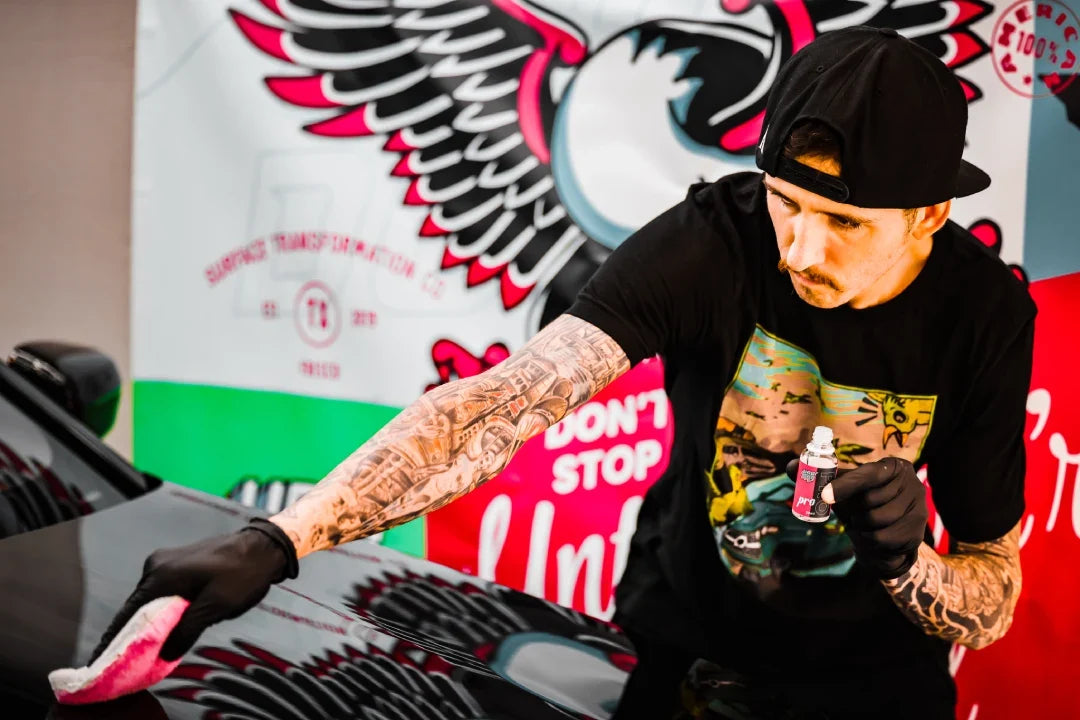
A ceramic coating slickness test is meaningful only when you know what touches the coating, how the contact is loaded and moved, and what result is being measured. A towel or phone sliding across a panel can demonstrate movement in that particular setup, but it does not automatically establish a coating's durability, scratch resistance, or overall quality. That distinction follows the emphasis on defined contacting systems and reported conditions in ASTM's friction-measurement guidance.
You do not need to dismiss the feeling of a pleasant-to-maintain finish. You do need to separate “I like how this feels” from “this measurement proves the product will protect my car longer.” This guide helps you review a slickness claim and keep useful maintenance observations without turning your paint into a test bench.
What is actually touching the coating?
Friction measurements concern interacting surfaces and their test conditions, not a number that belongs to a coating independently of everything touching it. ASTM G115-24 addresses selecting a measurement method and reporting enough information about the system for someone else to judge whether the result applies to their needs. Its public guidance specifically warns about friction data that omit the details of the tested system. ASTM G115 public scope and significance.
Translate that into a simple first question: what is the other contact surface? A bare hand, a towel face, a phone case, and a purpose-made test specimen are not descriptions of the same test. Ask the presenter to identify the item rather than treating “slickness” as a complete method.
Then ask what condition each surface was in. Was the panel clean and dry? Was the towel freshly cleaned, damp, or used with a drying aid? Was the coating being examined by itself or after another product had been applied? These are proposed disclosure questions, not an accusation that a particular demonstration was staged.
Finally, identify the surface beneath the coating and the preparation history. Do not assume that a comparison between two different body panels, or between painted metal and a plastic trim piece, isolates the coating. For a product comparison, request an explanation of how the tested surfaces and preparation were made comparable.
Starting friction and sliding friction answer different questions
The moment an object starts moving is not the same measurement as its behavior after motion has begun. ASTM G219-24 addresses static, or breakaway, friction between two bodies using an inclined plane. ASTM D1894-24 separately identifies starting and sliding friction in its plastic-film and sheeting method. We are using the public scopes to explain the distinction, not saying that either method automatically validates a detailing demonstration. G219 scope; D1894 scope.
For an inclined-plane demonstration, ask whether the presenter records the angle at which a defined object begins moving or simply shows that it eventually slides. The public G219 description relates the onset angle to the static coefficient for that particular sliding pair. A curved vehicle panel with an unspecified object is not made equivalent to that setup merely by tilting something. ASTM inclined-plane description.
For a pull test, ask whether the reported value describes the initial force, the force during continued motion, or a combination. If the answer is unclear, the result is unclear. A single “slickness score” needs a definition before it can be compared with another score.
Also check the method's intended material and application. D1894 is explicitly a method for plastic film and sheeting sliding over itself or another substance under specified conditions. Citing that title is not evidence that a towel test on automotive paint was performed according to it, or that its result predicts your maintenance experience. ASTM D1894 public scope.

How to evaluate a towel-slide or phone-slide video
First classify what you are seeing. An informal demonstration may be useful as a visual illustration while still leaving measurement questions unanswered. Our recommendation is to describe the visible event narrowly, then list the information needed to support any larger conclusion.
| What the demonstration shows | What to ask next | What not to conclude automatically |
|---|---|---|
| A folded towel moves across a panel. | Which towel face, fold, surface condition, load, and starting method were used? | That every towel will behave the same way. |
| A phone slides when a panel is tilted. | What contacted the panel, and was the starting angle measured? | That the phone is a standardized friction instrument. |
| A force gauge displays a number. | What force, contact pair, loading, motion, and calculation does the number represent? | That the number is a complete coating-performance score. |
| One side looks easier to wipe. | Were the surfaces, products, cloths, moisture, and technique comparable? | That the base coating alone caused the difference. |
| A fresh application feels especially slick. | What was applied, when, and how was the surface conditioned? | That the observation establishes long-term retained performance. |
This table is a review checklist, not a standardized test procedure. Its purpose is to prevent an observation from acquiring a stronger meaning as it travels from a video caption to a buying decision.
For example, imagine a hypothetical clip showing two towels released on opposite sides of a hood. One moves first. An accurate description is that one towel began moving first in that presentation. To attribute the difference to the coating, you would still want the contact materials, panel geometry, preparation, release method, product history, and repeated observations documented.
Do not make the opposite leap either. Missing details do not prove that the presenter is wrong or that the product has no useful properties. They limit the conclusion you can responsibly draw from that demonstration. Ask for clarification without turning an evidence question into a judgment about the person doing the work.
What a useful friction result should report
ASTM G115's public guidance emphasizes choosing a method that represents the system of interest and reporting enough information for other people to assess applicability. That is the foundation for the buyer's questions below. We have not reproduced its full paid reporting form or performed a standards-compliant test here. ASTM G115 reporting guidance.
Start with identity: the exact product, the coated material, the opposing contact material, preparation, application, and cure history. Ask whether the result concerns the named product alone or a complete system that includes a topper, cleaner residue, or another finish treatment. A result is easier to interpret when the tested system is named precisely.
Next, request the operating conditions: loading, motion, surface condition, and relevant environmental information. Ask the tester which factors were controlled and how. The D1894 public notes provide a useful, limited example: in that plastic-film method, motion rate and details of loading and time before movement matter to the friction measurement. Do not convert those notes into a universal automotive procedure. ASTM D1894 significance and use.
Then ask how many observations were made and whether the complete results are available, rather than only the best-looking run. Our recommendation is to request the individual readings or reported spread, the treatment of unusual results, and whether fresh test areas or specimens were used. A polished highlight clip does not answer those questions by itself.
Finally, ask why the test represents the benefit being sold. If the claim concerns towel handling during maintenance, the supplier should explain the relevance of the chosen contact material and conditions. If the claim concerns a different outcome, request evidence for that outcome rather than letting a friction result stand in for it.
When a supplier provides a report, our lab-report verification guide covers document identity and scope. This article's narrower question comes next: even if the document is genuine, does its friction setup answer your actual question?
Why slickness is not a scratch-resistance or lifespan score
A friction measurement and an abrasion evaluation have different defined endpoints. ASTM D4060-25, for example, concerns resistance of organic coatings to abrasion from a Taber Abraser on a flat, rigid surface. Its public notes also discuss factors affecting comparisons, including differences in friction and coating composition. That is more specific than treating “slides easily” as proof of resistance to damage. ASTM abrasion-method scope and significance.
The sensible purchasing response is to request damage-related evidence for a damage-related claim. Ask what exposure was used, what surface was examined, and what changed. Do not interpret a towel moving easily as a guarantee that ordinary washing can no longer mark the finish, and do not conduct a scratch challenge to find out.
The same restraint applies to time. A fresh observation describes that observation; it does not supply months or years of follow-up. If someone claims retained slickness after use, ask for the maintenance history, observation schedule, and the same defined measurement conditions at each check. If they claim retained protection more broadly, ask what protective property was actually assessed.
Record every additional product used during the observation period. Our booster and durability guide explains why a maintenance-product result should not silently become a new service-life promise for the underlying coating. You can appreciate a maintenance product without treating its immediate feel as a measurement of remaining base-coating life.
A low-risk observation routine for owners
Our recommendation is to observe during normal, manufacturer-approved maintenance rather than adding a separate rubbing or sliding challenge. Do not drag phones, coins, weighted blocks, dry bags, or improvised test devices across a customer's car. If you need a formal friction comparison, ask a qualified testing service about suitable specimens and a method appropriate to the question.
Start a simple record for the vehicle you already maintain. Note the coating identity if known, installation date, relevant aftercare instructions, and any additional products used. If those facts are unknown, write “unknown” rather than reconstructing a confident history from the way the panel feels.
At the next scheduled wash, follow the normal care procedure and record the wash product, drying method, cloth used, and anything unusual. Do not change the care routine solely to create a dramatic comparison. Keep any subjective note modest: “This clean towel felt easier to move during today's normal drying” is more precise than “the coating passed.”
If you notice unexpected grabbing, visible residue, roughness, or a possible defect, stop escalating contact. Photograph what is visible and ask the installer or product supplier which inspection or maintenance step is appropriate. Do not jump straight to aggressive decontamination, polishing, or stripping because a hand-feel check disappointed you.
Repeat observations only as part of later normal maintenance and preserve changes in the record. A different towel, different drying aid, or different wetness condition should be noted rather than hidden inside the word “same.” These notes can help explain your experience to a professional, but they are not a laboratory coefficient or a universal pass/fail threshold.
When sharing the result, state the limits plainly: one vehicle, your care routine, and subjective handling observations. That is useful information without a fabricated test result. If you later obtain instrumental data, keep it separate until the tested surfaces and conditions are clear.

Frequently asked questions
Does a towel sliding off paint prove the coating is better?
Not by itself. Ask what was in contact, how the surfaces were prepared, how movement began, and whether the result was repeated under comparable conditions. ASTM's general friction guidance emphasizes reporting the tested system before deciding how a result applies. ASTM G115.
Is starting friction the same as sliding friction?
No. Starting or breakaway friction concerns the onset of motion, while sliding friction concerns motion after it has begun. The public scopes of G219 and D1894 distinguish those measurements; a presenter should identify which result is being reported. G219; D1894.
Can a phone serve as a calibrated slickness tester?
Do not assume so from a video. Ask for the defined contact surface, geometry, measurement method, and evidence that the setup answers the intended question. Our recommendation is not to slide a phone across vehicle paint as a home test.
Does lower friction prove greater scratch resistance?
A friction result alone does not establish a separate damage-performance claim. Request an appropriate damage evaluation with documented conditions and outcomes. ASTM D4060 illustrates a distinct abrasion-testing endpoint; merely naming it does not mean any particular coating passed. ASTM D4060.
Does reduced slickness mean I should strip the coating?
Do not make that decision from subjective feel alone. Record the maintenance history and symptoms, stop adding test contact, and ask the installer or supplier for an appropriate inspection. This guide provides no universal hand-feel threshold for coating removal.
Should I compare coated paint with nearby uncoated plastic?
Not as an isolated test of the coating. You would be changing the underlying surface as well as its treatment. For a meaningful product comparison, ask how the test controls the contacting materials and preparation; ASTM G115 explains why system details matter. ASTM friction guidance.
Can I keep useful records without friction-testing equipment?
Yes. Keep a factual log of normal approved maintenance, products, cloths, dates, and subjective observations. Label it as an owner record, not a measured coefficient, standards-compliant test, or proof of remaining service life.
Does this article provide an HCC friction-test result?
No. It provides a framework for judging claims and observations, not a new HCC measurement or comparison win. Ask for product-specific evidence if a defined friction outcome is essential to your purchase.
How Undrdog does it
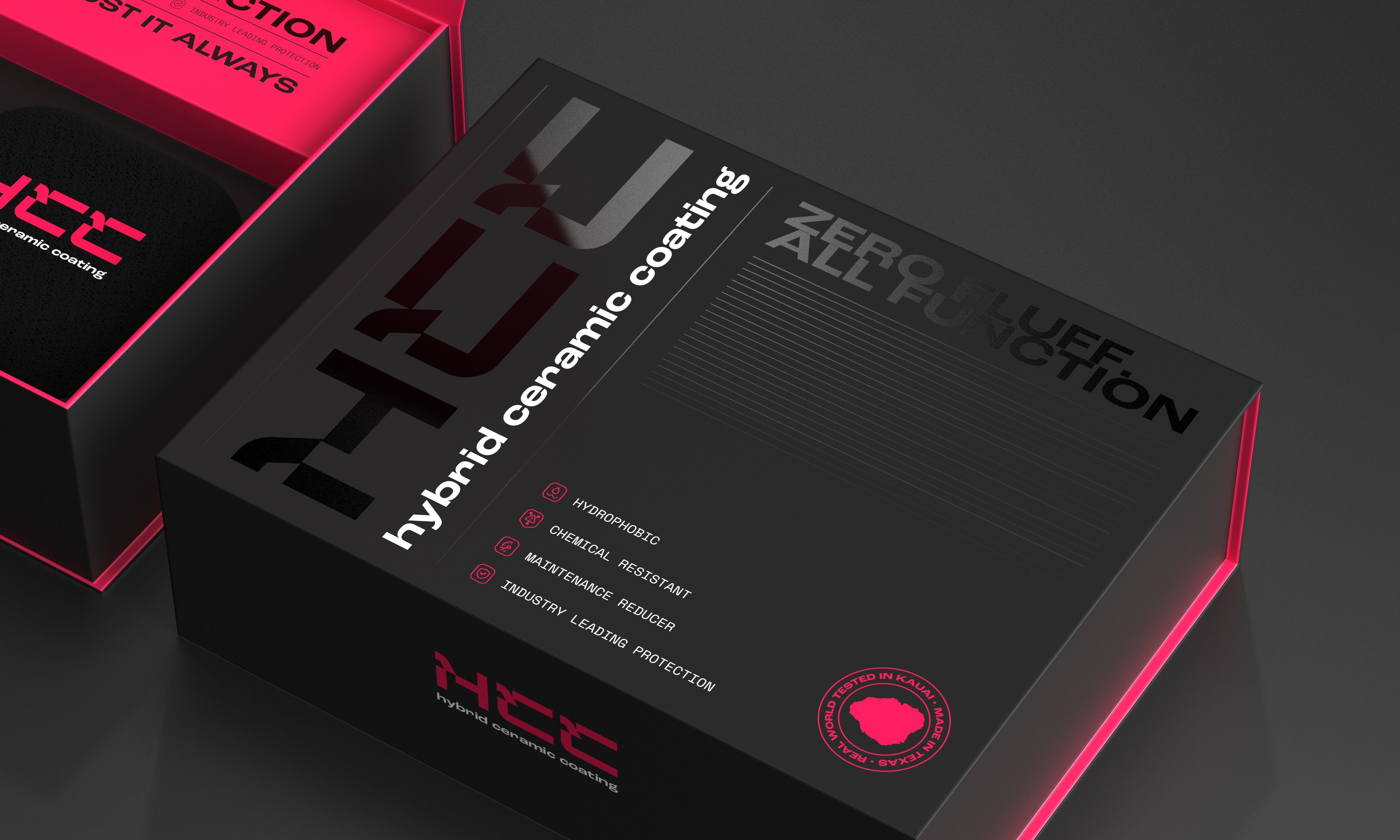
HCC Hybrid Ceramic Coating is Undrdog's all-surface flagship for cars, boats, planes, and bicycles. It is available to professional detailers and DIY users without a purchase-certification requirement. Its multi-year positioning remains conditional on preparation, exposure, use, and maintenance rather than a lifespan inferred from how a towel moves.
Apply the same evidence standard to our products. This article does not assign HCC a coefficient of friction, claim a win against another coating, or treat an owned photograph as a test result. Check the current product instructions for the intended surface and application, and ask about the exact property that matters to your project.
A professional's preparation, controlled application, and careful maintenance advice have value independent of a dramatic demonstration. If your existing finish raises a concern, start with its care history and a sensible inspection. A coating purchase is not an automatic answer to an unclear slickness observation.
Choose a coating for the complete job.
Review HCC's surface suitability, preparation, application, and maintenance requirements before beginning a protection project.
Shop HCC Hybrid Ceramic Coating

Leave a comment
This site is protected by hCaptcha and the hCaptcha Privacy Policy and Terms of Service apply.