

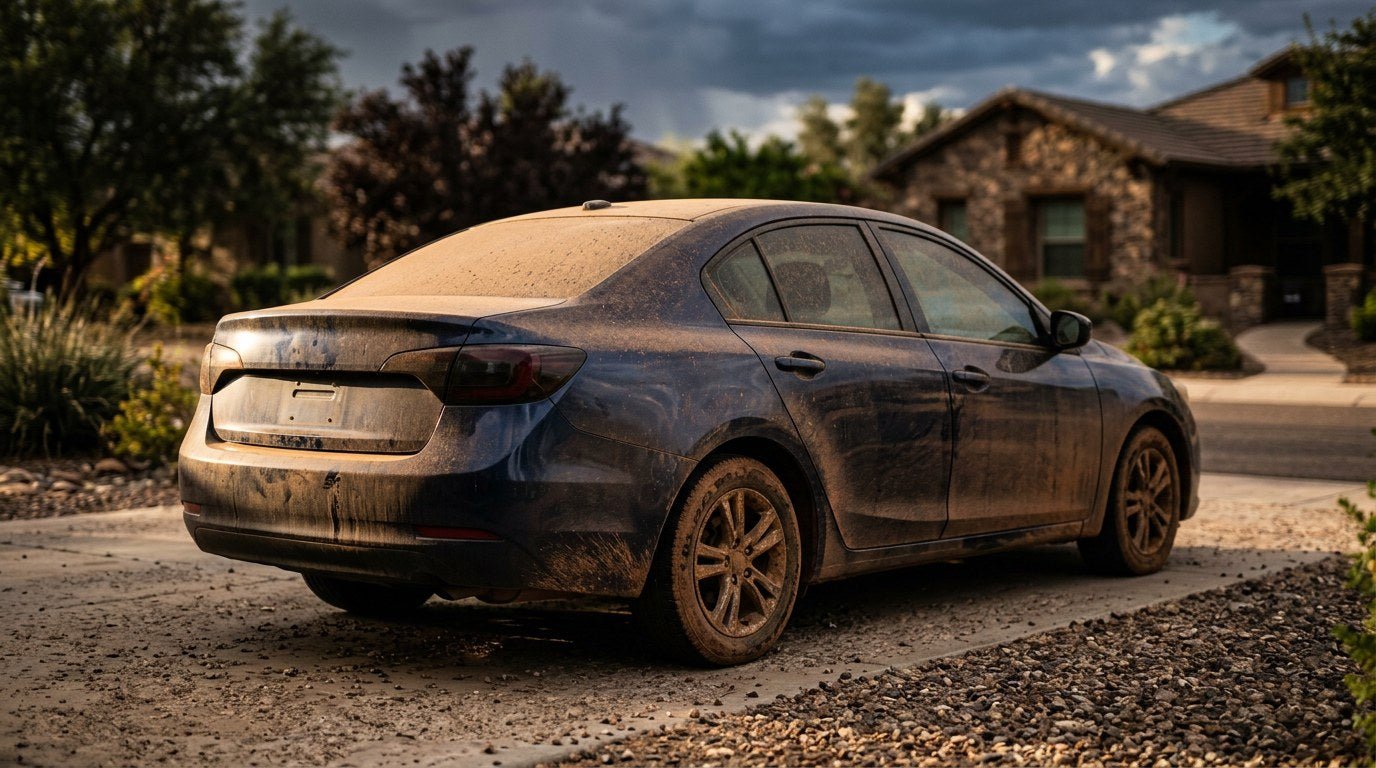
Monsoon season attacks car paint two ways at once — powdery haboob dust that scratches when you dry-wipe it, and mineral-rich rain that etches into clear coat as it evaporates in the sun. The winning workflow is a no-touch pre-rinse right after each storm, a proper foam-and-mitt wash within 24–48 hours, and a hydrophobic coating like HCC that sheets water off before minerals can bond. Do those three things and your paint stays clean through the wettest, dustiest weeks of the year.

Why Monsoon Season Is So Brutal on Paint
Late summer monsoons in the American Southwest, the Gulf Coast, Florida, and tropical islands like Hawaii aren't just about rain. They deliver a specific combination of environmental hits that stack up faster than any other season:
- Haboob dust storms: Wall-of-dust events push fine desert grit onto every panel, into every seam, and across every window.
- Mineral-loaded rain: Monsoon precipitation picks up dust in the atmosphere on the way down, then evaporates fast in the returning sun and deposits calcium, silica, and gypsum on your paint.
- Muddy runoff: Wind-driven rain splashes red-clay and calcium-caliche mud onto lower panels and rocker seams.
- Humidity swings: 100°F afternoons drop to 75°F humid nights, causing dew condensation that concentrates dissolved minerals on paint before the sun bakes them on.
- Debris impacts: Downed palm fronds, mesquite branches, tumbleweeds, roof shingles — physical hits during storms.
Any single one of these is manageable. Stack all five over a two-month monsoon window and unprotected clear coat starts to look tired, hazed, and permanently spotted.
The Two Threats You Actually Need to Manage
1. Haboob Dust and Dry Grit
A haboob or "wall of dust" pushes desert silica, sand, and pulverized soil at high wind speeds. What lands on your car is a fine abrasive powder. Dust sitting on paint isn't the problem — the problem starts the second someone drags a towel, California duster, sleeve, or windshield wiper across it. Fine grit against dark clear coat produces marring you can only remove with paint correction. As Arizona detailers put it after early August 2026's back-to-back storms, "the safest cleanup is a rinse-first process that removes loose particles before a wash mitt ever touches the paint" (AZ Auto Aesthetics).
2. Mineral Water Spots From Monsoon Rain
Monsoon rain grabs atmospheric dust on its way down. Drops that dry on paint in direct sun evaporate quickly and leave behind a ring of concentrated mineral — calcium carbonate, silica, gypsum — that bonds to clear coat. Left alone, those spots can etch into the surface within 24–48 hours in high heat, becoming permanent defects that only compounding will fix. See our water spot remover guide for the full breakdown on why they etch and how to fix them.

The Post-Storm Playbook: What to Do Immediately
Step 1: Wait For Conditions to Be Safe
Never work on the car during lightning, high wind, or blowing debris. Once winds drop and visibility returns, you can start.
Step 2: Never Dry-Wipe Dusty Paint or Glass
This is the single most important rule of monsoon car care. Skip the California duster. Skip the "quick wipe" with a microfiber. Skip running the wipers across a dusty windshield until you've flooded the glass with washer fluid and clear water. Dry dust must be loosened with water before anything touches the paint or glass.
Step 3: Rinse Top-Down With High Volume, Low Pressure
Use a garden hose on a wide fan or shower setting — not a jet or pressure washer, which can drive grit sideways into paint. Start at the roof, work down the glass, then hood, then sides. Get plenty of water flowing so loosened grit sheets off in dirty streams instead of getting redistributed. Pay attention to mirrors, badges, trim gaps, wheel arches, and the lower rockers where mud collects.

Step 4: Foam Pre-Soak
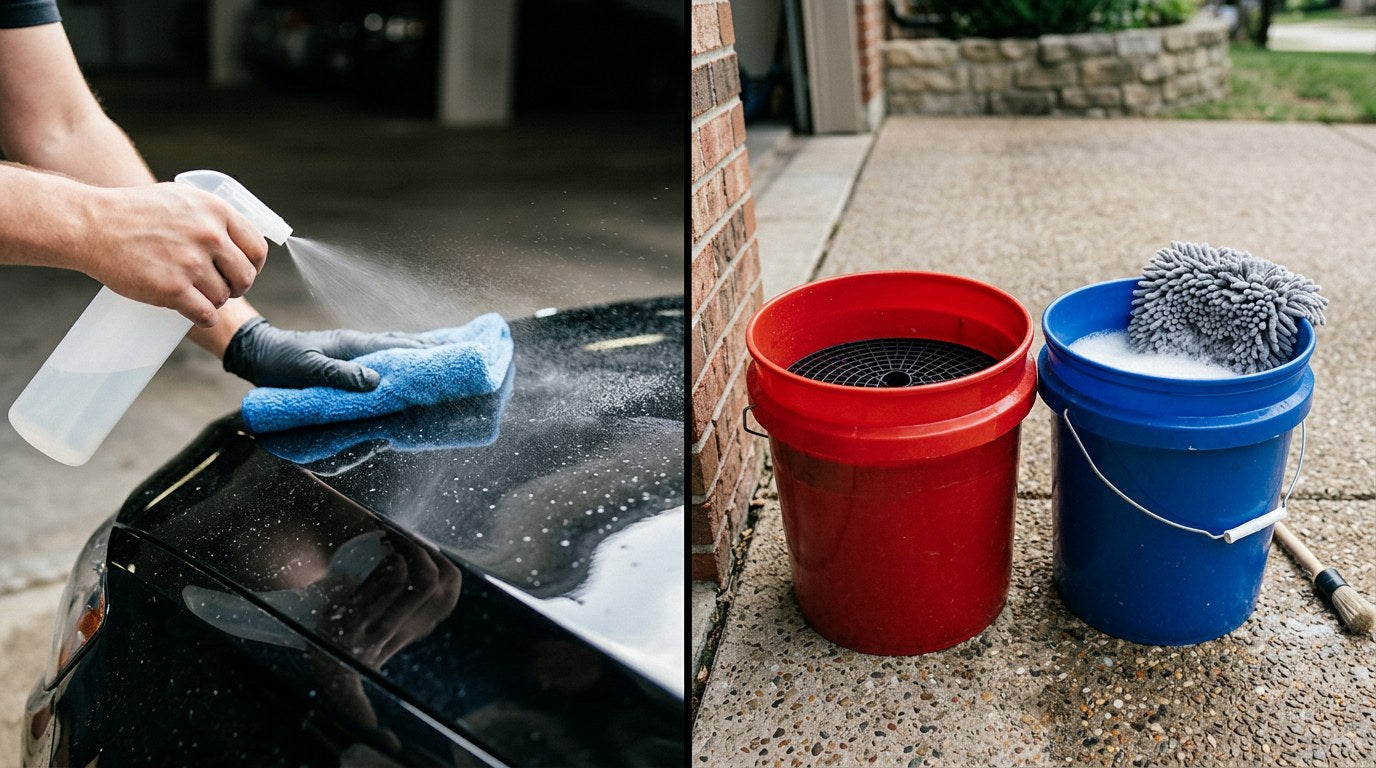
Once the loose dust is gone, hit the vehicle with a foam cannon load of Undrdog Soap at 1–2 oz per 32 oz bottle. Let the foam dwell 3–5 minutes to encapsulate what the rinse missed. This step also lubricates any remaining fine particles so a wash mitt can slide over them safely.
Step 5: Two-Bucket Contact Wash
Grit guards in both buckets. Wash top-down, panel by panel, with a plush microfiber mitt. Rinse the mitt in the clean bucket every panel and reload from the soap bucket. Never scrub — straight-line passes only on visible dust panels.
Step 6: Chase the Rinse — Dry Fast
This is where mineral spots either happen or don't happen. Dry the entire vehicle immediately with a plush microfiber drying towel, or use a filtered air blower. Never let rinse water air-dry in monsoon-region tap water — the minerals in southwestern and coastal municipal water will spot dark paint even after a clean wash. Our car drying towel guide covers technique in detail.
What If You Already Got Water Spots?
If mineral spotting is already on the paint, don't panic. Freshly deposited mineral (within 24 hours) can usually be removed with a dedicated Water Spot Remover and a quality microfiber. Apply per label, work small sections, wipe clean, and rinse.
Older etched spots — where the mineral has bonded and started to etch the clear coat — need either compound-and-polish paint correction or a professional detailer. If the spot doesn't come off with a proper water-spot remover, that's your signal it's etched, not just deposited. Our DIY paint correction guide walks through the compounding step.
The Long-Term Fix: Hydrophobic Protection Before the Next Storm
The most effective monsoon defense isn't reactive at all — it's a hydrophobic ceramic coating already on the paint when the rain hits. A properly cured ceramic layer does three things during monsoon season:
- Sheets water off panels before drops can pool and evaporate into mineral spots. Instead of dozens of round evaporating puddles, water rolls off in sheets and takes dust with it.
- Reduces dust and mud adhesion so the pre-rinse actually clears panels in one pass instead of leaving stuck-on grit.
- Buys you time between the storm ending and your wash — 48 hours instead of 24 before minerals start etching.
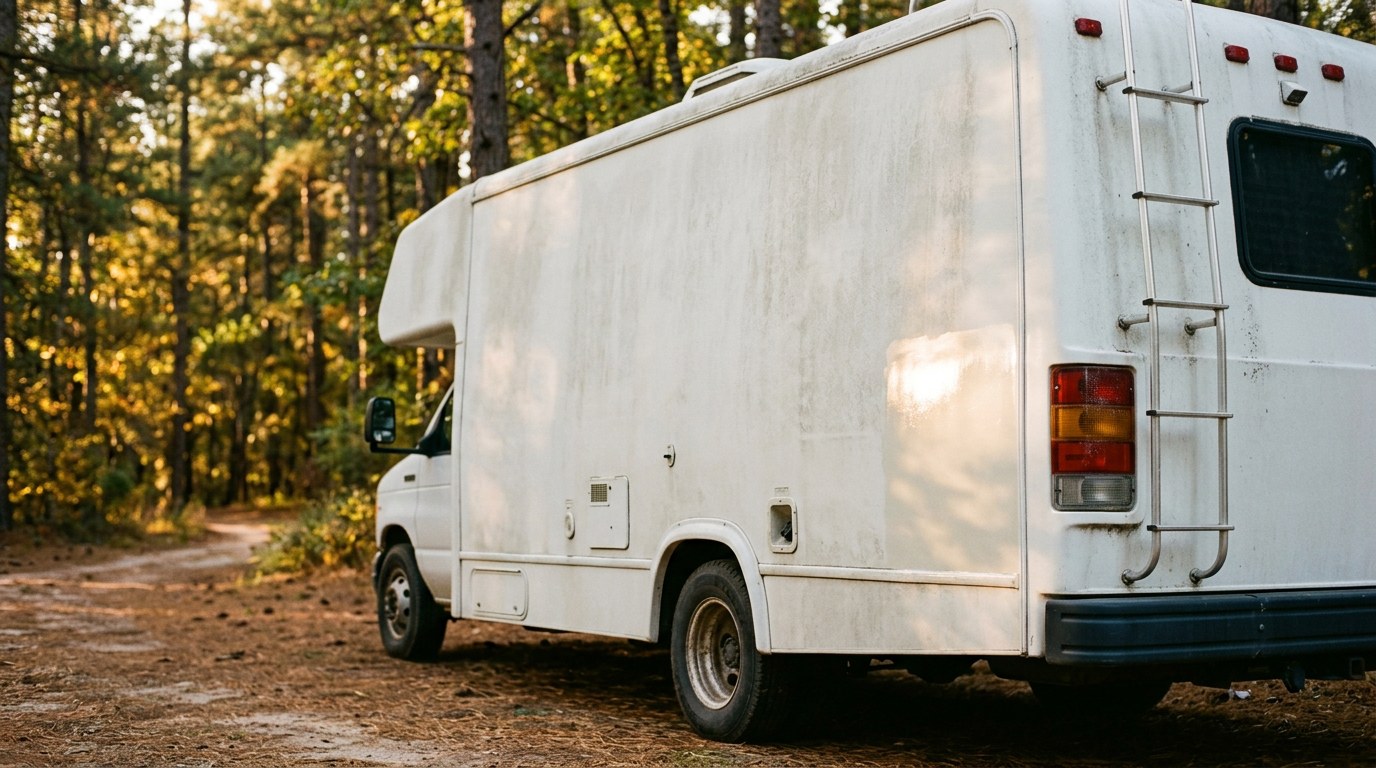
HCC is our default recommendation for anyone in a monsoon or coastal region. It bonds to paint, glass, plastic trim, gel coat, and aluminum — so the entire vehicle including windshield and wheels beads and sheets. If you're prepping paint for a first coating, our pre-ceramic prep guide is the exact workflow to run before laying HCC down.
Between-Storm Maintenance
Even coated cars need regular topping. Monsoon season is a wash-more-not-less season. A realistic mid-monsoon rhythm looks like:
- Immediately after every storm: Pre-rinse top-down, foam soak, quick two-bucket wash, dry immediately. Even if it's late.
- Weekly: Full maintenance wash with Undrdog Soap. Check for developing water spots on horizontal panels.
- Between storms: Spot-wipe fresh dust with Quick Detail — but only after a light water mist to soften dry particles.
- Every 6–8 weeks: Iron decon with The Purps if you're driving in traffic and picking up brake fallout.
- End of monsoon season: Water spot inspection pass, correction if needed, and a coating refresh on any panel with visible drop-off in beading.
Monsoon Region Care by Climate Type
| Region | Primary Threat | Key Product Focus | Wash Frequency |
|---|---|---|---|
| Arizona / New Mexico (haboob country) | Fine dust + mineral rain | HCC + Water Spot Remover | After every storm + weekly |
| Florida / Gulf Coast | Salt-laden rain + humidity | HCC + The Purps | Weekly + after every named storm |
| Hawaii (windward) | Salt air + tropical UV + rain | HCC + Marine for boats | Weekly rinse + biweekly wash |
| Texas Gulf | Humidity, salt, hurricanes | HCC + hurricane prep kit | Weekly + storm-specific |
| Southern California coastal | Marine layer + dust | HCC + drying discipline | Weekly + no air-drying |
For Hawaii residents specifically, our Kauai vehicle protection guide covers the full salt-air-plus-UV-plus-vog stack. For Gulf and Atlantic hurricane paths, our hurricane prep guide is the pre-storm and post-storm workflow.
Mistakes That Turn a Monsoon Into Paint Damage
Automatic Car Wash Right After a Dust Storm
Feels efficient. It's not. Automatic brush washes drag dust and grit across paint in circular patterns — that's exactly how you end up with visible swirl marks on dark cars. Wait until you can do a proper pre-rinse and two-bucket wash yourself, or use a touchless tunnel with strong pre-soak chemistry.
Letting Rain "Wash" Your Car
Rain drops carry dust and minerals down onto your paint. When they evaporate, they leave those contaminants behind. "Letting the rain wash it" is how you end up with mineral spots baked onto every horizontal panel. Rain is a pre-rinse trigger, not a wash substitute.
Pressure Washing Fresh Dust
Some detailers reach for the pressure washer to "blast" dust off. The pressure jet can drive fine grit sideways into clear coat and lift trim edges. Use a wide fan on garden hose pressure for the initial rinse, then bring in the pressure washer for foam application after loose dust is gone.
Skipping the Windshield Cleanup
Dusty windshield + one wiper pass = permanent wiper scratches in the glass. Flood the glass with washer fluid first, or don't run wipers until you've hand-rinsed the windshield.
Air-Drying After a Wash
Southwestern and tropical municipal water often runs high in dissolved minerals. Letting a clean car air-dry in the sun is how you end up with fresh water spots on top of the wash you just did. Always dry immediately with a plush microfiber or filtered blower.
Sheets Water. Sheds Dust. Every Storm, Every Time.
HCC is our hybrid ceramic flagship — bonds to paint, glass, and trim, so the whole vehicle beads and sheets. It's the single best thing you can do for a car in monsoon country.
Shop HCC Hybrid Ceramic Coating →Frequently Asked Questions
Does monsoon rain actually damage car paint?
Yes, especially when rain drops evaporate in strong sun before you wash them off. The atmospheric dust that rain carries down concentrates in the drying drop and deposits calcium, silica, and gypsum on paint. Given heat and time, those minerals can etch the clear coat.
Should I wash my car after every monsoon storm?
At minimum, do a pre-rinse top-down with a garden hose within 24 hours. A full two-bucket wash within 48 hours is ideal. Waiting longer lets mineral spots and mud bond to the clear coat.
How do I remove haboob dust safely?
Never dry-wipe. Rinse top-down with wide-fan garden hose pressure first, then foam pre-soak, then two-bucket wash. Skip the California duster, dry microfiber, or brush on dusty paint.
Can a pressure washer damage my car after a dust storm?
A concentrated jet aimed at dusty paint can drive grit sideways into clear coat and lift trim edges. Use a garden hose wide fan for the initial rinse. Reserve the pressure washer for foam application after loose dust is off.
How long do I have before water spots become permanent?
In high heat, mineral-loaded rain drops can begin etching clear coat within 24 to 48 hours. Freshly deposited minerals wipe off with a proper water spot remover. Etched spots require compounding and polishing.
Does a ceramic coating help during monsoon season?
Yes, significantly. A hydrophobic ceramic like HCC sheets water off panels before drops can pool and evaporate into mineral spots, reduces dust and mud adhesion, and gives you a longer window to wash before minerals bond. It's the single highest-impact upgrade for monsoon regions.
Is it okay to run an automatic car wash after a dust storm?
Brush automatic washes drag dust across paint in circular patterns and cause swirl marks on dark cars. A touchless tunnel with strong pre-soak chemistry is a safer commercial option. A proper DIY pre-rinse plus two-bucket wash is the safest.
What about washing during monsoon rain?
Not ideal. You want to pre-rinse and wash after the storm has cleared. Rain water alone plus dirty paint just concentrates minerals in evaporating drops. Wait for the storm to end, then work quickly.
How often should I refresh my ceramic coating during monsoon season?
Test hydrophobics weekly by watching how water beads and sheets on a horizontal panel. If beading weakens or water starts sheeting slowly, that's a signal to apply a coating booster or a fresh HCC top coat. Regular Undrdog Soap washes extend coating life significantly.
Should I cover my car during monsoon season?
A hard-sided garage is ideal. Avoid throwing loose fabric covers on dusty vehicles in strong wind — a moving cover drags grit sideways across paint. If you must cover, do it only after the vehicle is clean.

Leave a comment
This site is protected by hCaptcha and the hCaptcha Privacy Policy and Terms of Service apply.