

To remove road tar from car paint safely, spray a dedicated bug and tar remover on the spots, let it dwell for 3–5 minutes to dissolve the asphalt binder, then wipe gently with a soft microfiber. Never scrub dry tar with a brush or use gasoline — both damage clearcoat within seconds. This guide walks you through why tar sticks, the exact removal method for fresh and baked-on spots, and how to keep your paint from being a tar magnet the rest of summer.

Why Summer Is Peak Tar Season
Most U.S. road paving happens between June and September, when air and pavement temperatures are high enough for hot-mix asphalt to lay properly. According to the National Asphalt Pavement Association guidelines, hot-mix asphalt is laid at 275–325°F and needs warm ambient conditions to cure without cracking. That means fresh road tar, chip-seal aggregate, and sticky asphalt runoff are at their peak on U.S. roads exactly when most people are taking summer road trips.
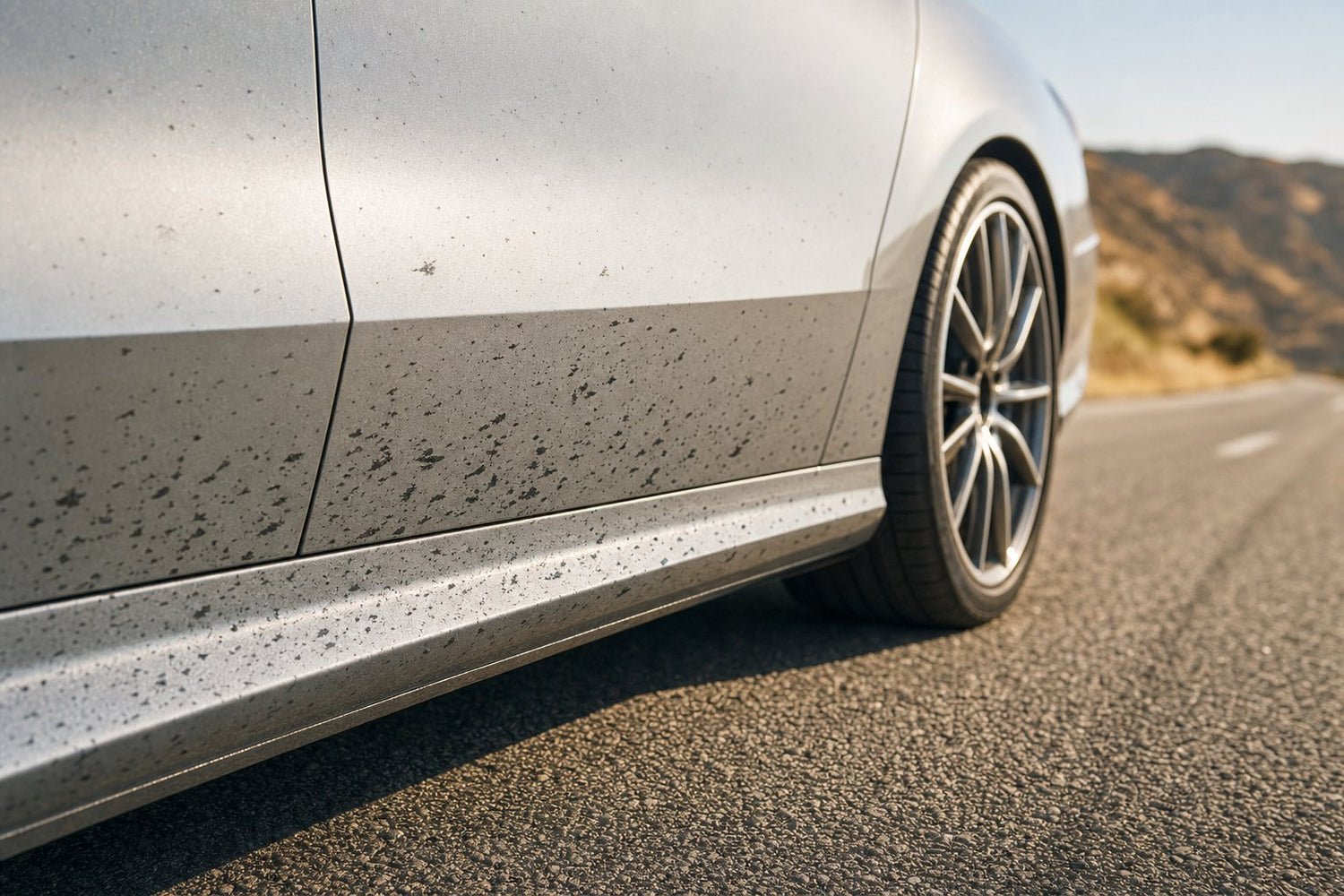
If you've noticed a rash of small black spots along your rocker panels, behind the wheel arches, or across your lower doors in July or August, that's road tar — flung up by your own tires, oncoming traffic, and freshly paved surfaces. Left alone in the sun, those spots bake harder every day and get progressively more difficult to remove without paint damage.
What Road Tar Actually Is
Road tar is not one substance — it's a mix of things that all behave similarly on paint:
- Asphalt binder: The petroleum-based glue that holds pavement together. When fresh pavement heats up, small amounts liquefy and flick up onto passing cars.
- Chip-seal aggregate: Small rocks bound in tar, sprayed onto rural roads as a resurfacing treatment. Sticks to paint in wet clumps.
- Old road residue: Decomposed asphalt, motor oil, and rubber that has combined into a sticky black film on the road surface and gets kicked onto lower panels in rain.
All three share one property: they're petroleum-based and non-polar, so they bond to your clearcoat through mechanical grip rather than chemistry. That's actually good news — the right solvent breaks the grip without touching the paint underneath.
What You'll Need
Before touching your paint, gather these supplies:
- A dedicated bug and tar remover (solvent-based, safe for clearcoat)
- Two clean microfiber towels — one for solvent, one for buffing
- A gentle car soap like Undrdog Soap for the follow-up wash
- A detailing clay bar or clay mitt with lubricant spray
- A shaded work area — never work on a hot panel in direct sun
- Nitrile gloves and eye protection (solvents can irritate)
Skip these dangerous alternatives that people commonly reach for: gasoline, kerosene, paint thinner, lacquer thinner, WD-40 in heavy quantities, brake cleaner, and any household abrasive like a Magic Eraser or dryer sheet. All of them will strip protection, dull clearcoat, or scratch paint faster than they remove tar.
Step-by-Step: Removing Fresh Road Tar
"Fresh" means tar that's less than a week old and still slightly soft. This is the easy case:
1. Rinse the Panel
Hose the affected area with cool water to knock off loose grit. Do not scrub. Any dry contamination on the panel becomes a scratch risk when you start wiping.
2. Move to Shade and Let the Panel Cool
Solvent works better on a cool panel because it evaporates slower and has more dwell time to dissolve tar. Hot paint (above about 100°F to the touch) also flashes solvent so fast it leaves streaks.
3. Spray Bug and Tar Remover Directly on the Spots

Mist enough product to saturate the tar and let it drip. According to Carmaa Car Care's technical writeup, dedicated bug and tar removers use hydrocarbon or citrus solvents specifically formulated to dissolve asphalt binder without attacking modern automotive clearcoat.
4. Dwell 3–5 Minutes
Do not wipe immediately. Let the solvent break the tar's bond to the paint. You'll often see the tar spots start to blur or run — that's the sign it's ready.
5. Wipe Gently With a Fresh Microfiber
Use straight-line motion, not circles. Fold the microfiber to a fresh face as soon as you see tar on it. Do not drag a contaminated section across clean paint.
6. Rinse and Rewash the Panel
Solvents strip whatever wax, sealant, or coating you had on the paint. Wash the panel with pH-neutral soap immediately to remove solvent residue, then dry properly with a plush microfiber. If the panel isn't protected, you now need to reapply your last-step product.
Step-by-Step: Removing Baked-On Tar
"Baked-on" means tar that's been sitting in the sun for weeks and has hardened into a dark crust. Solvent alone often isn't enough. Add these steps:
1. Apply Solvent, Dwell, and Cover
Spray tar remover and immediately cover the spot with a solvent-soaked microfiber laid flat against the paint. This holds the solvent against the tar and prevents evaporation. Let it sit 10–15 minutes.
2. Wipe and Reapply
Wipe off what has softened. If tar remains, reapply solvent, cover again, wait another 10 minutes, and wipe. Aggressive scrubbing on this step is what cause scratches — patience is what removes tar without damage.
3. Clay Bar the Panel

Once the bulk of the tar is gone but a shadow or thin film remains, wash the panel with soap and water and then clay bar it. Detailing clay pulls stuck contamination off the surface using shear rather than solvent. Use plenty of clay lubricant, work in small sections, and fold the clay to a clean face when the current face gets black. See our full clay bar guide for technique.
4. Inspect for Etching
If tar sat on hot paint for weeks, it can leave a shallow etch or a hazy spot even after full removal. Under raking sunlight, look for dull patches where the tar used to be. Light etching polishes out with a fine finishing polish; deep etching requires paint correction. This is why acting sooner rather than later matters.
Fresh Tar vs Baked-On Tar at a Glance
| Factor | Fresh Tar (under 1 week) | Baked-On Tar (weeks+) |
|---|---|---|
| Removal method | Solvent + wipe | Solvent + soak + clay bar |
| Dwell time needed | 3–5 minutes | 10–15 minutes, repeated |
| Risk of etching | Low | Moderate to high |
| Follow-up needed | Rewash + reapply protection | Clay bar, possible polish, reapply protection |
| Time per panel | 10–15 minutes | 30–60 minutes |
Common Mistakes That Damage Paint
Most tar-related paint damage happens during removal, not from the tar itself:
- Dry scrubbing with a brush or rag. Tar plus grit becomes a mild abrasive. Every scrub cycles it across your clearcoat and leaves fine scratches.
- Fingernail or plastic scraper. The tar comes off with a chunk of clearcoat attached. Never do this on paint.
- Gasoline, kerosene, or paint thinner. These dissolve tar quickly and also soften the top layers of clearcoat, leaving a dull or hazy patch that won't polish out.
- Brake cleaner or engine degreaser. Too aggressive on clearcoat. Also strips wax and sealant instantly.
- Working in direct sun on a hot panel. Solvent flashes off before it has time to work, and you end up scrubbing harder to compensate.
- Skipping the follow-up wash. Solvent residue keeps eating any protective layer even after visible tar is gone. Always rinse and wash after tar removal.
Prevention: How to Keep Tar From Sticking
The best defense against tar is a slick, hydrophobic top layer on your paint. When paint has almost no texture for tar to grip, most spots wipe off with a normal wash instead of needing solvent at all.
Ceramic Coating
A modern ceramic coating like HCC Hybrid Ceramic Coating creates a hard, slick, hydrophobic top layer. Fresh tar simply doesn't grip as well, so most of what would have baked onto bare clearcoat wipes off in your next wash. When tar does stick, it comes off with less solvent and less dwell time.
Sealant or Wax as a Sacrificial Layer
Even a good spray sealant or paste wax gives tar something to bond to besides your paint. When you dissolve the tar, you're also removing the sacrificial layer — but that's fine, because you can reapply. Without any protection, the tar bonds directly to clearcoat, which is exactly what leads to etching. See our spray sealant vs paste wax comparison for how to pick between them.
Wash Frequency in Peak Tar Season
Wash every 5–7 days during July, August, and September if you drive on freshly paved roads or gravel-and-tar chip-seal treatments. The tar you catch within a week wipes off with a normal wash; the tar you leave for a month needs solvent and a clay bar.
Rocker Panel Protection
Most tar collects on the lower doors, rocker panels, and behind the rear wheel arches. Some owners apply paint protection film (PPF) to these zones, which handles tar and rock chips together. If PPF isn't in the budget, at least keep the sacrificial layer of ceramic or sealant fresh on those areas — they take the worst of every tar hit.
When to Just Take the Car to a Detailer
Bring it to a professional if:
- Tar covers a large area (whole rocker, quarter panel, or full hood) and has been baking for weeks.
- You already see hazy or dull patches under sunlight where the tar was.
- You accidentally used gasoline, brake cleaner, or a similar harsh solvent and now the paint looks worse.
- The car is coated and you're worried about damaging the coating with home solvents.
A detailer with a proper paint correction setup can remove tar, clay bar the affected zones, and machine-polish out any residual etching in a couple of hours. It's cheaper than living with dull spots or paying to repaint a rocker panel.
Frequently Asked Questions
What is the best product to remove tar from car paint?
A dedicated automotive bug and tar remover with a citrus or hydrocarbon solvent base is the safest choice. It's formulated to dissolve asphalt binder while leaving modern clearcoat unharmed. Skip household solvents like gasoline, kerosene, or paint thinner — they remove tar but also dull the paint.
Will WD-40 remove road tar from a car?
WD-40 will soften tar and can work in a pinch, but it leaves an oily residue that traps dust and strips any wax or sealant on the panel. Use it only if you have nothing else, and always follow with a full soap wash and reapplication of protection.
Does tar damage car paint permanently?
Fresh tar sitting for a few days rarely causes lasting damage. Baked-on tar under summer sun for weeks can etch the clearcoat, leaving hazy or dull spots that need machine polishing to correct. Deep etching may require paint correction or, in rare cases, respray of the affected panel.
Can I use a clay bar to remove tar?
Yes — clay bar is one of the safest tools for lifting stuck tar residue after solvent has done most of the work. Use plenty of clay lubricant, work in small sections, and fold the clay to a clean face frequently. Clay alone (without solvent) can lift only light tar spots, not heavy baked-on deposits.
How do I remove tar from a ceramic-coated car?
Use the same solvent-and-wipe method, but keep dwell time short (2–3 minutes) and test in a small area first. Most quality automotive tar removers are safe on ceramic coatings, but repeated harsh use will shorten the coating's life. Rinse thoroughly after removal to clear any solvent residue.
Why is there so much tar on my car after a road trip?
Summer is peak road-paving season in the U.S., which means fresh asphalt binder, chip-seal aggregate, and hot pavement residue on many highways from June through September. Long stretches on rural roads or freshly paved sections at highway speed throw hundreds of tiny tar droplets onto your lower panels.
Should I use dish soap to remove road tar?
No — dish soap won't dissolve tar and its high pH strips any protective wax or sealant on the paint, leaving the clearcoat more vulnerable. Use a dedicated tar remover, then a car-specific pH-neutral shampoo for the follow-up wash.
How long does bug and tar remover need to dwell on paint?
Fresh tar needs 3–5 minutes. Baked-on tar needs 10–15 minutes, often with a solvent-soaked microfiber laid on top to prevent evaporation. Never let solvent dry completely on the panel — mist more product if it starts to flash off.
Will a pressure washer take tar off my car?
Not by itself. A pressure washer can knock off loose tar and lubricate the removal step, but bonded tar won't release under pressure alone. Use solvent to break the bond first, then rinse with a pressure washer at low PSI (1500 or below).
Is tar on a car covered by insurance?
Comprehensive auto insurance rarely covers tar damage — it's usually treated as normal road wear. Some fresh-pavement situations qualify if you can prove the paving crew failed to post signage or protect passing traffic. Most owners eat the cost of tar removal or minor polishing themselves.

Leave a comment
This site is protected by hCaptcha and the hCaptcha Privacy Policy and Terms of Service apply.