

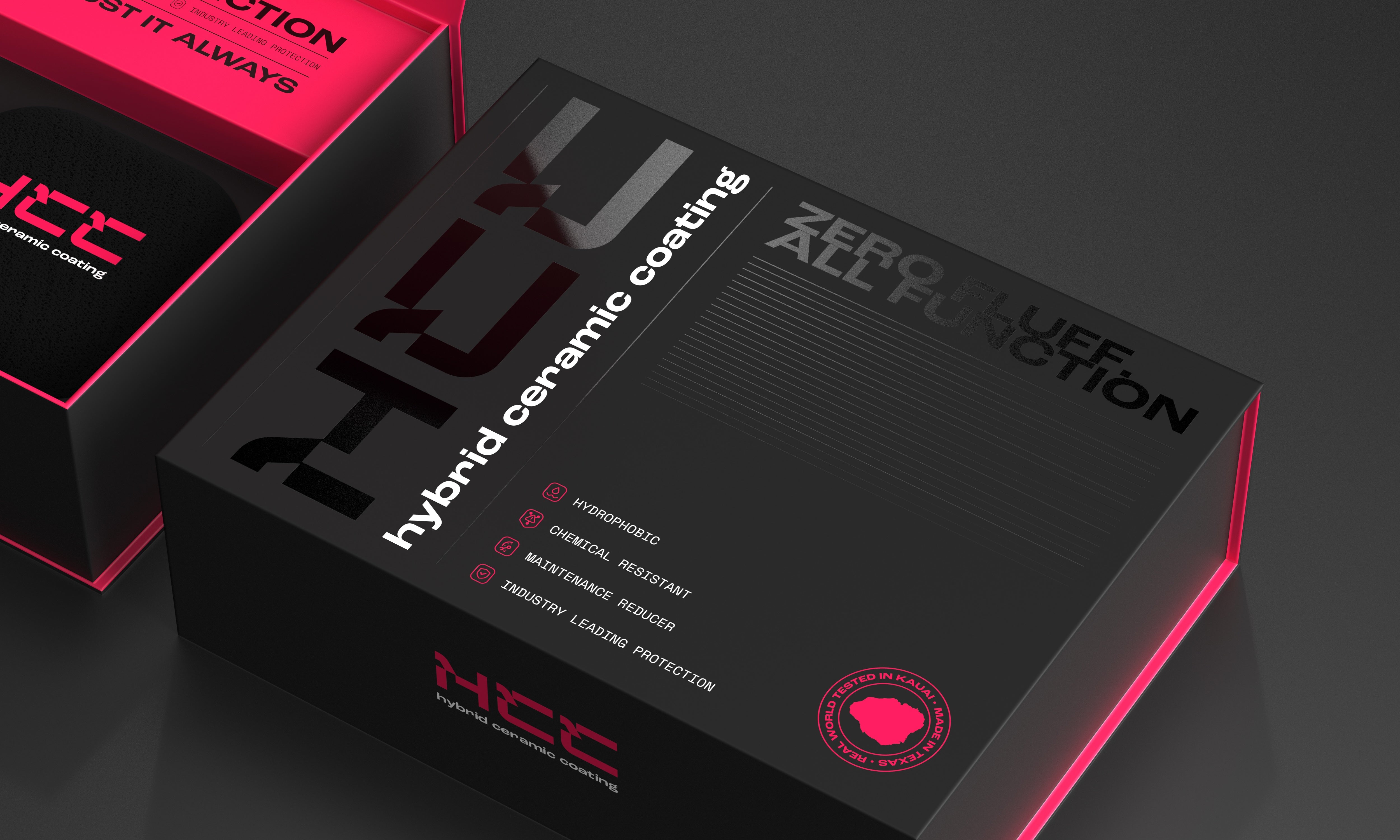

A "5-year" or "lifetime" ceramic coating warranty almost never means what it sounds like. It usually means the coating is covered against a narrow list of chemistry failures, only if you keep paying for annual inspections on schedule, only if you never miss the maintenance-product requirement, and only for as long as you personally own the vehicle. Miss one condition and the warranty term can drop overnight — sometimes from "lifetime" to five years, sometimes from five years to one.
That's not underhanded — it's how warranties are built, and the terms are usually written down and legal. The problem is that almost nobody reads them before paying $800 to $2,500 for the install. Here's what the fine print actually says, and what to check before you sign.

What the Number on the Bottle Doesn't Tell You
"5-year," "9-year," and "lifetime" are marketing terms attached to a warranty document, not laboratory results. The number is a business decision about how long the brand is willing to stand behind the product under a specific, narrow set of conditions — not a prediction of how long the coating will actually perform on your car in the real world.
The Federal Trade Commission's guidance on warranty law makes the same point about "lifetime" claims generally: the term needs a defined reference point, because it can mean the lifetime of the product, the lifetime of the original owner, or something else entirely — and if the ad doesn't specify which, that's the FTC's concern too (FTC Businessperson's Guide to Federal Warranty Law). In detailing specifically, a "lifetime" coating warranty commonly means: as long as you own the car, as long as you never miss an inspection, as long as the brand stays in business, and only for the specific failure modes the warranty names (Point Auto's warranty breakdown, labeled here as trade commentary). That's four conditions stacked on top of the number, and any one of them can end it early.
The Exclusion List Nobody Reads Before Paying
Across published ceramic coating warranties, a consistent pattern shows up in what's excluded, not what's covered. Common exclusions include rock chips, scratches, swirl marks from improper washing, hard water spotting, automatic brush car washes, and environmental etching from bird droppings or bug splatter left too long (Point Auto's warranty breakdown). Some warranties draw a hard line at removal windows — droppings or splatter cleaned within a specified period, sometimes 24 to 48 hours, are covered, past that window they're not (Point Auto).
The framing that matters most: a ceramic coating warranty typically covers the coating chemistry failing to perform its core function — sheeting water, resisting chemical etching — under conditions the brand considers "proper maintenance." It is not armor against physical damage, and it does not mean the paint will never need decontamination or polishing again (Point Auto). "Ceramic coating is a surface protection technology, not armor" is the line the industry itself uses to set that expectation.
What "Improper Maintenance" Can Mean
This is where warranties get restrictive. Some brands define "improper maintenance" narrowly enough that skipping a branded maintenance spray, or using a different brand's wash product, voids coverage outright — not just for that incident, but for the warranty going forward. Automatic brush washes are a common exclusion, and some warranties restrict maintenance to touchless washing specifically (Point Auto).

The Annual Inspection Trap
This is the mechanic that costs the average owner the most coverage without them realizing it. Several branded tier systems downgrade the marketed warranty length automatically if an annual inspection is missed — not cancel it outright, downgrade it, silently, from whatever the last inspection date supports.
A common pattern written into public warranty documents: coverage terms shorten or reset from the date of the last completed inspection when an annual checkup is missed. One publicly available tier-warranty PDF, for example, states that when the required annual service is not performed within its window, the period of cover changes to one year from the last completed service or original application (manufacturer warranty PDF). Each missed inspection can compound the downgrade.
Inspections aren't always free, either — some tier structures charge a fee for the checkup itself, which can include a wash, decontamination, and possible reapplication. And the inspection window is often narrow: the publicly filed warranty above requires the annual service within 30 days before or after the anniversary of the original application, and charges a fee determined by the installer (manufacturer warranty PDF). Miss that window and the coverage term changes accordingly.
| What the claim says | What it usually means | What to ask before you pay |
|---|---|---|
| "Lifetime warranty" | Lasts as long as you own the vehicle, inspect on schedule, and the brand stays in business — for named failure modes only | Whose lifetime — the car's, mine, or the company's? What happens if I sell the car? |
| "5-year protection" | Often contingent on annual paid inspections; missing one can shorten the term | Is the inspection mandatory? What's the fee? What happens if I miss the window? |
| "Full coverage" | Usually covers chemistry failure only — not chips, scratches, water spots, or contamination | What specific failure modes are named? What's explicitly excluded? |
| "Certified installer required" | Application by a non-certified installer often voids the manufacturer warranty entirely | Is this the manufacturer's warranty or the installer's workmanship guarantee? Are they the same thing? |
| "Transferable warranty" | Many coating warranties are explicitly non-transferable and end when you sell the vehicle | Does coverage transfer to a new owner, or does it end at sale? |
Manufacturer Warranty vs. Installer Guarantee — Not the Same Document
These get conflated constantly, and the distinction matters. A manufacturer warranty covers the coating chemistry itself failing to perform as stated — assuming proper installation and maintenance. An installer's workmanship guarantee covers application quality: high spots, streaking, incomplete prep. If the coating fails because it was applied over unaddressed swirl marks or contamination, that's an application issue the manufacturer warranty typically won't touch, even if the installer's own workmanship guarantee might (Point Auto's warranty guide). Ask for both documents, separately, before you pay — and ask what happens to the manufacturer warranty if the brand that wrote it stops operating. A manufacturer-only warranty is only as good as the manufacturer's continued existence.
What Federal Law Actually Requires
The Magnuson-Moss Warranty Act is the U.S. federal law governing written consumer product warranties, and it applies to written ceramic coating warranties the same as any other consumer product. A few provisions are directly useful to a coating buyer:
- Pre-sale availability: written warranties on products over $15 must be available for you to read before you buy — you're entitled to see the full terms before paying (FTC Businessperson's Guide).
- Full vs. limited titling: any written warranty over $10 must be titled "Full" or "Limited." A "full" warranty has to meet five specific standards — free service to any owner during the period, no unreasonable conditions, a refund-or-replacement remedy after a reasonable number of failed repair attempts. Most branded coating warranties are structured as limited warranties, which is legal, but it means the fine print is doing real work (FTC guide).
- Tie-in sales are restricted: a warrantor generally cannot require you to buy their branded maintenance products or services to keep the warranty valid — unless those products/services are provided free, or the FTC has granted a specific waiver (FTC guide). If a warranty document says you must use only the brand's own maintenance spray or the coverage is void, that's the exact provision the tie-in rule targets — worth asking the seller to point to their FTC waiver if they're enforcing it that way.
- No misleading terms: a warranty can't appear to cover something while functionally covering nothing — the FTC treats that as a prohibited warranty term (FTC guide).
None of this means every coating warranty is written unfairly — most brands are simply exercising their legal right to write a limited warranty with real conditions. It means you have the legal right to read the whole document before you pay, and to ask direct questions about tie-in requirements, inspection schedules, and what "full" or "limited" actually covers.

How Undrdog Does It
Undrdog doesn't put a year figure on HCC, Undrdog Pro, or Pro Plus — not because the coatings underperform, but because a stamped year is a marketing decision, not a measurement. As the brand puts it: no one knows exactly how long a coating will last any more than a car manufacturer can guarantee how many miles your engine will run. An engine's life depends on how it's driven and maintained; a coating's life depends on prep, environment, wash habits, and what it's exposed to.
What that means in practice: there's no annual-inspection clock ticking down your coverage, no branded maintenance-product requirement to keep the coating "valid," and no certification class or minimum buy standing between you and the same professional-grade coating Undrdog's detailer network installs. HCC is the flagship all-surface coating — engineered as a high-solids, crosslinked hybrid resin matrix built for film build and chemical resistance, sold the same way to a DIYer in a garage and a professional detailer on a lift. Undrdog Pro is positioned around measurable specifics rather than buzzwords: a PTFE, silicon, and paraffin blend with a defined 7–10 minute flash time. Pro Plus is the step up for professional-tier work — double the chemical resistance of Pro, per the product page, with a 24-hour dry and 5-day cure.
None of that replaces reading a warranty carefully — Undrdog's approach is simply not to attach a year number to something that depends on how the vehicle is actually cared for.
No year stamp. No inspection clock. No fine print to decode.
HCC is the same professional-grade coating sold to Undrdog's detailer network and to DIYers — no certification, no annual paid checkup required to keep it "valid."
Shop HCC →Frequently Asked Questions
Is a ceramic coating warranty a legal document?
Yes. If it's written, it's covered by the Magnuson-Moss Warranty Act, the same federal law that governs any written consumer product warranty in the U.S. (FTC guide).
What's the difference between a "full" and "limited" warranty?
A full warranty must meet five specific FTC standards, including free service to any owner during the period and a refund-or-replacement remedy. If even one standard isn't met, the warranty is legally "limited" — which most branded ceramic coating warranties are (FTC guide).
Can a missed inspection really shorten my warranty?
Yes. At least one publicly filed coating warranty states that if the annual service is not performed within its required window, the period of cover shortens to one year from the last completed service or original application (manufacturer warranty PDF). Similar downgrade mechanics appear in other tiered warranty structures.
Does a ceramic coating warranty cover rock chips or scratches?
Almost never. Physical damage — chips, scratches, swirl marks, abrasions — is a near-universal exclusion because a ceramic coating protects surface chemistry, not against impact the way paint protection film does (Point Auto).
Can a brand require me to buy their maintenance products to keep the warranty valid?
Generally, no — federal tie-in sales rules restrict requiring a specific brand's parts or services to maintain warranty coverage, unless those are provided free or the FTC has granted a waiver. If a warranty enforces this anyway, that's worth questioning directly (FTC guide).
Is a "lifetime" coating warranty transferable to a new owner?
Often not. Several published coating warranties are explicitly non-transferable and end when the original purchaser sells the vehicle — one publicly filed manufacturer guarantee document, for example, states the guarantee is non-transferable and applies only to the originally registered vehicle (manufacturer guarantee document). Worth asking about directly if resale value factored into your decision to coat the car.
Why doesn't Undrdog put a year number on its coatings?
Because durability depends on prep quality, environment, and how the vehicle is washed and maintained — not a fixed timeline any manufacturer can honestly guarantee. It's the same reason no car manufacturer promises exactly how many miles an engine will run.
What should I ask before paying for a ceramic coating install?
What's covered and what's excluded, whether annual inspections are mandatory and what they cost, whether the manufacturer warranty and the installer's workmanship guarantee are the same document, whether coverage transfers if you sell the vehicle, and what happens if the brand stops operating (Point Auto).
Does a longer warranty number mean better protection?
Not necessarily. A "9-year" warranty with a strict annual inspection requirement, narrow exclusions, and a mandatory branded maintenance product can leave you with less real-world coverage than a shorter warranty with fewer conditions. The number is only useful once you've read what triggers it and what voids it.
How is this different from what we covered on why Undrdog doesn't put a year on the bottle?
That piece explained the philosophy behind skipping a year stamp. This one is the line-item version — the actual exclusions, inspection triggers, and legal structure sitting inside the warranty documents that come with a stamped number, so you know what you're agreeing to before you pay.
Related reading: what a ceramic coating install actually costs, why some brands only sell through certified installers, and how to test whether your coating is still working yourself, warranty or not.

Leave a comment
This site is protected by hCaptcha and the hCaptcha Privacy Policy and Terms of Service apply.