

Hydrophobic means water-repellent; oleophobic means oil-repellent. They describe different liquid interactions, so a video of water beading is not proof that a coating repels oil: the oil behavior needs its own evidence, as explained in Biolin Scientific's guide to water- and oil-repellent surfaces.
For a coating buyer, the useful question is not which word sounds more advanced. Ask what liquid was tested, on what surface, under what conditions, and whether the result supports the benefit you actually want. That is a better buying conversation than treating one attractive water demonstration as a complete performance report.
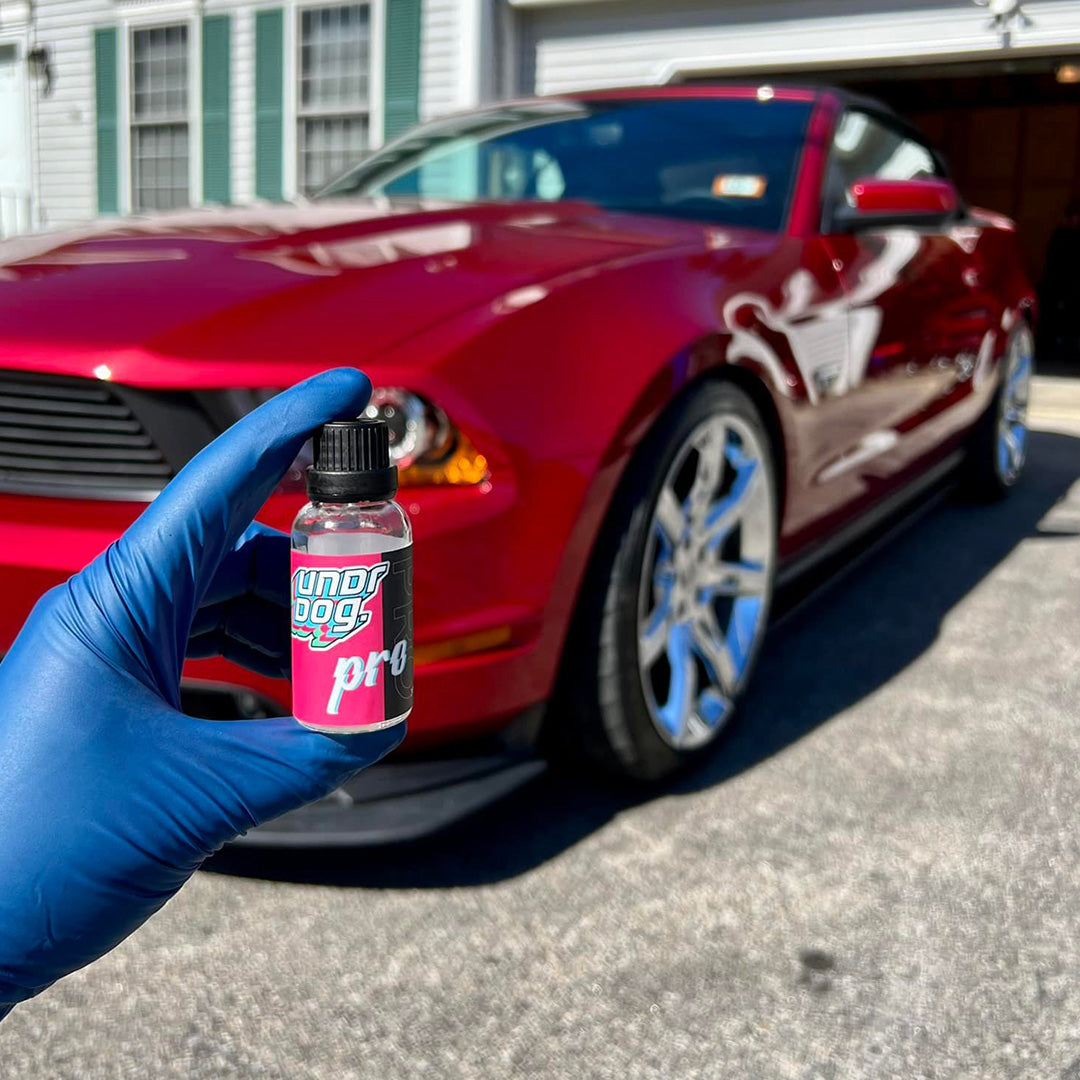
The photographs here are official Undrdog product and vehicle-care images, not laboratory evidence of oil repellency. The featured photograph is not a test of the coating recommended below.
Two useful terms, two different questions
Water repellency concerns how water wets a surface, while oil repellency concerns its interaction with oils or other specified low-surface-tension liquids; Biolin explicitly distinguishes the two and describes why achieving strong oil repellency is more demanding than showing water repellency (Biolin's terminology guide).
That distinction gives you a simple rule for reading product copy: do not silently replace the named liquid with a different one. A water result is useful evidence about water under that test. It should not be promoted into an oil result without the additional measurement. Equally, a manufacturer providing only water data has not thereby proved that its product lacks oil repellency; the narrower conclusion is that the supplied water data do not settle that question.
| Claim you see | Question it should answer | Evidence to request |
|---|---|---|
| Hydrophobic | How does water interact with the tested surface? | Water-wetting observations or measurements with the surface and method identified. |
| Oleophobic | How does a specified oil interact with that surface? | The oil's identity and the corresponding wetting measurement, not just water photographs. |
| Easy to clean | What contamination was removed, and with what effort? | A described soiling and cleaning procedure, including the endpoint used to judge success. |
| Stain resistant | What remains after a defined exposure and cleanup? | The contaminant, exposure conditions, cleaning method, and post-cleaning assessment. |
| Durable repellency | Does the stated behavior remain after use or conditioning? | Comparable before-and-after measurements, with the conditioning procedure stated. |
This table is a purchasing checklist, not a collection of product test results. Its first two distinctions follow Biolin's definitions and measurement guidance; the other rows identify the additional evidence we recommend requesting before accepting broader benefits.
What a contact-angle number actually describes
A static contact-angle measurement examines a droplet resting on a surface, while advancing and receding measurements examine wetting and de-wetting behavior as the liquid volume changes; their difference is contact-angle hysteresis (Biolin's advancing and receding angle explanation).
In practical terms, a still photograph and a moving-droplet experiment answer related but different questions. Biolin cautions that a high static water angle alone does not necessarily establish low adhesion or easy droplet movement, and describes roll-off angle as the tilt at which a droplet starts to move (static, dynamic, and roll-off measurements).
When a seller offers a contact-angle number, ask for its full label. “Contact angle” without the test liquid, method, and sample identity is not enough information for a fair comparison. Ask whether the number is a static, advancing, or receding result, and whether the sample was newly prepared or had already undergone a stated cleaning or wear procedure.
Do not assume that the largest number on a comparison chart wins your particular job. First decide whether you care about the resting droplet, how readily it moves, cleanup after contamination, or performance after repeated use. Then ask whether the chart measures that outcome. You do not need to become a surface scientist to notice that the chart and the sales promise are answering different questions.
Why water beads cannot stand in for an oil test
Biolin describes oils as lower-surface-tension liquids than water and explains that oil repellency needs a different evaluation from water repellency (oleophobic and superoleophobic surfaces). That is the scientific reason to ask for the test liquid's name instead of accepting “it repels liquids” as the entire explanation.
For a report intended to support an oil claim, our recommended minimum is a named oil or probe liquid, the coated substrate, the preparation and conditioning history, and the measurement method. If the demonstration uses a mixture, ask what mixture it is. A label as broad as “oil” makes it difficult to judge whether the demonstration addresses the exposure you are concerned about.
Also ask whether the comparison uses the same liquid on every sample. Changing the coating and the test liquid at the same time prevents you from treating the result as a clean coating-to-coating comparison. If the seller cannot provide that context, keep the evidence in the “interesting demonstration” category rather than the “comparable measurement” category.
Missing documentation is a reason to narrow your conclusion, not to accuse a manufacturer or detailer of bad intent. There may be a perfectly good technical answer. Give the person a precise question they can take to the manufacturer instead of asking them to defend every possible interpretation of a marketing adjective.
Repellency is not the whole cleaning story
Contact-angle and droplet-mobility measurements characterize wetting behavior; Biolin treats durability assessment as additional testing with measurements before and after defined exposure (measurement and durability guidance). For buying purposes, we recommend keeping wetting, cleanup, staining, and resistance to damage as separate items on your checklist.
Suppose your concern is oily contamination on a regularly driven vehicle. Ask two questions: how did the specified liquid behave when it first touched the test surface, and what did the surface look like after the stated exposure and cleanup? Do not let an answer to the first question substitute for an answer to the second.
A useful cleaning demonstration should tell you what was applied, how long it remained, which cleaner was used, and how success was judged. We would also ask for an appropriate comparison sample and consistent lighting. These are recommendations for assessing a demonstration, not a claim that every coating manufacturer uses a particular testing protocol.

For the cleaner-versus-coating distinction, read pH-neutral soap versus pH-resistant coating. That guide explains why a cleaner description should not become a universal promise about what the coated surface can withstand.
Read “super” and durability claims with the same discipline
In surface-science usage, “superhydrophobic” is commonly associated with a very high water contact angle and low contact-angle hysteresis, not merely an impressive-looking bead; Biolin describes both properties in its definition (superhydrophobic surface criteria). There is no need to turn that terminology into an unsupported performance grade for a coating whose corresponding results you have not seen.
Ask whether the word describes the freshly prepared sample, a sample after washing, or a sample after a defined wear test. Biolin notes that water movement can change with increasing hysteresis even when a static contact angle remains fairly high, which is why before-and-after dynamic measurements can matter (real-world durability discussion).
For a purchase decision, a useful report should separate what was measured from what is predicted. A laboratory conditioning sequence can be described precisely without turning it into a guaranteed number of years on your own vehicle. If the sales conversation makes that leap, ask how the real-world forecast was established.
The same boundary applies to other benefits. Our guide to water beading and UV-protection evidence explains why a water observation does not, by itself, establish weathering performance. Here, the equivalent buying mistake is treating a water result as a universal answer about oils and contamination.
A short evidence request you can actually send
Use the following as a request, not a demand that your detailer personally operate a laboratory. A professional can explain the installation and maintenance plan, then help obtain manufacturer information where that information is relevant to your purchase. Keep the request tied to the benefit that matters to you.
I am comparing coatings for this surface and this type of exposure. For the oil-repellency claim, could you share the test liquid, coated substrate, test method, and whether the result was measured fresh or after conditioning? I would also like to know whether the evidence addresses initial wetting, ease of cleaning, or staining after cleanup.
When a reply arrives, organize it into three columns in your notes: claimed benefit, supplied evidence, and unresolved question. Leave a field blank when the information is unavailable. A blank is more honest, and more useful, than filling it with a guessed result.
- Identity: Which product and version were tested? Is the sample coated clear coat, glass, or something else?
- Liquid: What exactly contacted the surface? Is the same liquid used throughout the comparison?
- Method: Is this a photograph, static-angle measurement, dynamic measurement, or cleaning demonstration?
- Condition: How was the surface prepared, cured, cleaned, or aged before the result was recorded?
- Outcome: What was observed, and what remains untested? Do the report and the sales claim have the same scope?
Consider two hypothetical replies. The first sends only a water-beading clip. Thank the sender, but mark oil behavior unresolved. The second identifies an oil and method on a stated coated sample. That is more directly relevant to oil repellency, but you should still ask for cleanup or aging evidence if the purchase promise includes those benefits. Neither example describes an actual product test or customer exchange.
Do not turn this checklist into an improvised gasoline, solvent, or oil challenge on your car. Our recommendation is to request existing evidence and follow the product's actual care instructions, not to expose a finished vehicle to an unapproved substance simply to see what happens. If formal testing is necessary, discuss an appropriate sample and protocol with a qualified testing provider.
How Undrdog does it
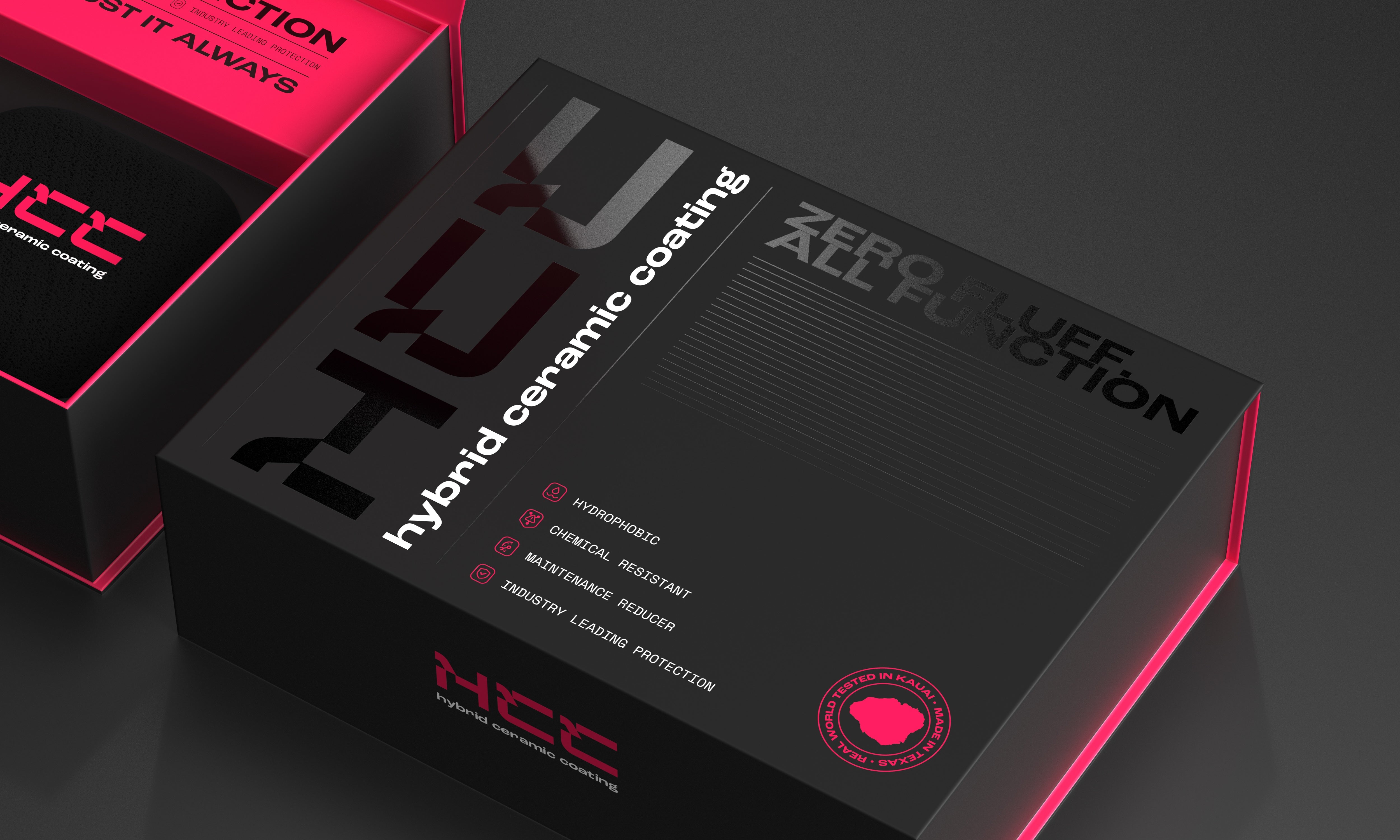
HCC Hybrid Ceramic Coating is Undrdog's flagship all-surface coating for cars, boats, planes, and bicycles, with product guidance covering surfaces such as paint, gel coat, metal, glass, PPF, vinyl, and plastic trim. Choose it for an appropriate new coating project, following current directions for the specific surface, rather than treating a general all-surface description as permission for every component.
HCC is positioned for multi-year protection, with actual durability dependent on preparation, exposure, use, and maintenance; the current HCC product information should guide the purchase and care plan. This article does not assign HCC an oil-contact-angle number, claim a comparative oil-test victory, or convert generic surface-science research into a product-specific result.
Apply the same evidence questions to our products that you would apply to any other coating. If your project depends on a particular oil exposure or cleanup requirement, ask Undrdog about that exact use before choosing a product. You do not need a proprietary formula disclosure to ask for relevant instructions and properly scoped performance evidence.

We recommend choosing a coating around the actual surface, installation process, care requirements, and evidence relevant to the job. The adjective should start a useful question, not end the conversation.
Frequently asked questions
What is the difference between hydrophobic and oleophobic?
Hydrophobic describes water repellency, while oleophobic describes oil repellency. They concern different liquid interactions, so evidence for one should not automatically be treated as evidence for the other (Biolin Scientific).
Does water beading prove that a ceramic coating repels oil?
No. A water demonstration addresses water behavior under the demonstrated conditions; an oil-repellency claim needs evidence involving an identified oil or suitable specified test liquid (Biolin's water-versus-oil explanation).
Does a larger static contact angle mean droplets slide off more easily?
Not necessarily. Biolin explains that a high static angle can coexist with droplet pinning, so advancing and receding angles, hysteresis, or roll-off measurements provide additional information about movement (contact-angle measurement guidance).
What is contact-angle hysteresis?
It is the difference between the advancing and receding contact angles. These measurements examine wetting and de-wetting behavior rather than only the shape of one stationary drop (Biolin's dynamic-angle explanation).
What should I ask for when a product is called oleophobic?
Request the test liquid's identity, the coated substrate, the measurement method, and the sample's preparation and conditioning history. Then ask whether the supplied evidence concerns initial wetting, cleaning, or staining, rather than assuming it covers all three.
Can I test the claim by putting oil or solvent on my car?
We do not recommend improvised exposure challenges on a finished vehicle. Ask for existing product-specific evidence and follow the manufacturer's care directions; discuss formal testing with a qualified provider if your application requires it.
Does a missing oil-test report prove a coating is not oleophobic?
No. Keep the conclusion limited to the information available: the supplied evidence has not resolved your oil-repellency question. Ask for clarification instead of substituting either a positive performance claim or a negative product judgment.
Which Undrdog coating should I start with for a new project?
Start by checking HCC, Undrdog's all-surface flagship, against your surface and application needs. Its current product information is the reference for suitability and care; this article does not supply a product-specific oil-contact-angle result (HCC product details).
Choose for the job, not just the adjective
Start with your surface and your care plan.
Review HCC's current application and maintenance information for your next coating project. If a particular exposure drives the decision, ask us about that use before you buy.
Shop HCC Hybrid Ceramic Coating

Leave a comment
This site is protected by hCaptcha and the hCaptcha Privacy Policy and Terms of Service apply.