

To clean windshield wiper blades, gently wipe the rubber with a soft cloth dampened with water or the washer fluid approved by your vehicle and blade instructions; Ford recommends this basic approach in its vehicle-care guidance. Clean the windshield separately, then test the wipers on wet glass while parked, as AAA advises. Treat visible blade damage or persistent poor wiping as a reason to inspect and replace or service the parts, not to keep escalating the cleaner.
Is the problem the wiper blade or the windshield?
Start with both, not a shopping list of stronger chemicals. Bosch identifies windshield contamination as a common reason for poor wiping even when the blades themselves are in good condition, and lists streaking, chattering, visible edge damage and loss of flexibility as warning signs in its wiper maintenance FAQ.
Our recommended approach is to separate the job into three decisions: whether the blade is safe to keep using, whether the glass is clean, and whether the completed system wipes properly. Do not use a bottle of cleaner as a substitute for the first or last decision. You want an adequate view through the windshield, not merely a dirty mark on a towel that feels like progress.
Also identify which side of the glass needs attention. If the problem is interior haze or condensation rather than the exterior wiping surface, use our windshield haze versus fog checklist instead of repeatedly cleaning the blades. Keep this guide for the blade inspection, cleaning and wet-test portion of the job.
What you need to clean wiper blades
Build the kit around the vehicle and replacement-blade instructions, not around whatever solvent is already on your detailing cart. Ford explicitly tells owners to check the Vehicle Care section of their manual for product compatibility, and specifies a soft sponge or cloth with washer fluid or water for the blades in its cleaning instructions.
- Blade cloth: A clean, soft cloth or sponge, reserved for the blade-cleaning step.
- Approved cleaning liquid: Water or an appropriate washer fluid where the specific instructions permit it. Follow any more restrictive blade-maker directions.
- Glass towels: Separate clean towels for the windshield rather than carrying blade residue back onto the glass.
- Glass cleaner: A product compatible with the windshield and any installed film or treatment, used according to its own directions.
- Owner's manual: Keep the wiper access, maintenance and replacement sections available before lifting anything.
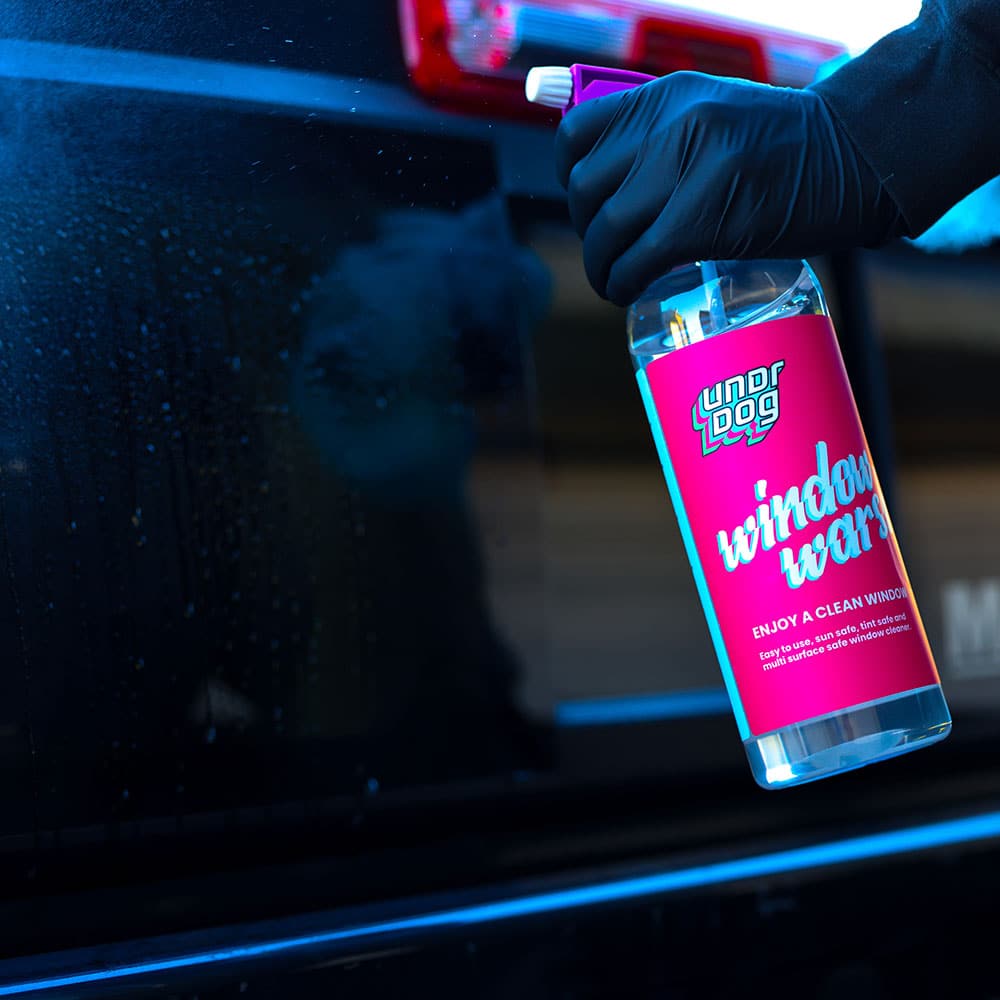
For the glass-cleaning part, Undrdog Window Warsh is a glass cleaner with towel or direct-to-glass application instructions, not a recommendation to treat the blade rubber. Make that distinction before you begin: a cleaner intended for the windshield does not automatically become the right cleaner for every nearby component.

How to access wiper blades without forcing the arms
Park securely and set the parking brake before working; Ford includes these steps in its wiper replacement guidance. Check your own model's instructions for access and any required service position because Ford also notes that procedures vary by year and model in that same guide.
Do not copy a generic ignition-and-wiper sequence into every car. Find the procedure for the actual vehicle, complete any required positioning, and ensure the wipers cannot move unexpectedly while your hands are at the blades. If the arm will not lift without contacting surrounding bodywork, stop rather than forcing clearance.
Keep control of a raised arm as you work and lower it gently; AAA warns against letting an arm snap back onto the glass in its maintenance and replacement guide. Cleaning is not a reason to remove the blade assembly unless the specific maintenance instructions require removal. Avoid turning a simple wipe-down into an unnecessary disassembly job.
Check rear-wiper instructions separately rather than assuming they match the front. Ford specifically warns that excessive force can break a rear arm at its heel and that rotating the blade structure can trap a hand in its rear-blade instructions.
Clean the blades, then clean the glass
Inspect the wiping edge before cleaning
Look along the rubber for visible damage rather than judging the blade only by how shiny or dirty it looks. Visible edge damage is one of the replacement warning signs in the Bosch FAQ. If you find a split, torn section or loose component, stop the cleaning experiment and resolve that defect before relying on the wiper.
Our practical rule is simple: do not try to polish, trim or chemically revive a damaged wiping edge. Follow the vehicle and blade maker's replacement instructions instead. If you are unsure whether a component is seated correctly or safe to reuse, have it checked rather than guessing.
Wipe gently with the approved liquid
Dampen the soft cloth with the liquid allowed by your instructions and gently wipe along the accessible rubber. This follows Ford's soft-cloth and water-or-washer-fluid approach rather than introducing a stronger cleaning recipe; see its blade-care recommendation.
Work with controlled, light pressure and use a clean area of cloth as needed. Avoid pulling sideways on the rubber, scrubbing with an abrasive pad or repeatedly pinching the edge. The goal is a gentle cleaning pass, not a demand that you keep rubbing until the towel shows absolutely no color. If a normal wipe-down is not enough, move to inspection rather than endless scrubbing.
There is no universal alcohol, vinegar, solvent, dressing or coating recipe in this procedure. Do not add one unless the exact blade or vehicle instructions call for it. A social-media demonstration on an unidentified blade is not a compatibility check for yours.
Clean the full wiping area of the windshield
Use your separate glass towels and the appropriate glass-cleaning directions. Include the lower area where the blades rest: AAA specifically notes that debris at the bottom of the windshield can be dragged by the wipers in its maintenance advice.
Window Warsh's current application instructions allow applying it to a towel or directly to the glass, folding the towel into four, wiping up and down, then refolding and wiping side to side. For this job, we recommend the towel route for more deliberate placement while keeping the blade-cleaning and glass-cleaning steps separate.
Do not interpret a clean windshield as proof that you have added protection or repaired worn parts. Our glass cleaner versus glass protection guide explains that distinction. Here, the product's role is cleaning the glass; blade condition still needs its own check.
Test the wipers on wet glass while parked
Return the arms to their normal operating position according to the manual and remove your towels and tools from the area. Keep everyone clear before operating the controls. Complete the initial check while parked so you can stop immediately and investigate without trying to diagnose the problem in traffic.
Wet the windshield before running the wipers. AAA recommends washer fluid before operating on dry glass and warns against using the wipers to remove ice or snow in its wiper safety guidance.
Use the vehicle-specified washer fluid for the washer system; do not put a detailing glass-cleaner spray into the reservoir on the strength of its name. A handheld glass-cleaning instruction is not a washer-system filling instruction. Follow the vehicle manual for the fluid and conditions in which you will operate.
Observe the driver's actual viewing area and the passenger-side sweep rather than deciding by sound alone. Note whether the blades clear the wet surface, leave repeatable streaks, skip or leave an unwiped patch. Use the following table as a next-step checklist, not a remote diagnosis of arm alignment or motor condition.
| What you observe | Recommended next step | What not to assume |
|---|---|---|
| Wiping improves after cleaning | Finish the parked wet test and continue routine inspection. | Cleaning guarantees a particular remaining blade lifespan. |
| The same streak remains after blade and glass cleaning | Recheck the edge and follow replacement or service guidance. | A stronger solvent must be the answer. |
| Visible torn or damaged rubber | Replace the affected blade or approved insert using the correct instructions. | A dressing or coating can substitute for an intact edge. |
| Chattering or skipping persists | Have the blade fitment and wiping system assessed if basic checks do not resolve it. | You should bend the arm yourself. |
| Haze is inside the windshield | Address the interior glass or condensation issue separately. | More exterior blade cleaning will address the wrong surface. |
Streaking and chattering are warning signs, not proof of one single cause; Bosch lists them alongside edge damage and loss of flexibility in its maintenance FAQ. If the view remains inadequate, resolve the problem before driving in conditions that depend on effective wiping.
When to replace blades instead of cleaning again
Inspect regularly and replace as needed rather than waiting for a dramatic failure; that is the approach in Ford's vehicle-care guidance. Use the blade manufacturer's maintenance interval alongside actual condition. This guide does not promise that cleaning will add a fixed number of months or restore old rubber to new condition.
Confirm the correct part for each position before buying replacements. AAA notes that front blades can differ in length and that the rear needs its own size check in its replacement guidance. Follow the actual connector instructions rather than assuming that every blade attaches with the same hook or release tab.
For a detailer, a useful handoff is specific: record what you cleaned, what you observed during the wet test, and whether a blade or system inspection is still needed. “Windshield and blades cleaned; driver's blade still streaks during parked test” is more useful than calling the problem fixed because the glass looks good in the bay.

Frequently asked questions
Can I clean wiper blades with water?
Yes, where your vehicle and blade instructions permit it. Ford recommends a soft cloth or sponge with water or washer fluid for its blade-care routine; check your own manual and follow any more restrictive blade instructions. Read Ford's guidance.
Should I use glass cleaner on the rubber?
Do not assume a glass cleaner is approved for wiper rubber. Use the blade-care method specified for your vehicle and blades, and reserve Window Warsh for the glass-cleaning step described here.
Can cleaning fix a torn wiper blade?
Do not treat cleaning as a repair for a torn edge. Visible rubber-edge damage is a warning sign identified by Bosch; replace the damaged component according to the applicable instructions. Read Bosch's maintenance FAQ.
Why do my wipers still streak after cleaning?
Recheck both the windshield and blade condition rather than assuming the cleaner was too weak. Bosch identifies windshield contamination as a cause of poor wiping even with good blades, and lists streaking and edge damage among warning signs. See Bosch's explanation.
Should I test the wipers on dry glass?
No. AAA advises using washer fluid to wet a dry windshield before operating the wipers. Perform the initial test while parked, with the arms correctly returned and people and tools clear. Read AAA's safety advice.
Do I need to remove the blades to clean them?
Do not remove them automatically. First follow the vehicle's access and service-position instructions, then use the specified cleaning method; leave removal to procedures that actually require it.
Can I use the wipers to clear ice or snow?
No. AAA advises against using wipers to remove ice or snow because doing so can damage the blades; follow your vehicle's approved clearing and defrosting procedures instead. Read AAA's winter-use guidance.
Can I put Window Warsh in the washer reservoir?
That is not the application recommended here. Window Warsh's instructions describe cleaning glass with a towel or direct spray, not filling the vehicle's washer reservoir; use the washer fluid specified by your vehicle manual.
Give the glass its own cleaning step
Use Window Warsh for appropriate glass cleaning, then inspect and wet-test the wipers instead of asking a cleaner to fix worn parts.
Shop Window Warsh

Leave a comment
This site is protected by hCaptcha and the hCaptcha Privacy Policy and Terms of Service apply.