

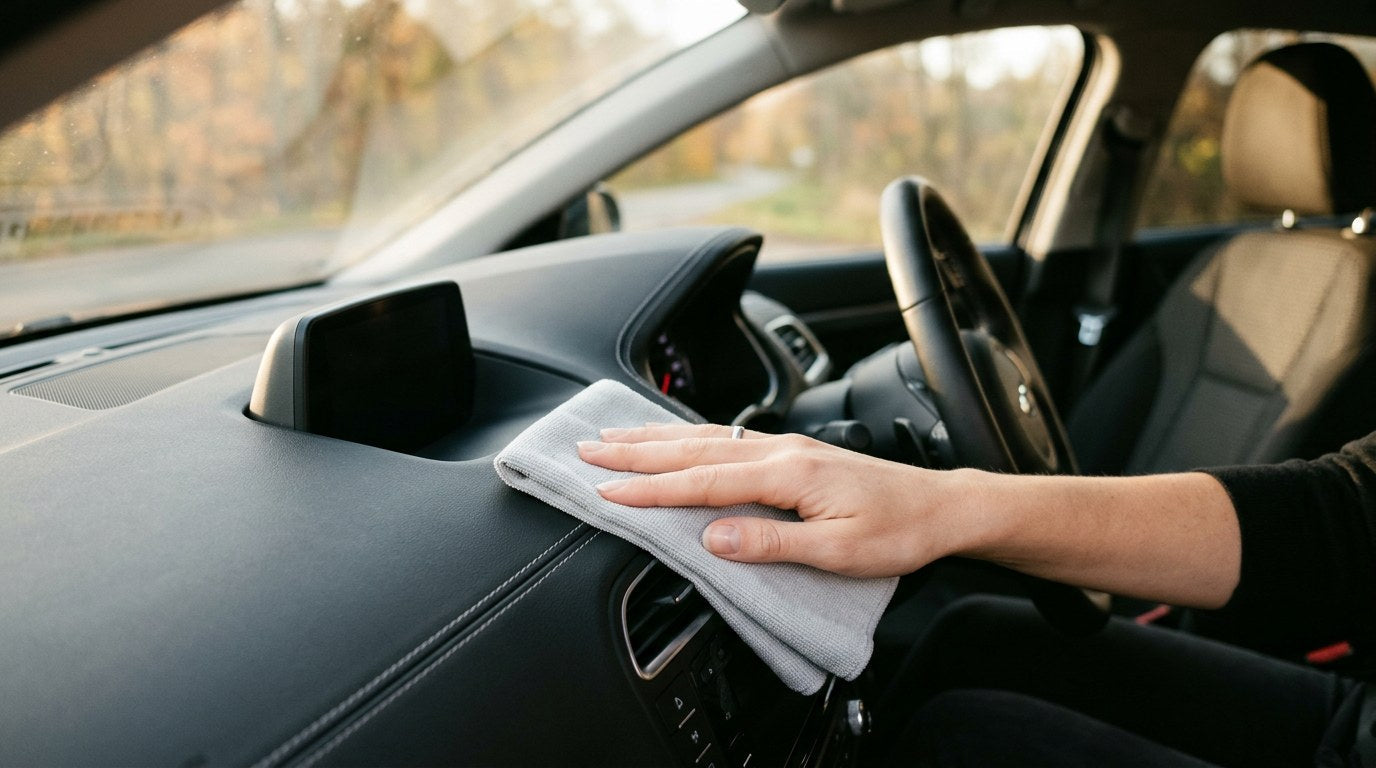
Undrdog Interior Cleaner is a plant-based, naturally scented all-purpose designed to clean every non-porous surface inside a modern car — dashboard, door panels, hard plastics, vinyl, leather (diluted 50:50), and even glass and metal — without leaving residue, greasy shine, or a synthetic fragrance haze. It is built around saponified organic sunflower and coconut oils rather than aggressive alkaline surfactants, which is the reason it can safely handle both a coated steering wheel and a fabric floor mat with the same bottle.

What Undrdog Interior Cleaner Actually Is
Most car interior cleaners on the shelf are one of two things: a high-pH all-purpose cleaner (APC) diluted from a concentrate, or a light-duty water-based spray with heavy fragrance oils and a silicone dressing baked in. Both formats have real drawbacks — the first strips leather and dries out vinyl over time, the second leaves a slippery film on a steering wheel or shifter that you can literally feel with your fingertips.
Undrdog Interior Cleaner takes a different route. The active cleaning package is saponified plant oil chemistry — the same class of surfactant used in traditional castile soap. Saponification converts organic sunflower and coconut oils into mild soap salts that lift dirt without the strong alkaline aggressiveness of caustic-based APCs. It is then combined with water, vegetable glycerin, and essential oils for scent. No dyes. No synthetic fragrance oils. No silicone dressing agents that leave a shine on the dash.
The practical effect: it cleans, it smells like real essential oils rather than a rental-car "new car smell" tree, and it rinses to a matte, factory-looking finish instead of a greasy sheen.
Why the Chemistry Matters for a Car Interior
Automotive leather, vinyl, and topcoated plastic are all more sensitive to cleaner chemistry than most owners realize. A pH-balanced formula matters because modern coated leather (which is what almost every "leather" seat on the market actually is) reacts negatively to alkaline surfactants. According to a comparative pH breakdown of leading interior cleaners, high-pH APCs in the 9–10 range can strip protective oils from the leather coating, dry out the surface, and leave it prone to cracking and haze in high-sun areas.
Vinyl and hard plastics have their own failure mode: harsh solvents dissolve the plasticizers and UV stabilizers that keep the material flexible. That is what turns a five-year-old dashboard chalky and brittle. A mild, plant-based cleaner does the cleaning work — lifting skin oils, dust, pollen, food residue — without eating into the plasticizer package underneath.
Fabric adds one more variable: residue. If a cleaner leaves a soapy or sticky film in the weave, that residue attracts dust and dirt faster than the fabric would on its own, and you end up with re-soiling within a week. The residue-free formulation on Undrdog Interior Cleaner is why fabric seats stay clean longer after you use it.
What You Can Actually Clean With It
The versatility is the point. Rather than juggling four bottles — leather cleaner, plastic cleaner, fabric cleaner, glass cleaner — one bottle handles the whole cabin. Dilution changes based on what you're cleaning.
| Surface | Dilution | Application | Notes |
|---|---|---|---|
| Coated leather seats | 50:50 with water | Spray on soft microfiber, gentle wipe, follow with dry towel | Always dilute for leather — even mild cleaners work best diluted |
| Vinyl / hard plastic / dashboard | Ready-to-use (RTU) | Spray onto cloth, wipe, buff dry | Never spray directly onto screens |
| Fabric seats and floor mats | RTU or 1:1 for light dirt | Spray, agitate with detail brush, blot with damp then dry microfiber | Test in hidden spot first for colorfastness |
| Alcantara / suede | Very dilute (3:1 water) | Light mist onto brush, work in small area at a time | Alcantara needs the mildest approach — do not saturate |
| Steering wheel | 50:50 with water | Spray on cloth, wipe, buff dry | Skin oils build up here — clean monthly at minimum |
| Glass & touchscreens | RTU on cloth (never spray on screen) | Light mist to microfiber, wipe screen, follow with dry side | For heavy glass jobs use a dedicated glass cleaner |
| Painted or plastic door jambs | RTU | Spray, wipe with cloth | Great for the black seals and jamb metal after a wash |

How to Clean a Car Interior the Right Way, Top-Down
The order of operations matters more than the product itself. If you clean the seats first and then blast the headliner with a vacuum, all your work goes onto the seats a second time. A standard interior detailing sequence works top-down for exactly this reason.
Step 1: Remove and Vacuum
Pull floor mats, empty cup holders, and shake out obvious debris. Vacuum the headliner first, then work down through vents, dashboard, door cards, seats, and floors last. A soft detail brush paired with a vacuum crevice tool pulls the grit out of seams and stitching that a plain vacuum leaves behind.
Step 2: Dust the Hard Surfaces Dry
Wipe the dashboard, screens, and door tops with a clean dry microfiber before you introduce any liquid. Dry dust bonded to a wet surface turns into muddy streaks — skipping this step is the #1 reason DIY interior work looks worse right after the "clean."
Step 3: Clean Hard Surfaces With RTU Interior Cleaner
Mist Undrdog Interior Cleaner onto a folded microfiber (never directly onto a screen or gauge cluster) and work section by section. Use a soft detail brush for vents, buttons, and seams. Flip the cloth to a fresh face often. Follow immediately with a dry microfiber to buff off any moisture.
Step 4: Leather Seats and Steering Wheel
Dilute 50:50 with water. Mist onto a clean microfiber, gently wipe the surface, and follow with a dry cloth. Do not soak the leather; the goal is a damp wipe, not a wash. For perforated leather, be extra careful about how much liquid you introduce — liquid pools inside the perforations and can migrate into the foam beneath.
Step 5: Fabric Seats and Carpets
Spray Interior Cleaner directly onto the fabric or, for tougher spots, onto a stiffer detail brush. Agitate in circular motion. Blot with a damp microfiber to lift the loosened soil, then follow with a dry microfiber to pull moisture. If the fabric is deeply soiled, an extractor will pull more out than blotting alone.
Step 6: Windows and Screens Last
Do glass and touchscreens after everything else so overspray from earlier steps doesn't recontaminate them. Mist Interior Cleaner onto the microfiber first, wipe the screen or window, then flip to a dry side and buff.
The Common Interior Cleaner Mistakes Undrdog Fixes
A quick round-up of what plant-based, residue-free chemistry actually solves in real-world use:
- Sticky steering wheels. High-pH cleaners often leave a tacky residue on leather steering wheels once the cleaner dries. A pH-balanced, residue-free formula rinses clean.
- Greasy dashboards. Silicone-heavy interior sprays leave that "shiny plastic" look that also picks up fingerprints. Undrdog Interior Cleaner does not contain a dressing agent, so it leaves a matte factory finish.
- Fragrance overload. Essential-oil scent versus synthetic fragrance oil is a real difference for anyone with kids in car seats or sensitivity to VOCs.
- Streaking on trim. Piano-black trim streaks show up when a cleaner leaves any film behind. Wipe once with Interior Cleaner, buff dry, done.
- Fabric that re-soils in a week. Residue is a magnet for new dirt. Residue-free chemistry keeps the fabric cleaner longer between details.

Interior Cleaner vs Interior Cleaner Concentrate
Undrdog sells the ready-to-use 32 oz spray plus a concentrated version. The concentrate is meant for detailers or heavy household users who want to mix their own strengths from a gallon or two of concentrate. If you are cleaning your own car and maybe your partner's car, the RTU 32 oz is what you want. If you are running a mobile detailing operation or doing multiple family vehicles a month, the concentrate is the better cost-per-clean.
Pairing Interior Cleaner With the Rest of the Undrdog Lineup
Interior Cleaner is the workhorse; a few products round out the interior workflow.
- Quick Detail — the exterior partner. After you finish the interior, hit the paint and glass with Quick Detail for a fast hydrophobic top-up between full washes. Our full walkthrough on when and how to use Quick Detail covers the technique.
- Undrdog Soap — the exterior wash foundation. Before you get inside, get the outside clean so you're not tracking wash water back into the cabin.
- HCC Hybrid Ceramic Coating — the flagship all-surface ceramic. HCC lives on the outside of the car, but a clean interior on top of coated paint is the full "showroom" combo. For non-porous interior surfaces you generally don't ceramic-coat — you keep them clean with Interior Cleaner instead.
How Often You Should Actually Clean the Interior
Interior cleaning is one of those tasks that people either do never or do obsessively. A sane cadence for a daily driver:
- Every wash (weekly-ish): quick vacuum, wipe steering wheel and dashboard with Interior Cleaner on a microfiber, empty console and cup holders.
- Monthly: full top-down interior including door cards, seat bases, floor mats, screens, and vents.
- Quarterly: deep clean including headliner spot treatment, seat rails, seatbelts, and under seats.
- Twice a year: full interior detail including leather condition check, fabric extraction, and any spot treatment on stained areas.
The daily-driver monthly cadence is what keeps a five-year-old interior looking two years old. Skip it and you get chalky plastic, faded piano-black trim, and stained cloth by year three. If you also run a home wash routine, our foundation post on using a ceramic-safe car soap pairs the exterior side of the equation with your monthly interior. If your car lives in a Hawaii-tier UV environment, our post on surviving Hawaii sun, salt, and vog covers what the interior specifically needs on top of the exterior routine.
What Interior Cleaner Doesn't Do
Being honest about the limits keeps expectations grounded:
- It is not a leather conditioner. It cleans leather safely, but conditioning — replenishing oils in the topcoat — is a separate step done a couple of times a year.
- It is not a heavy-duty tar or adhesive remover. For gum, sticker residue, or heavy tar inside the cabin, a citrus-based bug-and-tar remover is the right tool.
- It is not an odor eliminator by itself. It removes the source of many odors (skin oils, food residue) but a truly stubborn cabin odor (smoke, pet, spilled milk) usually needs enzyme treatment plus an ozone or a cabin air filter change on top of a good cleaning.
- It does not seal or coat the surface. That is what UV-blocking protectants and cabin coatings are for — different chemistry, different job.
Compatibility With Ceramic-Coated Interiors
Some higher-end shops apply an interior ceramic (a dedicated interior-grade formula, not exterior HCC) to leather, vinyl, and screens. Interior Cleaner is compatible with those coatings because it doesn't leave residue that would clog the hydrophobic layer. Do a diluted 50:50 wipe on coated leather to be safe and follow with a dry microfiber.
Want a cabin that smells like essential oils, not chemicals?
Undrdog Interior Cleaner is our plant-based, residue-free interior all-purpose — safe on leather, vinyl, fabric, plastic, and glass with one bottle.
Shop Interior Cleaner →Frequently Asked Questions
Is Undrdog Interior Cleaner safe on leather?
Yes, when diluted 50:50 with water. The plant-based, pH-balanced formula avoids the alkaline aggressiveness that dries and cracks leather over time. Always test in a hidden area first and follow with a dry microfiber.
Can I use it on my car's touchscreen?
Yes — but spray it onto the microfiber cloth first, never directly onto the screen. Wipe gently, then buff with a dry side. Avoid soaking the edges of the screen where liquid can migrate into the bezel.
Does it leave a shiny "wet look" on the dashboard?
No. Interior Cleaner does not contain silicone or dressing agents, so the dashboard looks factory matte after use. If you want a shiny dash you would apply a separate protectant afterward, but most enthusiasts prefer the OEM matte look.
Is it safe on Alcantara or suede?
Yes, but use a very dilute 3:1 water mix, mist onto a soft detail brush rather than directly on the material, work in small sections, and blot with a damp microfiber. Alcantara is the most delicate common interior material and needs a light touch with any cleaner.
What's the difference between Interior Cleaner and Interior Cleaner Concentrate?
Interior Cleaner is a ready-to-use 32 oz spray. Interior Cleaner Concentrate is meant for detailers or heavy users who mix their own strengths from a gallon of concentrate. For most personal use, the RTU spray is the right pick.
Can I use it on baby seats or cloth car seat covers?
Yes. The plant-based, fragrance-free (essential oils only) formulation is a better fit than synthetic-fragrance APCs for surfaces kids will touch or breathe near. Do a hidden spot test first for colorfastness on any dyed fabric.
Does it kill mold or bacteria?
No — it is a cleaner, not a disinfectant. If you need actual disinfection (after a spill or mildew problem), use a dedicated automotive-safe disinfectant, then follow up with Interior Cleaner to remove the residue.
How does it compare to a high-pH all-purpose cleaner like APC?
Traditional APCs at pH 9–10 clean aggressively but can dry leather, dull piano black, and leave residue that re-soils fabric quickly. Undrdog Interior Cleaner trades a bit of raw cleaning aggression for surface safety and residue-free finish — the right trade for regular use on a car you plan to keep looking good.
How long does a 32 oz bottle last?
For one daily-driver on a monthly full interior with weekly touch-ups, a 32 oz RTU bottle typically lasts 4–6 months. Detailers running multiple vehicles a week should look at the concentrate for cost-per-clean.
Can I use it around the house too?
Yes — the plant-based, essential-oil-scented formula is safe on most household hard surfaces: countertops, appliance exteriors, sealed wood cabinet fronts, and bathroom fixtures. Avoid unsealed natural stone (marble, granite) and always test first on any finished wood.


Leave a comment
This site is protected by hCaptcha and the hCaptcha Privacy Policy and Terms of Service apply.