

The right way to clean car wheels is with cool wheels, a pH-neutral iron-fallout wheel cleaner, a soft dedicated wheel brush, and a top-down soap-first sequence that keeps grit off your paint. The wrong way is acidic wheel cleaner on hot rotors with a stiff brush — that's how you strip powder coat, discolor calipers, and put brake dust back into your fresh coating. This is the full step-by-step, with the chemistry behind it and the products that pair with each stage.

Why Wheel Cleaning Is Where DIY Detailing Usually Fails
Wheels take the worst abuse of any surface on a car. Brake dust is a metallic composite of iron and copper particles fused with resins from the brake pad, thrown off hot and welded to the wheel finish by heat. The brake dust composition itself includes iron oxides, ceramic particles, and organic binder residue — a mix that hardens into a dark crust the moment it hits a cool wheel. Add road salt in winter, sand in spring, and airborne iron contamination from rail lines and industrial areas, and every wheel becomes a chemistry problem.
Most damage happens for one of three reasons:
- Wrong chemistry. Acid-based wheel cleaners at very low pH strip powder-coat finish, discolor anodized parts, and can etch brake calipers.
- Wrong technique. Same brush and bucket used on wheels and paint is how you drag brake dust and grit across your clear coat.
- Wrong temperature. Hot rotors and hot wheels flash-dry cleaner, leaving streaky mineral etches and reducing the chemical dwell time you actually need.
Do the sequence right and a wheel cleaning session takes 10–15 minutes per corner, protects the finish, and pairs cleanly with the rest of the wash. Do it wrong and you spend a weekend chasing spots that were caused by the wheel cleaner itself.
The Chemistry: pH-Neutral Iron Removers vs Acid Wheel Cleaners vs APCs
Three product categories dominate the wheel-cleaner shelf. They do different things and are safe on different surfaces.
1. pH-Neutral Iron Fallout Removers
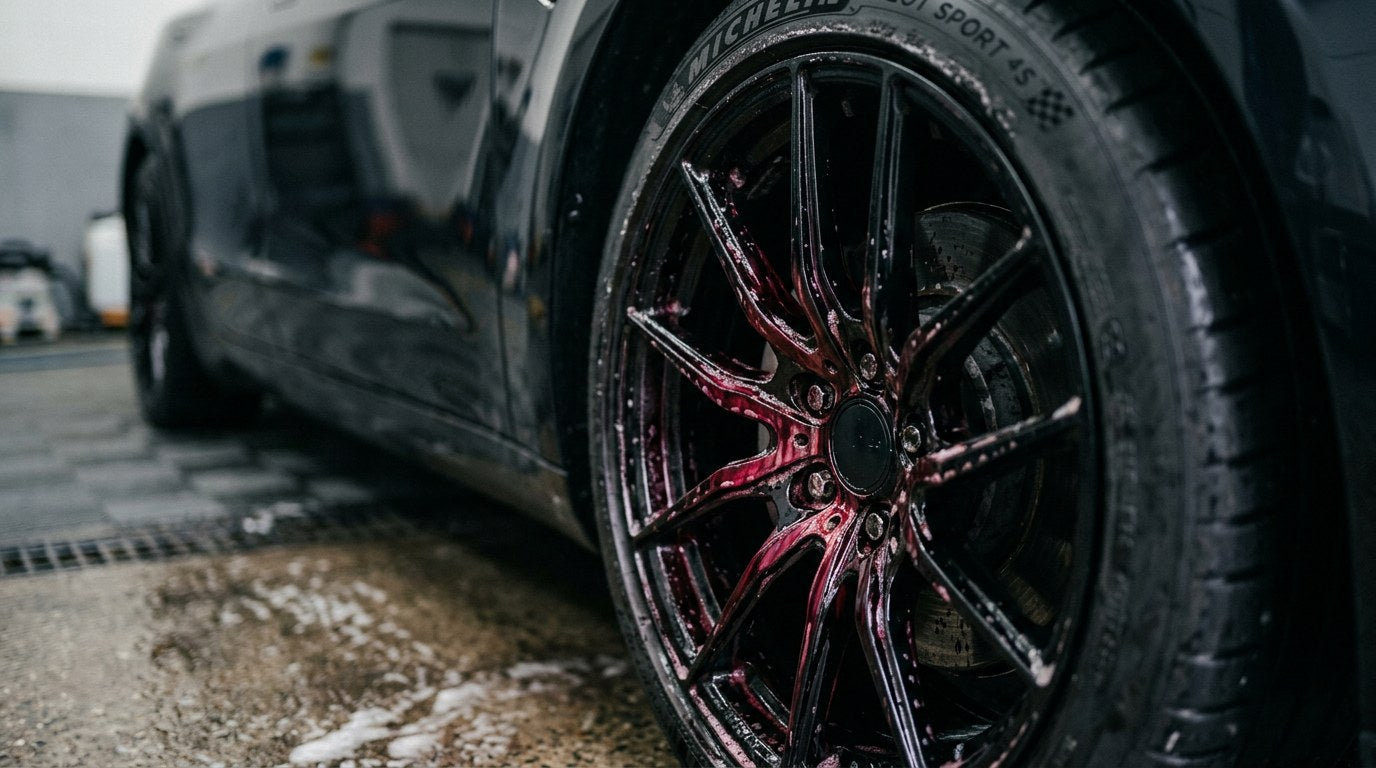
These are the modern gold standard for regular wheel cleaning. The active chemistry is ammonium thioglycolate (or a similar mercapto-based ligand), which selectively bonds with iron atoms and converts them into a water-soluble form that rinses away. You know it is working because the reaction produces a vivid red or purple color as the iron dissolves. According to product chemistry breakdowns like this professional iron-remover specification, pH-neutral iron removers are safe on painted wheels, powder coat, chrome, polished aluminum, ceramic coatings, and even the paint on the car itself — which is exactly why we recommend this class as the default.
The Purps Iron and Fallout Remover is Undrdog's take on this category. It bonds to embedded brake dust and iron particles on wheels, calipers, gel line on boats, and even paint, then flushes clean with water.
2. Acid Wheel Cleaners
Traditional heavy-duty wheel cleaners built around hydrofluoric acid derivatives or hydrogen fluoride were designed to strip baked-on brake dust fast. They work — and they also strip powder coat, etch anodized parts, discolor bare aluminum, damage tire sidewalls, and can etch brake rotors and calipers with repeated use. There is a shrinking case for professional acid cleaners on neglected wheels being restored from years of neglect, but for regular maintenance on a modern car with painted alloys, powder coat, or a ceramic-coated wheel, acid wheel cleaners are overkill and a real risk.
3. All-Purpose Cleaners (APCs)
Diluted alkaline APCs handle light road grime and greasy tire crud well, but they are not designed to lift iron contamination. The right use for APC in a wheel wash is on the tire sidewalls, the wheel wells, and the lug seats after the iron remover has done the heavy lifting.
What You Actually Need to Clean Wheels Properly
Before you touch the wheels, here's the tool kit for one car:
- The Purps or another pH-neutral iron fallout remover.
- Undrdog Soap or a ceramic-safe pH-balanced car soap.
- Dedicated wheel bucket (never share with paint wash bucket).
- Grit guard for the wheel bucket.
- Long-handled soft-bristle wheel brush for the face.
- Woolie or long-handled soft brush for the barrel and lip.
- Small detail brush for lug seats and center caps.
- Two dedicated wheel microfiber towels (dark color, so brake dust stains aren't a big deal).
- Nitrile gloves — iron removers smell terrible.
- Garden hose with a wide fan nozzle, or a pressure washer at low PSI.
Never share brushes, buckets, or microfibers between wheels and paint. This is the single biggest habit change that separates careful detailers from the rest. If you're building out the full wash kit, our guide to foam cannon vs pump sprayer for the pre-wash covers how the wheel-cleaning stage fits into the full detail sequence.

The Step-by-Step: Clean Wheels the Right Way
Step 1: Let the Wheels Cool
Park in shade for at least 30 minutes after driving. Hot rotors bake wheel cleaner onto the finish before it can react, and hot cleaners can etch aluminum. If you can hold your hand on the wheel face for 3 seconds without discomfort, it is cool enough.
Step 2: Pre-Rinse With Water
Start with the wheel wells, then move to the wheel face, barrel (as far as you can reach), and tire sidewall. A wide fan pattern is safer than a narrow blast — you're trying to lift loose grit, not force it deeper into seams.
Step 3: Apply the Iron Fallout Remover
Spray The Purps generously onto the wheel face. Get the spokes, the lip, the lug seats, and reach as far into the barrel as your applicator allows. Move to the next wheel. By the time you have all four sprayed, the first wheel is ready to work. Watch for the reaction bleed — on badly contaminated wheels you'll see obvious red and purple streaks; on well-maintained wheels the color is much lighter.
Standard dwell time is 3–5 minutes. Do not let the cleaner dry on the wheel — if you see it starting to flash off in direct sun, mist with water to keep it wet.
Step 4: Agitate With Soft Brushes
Working one wheel at a time, dip a soft-bristle wheel brush in your wheel-dedicated soap bucket and work the face and spokes in overlapping passes. Then use a wool wheel brush or a soft barrel brush to reach behind the spokes. A small detail brush handles the lug seats and any recessed logo areas. Keep the wheel wet the entire time.
Step 5: Clean the Tire Sidewall
Tires are a different substrate. Rubber and the release-agent film that new tires leave behind respond well to a straight soap-and-scrub approach with a stiffer sidewall brush. Skip aggressive degreasers here — they can dry out the sidewall over time. A dedicated tire brush plus Undrdog Soap or a mild APC is enough.
Step 6: Rinse Thoroughly, Top-Down
Rinse the wheel face first, then the barrel, then the tire, and finally flush the wheel well. Follow up with a light rinse of the paint below the wheel to knock down any overspray that might have carried onto the lower panels. Iron removers on paint aren't damaging — they're paint-safe by design — but you still don't want them sitting there indefinitely.
Step 7: Dry the Wheels
Standing water on wheels leaves mineral spots the same way it does on paint. Dry with a plush dedicated wheel microfiber, working from the top of the wheel down. Get the lug seats and lip dry, and blot the tire sidewall.
Wheel-Cleaner Compatibility Matrix
| Wheel Finish | pH-Neutral Iron Remover | Acid Wheel Cleaner | Ceramic Coated? |
|---|---|---|---|
| Painted alloy (factory) | Safe | Risk of clear coat damage | Yes — safe with pH neutral only |
| Powder-coated wheels | Safe | Do not use — strips coating | Yes — safe with pH neutral only |
| Polished aluminum | Safe | High risk of oxidation and stain | Yes |
| Chrome | Safe | Can pit chrome plating | Yes |
| Anodized (aftermarket forged) | Safe | Discolors anodizing | Yes |
| Machined face (two-tone) | Safe | Can etch bare machined areas | Yes |
| Brake calipers (painted or powder) | Safe | Do not use | Yes — HCC works on calipers too |
The pattern is consistent: pH-neutral iron removers are safe across the entire wheel-finish universe. Acid cleaners have narrow safe use cases and are not the right tool for most modern cars.
How to Dress the Tires After Cleaning
A clean tire is a good tire, and a dressed tire is a finished tire. Two rules:
- Only dress dry tires. Applying dressing to a wet sidewall traps water inside the finish and can cause the dressing to sling onto your paint at highway speed.
- Skip the greasy shine. Silicone-heavy dressings look wet for a day and then attract dust for the next two weeks. A water-based, matte-satin dressing gives a factory look and lasts through a rainstorm.

Apply dressing with a foam applicator, not by spraying directly onto the tire — overspray onto wheels, brakes, and paint is exactly how you end up with a slick brake pedal and streaks on the lower door. Wipe on, let it sit 5 minutes, then wipe off any excess with a dedicated microfiber. Two thin coats look better than one heavy one.
Ceramic Coating the Wheels: When It's Worth It
Once wheels are clean and decontaminated, this is when a ceramic layer earns its keep. Wheels see extreme heat, brake dust, road salt, and iron fallout constantly. A ceramic coating creates a slick, chemically resistant layer that keeps brake dust from bonding as hard, makes weekly wheel cleaning a rinse instead of a scrub, and reduces the frequency you need to reach for the iron remover.
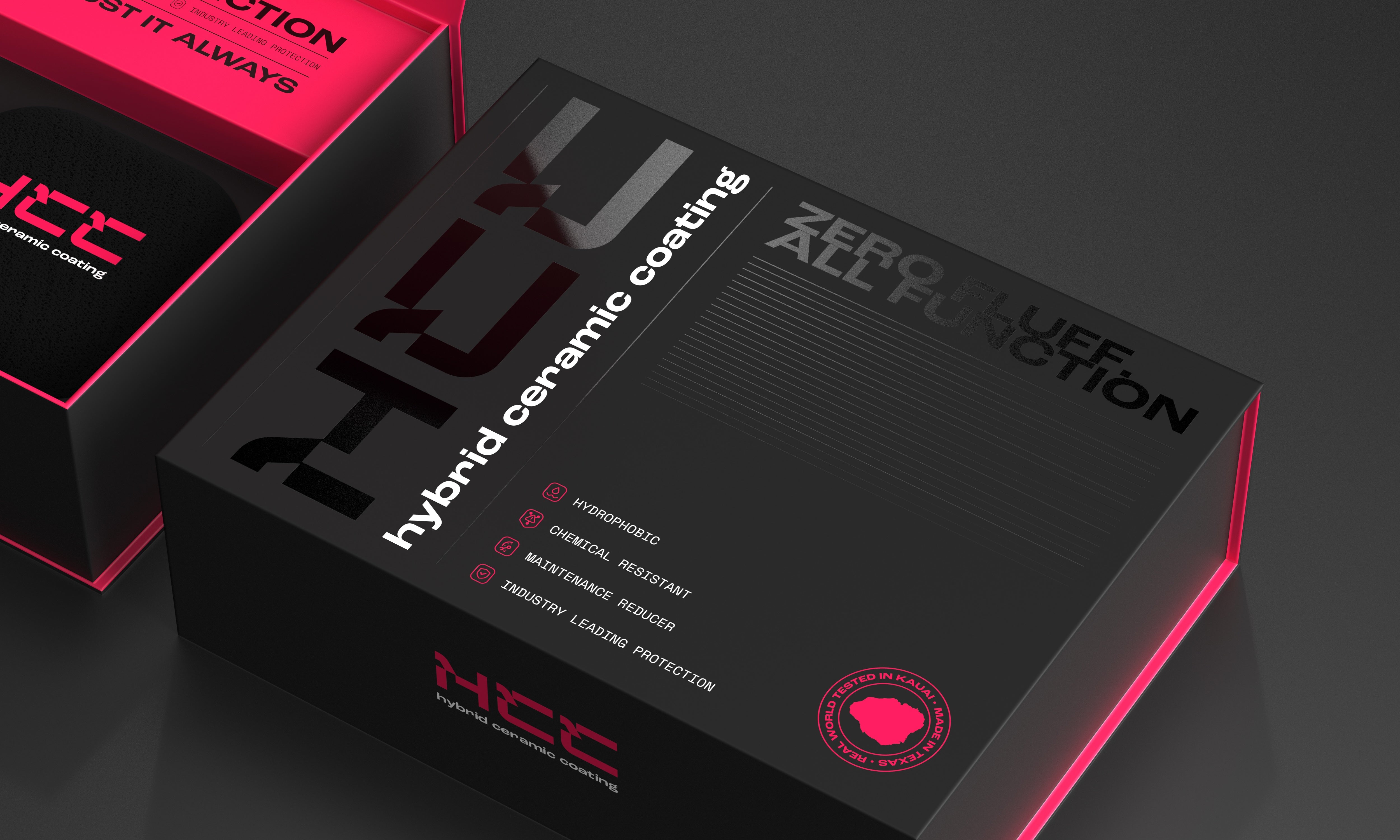
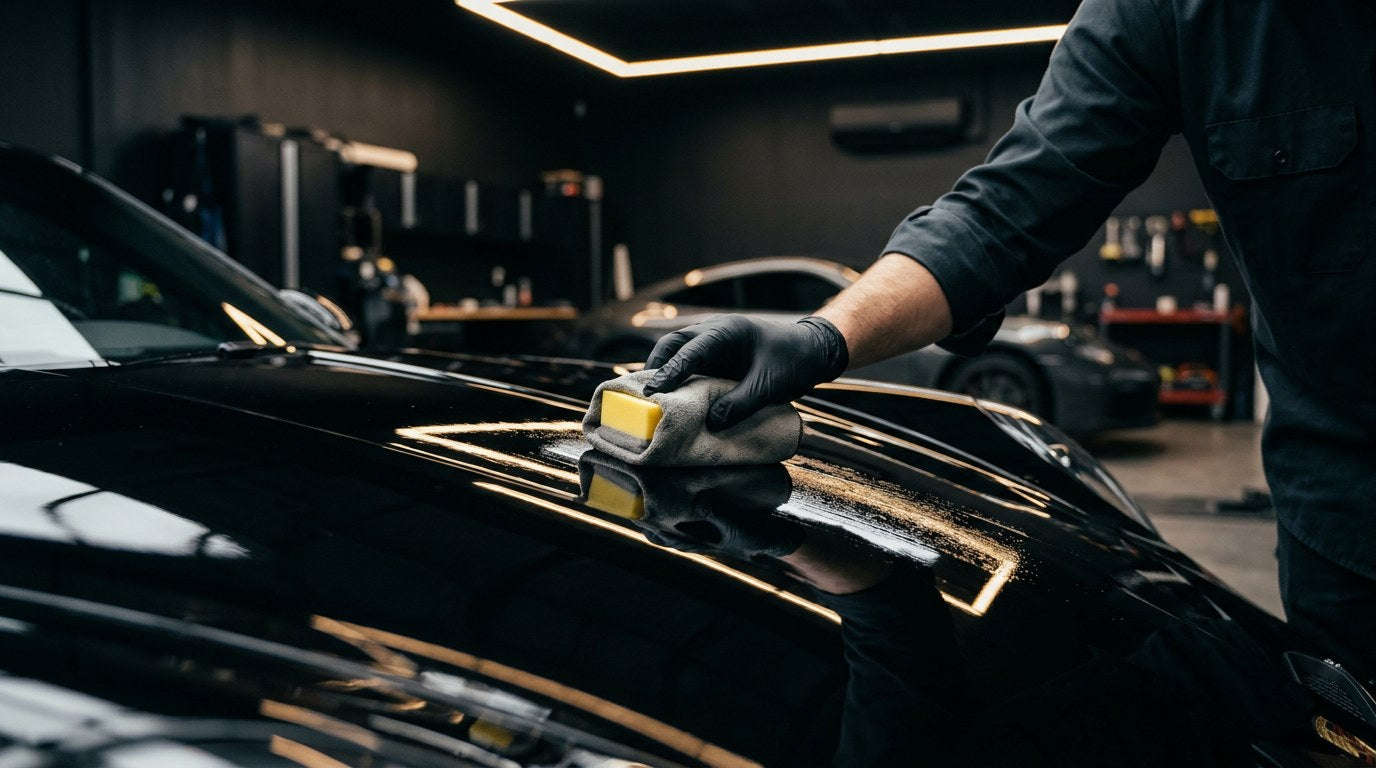
HCC Hybrid Ceramic Coating is the flagship all-surface coating and works on painted, powder-coated, machined, and chrome wheel finishes. Prep is critical: the wheels need to be off the car (or at least positioned so you can access the full face and lip), completely clean, decon'd with iron remover, wiped with a 15–25% IPA solution, and coated in shade. Apply thin, buff off before it fully cures, and give it 24 hours before driving on it.
For step-by-step application detail that also applies to wheels, our post on how to apply a DIY ceramic coating without streaks or high spots walks through the exact technique. Our overview of pre-ceramic paint prep covers the decon side that applies to wheels too.
Common Wheel-Cleaning Mistakes
- Cleaning hot wheels. Cleaner flashes off before it can react and mineral spots etch in.
- Sharing brushes and buckets with paint. This is how brake dust ends up in your clear coat.
- Using stiff brushes on soft finishes. Scratches show up as haze under direct sun and are hard to correct on painted wheels.
- Skipping the pre-rinse. Cleaner reacts better on a wet surface than a dry, dusty one, and pre-rinsing flushes off the loose grit that would otherwise get dragged across the finish.
- Letting cleaner dry. A dried iron remover leaves streaky residue that can bleach dark finishes.
- Neglecting the barrel. The inside of the wheel picks up more brake dust than the face. If you never clean the barrel, you're not really cleaning the wheel.
- Spraying tire dressing on the whole sidewall at once. Overspray on rotors and paint is the whole problem. Apply on the pad, not on the tire directly.
How Often You Should Actually Clean Wheels
- Weekly rinse and soap wash on a daily driver — keeps brake dust from cooking on.
- Bi-weekly iron fallout treatment during heavy driving seasons.
- Monthly deep clean including barrel for most cars.
- Annual ceramic coating refresh for wheels that are coated.
On performance cars with high-metal-content brake pads, the cadence tightens up — some track-day setups need iron removal every wash. On EVs with regen braking doing most of the work, brake-dust load is significantly lower and a monthly deep clean is often enough.
Stop scrubbing brake dust — dissolve it instead.
The Purps is our pH-neutral iron fallout remover — safe on painted, powder-coated, chrome, polished, and ceramic-coated wheels. Spray, watch the reaction, rinse clean.
Shop The Purps →Frequently Asked Questions
Is it safe to spray wheel cleaner on hot wheels?
No. Let wheels cool for at least 30 minutes after driving. Hot rotors flash-dry the cleaner before it can react, and hot surfaces can etch as the mineral content in the cleaner concentrates.
Can I use a wheel cleaner on my car's paint too?
pH-neutral iron fallout removers like The Purps are safe to use on paint. That's actually one of their best applications — they lift airborne iron contamination out of paint before ceramic application. Acid-based wheel cleaners are not paint-safe and should stay off the body panels.
Will iron remover damage my brake calipers?
pH-neutral iron removers are safe on painted and powder-coated calipers. Acid wheel cleaners can etch calipers and cause discoloration; avoid on calipers.
Do I need to remove the wheels from the car to clean them properly?
For maintenance cleaning, no. For deep restoration or a first-time ceramic coating application, taking the wheels off gives you full access to the barrel and the back face — that's a bigger project done once a year at most.
What's the difference between a wheel cleaner and an iron fallout remover?
"Wheel cleaner" is a general category that includes acid cleaners, degreasers, and iron removers. Iron fallout remover is a specific subset that uses ammonium thioglycolate or a similar ligand to chemically bond with iron particles and convert them into a water-soluble form. Modern pH-neutral iron removers are the safest general-purpose choice.
Why does the wheel cleaner turn purple or red?
That color is the visible sign of the iron reaction working. The ligand in the cleaner is bonding with iron atoms from brake dust and other contamination, and the resulting compound has that vivid red-purple color. No color usually means no iron contamination — which is a good sign, not a bad one.
Can I use dish soap on wheels?
Dish soap will lift light road grime but it will not touch bonded brake dust or iron contamination. It also strips any ceramic coating over time. Use a dedicated pH-balanced car soap or iron remover instead.
How often should I dress my tires?
Most water-based dressings last 2–4 weeks depending on rain, sun, and mileage. Redressing after every wash is typical for enthusiasts; every second or third wash is fine for daily drivers.
Are ceramic-coated wheels worth it?
For most daily drivers, yes. A coated wheel takes 5 minutes to clean with a rinse and light soap where an uncoated wheel takes 20 minutes with iron remover and scrubbing. On track cars and off-road vehicles the coating wears faster and needs annual reapplication, but the maintenance savings still stack up.
Can I ceramic-coat wheels that already have brake dust burned in?
No — you'll be locking in that contamination under the coating. Full iron decon, then IPA wipe, then coat. Don't skip the prep on wheels; that's where wheel coatings usually fail.

Leave a comment
This site is protected by hCaptcha and the hCaptcha Privacy Policy and Terms of Service apply.