

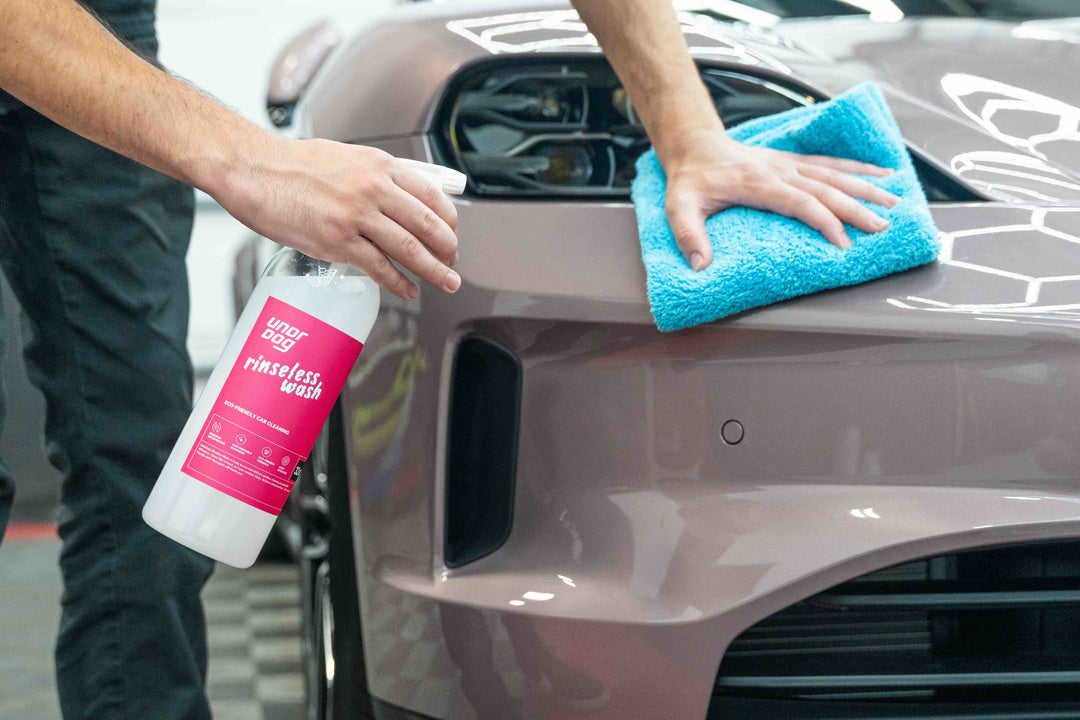
Undrdog Rinseless Wash Spray is a ready-to-use cleaner for suitable lightly to moderately soiled surfaces: spray a manageable section liberally, wipe immediately with a clean plush microfiber, then dry immediately with a second clean towel. It is not the right shortcut for a vehicle caked in mud, substantial road grime, or heavy fallout; assess the condition and use a proper wash first when needed.
The convenience is the prepared bottle, not permission to skip inspection. This guide covers the spray's role, the towel workflow, the limits that matter on coated vehicles, and its current safety and storage directions. It is a product-use guide, not a recipe for mixing the separate concentrate or a promise that every finish can be cleaned the same way.
What is Rinseless Wash Spray?
The current product description identifies the spray as Undrdog's rinseless concentrate pre-diluted at 10:1 and packaged for immediate spray application. Its ready-to-use safety data sheet clarifies that ratio as ten parts water to one part concentrate (Rinseless Wash Spray SDS, section 1). That describes the supplied product; it is not an instruction to dilute the ready-to-use bottle again.
Check the product name before you begin, especially when several bottles in your kit have similar branding. The concentrate and the prepared spray have different handling workflows. Do not copy a bucket-wash ratio into this bottle, add another chemical to change the result, or assume that an old unlabeled spray container contains the same product.
The spray's stated uses include between-service touch-ups, spot cleaning, and boat or RV maintenance where a hose is impractical. Its directions call for no rinse in the intended spray-and-wipe process (current product directions). That does not mean every dirty vehicle can skip a preliminary rinse or a more substantial wash.
Think of the bottle as one part of a small maintenance kit. You still need appropriate clean towels, a place to put used towels, enough light to inspect the finish, and a realistic decision about whether the surface is suitable. Having the chemical ready saves a mixing step; it does not remove those other decisions.
When to use the spray and when to wash instead
Look at the individual panel, not just the vehicle from a distance. Ask what you are trying to remove and whether it can be handled with the product's light-pressure wiping method. If you already expect to scrub, make repeated loaded passes, or force a stubborn deposit off, stop and reassess before contact.
| What you find | Where the spray fits | Next decision |
|---|---|---|
| Light soil on a compatible, sound exterior panel | Within the intended maintenance role | Set up clean wiping and drying towels, then work in small sections |
| Moderate soil without a heavy buildup | The product includes light-to-moderate cleaning | Inspect closely and change methods if towels load rapidly or gentle wiping is ineffective |
| Caked mud, substantial road grime, or heavy fallout | Not a direct spray-and-wipe shortcut | Use a proper wash or appropriate preliminary cleaning before reconsidering |
| A remaining mark after ordinary soil is removed | Not automatically a reason for more wiping | Identify the mark and select a separate, surface-appropriate process |
| A new coating with aftercare restrictions | Wait for the coating's permitted maintenance stage | Follow the coating's instructions rather than a generic timing assumption |
| An unknown, damaged, or specialized finish | Compatibility is unresolved | Consult the finish maker or qualified detailer before experimenting |
The soil limits in this table follow the spray's own application instructions; the stopping points are our practical way of applying them. They are not a laboratory threshold for how many grams of dirt a towel can safely carry.
For example, you may want to freshen one lightly soiled door before a trip. Inspect that area, set up the towels, and complete that limited job. If the lower panels are heavily loaded with road grime, leave them for a suitable wash rather than turning one successful spot cleanup into a reason to wipe the entire car.
Set up separate wiping and drying towels
The product directions specify a clean, plush microfiber for wiping and a second clean plush microfiber for immediate drying. They also instruct you to rotate or replace towels as they become loaded (towel directions). The second towel is not an excuse to keep the first one in service after its condition changes.
Before starting, inspect the towels and identify their previous jobs. Set aside any cloth with grit, roughness, hardened spots, or an uncertain history. Keep the clean supply protected and create a clearly separate place for used cloths. A towel that falls onto the ground should leave the active paint-cleaning set, not return after a quick shake.
There is no useful universal towel count for this job. Vehicle size, soil, towel condition, and working area vary. Bring enough to change them when needed, and stop if you run out of clean materials. Finishing the last panel with a questionable towel is not a meaningful saving.
If some towels previously handled a coating installation, keep that history separate from ordinary maintenance. Our coating-towel inspection guide explains why laundering should not be treated as proof that hardened residue is gone. Do not turn an uncertain leveling towel into a trusted wash towel merely because both are microfiber.

How to use Rinseless Wash Spray, section by section
Inspect and choose a manageable area
Confirm that the surface and soil fit the intended use before spraying. Choose an area small enough to wipe and dry immediately without rushing. Work where you can see the result and maintain control of the product; if conditions make that impractical, change the setup rather than coating a large area and hoping to catch up.
Spray liberally, then wipe immediately
Apply the spray liberally to the selected section. Follow the product's top-down method, using straight passes with light pressure and a clean plush microfiber. Do not replace that instruction with aggressive rubbing, an improvised dwell time, or a predetermined number of dry passes (application sequence).
Watch the towel as well as the paint. Expose a clean face or replace the towel when it becomes loaded. If contamination is building quickly or the section does not clean under light pressure, stop and reconsider the wash method. The goal is controlled soil removal, not proving that one bottle can finish any job.
Dry immediately with the second towel
Dry that section immediately with a second clean plush microfiber, as the product directions specify. Keep this towel's role distinct from the dirt-removal towel. Inspect the result before moving on, and do not let the drying cloth become a backup scrubber for material the first step failed to remove.
Work through the vehicle from cleaner upper areas toward dirtier lower areas only where the condition remains suitable. Treat a heavily soiled section as a fresh decision rather than extending the method automatically. Finish with a visual inspection of the areas you actually cleaned, not a claim that the entire vehicle has been decontaminated.
What to check if you see streaks or a remaining mark
If the finish is uneven after drying, pause and review the process. Was the section too large to manage? Did either towel become loaded? Was drying delayed? Is the mark ordinary residue, remaining contamination, or something that needs a different assessment? These are troubleshooting questions, not proof of a particular cause.
Recheck the current instructions and the towel condition before repeating a small, suitable area. Do not keep buffing harder just because a line remains visible. If a mark persists, photograph it and ask for guidance rather than adding unrelated chemicals or escalating pressure.
The product page lists glass among its intended surfaces and recommends a dedicated glass-cleaning follow-up when needed for a clear result (glass-use FAQ). Inspect glass carefully after cleaning, especially where visibility matters. A generic glossy appearance is not the same objective as a clear, haze-free view.

Do not treat added gloss or a slick feel as a diagnostic measurement of the underlying coating. The spray's purpose here is maintenance cleaning. A remaining stain, scratch, or changed water behavior calls for its own assessment rather than an automatic second cleaning pass or a new coating.
Cured coatings, unusual finishes, and product boundaries
The current spray FAQ says it is suitable for cured Undrdog coatings. The word “cured” matters: that statement is not permission to wash a fresh installation before its product-specific aftercare allows it (coated-surface FAQ). Keep the maintenance product's directions and the coating's aftercare instructions together.
The same page identifies matte finishes and hard interior surfaces among its uses, but that should not be stretched into approval for every display, lens, upholstery material, control, or specialized finish. This guide focuses on the exterior spray process. Confirm the material's own requirements and obtain specific guidance when the intended application is unclear.
For marine paint, wraps, film, or repaired surfaces, identify the exact finish before choosing the process. Do not use a broad product category as permission to disregard a finish maker's restrictions. A small-area test can help assess appearance where use is already appropriate; it does not overrule an explicit prohibition or establish long-term compatibility.
If your real goal is a different type of maintenance finish, our Mystery Elixir product guide explains its separate role. Do not make applying multiple spray products a mandatory sequence. Choose the result you need and follow the directions for that product rather than building a routine from similar bottle names.
Safety, storage, and cleanup after use
Read the ready-to-use spray SDS, not only the separate concentrate's information. The September 15, 2026 sheet states that the spray is not classified as hazardous under the OSHA Hazard Communication Standard, while also identifying possible mild eye irritation and a slippery surface when spilled. A classification is not an instruction to ignore exposure or housekeeping.
Its handling directions include avoiding eye contact, washing hands after use, keeping the product away from children, and not mixing it with other chemicals. It recommends safety glasses for spraying at eye level or overhead and gloves for prolonged or repeated professional use; follow the full document and the actual working conditions (SDS sections 7–8).
Store it in the original, tightly closed container in a cool, dry place, protected from freezing and direct sunlight. The SDS also identifies excessive heat as a condition to avoid (storage and stability instructions). A convenient travel bottle still needs appropriate storage; do not treat a vehicle's temperature swings as automatically acceptable.
Deal with spills promptly and follow the SDS and local disposal requirements. It cautions against discharging large quantities to storm drains or waterways and makes disposal subject to applicable rules (SDS sections 6 and 13). “No rinse needed” describes the cleaning method, not a disposal exemption.
Afterward, keep used towels separate and follow their manufacturer's care directions. As a primary microfiber-care reference, The Rag Company recommends appropriate microfiber detergent, no fabric softener, and low/no heat or hanging to dry for its towels (microfiber care FAQ). Inspect the towels again before returning them to a clean, labeled supply.
How Undrdog fits this into a maintenance routine
Rinseless Wash Spray is the prepared cleaning option when the surface, soil, and conditions fit its directions. It is not a coating-installation kit, a guarantee against marring, or a substitute for a needed full wash. Good product selection includes deciding not to use it when the job falls outside those limits.
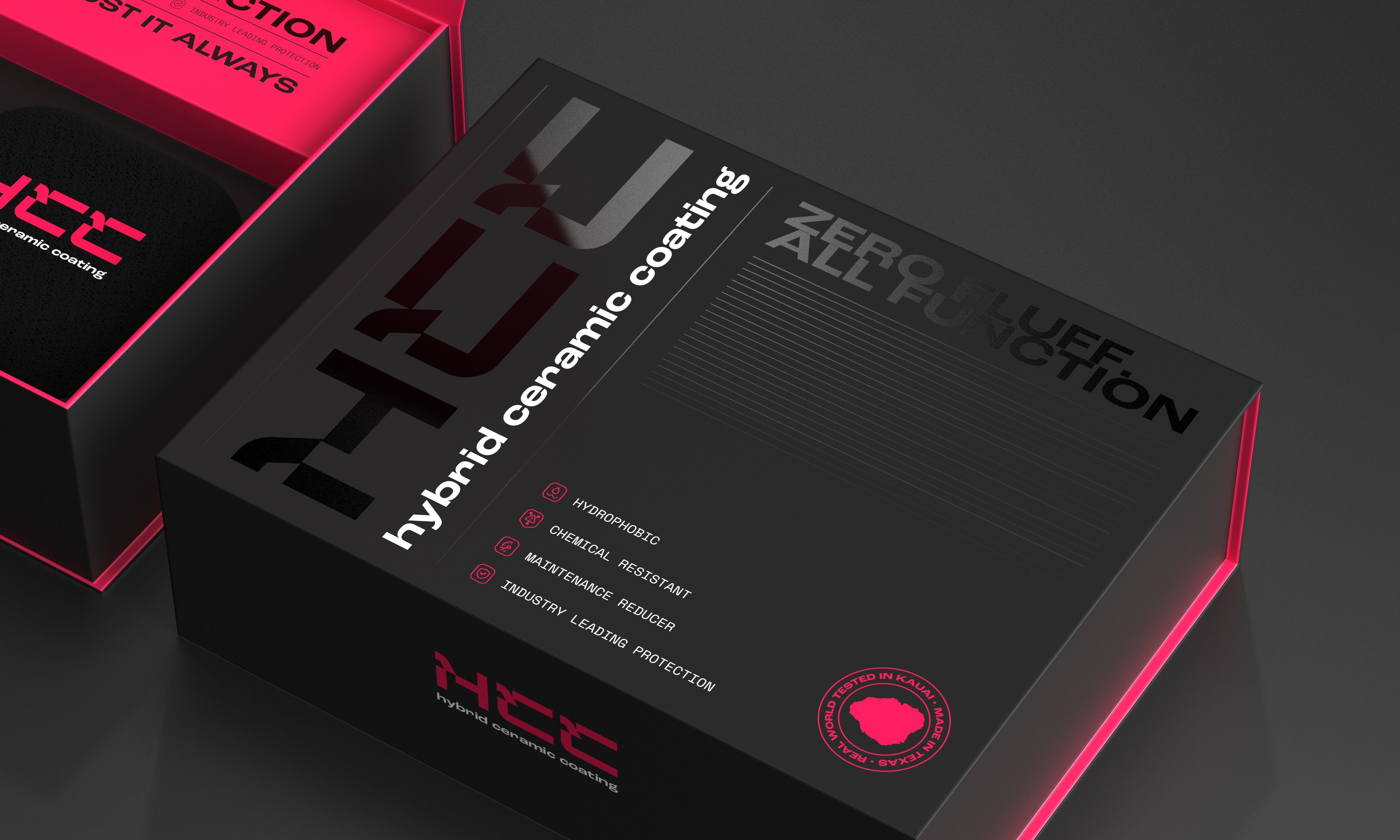
For a separately justified coating project, HCC Hybrid Ceramic Coating is Undrdog's all-surface flagship for cars, boats, planes, and bicycles. Its multi-year positioning depends on preparation, exposure, use, and maintenance. Confirm suitability and follow its current installation and aftercare instructions; cleaning a panel with the spray does not by itself complete coating preparation.
For an already coated vehicle, prioritize the permitted maintenance process rather than adding protection products by habit. Inspect, clean appropriately, change towels as needed, and record anything unresolved. A controlled touch-up is useful because it fits the actual condition, not because it promises to replace every other step in vehicle care.
Frequently asked questions
Do I need to dilute Rinseless Wash Spray?
No. The product is sold ready to use. Its stated 10:1 dilution describes the supplied spray, not another mixing step for the customer. Identify the bottle correctly and do not borrow the separate concentrate's bucket directions.
Can I use it on a heavily dirty vehicle?
Not as a direct spray-and-wipe shortcut. The product directions call for a proper wash or appropriate preliminary cleaning when a vehicle has caked mud, substantial road grime, or heavy fallout. Reassess the condition before starting contact cleaning.
Do I need two towels?
The current instructions specify a clean plush microfiber for wiping and a second clean plush microfiber for immediate drying. Have replacements available and rotate or change towels when loaded. Two towels are the working roles, not a guaranteed total allowance for an entire vehicle.
Should I let the spray dwell before wiping?
The routine application directions say to wipe immediately and then dry immediately. Do not invent a timed soak for a stubborn deposit. If ordinary gentle cleaning is ineffective, stop and choose an appropriate separate process.
Can I use it on a newly coated car?
The product FAQ specifies cured Undrdog coatings. For a new installation, follow the coating's actual aftercare restrictions before washing. A maintenance spray's compatibility statement does not shorten the coating's required waiting period.
What if the surface still has streaks?
Check the towel condition, section size, and whether you dried immediately. Revisit the product instructions before repeating a small suitable area, and stop if the mark persists. Avoid harder buffing or mixing chemicals to chase an unidentified problem.
Can I keep the bottle in my car?
Only where its storage requirements can be maintained. The spray SDS calls for the original tightly closed container in a cool, dry place, protected from freezing and direct sunlight, and identifies excessive heat as a condition to avoid.
Does Rinseless Wash Spray replace a ceramic coating?
No. This guide treats it as a maintenance cleaner used according to its directions. A coating such as HCC is a separate project with its own surface suitability, preparation, application, and aftercare requirements.
Set up for a controlled touch-up
Choose the ready-to-use spray for a suitable maintenance job, and have clean wiping and drying towels ready before you begin.
Shop Rinseless Wash Spray

Leave a comment
This site is protected by hCaptcha and the hCaptcha Privacy Policy and Terms of Service apply.