

Wash road salt off a ceramic-coated car when you can rinse and dry it without creating an ice hazard or leaving water to freeze on the vehicle. A ceramic coating does not eliminate the need to clean winter residue from the exterior, wheel areas, and undercarriage. AAA recommends washing winter road salt from the vehicle, including the undercarriage, because salt exposure can contribute to corrosion. AAA explains why removing road salt matters.
The right approach depends on more than one thermometer reading. You need a place where water can be controlled, the vehicle can be dried, and you can leave without creating or encountering avoidable ice. AAA advises choosing safe conditions for rinsing and drying and avoiding ice hazards. AAA’s winter car-care guidance discusses safe washing conditions.
Why road salt still matters on a coated car
A coating is part of a maintenance system. It does not mean road salt, slush, and accumulated grime should remain on the vehicle indefinitely, and it does not make concealed areas self-cleaning.
Winter residue can collect around lower panels, wheel areas, seams, and beneath the vehicle. A quick wipe of the visible upper panels will not address all of those locations. The goal is straightforward: remove residue without dragging contamination across the paint, then leave the vehicle in conditions where remaining water will not create a problem.
If the underside has been exposed to treated roads, include it in the wash plan when the facility and conditions allow. This does not require an unsafe driveway maneuver. It means using an appropriate wash facility or waiting until the underside can be addressed safely.
Decide whether washing today is practical
Before taking out a hose or bucket, make a short conditions check. You are looking for a location where water can be rinsed away, the car can be dried, and the surrounding ground will remain safe for people and vehicles.
- Proceed when you have a safe place to rinse and dry the vehicle and can move it without creating or encountering avoidable ice.
- Use a suitable professional facility when it provides a controlled winter wash and access to the underside.
- Postpone when runoff will freeze where people or vehicles need to travel, when you cannot dry the car adequately, or when the work would leave you in unsafe conditions.
- Do not substitute a quick-detailing step for washing when the car has heavy salt and grit. A maintenance spray belongs after appropriate cleaning, not in place of it.
This is a decision about actual conditions, not a universal temperature threshold. Sun, wind, drainage, shelter, and drying equipment can change the result at the same outside temperature.

Prepare for a low-contact salt wash
Keep the process uncomplicated. You need a compatible automotive wash product, clean wash media, a way to rinse, and drying towels or another suitable drying method. The main preparation is to avoid turning salt removal into a contact-heavy rubbing session.
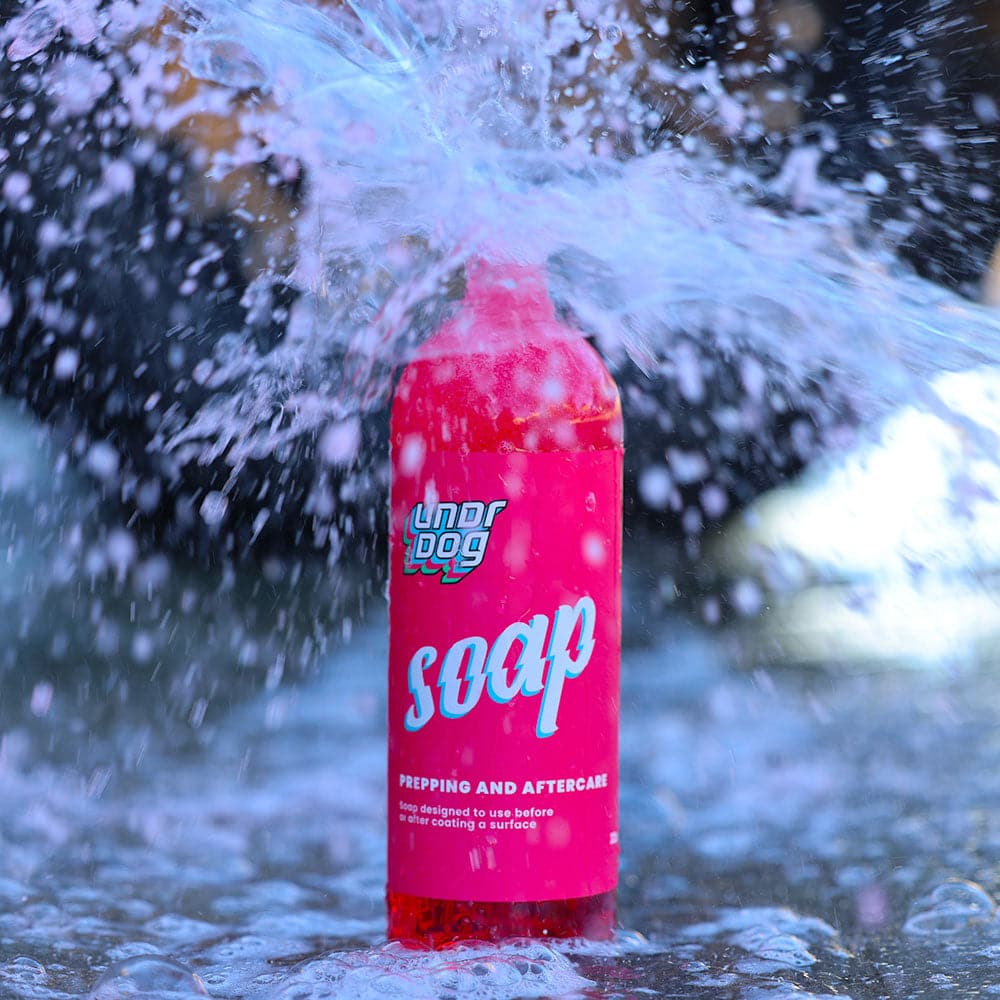
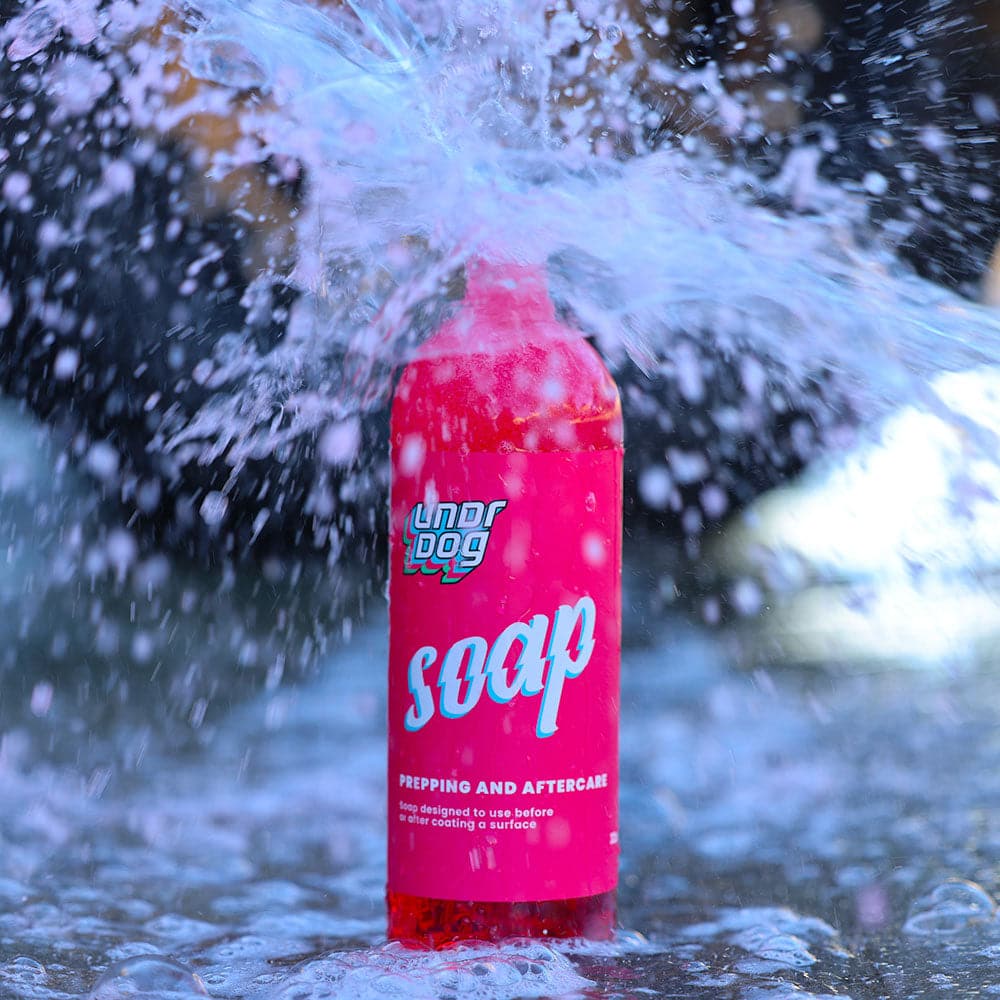
Undrdog Soap is described on its product page as a pH-neutral automotive wash suitable for routine coating maintenance. Follow the label’s dilution and surface directions. Do not choose a concentration by guesswork, and do not treat pH alone as proof of compatibility with every surface or situation.
Separate the tools used for the dirtiest areas from those reserved for cleaner painted surfaces. This simple separation reduces the chance that a tool carrying road grit will return to a cleaner panel. Keep clean drying materials available before you begin so the vehicle is not left wet while you search for them.
A careful winter salt-wash sequence
1. Inspect the vehicle first
Look over the lower panels, wheel areas, glass, and accessible underside before washing. Note where salt and slush have collected. This helps you spend the wash on residue removal instead of repeatedly wiping areas that are already clean.
2. Rinse before making contact
Use a thorough initial rinse to loosen and carry away as much loose salt, slush, and grit as the facility allows. Do not begin with a wash mitt or towel on a visibly dirty panel. The first rinse does not guarantee that the surface is clean, so continue treating the vehicle as contaminated until the contact stage is complete.
Work from areas where residue is heaviest toward the places you intend to keep clean, or use separate tools for heavily contaminated sections. Keep the rinse controlled rather than allowing dirty water to run back over areas you have already addressed.
3. Wash manageable sections
Follow the wash product’s label directions and work methodically. Use clean wash media, limit unnecessary pressure, and refresh or change the media when it becomes visibly contaminated. Keep the dirtiest areas toward the end of the painted-surface work or use separate tools for them.
Do not use the coating as a reason to scrub harder. A water-repellent surface still needs a controlled wash. The aim is to remove residue with the wash solution and limited contact, not unnecessary friction.
4. Address hidden areas safely
Include the undercarriage when your equipment and location make that possible. AAA specifically recommends washing the undercarriage as part of removing winter road salt. AAA’s road-salt guidance includes the vehicle’s underside.
Do not place yourself under a vehicle or improvise an unsafe access method. If access is limited, choose a facility designed to wash the underside or wait until conditions support a safer option. The maintenance benefit is not worth creating a personal or property hazard.
5. Rinse away solution and residue
Rinse until the wash solution and loosened residue have been removed from the areas you can safely reach. Pay attention to seams, lower sections, wheel areas, and other places where water and winter grime collect. Avoid allowing dirty solution to dry on the vehicle simply because the process has become inconvenient.
6. Dry before leaving
Dry the vehicle using clean, suitable materials and a controlled technique. Concentrate on places where water can remain, including panel gaps and trim transitions, while staying within what you can reach safely.
If the vehicle cannot be dried adequately or the surrounding surface is becoming hazardous, stop and change the plan rather than rushing. A delayed wash in safer conditions is preferable to creating ice around the vehicle or encouraging aggressive wiping.
Winter wash choices at a glance
| Situation | Best next step | Reason for the decision |
|---|---|---|
| Light residue and safe access to rinse and dry | Perform a careful contact wash after a thorough initial rinse | Removes residue while limiting unnecessary contact |
| Heavy salt or slush on lower panels | Prioritize rinsing and include the underside where safely available | Winter residue can collect below the visible upper panels |
| Rinsing is possible but runoff will freeze | Postpone or use a controlled wash facility | Washing should not create an ice hazard |
| The car is clean but water behavior has changed | Inspect the surface and maintain it only as directed | Water behavior alone does not prove that a base coating is gone |
| Heavy contamination and no way to rinse | Do not replace the wash with a quick-detailing spray | A maintenance spray is not a substitute for removing grit |

What not to do during a freezing-weather wash
Do not select a fixed temperature threshold as though it guarantees a safe result everywhere. Consider the actual site, drainage, shelter, and ability to dry the vehicle. If those conditions are poor, use a controlled facility or wait.
Do not wipe visibly salty panels before loosening the residue. Do not use a hydrophobic spray in place of removing heavy grit. Do not assume that a coated vehicle can be neglected because the surface is easier to maintain. Finally, do not create a slippery walking or driving surface with runoff.
These limits are especially important for home washing. If you cannot control where the water goes or cannot finish the drying step, postponing the job is the sensible choice.
Inspect the finish after washing
Once the car is clean and dry, inspect the finish in good light. Look for remaining salt deposits, missed lower sections, water trapped in accessible gaps, or areas that need a second rinse. This is also the point to decide whether the vehicle needs routine maintenance or a professional inspection.
Do not diagnose coating failure solely from a change in beading. Water behavior alone does not prove that the underlying coating is gone. A maintenance product may improve the feel or water behavior of a properly cleaned compatible surface, but that does not establish the condition of the underlying coating.
Undrdog Quick Detail is described as a hydrophobic maintenance spray. Apply it only as directed to an appropriately cleaned, compatible surface. It should be used after washing, not as a way to avoid rinsing salt and grit from the car, and it is not proof that a base coating remains.
A simple winter maintenance worksheet
For each winter wash, record the conditions in plain language. This is a practical tracking aid that can help you identify what still needs attention:
- Date: ____________________
- Where was the vehicle washed? ____________________
- Was the initial rinse completed before contact? Yes / No
- Were lower panels addressed? Yes / No
- Was the underside safely accessible? Yes / No / Not available
- Could the vehicle and surrounding area be dried safely? Yes / No
- What remains to inspect later? ____________________
- Was a maintenance product used only after cleaning? Yes / No / Not used
The value of this worksheet is that it separates what you did from assumptions about the coating. If the underside was not accessible, note that and address it during the next safe opportunity. If drying was compromised, do not add more product to compensate for an unfinished wash.
Further reading for lower-contact washing
For a broader explanation of reducing unnecessary contact during maintenance, read How to Wash Your Car Without Scratching It: The 2-Bucket and Rinseless Method. For routine care beyond a single winter wash, see How to Maintain a Ceramic-Coated Car for Maximum Longevity.
How Undrdog does it
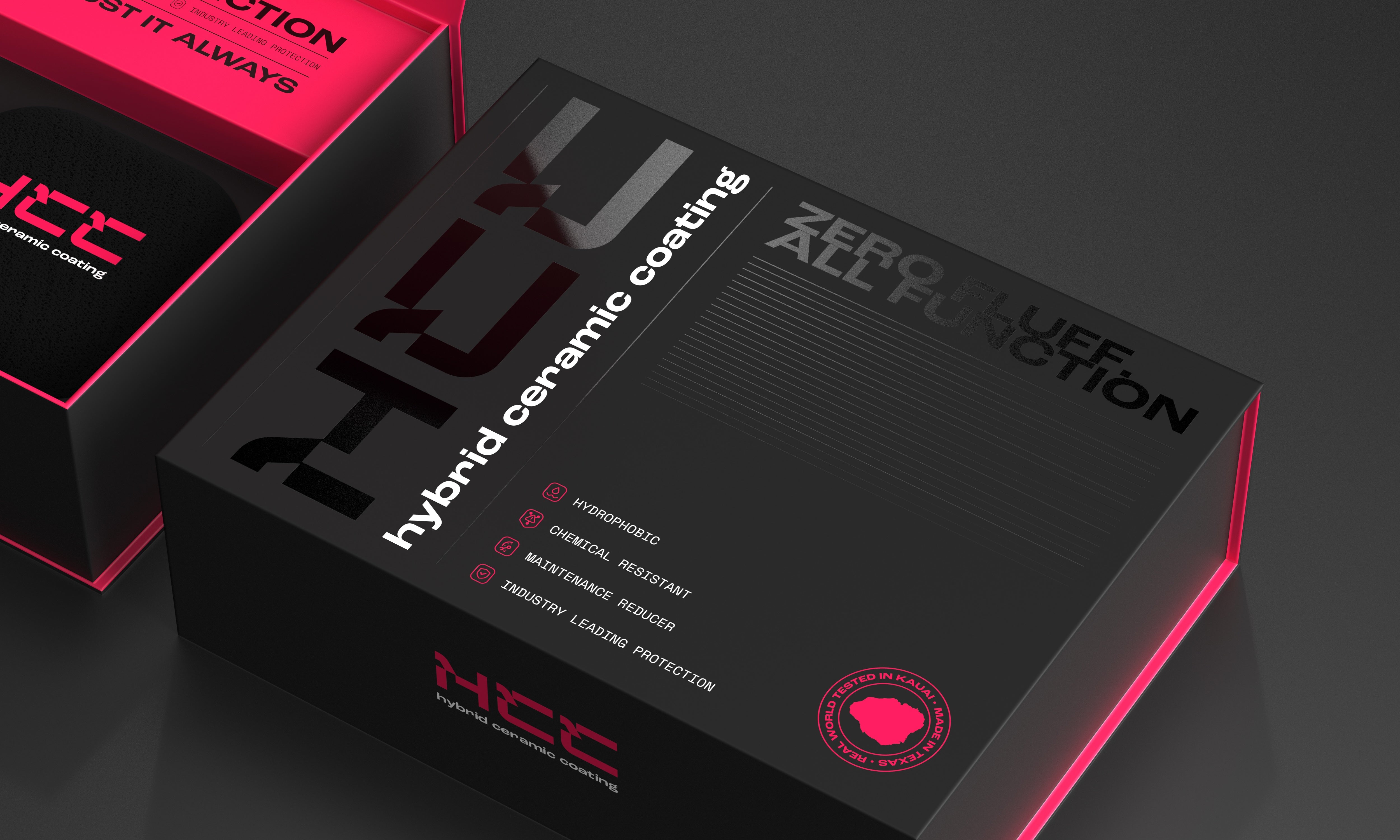
If you are planning a coating for an appropriate exterior surface rather than maintaining an existing one, HCC Hybrid Ceramic Coating is Undrdog’s flagship all-surface coating for cars, boats, planes, and bicycles. Confirm suitability and the current application instructions for the exact surface. Protection depends on preparation, exposure, use, and maintenance, so applying a coating is not a reason to skip winter washing.
For routine maintenance, start with the product that matches the task. Undrdog Soap is the relevant wash option when its label directions and surface suitability match the vehicle. Use Quick Detail only after the surface has been appropriately cleaned and only as directed.
When road salt is present, the premium approach is disciplined rather than dramatic: rinse first, use controlled contact, address the underside when safely possible, dry the vehicle, and stop when conditions make the job unsafe. Start with Undrdog Soap for the wash, then use maintenance protection only after the surface is clean and ready.
Frequently Asked Questions
How often should I wash road salt off a ceramic-coated car?
Wash when conditions allow rather than following a fixed interval. The important decision is whether salt has accumulated and whether you can rinse and dry the vehicle safely. AAA recommends regular winter washing and attention to the undercarriage. Read AAA’s guidance on removing winter road salt.
Can I wash a ceramic-coated car when temperatures are below freezing?
There is no single temperature that guarantees a safe wash in every location. Consider drainage, shelter, drying access, and whether runoff or remaining water could freeze. If washing would create an ice hazard or you cannot dry the vehicle adequately, postpone the job or use a controlled facility. AAA advises choosing safe rinsing and drying conditions.
Should I wash the undercarriage after driving on salted roads?
Yes, include the undercarriage when it can be reached safely and the facility supports it. AAA specifically recommends washing the undercarriage as part of removing winter road salt because salt exposure can contribute to corrosion. Do not place yourself under a vehicle or improvise an unsafe access method. See AAA’s road-salt guidance.
Is Undrdog Soap suitable for routine maintenance of a ceramic coating?
Undrdog describes its Soap as a pH-neutral automotive wash suitable for routine coating maintenance. Follow the product label’s dilution and surface directions. Its pH description alone should not be treated as proof of compatibility with every surface or use.
Can I use Quick Detail instead of washing off road salt?
No. Quick Detail is a hydrophobic maintenance spray for appropriately cleaned compatible surfaces. It is not a substitute for rinsing away salt and grit, and using it does not prove that the underlying coating is still present. Clean the vehicle first and follow the product directions.
Does a ceramic coating prevent road salt damage?
A coating does not remove the need for winter care. AAA recommends washing road salt from the vehicle, including the undercarriage, because salt exposure can contribute to corrosion. A coated exterior still needs appropriate cleaning, and hidden or untreated areas still require attention. Treat the coating as part of a maintenance system, not as an exemption from washing. AAA’s road-salt guidance explains the need for removal.
What should I do if my coating seems less hydrophobic after winter driving?
Wash and dry the vehicle carefully before drawing conclusions from water behavior. Do not diagnose coating failure solely from a change in beading, because water behavior alone does not prove that the underlying coating is gone. Use a maintenance product only as directed on an appropriately cleaned compatible surface, or seek a qualified inspection if the concern remains.
Should I apply HCC just because my car sees road salt?
Do not apply a new coating as a substitute for removing winter residue. If you are coating an appropriate exterior surface, HCC is Undrdog’s flagship all-surface coating for cars, boats, planes, and bicycles. Confirm suitability and current instructions for the exact surface. Protection depends on preparation, exposure, use, and maintenance.
Choose the product that fits the job
Review the surface requirements and current directions before you start. Choose the right product for your project, not a bigger promise.
Explore HCC - Hybrid Ceramic Coating

Leave a comment
This site is protected by hCaptcha and the hCaptcha Privacy Policy and Terms of Service apply.