

A ceramic coating doesn't have one cure time — it has three, and every "24 hour" or "7 day" number on a bottle is describing a different chemical stage. The coating is dry to the touch in minutes, waterproof enough to survive light rain in about 24 hours, structurally set in 5–7 days, and still finishing its final crosslinking reactions weeks after you rolled the car back out of the garage. Confusing those stages is why so many coating jobs fail early — someone washes on day two thinking "the label said 24 hours," and the film that hasn't finished condensing gets stripped off the paint. Here's what's actually happening in the coating, hour by hour, and what "cured" really means when you're the one deciding whether it's safe to drive, park outside, or hit it with soap.

What the Chemistry Is Actually Doing
Ceramic coatings are silicon-based liquids. The active ingredient is a silane or silazane compound with silicon atoms bonded to reactive groups — usually alkoxy groups (Si-OR) or hydroxyl groups (Si-OH). When the coating hits your paint, three chemical stages happen in sequence, and they don't happen instantly.
Stage 1 — Hydrolysis. The moment the coating is exposed to ambient humidity or residual water on the surface, the reactive groups convert to silanol groups: R-Si(OR)₃ + H₂O → R-Si(OH)₃ + ROH. This releases the alcohol carrier (that's what you smell), and it's the reason humidity matters so much — too dry and hydrolysis stalls; too wet and it runs away.
Stage 2 — Condensation (crosslinking). Once silanol groups form, they react with each other and with hydroxyl groups on the clear coat surface: Si-OH + HO-Si → Si-O-Si + H₂O. Every one of those Si-O-Si bonds (siloxane bonds) is a link in the crosslinked network that becomes the finished coating. This is what physically anchors the coating to your paint and what turns the wet liquid into a hard glass-like film. Every one of these reactions also releases water as a byproduct — which the coating then has to shed before it can finish curing.
Stage 3 — Continued crosslinking. The reaction doesn't stop when the surface feels dry. Silanol groups deep in the film are still finding each other, still condensing, still building denser crosslinks. This is why hardness, chemical resistance, and hydrophobicity all keep improving for weeks after application. A coating that measures a certain pencil hardness at 24 hours will typically measure harder at 7 days and harder still at 30.
Every real "cure time" number is describing where you are in that three-stage process — not a hard on/off switch.
The Real Timeline: Minutes to Weeks

Minutes 0–10: Flash
The coating goes on wet and evenly. Within one to ten minutes (depends on temperature, humidity, and the specific formula) it transitions to a hazy, rainbow-tinted, tacky state. This is the flash. It's the visual signal that the carrier solvent has begun to off-gas and hydrolysis is underway. You have a narrow window to wipe it off cleanly at this point — miss the window and you're either wiping too early (removing coating you meant to leave) or too late (leaving high spots you'll have to polish out).
Hours 1–8: Skin Formation
After a proper wipe-off, the coating enters early condensation. The outermost layer forms a thin skin as siloxane bonds link up at the surface. Water — even the water produced by the coating's own condensation reactions — is the enemy here. Any contact with liquid water in this window (rain, wash, humidity condensing on the panel) can rehydrate silanol groups that were about to bond, disrupt the crosslink pattern, and leave streaks, water spots baked into the coating, or dead patches with no hydrophobicity at all.
Hours 24–48: Initial Cure
By 24–48 hours, the coating has enough crosslinking to survive light rain and hold its structure. This is what the "do not wash for 24 hours" instruction is talking about. The film is water-resistant but not fully cured — soap, tar removers, or any chemical stronger than plain water can still disturb what hasn't finished bonding.
Days 5–7: Structural Set
Between five and seven days, the coating reaches what most manufacturers consider "safe to wash" territory. Enough of the crosslinking network is in place that pH-neutral car soap won't pull material out of the film. This is where you can safely maintenance-wash again. But chemistry-wise, the coating is still finishing — it's just that the top layer is now dense enough to protect the softer film underneath from chemical attack.
Weeks 2–4: Full Chemical Cure
The last silanol groups deep in the film condense. Hardness reaches its peak measurable value. Chemical resistance to strong solvents, bird droppings, and bug guts is at its maximum. Hydrophobic performance is at its most consistent. Most manufacturers reference this window when they quote peak specs — the numbers in datasheets are usually measured at 21 or 28 days, not at 24 hours.

The Table Nobody Prints on the Bottle
| Time After Wipe-Off | What's Chemically Happening | Safe To Do | Do Not Do |
|---|---|---|---|
| 0–1 hour | Solvent off-gassing, early hydrolysis | Leave undisturbed indoors | Touch, breathe on, put anything on the surface |
| 1–8 hours | Skin formation, early crosslinking | Leave in a climate-controlled garage | Any water, humidity spike, dust, hands |
| 8–24 hours | Continued condensation, film densifying | Nothing yet — keep dry and undisturbed | Rain exposure, washing, driving through moisture |
| 24–48 hours | Water-resistant but still curing | Drive in dry conditions; light rain okay | Wash, park under sap trees, expose to heavy rain |
| 3–5 days | Structural crosslinking near-complete | Normal driving, most weather | Soap wash, chemical decon, harsh detergents |
| 5–7 days | Safe-to-wash threshold | pH-neutral wash, gentle drying | Automatic brush wash, chemical strippers, polish |
| 2–4 weeks | Full chemical cure, peak properties | Everything normal maintenance requires | Aggressive polish, abrasive pads |
What Actually Changes the Cure Time
The bottle says "24 hours to initial cure." That number assumes textbook conditions. In reality, four variables move it in either direction.
Temperature
Warmer surfaces cure faster. The rule of thumb from silicone and siloxane chemistry: reaction rate roughly doubles for every 10°C (18°F) rise in temperature. A panel at 30°C (86°F) cures roughly twice as fast as the same panel at 20°C (68°F). Below about 10°C (50°F), condensation reactions slow to a crawl and most manufacturers won't warranty an application. Above about 35°C (95°F), the flash happens so fast you can't wipe evenly, and you end up with high spots and holograms.
Humidity
Hydrolysis needs moisture. Too little (below ~30% relative humidity) and the reaction stalls — the coating stays sticky and doesn't crosslink properly. Too much (above ~70%) and hydrolysis runs so fast the coating cures before you've evenly spread it. The sweet spot most manufacturers specify is 40–60% RH. Coastal garages in tropical climates are usually too humid; desert garages in winter are usually too dry.
Ventilation
Condensation reactions release water. If that water has nowhere to go — no airflow, a sealed garage with the door closed for 24 hours — humidity climbs inside the enclosure and the coating stalls in its own byproduct. A slow, gentle airflow across the vehicle helps, especially in hours 8–24. This doesn't mean a fan blasting on the paint; it means a garage that isn't sealed shut.
Coating Thickness
A properly wiped coating is measured in microns, sometimes fractions of a micron. If application left high spots or double-layered sections, those thicker patches cure slower — the outer skin forms and traps solvent underneath, which then either off-gases through the finished film (leaving voids) or never fully cures. This is why the wipe-off step matters more than most people realize.
The Wash Question, Answered by Chemistry Instead of Marketing
The most common cure-time question is "when can I wash it?" The chemistry-based answer:
- Day 1–2: Do not wash. The film is water-resistant but the crosslinking network is still forming. Soap and mechanical scrubbing at this stage strips the softer, unformed portions.
- Day 3–4: Rinse only, if you must — no soap, no touching. Cool clean water only. Ideally still don't.
- Day 5–7: pH-neutral car soap and a clean microfiber mitt. Two-bucket method. No pressure washing at close range yet.
- Day 8+: Normal maintenance wash routine. Still use pH-neutral soap forever — it's not just a cure-window rule.
Notice what's missing from that list: "when the label says 24 hours." The label is describing water resistance, not structural completion, and if you interpret it literally you'll wash on day two and damage a coating that had days of chemistry left to finish.
Can You Test If a Coating Is Cured?
Not directly, no. There's no home test that measures crosslink density. What you can test is whether the coating is doing what a cured coating should do — which is a proxy, not a proof. The three field checks:
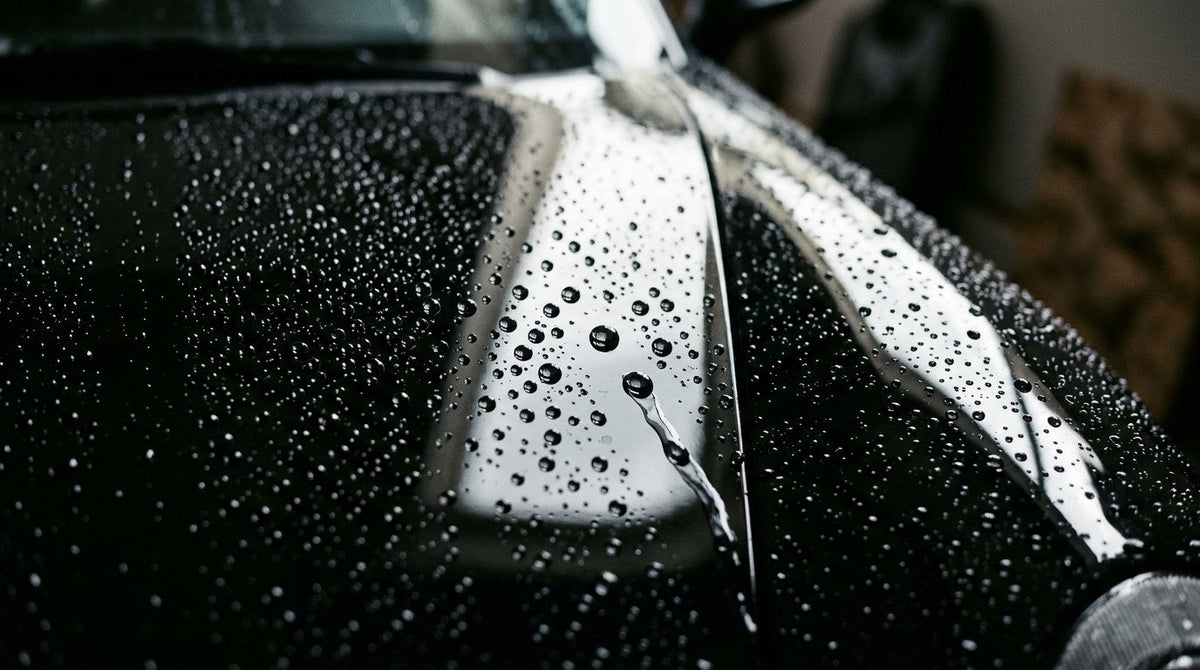
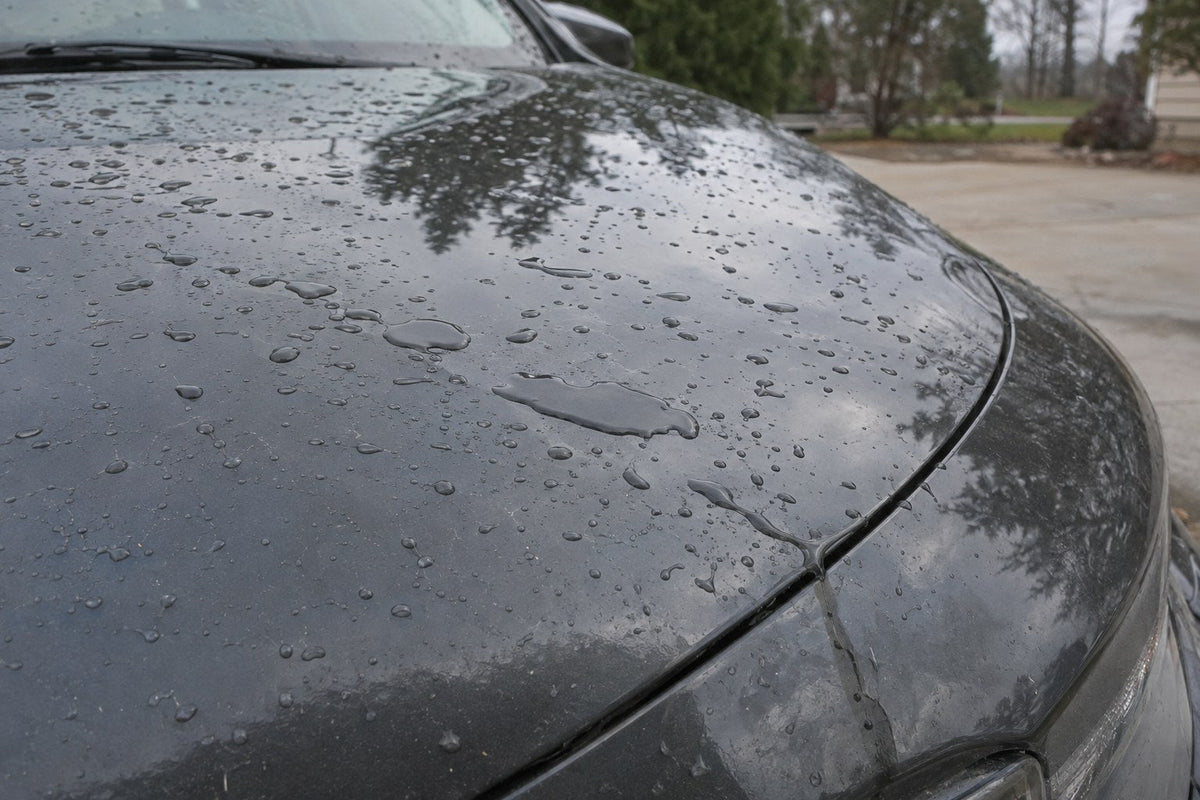
- Water bead geometry. Spray a light mist of clean water on a horizontal panel. Fully cured coatings produce tight, high-contact-angle beads that hold their shape for many seconds. Uncured or damaged coatings produce loose, flat, sheeting droplets. This test tells you the coating's hydrophobic system is working — it doesn't tell you the underlying siloxane network is fully condensed.
- Sheeting behavior. Rinse a whole panel with a hose (no nozzle). Cured coatings sheet water off quickly and leave large dry patches. Uncured or degraded coatings hold water in wide sheets that drain slowly. Same caveat — this is a proxy for hydrophobicity, not cure.
- Chemical resistance. A drop of pH-neutral soapy water dwelling on the surface for 30 seconds should not soften or streak a cured coating. This one is closest to a real cure test, but it's still indirect.
For a fuller field-test protocol, see our companion post on how to tell if your ceramic coating is still working. The short version: field tests confirm that the coating is present and hydrophobic. They cannot confirm that it's at 100% of its final crosslinked strength — only time (and the right conditions) can do that.
What "Full Cure" Actually Means for Different Coatings
Different coating chemistries have different cure profiles. A quick reference for the coating classes commonly sold to DIY buyers:
| Coating Class | Flash Time | Water-Safe | Wash-Safe | Full Cure |
|---|---|---|---|---|
| Ceramic spray / spray sealant | Wipe on and off | 2–4 hours | 24 hours | 7 days |
| Hybrid ceramic coating | 1–5 min | 12–24 hours | 3–5 days | 14–21 days |
| Traditional SiO₂ ceramic coating | 1–3 min | 24–48 hours | 7 days | 21–30 days |
| Silazane-based professional coating | 30 sec – 3 min | 48 hours | 7 days | 21–30 days |
These are general chemistry-based ranges, not manufacturer specs. Every product ships with instructions that reflect its exact formulation — read them and follow the specific numbers, especially for the flash window and the safe-to-wash window.
How Undrdog Does It
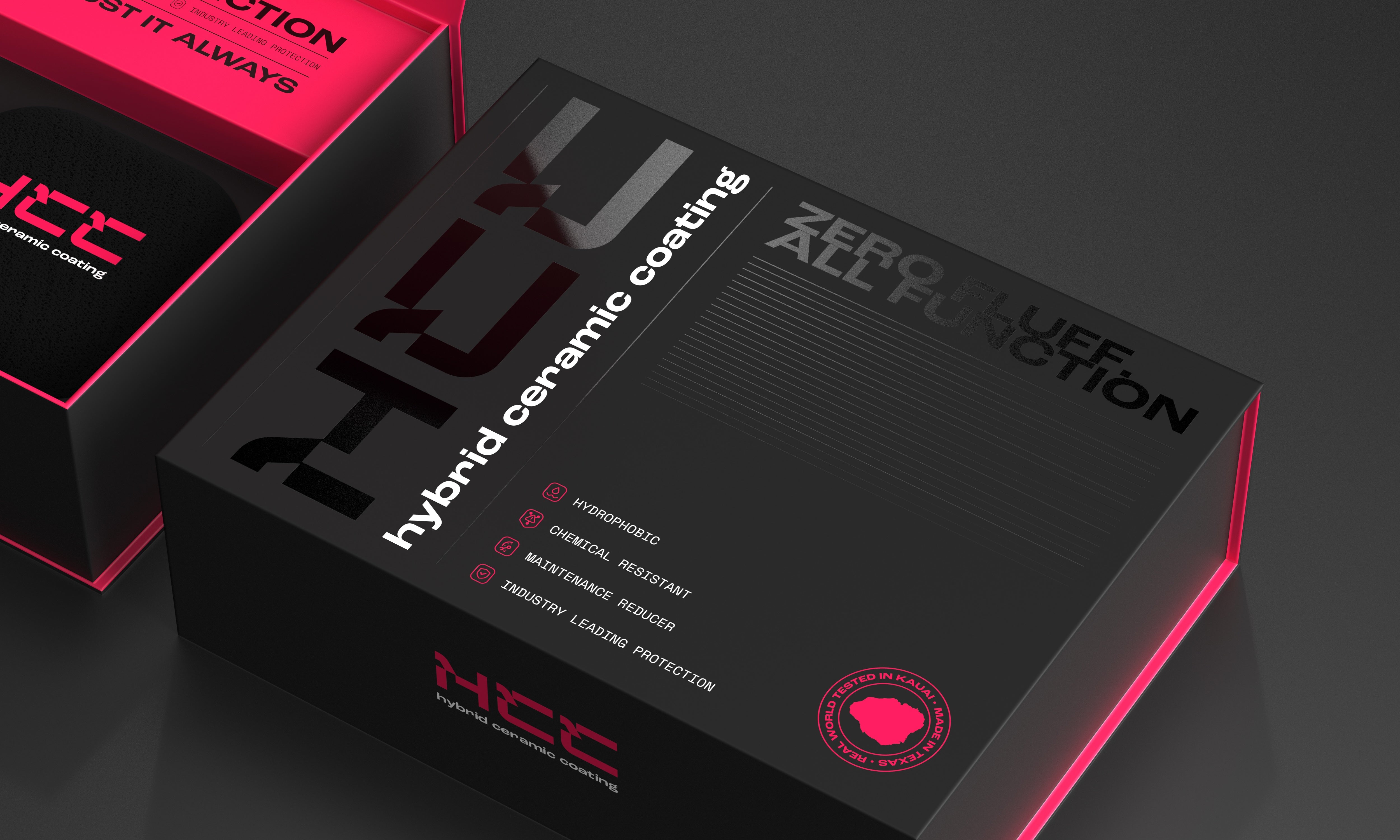
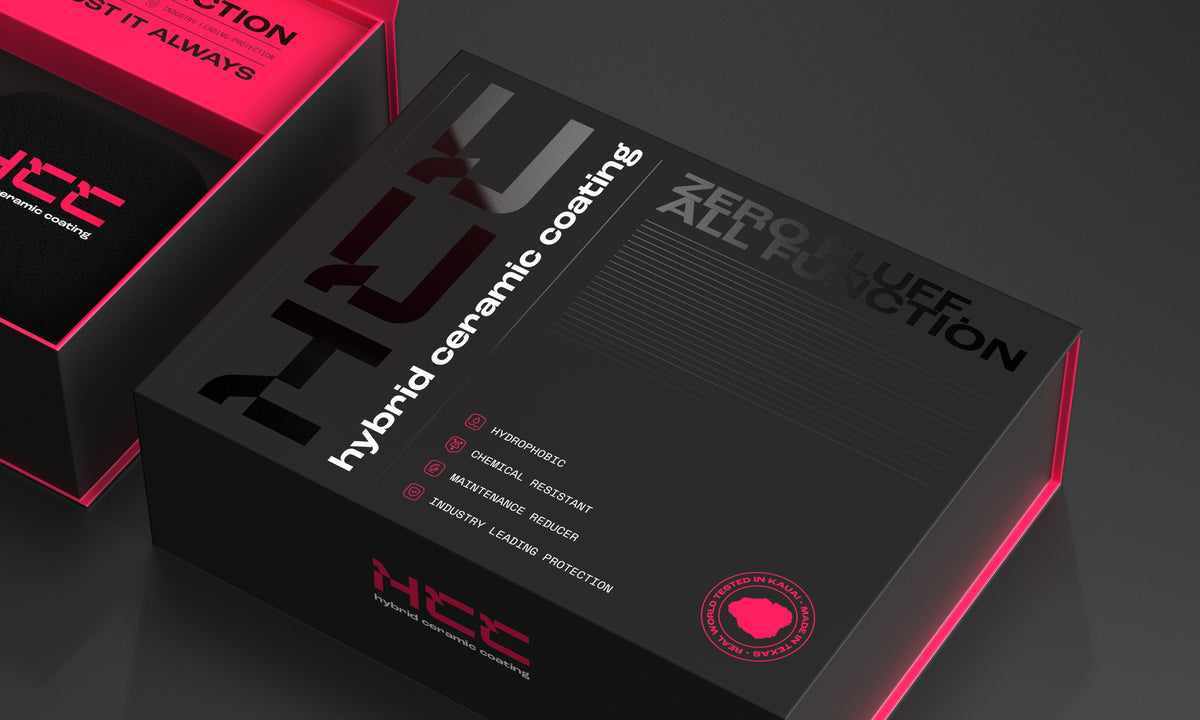
Undrdog HCC is a hybrid ceramic coating built on a crosslinked resin matrix with a tunable flash window designed to forgive real-world garage conditions instead of assuming a clean-room. That tunability matters because most DIY applications don't happen at exactly 22°C and 50% RH — they happen in a Wailua garage in September, or a Phoenix garage in January, or a New England garage in April. HCC's chemistry is formulated to still cure predictably across a wider temperature and humidity band than traditional single-molecule ceramic coatings.
The cure window for HCC:
- Flash: 1–5 minutes depending on ambient conditions.
- Wipe-off: as soon as the rainbow flash appears — do not miss the window.
- Water-safe: 12–24 hours indoors under normal conditions.
- Wash-safe: 3–5 days with pH-neutral soap.
- Full chemical cure: 14–21 days.
For a full walkthrough of the day-by-day cure timeline for HCC specifically, we published a detailed timeline breakdown at HCC curing timeline: hour by hour on the main detailing blog. It's the same chemistry described here, mapped to specific products and specific wait times.
For a comparison of DIY versus professional cure workflows — including which parts of the cure are handled by product chemistry versus by installer environmental control — see DIY vs professional ceramic coating. And if you're trying to make sense of the durability marketing that led you here, our post on how long ceramic coating really lasts covers why we frame lifespan in years and driving conditions, not in a fixed number on a bottle.
Common Cure-Time Mistakes
- Washing on day two because "the label said 24 hours." The label is describing water resistance, not structural cure. Wait 5–7 days minimum before soap.
- Parking outside during the first 48 hours. Even light rain deposits mineral spots that get locked into the still-curing film — permanent, visible, and only removable by polishing the coating off.
- Applying in a sealed garage. The reaction releases water; that water has to go somewhere. A sealed garage traps it, humidity climbs, and cure stalls.
- Applying below 10°C or above 35°C. Too cold and reactions crawl; too hot and you can't wipe cleanly. Coating manufacturers specify these bounds for a reason.
- Assuming the coating is "done" at 24 hours. The coating you're looking at will be measurably harder and more chemically resistant at 21 days than it is at day one. Treat the first three weeks as a maintenance-light period.
- Skipping surface prep because "the coating is powerful." Silanol groups need to bond to hydroxyl groups on the substrate. Wax residue, polish oils, or dirt occupy those bonding sites. No prep, no bond — no matter how long you let it cure.
Frequently Asked Questions
How long does ceramic coating actually take to cure?
The coating flashes in 1–10 minutes, is water-safe at 24–48 hours, is wash-safe at 5–7 days, and reaches full chemical cure at 2–4 weeks. Every one of those numbers refers to a different chemistry stage. There is no single "cured" moment.
Can I wash my car 24 hours after a ceramic coating?
Chemistry says no. The 24-hour figure on most labels refers to water resistance — the coating will survive rain — not structural completion. Soap and physical washing at 24 hours can strip the crosslinking network that's still forming. Wait 5–7 days minimum, then use a pH-neutral car soap.
What happens if it rains during the cure window?
Between hours 0 and 8, rain will disrupt the crosslinking process and can leave permanent streaks, water spots baked into the film, or dead patches with no hydrophobicity. Between hours 8 and 24, light rain is not ideal but usually recoverable. After 24 hours, most coatings are water-resistant enough to handle rain without damage.
Do I need to keep my car in a garage during cure?
For the first 24–48 hours, yes — controlled temperature, moderate humidity, no rain, no direct sunlight if possible. After 48 hours, the coating can typically live outside in normal weather. Ideal cure conditions are 15–30°C and 40–60% relative humidity.
Does temperature actually change cure time?
Yes, significantly. Reaction rate roughly doubles for every 10°C rise. A coating that cures in 24 hours at 20°C might reach the same crosslink density in 12 hours at 30°C. Below 10°C, most coatings stall and won't complete their chemistry properly.
What is the "flash" stage of a ceramic coating?
Flash is the visible transition of the coating from wet liquid to a hazy, rainbow-tinted, tacky film. It signals that hydrolysis has begun and it's the correct moment to wipe off excess. It usually happens 1–10 minutes after application depending on temperature and humidity.
How do I know the coating is cured?
You can't measure crosslink density at home. What you can measure is hydrophobic performance — tight water beads, fast sheeting, chemical resistance to a drop of soapy water sitting on the paint. Those tests confirm the coating is present and functioning. They cannot confirm 100% of the crosslinking network has finished forming; only time and correct conditions do that.
Does humidity affect ceramic coating cure?
Yes — hydrolysis needs moisture. Below 30% relative humidity the reaction stalls; above 70% it runs too fast to wipe cleanly. The sweet spot is roughly 40–60%.
Can a ceramic coating cure too fast?
Yes. High temperature plus high humidity accelerates flash and can push the coating past its wipe window before you finish spreading. This leaves high spots and holograms that then have to be polished off and reapplied.
Why does my new coating feel sticky days after application?
Usually one of three things: too little humidity slowing hydrolysis, too much coating left on the surface (poor wipe-off leaving high spots), or too cold an ambient temperature. The film needs to be evenly thin, in a moderate temperature and humidity range, to reach a clean cure.
The Zero-Fluff Bottom Line
A ceramic coating is a chemical reaction that takes weeks to finish, not a paint that dries. The 24-hour figure on the bottle is the earliest you can expose the coating to water and still get most of its performance — it is not permission to wash, to hit it with tar remover, or to consider the coating "done." Respect the 5–7 day wash window, keep the car in controlled conditions for the first 48 hours, and understand that the peak performance numbers you paid for don't show up until 2–4 weeks in. That's not marketing spin; that's chemistry.
If you're evaluating ceramic coatings and want a hybrid formulation designed to cure predictably in real garage conditions instead of laboratory ones, look at Undrdog HCC. It's the same crosslinked resin matrix we describe above, tuned for the range of conditions DIY buyers actually apply in.

Leave a comment
This site is protected by hCaptcha and the hCaptcha Privacy Policy and Terms of Service apply.