

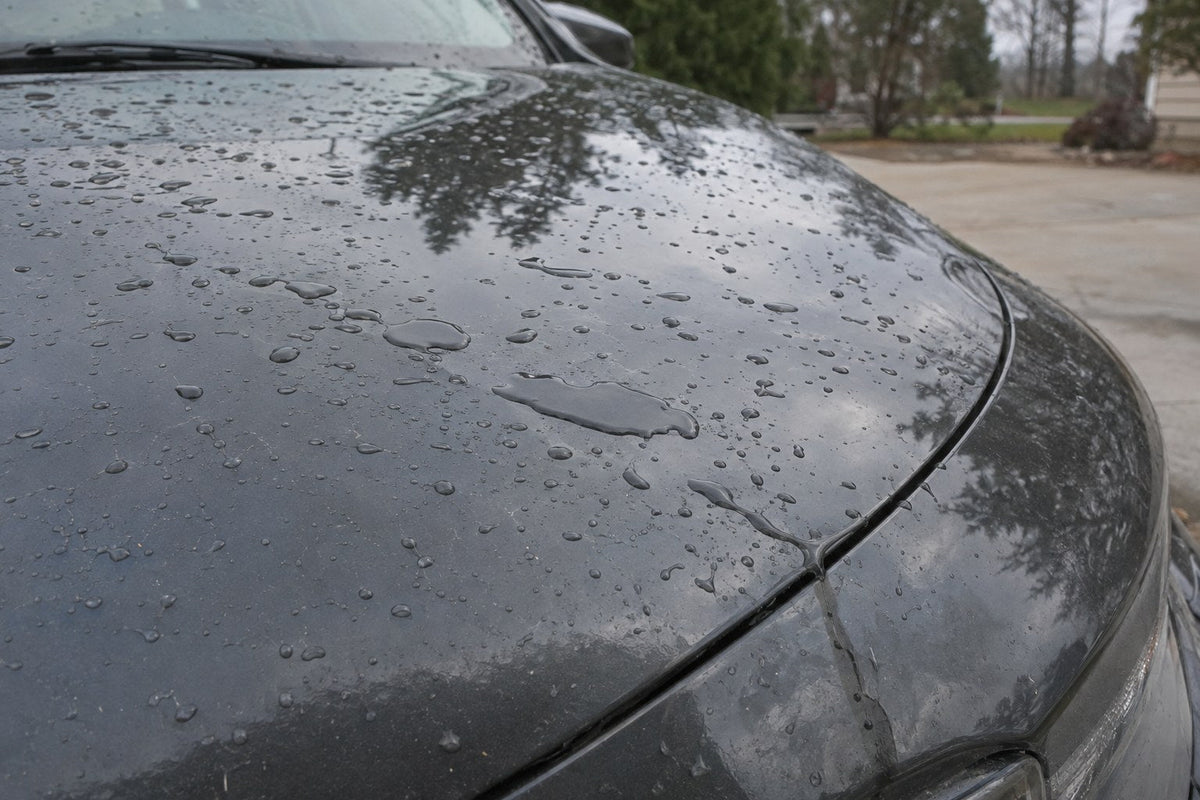
Short answer: "Graphene" is the buzzword. The real question is what's in the bottle and whether the resin holds up. A pure ceramic coating cures a silicon-dioxide-based film. A "graphene ceramic" bolts small amounts of graphene oxide (GO) onto that same silica chemistry. In the lab, GO can measurably improve dispersion, thermal handling, and film-forming behavior when it's properly functionalized into a silica matrix (ScienceDirect, GO/SiO2 hybrid coatings). On your car, that difference is dwarfed by resin quality, film build, prep, and cure. Below is the honest chemistry read, what the marketing usually skips, and how to judge any coating — with or without "graphene" on the label.

What "ceramic coating" and "graphene coating" actually mean
Both are liquid coatings that cure into a thin, cross-linked, mostly inorganic film on your clear coat, gel coat, glass, or wheels. The differences live at the molecular level.
Ceramic coating. The reactive backbone is silica chemistry — typically polysilazanes, silanes, siloxanes, and silicic-acid derivatives that condense into a silicon-dioxide-rich (SiO2) network when they meet moisture and oxygen. That network is what gives a cured film its glass-like feel, chemical resistance, and slick water behavior.
Graphene coating. In consumer coatings, "graphene" almost always means graphene oxide (GO) — the oxidized, dispersible cousin of graphene — added at low weight percent into that same silica chemistry. Pure, defect-free, single-layer graphene has an intrinsic tensile strength around 130 GPa and a Young's modulus near 1 TPa (Nature Nanotechnology). GO is not the same material. It carries oxygen-containing groups (hydroxyl, carboxyl, epoxide) that make it dispersible in water and solvents but reduce those pristine mechanical numbers. Real, scalable graphene coatings use functionalized GO as an additive, not a stand-alone film.
What each term technically means (and doesn't)
| Term you see | What the industry usually means | What to ask |
|---|---|---|
| Ceramic coating | Silica-based resin (silanes/siloxanes/polysilazanes) that cures into an SiO2-rich film. | What is the resin system, film build (µm), and how is durability measured? |
| Graphene coating | Silica-based resin with functionalized graphene oxide added at low weight percent. | What weight percent of GO is in the cured film, and what property does it change? |
| 9H hardness | A pencil-scale rating from the ASTM D3363 pencil-hardness test — a coatings-industry method, not the Mohs mineral scale. | Which method (ASTM D3363 or ISO 15184) and does that predict scratch resistance for you? |
| Nano-coating | A liquid whose reactive species and/or additives sit at the nanoscale. Most modern coatings qualify. | Does "nano" change the cured film or is it just the raw material size? |
| Quartz | Marketing shorthand for SiO2. Cured quartz-branded coatings are chemically similar to other ceramics. | Same as ceramic — resin, film build, cure schedule. |
| "Self-healing" | Marginal thermoreflow of very light swirl marks under heat. Not stone-chip repair. | What defect size, at what temperature, over what timeframe? Any data? |
The graphene-oxide claim, decoded
When a bottle says "graphene infused" or "graphene ceramic," the most likely composition is a silica-based coating with functionalized graphene oxide dispersed into the resin at a small weight percent. That is not marketing hype in itself — GO is real, well-characterized chemistry — but four things matter.
1. GO is not graphene. Pristine graphene's ~130 GPa strength and ~1 TPa modulus are measured on defect-free, single-layer sheets under nanoindentation (Nature Communications). Once you oxidize graphene to GO, its mechanical properties drop; even in high-end research papers, reduced-GO papers land around 660 MPa in tension, and highly ordered graphene papers only reach ~1.1 GPa under specialized processing (Nature Communications, 2020). Consumer coatings do not deliver a graphene film. They deliver a silica film with GO in it.
2. Small additions can change coating behavior. Peer-reviewed work on GO/SiO2 hybrid films shows GO can help disperse silica, tune pore structure, and change interaction modes inside the coating (ScienceDirect). Separate work on epoxy composites shows that when GO is functionalized (for example, with APTES-treated silica), it disperses without agglomerating — the classic problem with GO in resins (Engineering, Technology & Applied Science Research). If GO clumps, you lose the effect and can actually weaken the film.
3. Thermal claims are the most oversold. Graphene's in-plane thermal conductivity is genuinely extraordinary (~5,300 W/m·K in single-crystal graphene, per the same Nature paper). But that value depends on a continuous, defect-free graphene lattice — nothing like the low-weight-percent GO flakes distributed inside a silica film on your fender. "Reduces water spots because it dissipates heat faster" is a plausible directional effect at best, not the physics of pristine graphene.
4. Marketing does not equal chemistry. A bottle marketed as "graphene" with a very low GO loading may cure into a film that is functionally indistinguishable from a well-formulated pure ceramic. A pure ceramic with better resin, higher solids, and thicker cured film can outperform a poorly formulated "graphene ceramic." The word on the label does not decide the outcome.

What actually predicts coating performance
Chemistry naming is downstream. The variables that decide how a coating looks, feels, and lasts on your paint are these:
- Resin quality and cross-link density. How completely the reactive species link into a three-dimensional network as the coating cures. Higher cross-link density generally means better chemical resistance and slicker, more consistent water behavior. This depends on the formulation, not on whether graphene is on the label.
- Film build. The cured thickness in microns. A thicker, well-leveled film has more sacrificial material to lose to washing, decontamination, and UV before performance drops off. A thin, spread-too-far film — regardless of chemistry — thins the effective life.
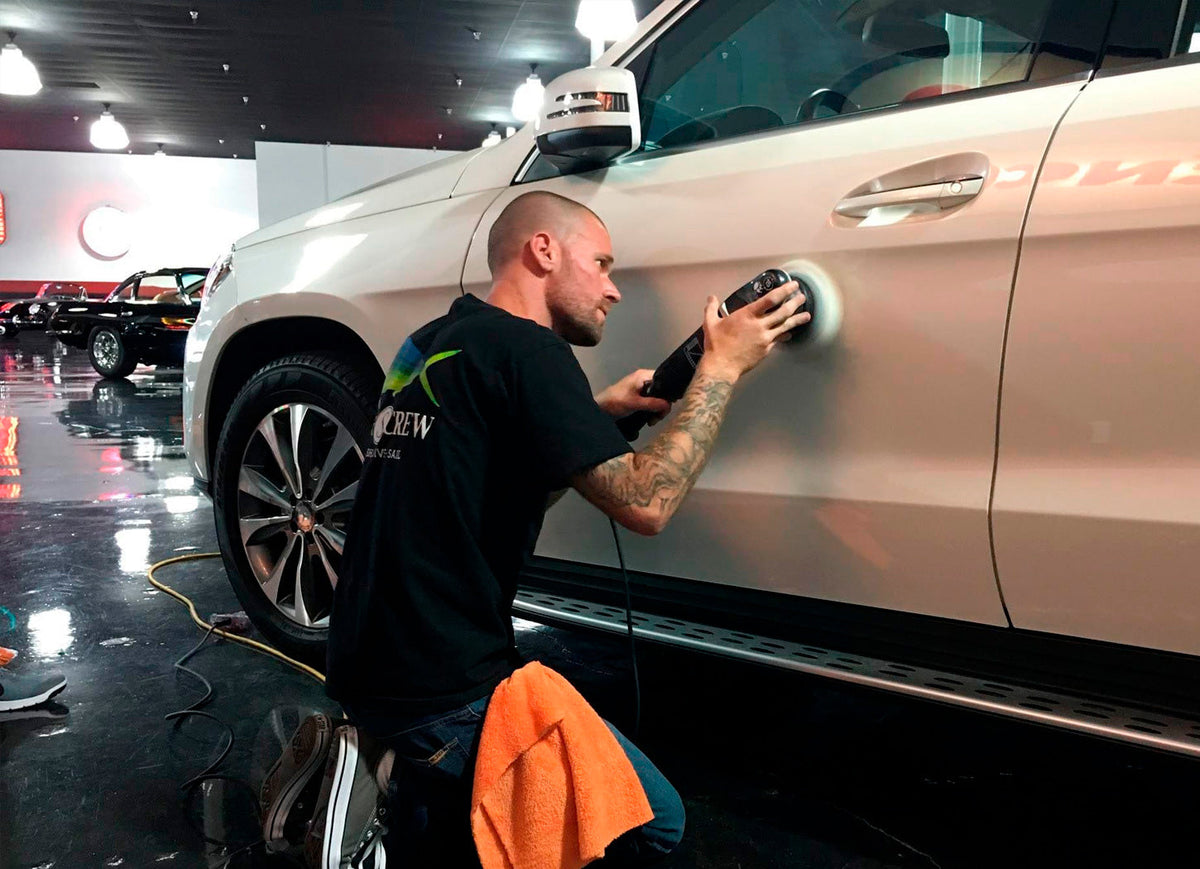
- Prep. Coatings bond to what's on the panel at cure time. Wax residue, silicone from tire dressing overspray, or a hazy polish film all live under the coating and cap the maximum bond you can get. A pre-coating panel prep or an IPA/isopropyl wipedown is not optional; it's the single biggest variable in real-world durability.
- Environment during cure. Temperature and humidity gate silane hydrolysis and condensation. Cure a ceramic below its recommended dew-point margin or on hot, sun-drenched paint and the film flashes before it levels. That's a photograph of cure — a coating that "failed after 3 months" often failed at the moment it was wiped off.
- Maintenance. High-pH degreasers, aggressive traffic-film removers used at over-strength, machine polishing, and neglect all age a film. A well-formulated ceramic maintained with pH-neutral wash chemistry and periodic decontamination lasts multiples longer than one drowned in strong soaps and stripped every wash.
None of those five variables is decided by the word "graphene."
9H hardness — the most misunderstood number in this industry
"9H" on a ceramic coating comes from the pencil-hardness test, standardized as ASTM D3363 in North America and its close cousin ISO 15184 internationally. In this test, drafting pencils of graded hardness (from soft to 9H at the top of the coatings scale) are pushed across a cured film at a set angle and load. The rating is the hardest pencil that doesn't leave a visible scratch or gouge.
That number tells you a small, useful thing: this cured film resists a pencil-lead-sharpness point at bench conditions. It does not mean:
- 9 on the Mohs mineral scale. The Mohs scale runs 1–10 (talc to diamond). 9H on the pencil scale is not comparable to Mohs 9. Same number, different scale.
- Immunity to rock chips or wash scratches. Rock chips and wash marring involve much higher point loads and different failure modes than a drafting pencil at the specified angle. A 9H rating does not equal chip resistance.
- Long-term abrasion resistance. That's a different test — for coatings, typically ASTM D4060 Taber abrasion, which measures mass loss under a rotating abrasive wheel.
Both good ceramic coatings and good graphene ceramics test 9H on this method. Publishing a 9H rating tells you the manufacturer ran the test. It does not rank one coating above another on the wall.
Where "graphene ceramic" can and can't outperform a good ceramic
Here's the honest sorting, based on the underlying chemistry:
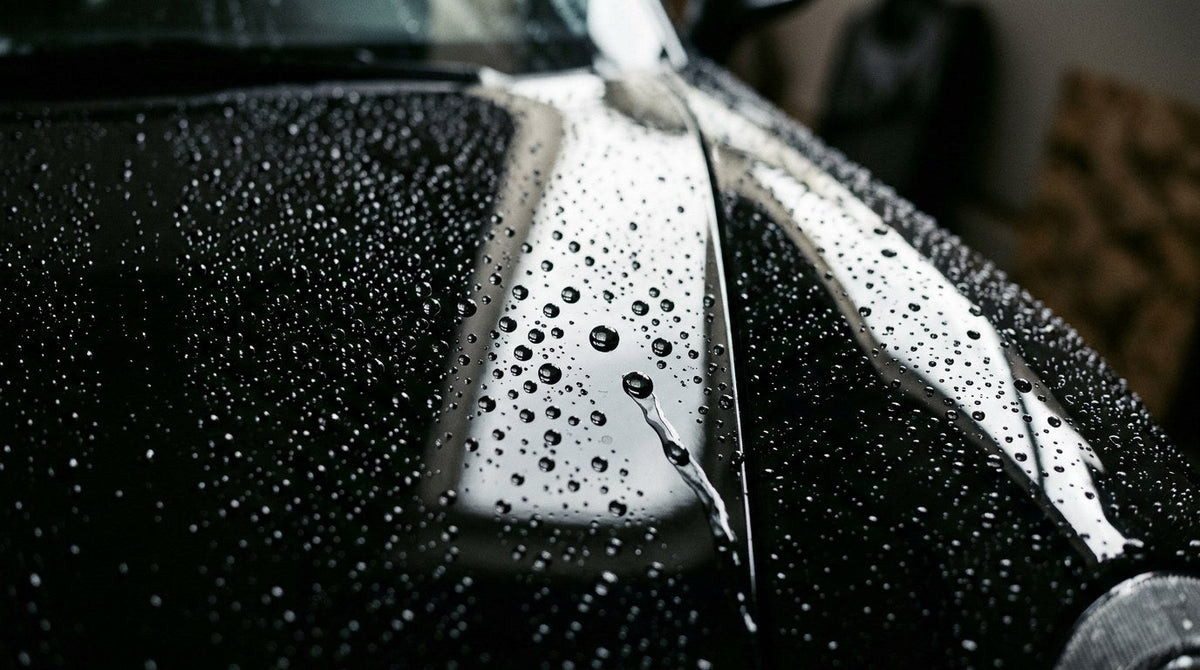
- Slickness / initial hydrophobic feel. Very close. Silicone-modified silane-siloxane finishes and GO-modified silica finishes both bead well when they're properly cured. Whichever bottle has better surface-energy tuning wins here, not the term on the label.
- Water-spot behavior on hot panels. This is where "graphene helps with heat" gets marketed hardest. Real cause of water spots is dissolved minerals in the water drying on paint — panel temperature accelerates the effect. GO's role in a low-percent additive coating is a minor thermal-transport tweak, not a fix. The real fixes are wash chemistry, drying, and rinse water quality.
- Chemical resistance (bird bombs, iron, industrial fallout). Decided by cross-link density and film build. Well-formulated ceramics and well-formulated graphene ceramics both do this well. Poorly formulated versions of either fail.
- UV weathering / long-term gloss retention. Also decided by the cured resin chemistry and film build — and by whether the paint under the coating was properly corrected before install. The word on the label doesn't decide this.
- "Self-healing" of light marring. Marginal thermoreflow of very fine scratches under sun heat can happen on some flexible resin systems, ceramic or graphene ceramic. It is not stone-chip repair, no matter what the ad shows.
Put plainly: a good ceramic beats a mediocre "graphene ceramic," and vice versa. The label is a very weak predictor.

What the marketing usually leaves out
A few things you should notice — or ask — before you spend on any coating, ceramic or "graphene-infused":
- Weight percent. "Graphene infused" without a stated GO loading is a marketing phrase. Below a functional threshold, GO doesn't measurably change film performance. Above it, dispersion becomes hard and clumping degrades the coating.
- Cure time and window. Real chemistry — ceramic or graphene ceramic — needs cure time. A 24-hour dry to touch and 5–7 days to full cure is normal. Coatings marketed as "cures in an hour" typically buy that speed with resin choices that trade off long-term film performance.
- Warranty math. Long warranty terms are often gated by installer certification, inspection intervals, and paperwork that a normal owner won't complete. Read the exclusions section, not the headline. (See our post on ceramic-coating warranty fine print.)
- Independent testing. Very few consumer-facing coatings publish independent lab test data. When they do, look for method (ASTM D3363, D4060, D3359, D2454), sample count, and the actual number — not "passes."
- Track record on real paint. Detailer-forum consensus and long-term owner threads outperform hero shots on every axis. Look for coatings that survive 12+ months on cars that got washed like actual cars.
How to actually shop the shelf
Ignore the word "graphene" as your first filter. Sort by the same criteria you'd use for a paint or an engine oil:
- Is the resin chemistry described in plain terms — silane, siloxane, polysilazane, functionalized silica?
- Is film build stated in microns or is there at least an approximate coverage-per-bottle figure that implies a real film?
- Is the cure schedule realistic (24-hour dry, 5–7 day cure)?
- Are the durability statements grounded in prep, environment, and maintenance — or are they a raw year number with no conditions?
- Do you have to prove you're a "certified installer" to buy it? (That's a distribution decision, not a chemistry one — see why you can't buy "professional" ceramic coating.)
If a "graphene" coating checks those boxes, great. If it doesn't, "graphene" doesn't rescue it.
How Undrdog does it
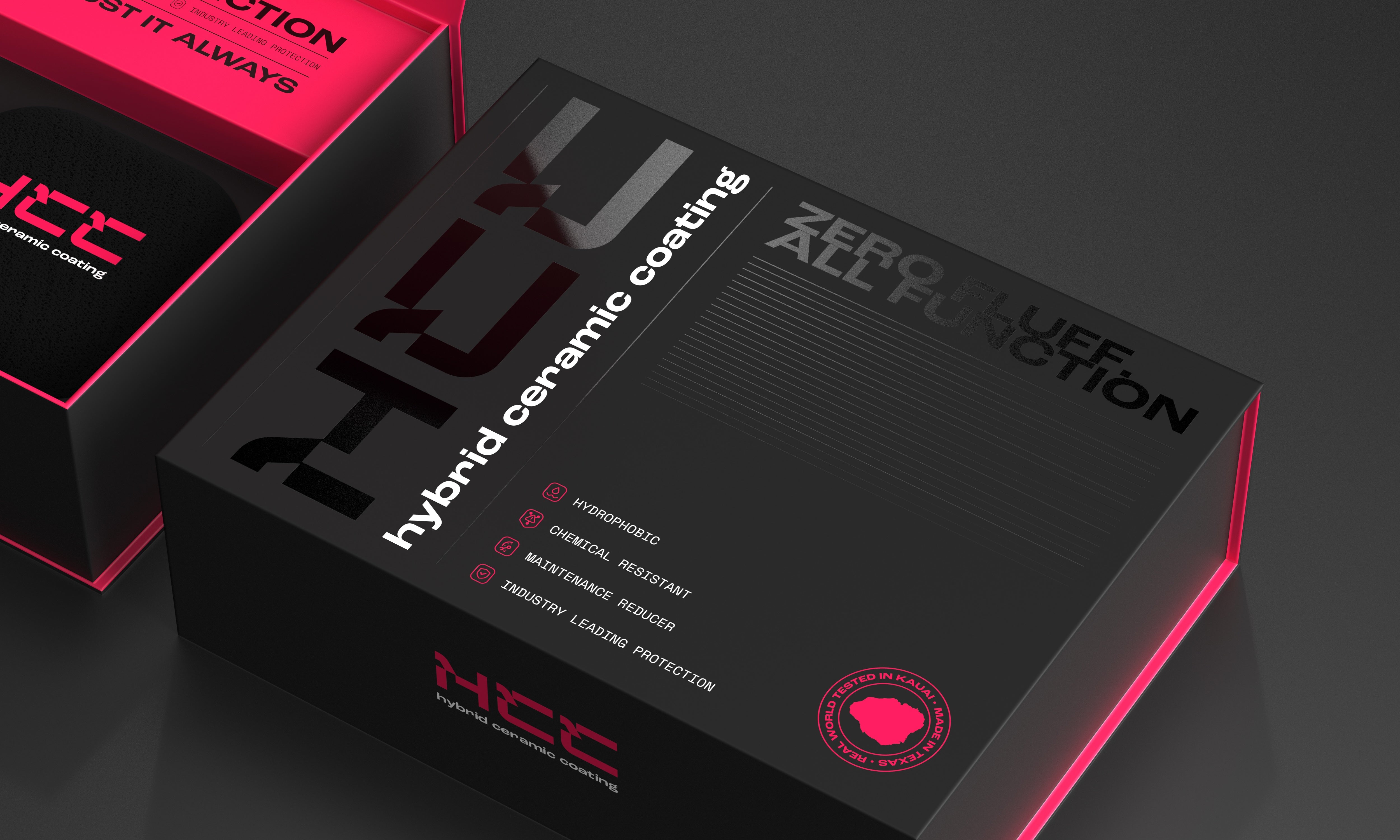
Undrdog's flagship HCC – Hybrid Ceramic Coating is engineered on the two variables that actually predict how a coating performs: resin quality and film build. The product page describes a high-solids, crosslinked hybrid resin matrix built for a durable cured film, chemical resistance, and a tunable flash/wipe window so it levels and cures instead of flashing in the sun. It criticizes exactly what this post is about — coatings whose "3-year" claims fail in 12 months because chemistry, prep, and cure got skipped.
We don't stamp a year on the bottle, and that's on purpose. A coating's real life depends on prep, environment, and how the surface is maintained. Framing it like engine mileage is more honest than any warranty print: some owners get many years on the same install; others burn through it faster because of climate, wash habits, or environment. The right coating gives you more of that runway; it doesn't sell you a fixed clock that ignores your driveway.
Undrdog also sells the same professional-grade coatings to detailers and DIYers. Undrdog Pro is a PTFE + silicon + paraffin professional coating with a 7–10 minute flash time; Pro Plus is the elite professional tier with double the chemical resistance of Pro (per the product page), a 24-hour dry, and a 5-day cure. No certification, class, or minimum order required. If you want a professional install, we support a network of Undrdog-trained pros; if you want to DIY, you get the same bottle.
Bottom line
Yes, graphene oxide can measurably change how a silica-based coating behaves in the lab. On your paint, that change is dwarfed by resin quality, film build, prep, and cure. Buy a coating whose chemistry, coverage, cure schedule, and warranty math are stated in plain English — and whose maker is honest about the variables it can't control. That's a better filter than any word on the bottle.
Try HCC — a coating built on chemistry and film build, not buzzwords
HCC is our high-solids hybrid ceramic engineered for a durable cured film, chemical resistance, and a tunable flash window so it levels instead of streaking. Same bottle for DIYers and pros. Multi-year protection when it's applied right and maintained right — no year-count fine print required.
Frequently asked questions
Is graphene coating actually stronger than ceramic on a car?
In real-world use on paint, no — not because of the "graphene" label. A consumer graphene coating is a silica-based ceramic with a small amount of graphene oxide added. Cured film performance is driven by resin cross-link density, film build, prep, and cure — not by whether GO is in the mix at low weight percent. A well-formulated pure ceramic can outperform a poorly formulated graphene ceramic, and vice versa.
Does graphene really give better water-spot resistance?
The claim is that graphene's high thermal conductivity spreads heat and reduces mineral deposition. Pristine graphene does have extraordinary thermal conductivity (around 5,300 W/m·K in single-crystal graphene), but that assumes a continuous defect-free lattice. Low-weight-percent graphene oxide in a silica film is a small thermal-transport tweak at best. Water spots are a mineral-in-water problem — solved primarily by wash chemistry, rinse water quality, and drying, not by which coating you chose.
What is 9H hardness on a coating?
9H is the top rating of the pencil-hardness test, standardized as ASTM D3363. It measures the hardest drafting pencil that will not scratch a cured coating under specified angle and load. It is not the Mohs mineral scale, and it does not predict rock-chip or wash-swirl resistance. Both quality ceramic and quality graphene ceramic coatings usually rate 9H on this method.
Is "graphene infused" a real chemistry difference or marketing?
Both. Functionalized graphene oxide can be added to a silica resin at low weight percent and, if properly dispersed, measurably change film behavior (dispersion, pore structure, thermal transport). It is a real ingredient — but the effect on real paint depends entirely on formulation. Without stated loading, dispersion, and film-build data, "graphene infused" alone is marketing.
Do I need a "graphene coating" for a boat or hot-climate car?
No. What a boat or hot-climate car actually needs is a coating with high chemical resistance, a real film build, a cure schedule you can meet, and a rational maintenance plan. Salt, UV, and hot panels degrade any coating faster if prep and maintenance are skipped. A properly applied silica-based ceramic on well-corrected paint or gel coat holds up in these environments.
How long should a good coating actually last?
Multi-year, given proper prep, application in-spec, and pH-neutral maintenance. There is no honest single "X years" number because the answer depends on your climate, wash habits, panel exposure, and whether the film was cured properly in the first place. That's why we don't stamp a fixed year on the bottle. See our full breakdown in how long does ceramic coating really last.
Is graphene the same as graphene oxide?
No. Pristine graphene is a single-atom-thick sheet of pure carbon with a defect-free hexagonal lattice — the material with a measured intrinsic tensile strength of ~130 GPa and Young's modulus around 1 TPa (Nature Nanotechnology). Graphene oxide is that lattice functionalized with oxygen groups (hydroxyl, carboxyl, epoxide) so it's dispersible in solvents. GO's mechanical properties are lower than pristine graphene's — and consumer coatings use GO, not defect-free graphene.
Does a graphene coating cost more? Is it worth it?
Often yes on price, usually because it's marketed as premium. Whether it's worth it depends on whether the bottle actually delivers a better cured film than a similarly priced pure ceramic — which is a formulation question, not a "graphene" question. Compare resin description, coverage per bottle, cure schedule, and independent test data. If those are equivalent, the "graphene" label is a marketing decision.
Can I apply a graphene coating over an existing ceramic?
Generally no. Any coating bonds best to properly prepped bare clear coat or gel coat. Layering a new coating over a cured coating of a different chemistry usually produces a weak, uneven film. Strip the old coating (or wait for it to age off), correct the paint, and apply the new coating fresh.
Bottom line — should I buy graphene ceramic or plain ceramic?
Neither label is the right filter. Buy based on resin chemistry, film build, cure schedule, warranty math, and whether the maker is honest about what durability depends on. A good ceramic with those things beats a mediocre graphene ceramic. And a good graphene ceramic beats a mediocre plain ceramic. The word on the bottle isn't what decides.

Leave a comment
This site is protected by hCaptcha and the hCaptcha Privacy Policy and Terms of Service apply.