


Short answer: the biggest difference between a $40 spray at the parts store and a $1,500 pro install isn't a "trade secret" the industry hides from you — it's mostly SiO₂ concentration, cure conditions, and how many hours of prep sit behind the coating. Real chemistry gaps exist. So do real skill gaps. But a large chunk of what gets sold as "professional grade" is a marketing category, not a chemistry category, and the middle of the market — high-solids single-part coatings you can actually buy — has closed a lot of that gap. This is the honest map of what's real, what's oversold, and how to decide whether to pay a shop or do it yourself.
Where the Industry Line Is Drawn
Walk into a detailing forum and you'll get a clean, tidy version of the story: consumer "ceramic sprays" are marketing, "professional coatings" are real chemistry, and only a certified installer can apply the good stuff. The reality is more layered. There are three product tiers on the market, and the marketing labels do not always match the chemistry.
- Consumer sprays and toppers — mostly polymer/SiO₂ blends in the low single digits to ~10% active SiO₂. Real hydrophobicity, real UV improvement, but a coating measured in months, not years.
- Prosumer / high-solids DIY coatings — the middle tier. Genuine SiO₂ polysiloxane chemistry in the 40–70% range that cures into a real cross-linked film, sold without a shop-only wall. Undrdog HCC sits in this tier.
- Installer-restricted "pro" coatings — 70–95% SiO₂ formulations, moisture-cured, often paired with warranties that require a certified installer to sign off. The chemistry is genuinely denser and thicker; the price and access model is largely a business choice.
According to a technical explainer on ceramic coating composition, automotive coatings are "primarily made of silicon dioxide (SiO₂) nanoparticles suspended in an alcohol-based solvent," and the split between tiers really does come down to concentration: "professional-grade products contain 80 to 95% pure SiO₂, while consumer versions sold at auto parts stores typically contain 20 to 40%." That's a real gap. It's also a spectrum, not a wall — and the middle tier lives inside that spectrum.
What "Professional Grade" Usually Buys You (Chemically)
Higher active-solids concentration
The main chemical differentiator in a shop-restricted coating is how much of the bottle is actually reactive silicon chemistry versus how much is solvent carrier and flow additive. A higher-solids coating typically deposits a thicker cross-linked film per layer, and thickness (measured in microns, or fractions of a micron) is one of the few coating properties that actually correlates with the length of the visible protection window on paint that isn't washed or corrected badly.
Denser cross-link networks
Ceramic coatings cure through a sol–gel process in which polysiloxane precursors react with atmospheric moisture and adjacent molecules to form Si–O–Si networks. Higher-solids formulas contain more reactive sites per applied volume, so the cured film is denser and typically harder — and the practical result is more resistance to solvents, road grime, and light chemical staining. This is real. It also has diminishing returns.
Formulations that assume a controlled environment
Installer-restricted coatings often assume a temperature- and humidity-controlled bay: 65–80°F, moderate humidity, dust-controlled space, dedicated lighting, no direct sun on the panel. That environment is part of why the "pro" version cures the way the datasheet says. A high-solids coating flashed in the wrong conditions doesn't magically become a bad chemistry — it just has an application window measured in minutes, and a mistake in that window is a lot easier to see on cured paint than a mistake with a forgiving prosumer coating.

What "Professional Grade" Actually Sells You (Beyond Chemistry)
Chemistry is only part of what you're paying for at a pro shop. The rest is labor and access.
Prep is the real product
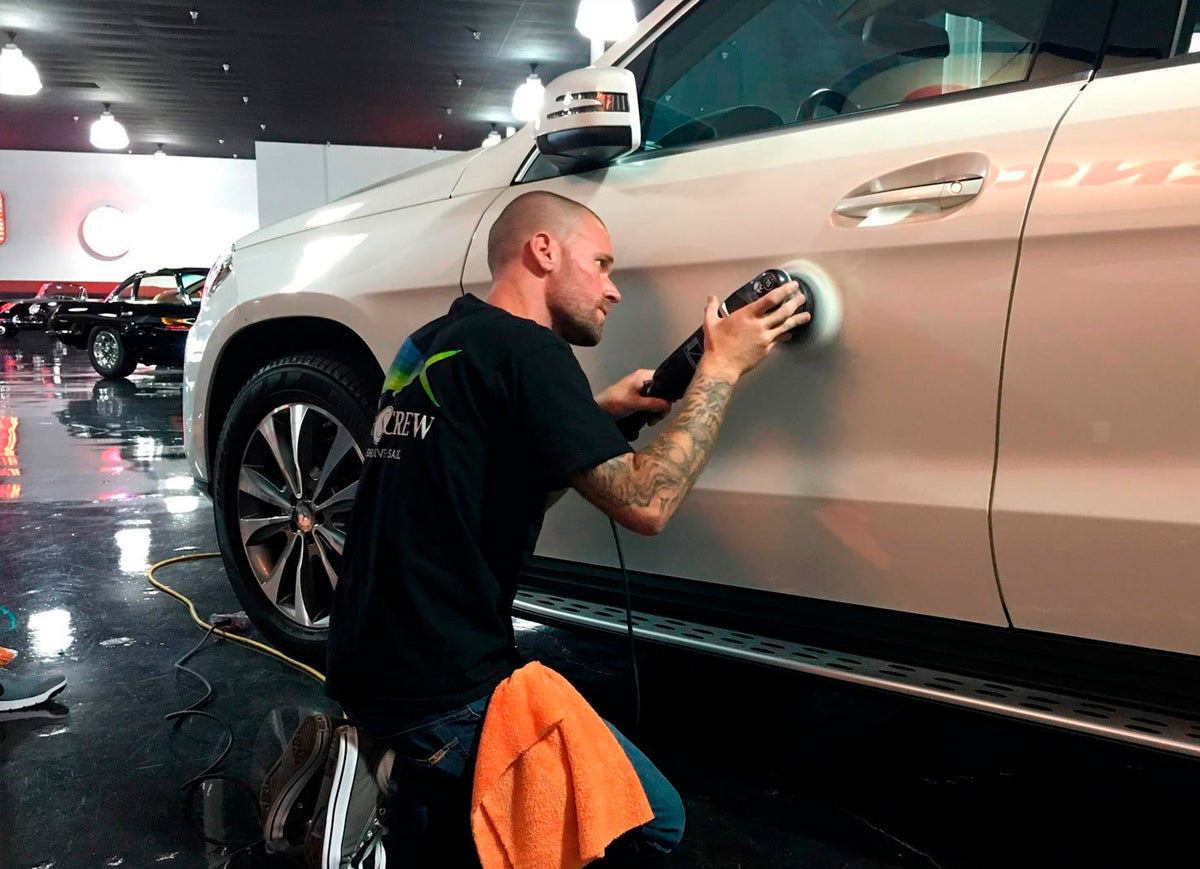
Ask any working detailer where a coating install actually earns its price and the answer is universal: it's the paint correction, the decontamination, and the panel-wipe steps before the coating ever touches the surface. A high-end shop books eight to sixteen hours of prep on a used car — iron decontamination, clay bar or nano-clay mitt, tape-off, single-stage or two-stage machine polish, IPA panel-wipe, and only then coating application. That's where the visible depth in "the coating shots" comes from. The coating itself flashes and levels in minutes.
Studies of coating adhesion in industrial contexts back this up. The ASTM D3359 cross-cut adhesion test — a standard adhesion test used across the coatings industry — measures how well a coating stays bonded to its substrate, and the strongest predictor of poor performance in the test is contaminated or improperly prepared surfaces. The chemistry can be world-class; if the surface is dirty or oily, the film fails.
Certified installer training is real but narrower than the branding suggests
Reputable installer certifications train real skills: paint depth measurement, machine polishing without burning through clear, understanding cure conditions, application technique, safety around solvents. Those skills matter and they are not trivial. What they are not is a chemistry secret. The training is a repeatable procedure: prep, application, inspection, curing. A patient, careful DIYer working with a forgiving high-solids coating can execute the same procedure — with more time and more mistakes early on.
Warranty and repeat customer economics
A significant part of "installer only" is also a distribution business model. Restricting sales to trained shops protects the brand's reputation from bad DIY installs and creates a repeat-customer service revenue stream (annual inspections, maintenance washes, coating boosters). That's a legitimate business choice. But it isn't chemistry, and the Magnuson–Moss Warranty Act, along with FTC guidance on written warranties, makes clear that manufacturer warranties often carry maintenance requirements — annual inspections, approved products, prescribed wash routines — that many consumers never actually read.
Where the DIY Story Bends
The gap is real, but the middle tier is real too
The most misleading version of the DIY-vs-pro debate compares a $19 spray "ceramic wax" to a $1,500 install. That's not comparing coatings — it's comparing categories. A high-solids single-part coating in the middle tier is a fundamentally different product from a spray topper and lives in the same chemical family as an installer-restricted coating. The gap between a good middle-tier coating and an installer-restricted 90% coating is smaller, measured honestly, than the gap between a topper spray and either of them.
Skill compresses the gap further
Two DIYers with the same bottle will get two different outcomes. So will two shops. Prep discipline — the difference between "washed the car this morning" and "clay bar, machine polish, IPA-wipe, tack-cloth" — is worth more, in visible finish and longevity, than moving one tier up in coating chemistry.
Warranty length is a business number, not a physics number
A "10-year professional coating" and a "2-year DIY coating" do not tell you the coating lasts 5× longer. What they tell you is the manufacturer's willingness to underwrite a claim, which depends on installer control, inspection cadence, and the fine print of what "still working" means. See our companion piece on what ceramic coating warranties actually require of you for what those numbers really cover.
What the Bottle Doesn't Tell You

Here's the honest comparison at the level a bottle can never resolve on its own.
| Factor | Consumer spray | High-solids DIY (middle tier) | Installer-restricted |
|---|---|---|---|
| Active SiO₂ / solids | ~5–15% | 40–70% | 70–95% |
| Cure mechanism | Mostly flash/wipe-on-wipe-off polymer | Moisture-cured sol–gel | Moisture-cured sol–gel, tighter window |
| Realistic protection window | Weeks to a season | Multi-year with proper prep and maintenance | Multi-year — but heavily dependent on prep and maintenance regardless of the year number on the bottle |
| Application window | Forgiving | Moderate — needs section-by-section discipline | Tight — trained hands, controlled environment |
| Cost (product only) | $15–$40 | $60–$180 | Bundled into $800–$2,500+ install |
| Prep required for advertised result | Wash + decon | Wash, iron decon, clay, single-stage polish, IPA-wipe | Full paint correction, IPA-wipe, dust-controlled room |
| Warranty gate | Usually none | Manufacturer-limited | Yes — with maintenance and inspection conditions |
When Paying a Pro Is Genuinely the Right Call
- A brand-new or repainted car you want to keep 5+ years. The multi-day, dust-controlled install and the top-tier chemistry are worth more on a fresh, factory-flat clear.
- You want the paperwork. Warranty-backed installs and third-party paperwork have value at resale, especially on higher-end vehicles.
- You don't have the space, time, or tools. Machine polishing, a controlled environment, and 12–24 hours of undisturbed cure time are not free. Time you don't have has a real cost.
- You've never done paint correction and the car has meaningful defects. Learning to correct paint on a car you love is a legitimate reason to hand off the first install.
When DIY Genuinely Makes Sense
- Daily drivers, used cars, and second cars. The delta between a well-executed middle-tier coating and an installer-restricted coating is small on paint that isn't showroom-flat to begin with.
- Boats, motorcycles, RVs, bicycles, and aviation surfaces. Many of these have limited "pro coating" market coverage. A high-solids all-surface coating you can apply yourself is often the only realistic option.
- You're patient and willing to prep properly. DIY success is 80% prep. If you're going to do wash-clay-polish-wipe-coat, your finish will look like a pro's finish.
- You want the option to top up on your schedule. A middle-tier coating you can layer or refresh whenever your paint tells you it's time — not when a warranty inspection is due — gives you a live, active hydrophobic surface for a fraction of the cost of a warranty-gated install.
How Undrdog Does It
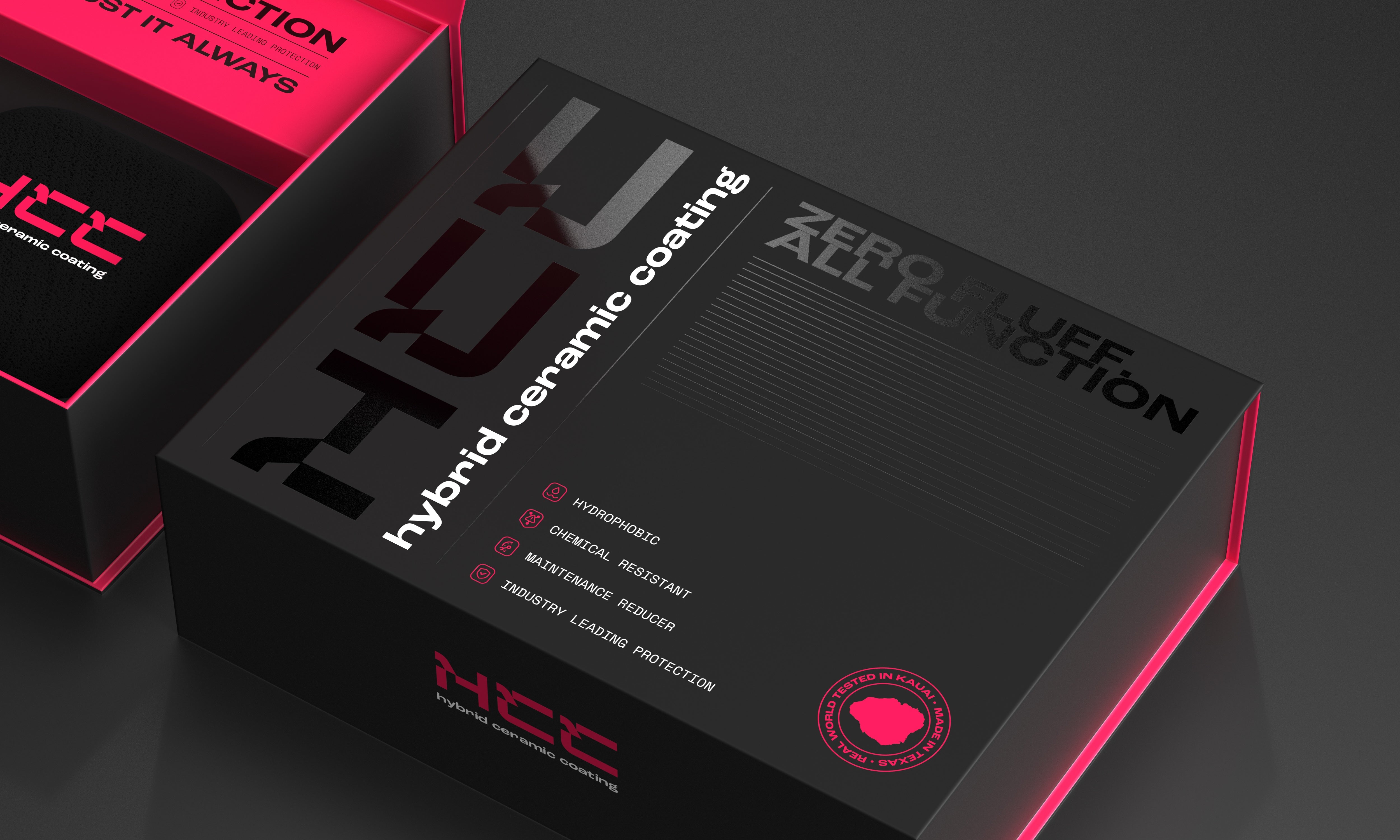
Undrdog builds real high-solids single-part coatings and sells them direct — no installer wall, no annual inspection to keep the coating "valid." The flagship, HCC Hybrid Ceramic Coating, is a moisture-cured sol–gel formula meant to work on painted panels, chrome, glass, plastic trim, gel coat, aluminum, and even bike frames — a genuine middle-tier chemistry with a wide-application forgiving window, applied with an applicator block and suede pad.
We treat coating durability the way a mechanic treats engine life: it's a function of how you use and maintain the car, not a single number on a bottle. We won't stamp a year on a coating and hope you never wash it in dish soap. If you want a specific pro-oriented option, our Undrdog Pro and Pro Plus coatings are higher-solids formulas built for detailers and disciplined DIYers who can commit to a full prep cycle.
Our position: chemistry should be honest, application should be teachable, and the market should be open enough that a patient owner with a decent DA polisher can get 80% of the pro result at a fraction of the cost. The other 20% is prep, patience, and cure conditions — no bottle solves those for you.
Ready to actually try it?
HCC is our all-surface flagship — the same chemistry we run on cars, boats, planes, and bikes. Buy it direct, get the honest instructions, and skip the certification wall.
FAQ
Is a "professional" ceramic coating fundamentally different chemistry from what I can buy?
Sometimes, and sometimes not. Installer-restricted coatings tend to run higher active-solids (often 70–95% SiO₂), while consumer sprays are much lower. But the middle of the market — high-solids single-part coatings you can buy — sits chemically closer to a pro-only coating than most marketing admits.
Will a DIY coating actually protect my paint?
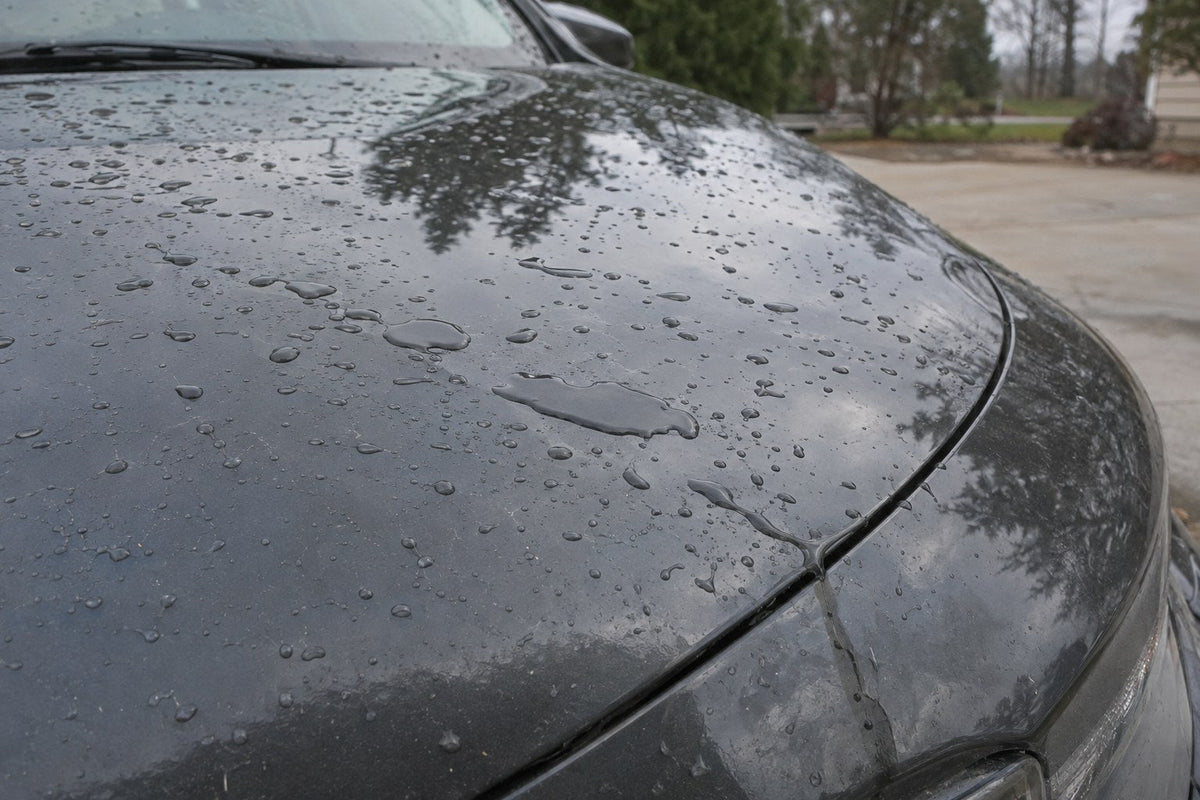
Yes, if it's a real coating (not a "ceramic-infused wax" spray) and you prep the paint properly. A middle-tier moisture-cured coating on decontaminated, corrected paint will give you real hydrophobic behavior, UV resistance, and easier washing for years — how many depends on prep quality, environment, and how you maintain it, not on a number on the bottle.
Why does the pro install cost so much if the chemistry gap is smaller than the marketing implies?
Because you're mostly buying labor and access to controlled conditions. A high-end shop is spending 8–16 hours on prep before the coating goes on. That labor time — plus real overhead on climate-controlled shop space and trained installers — is where the invoice comes from, not primarily the bottle.
Do I need paint correction before applying a ceramic coating myself?
Any swirl, scratch, or oxidation you don't correct gets locked in under the coating for the life of that coating. If your paint is already close to perfect, a light IPA panel-wipe after washing and clay-barring is enough. If it's not, at least a single-stage machine polish before coating is worth the time.
Can I get warranty-backed coverage on a DIY install?
Usually no. Warranty-backed programs are the primary business reason installer-only coatings exist — the manufacturer needs a trained, inspectable installer to underwrite the claim. That doesn't make the DIY coating worse chemistry; it just means the paperwork won't follow you if a claim ever comes up.
What's the single biggest DIY mistake?
Skipping decontamination and IPA-wipe. Coating chemistry bonds to paint, not to embedded iron particles, wax residue, or polish oils. If those are on the panel when you apply, the film doesn't fully bond and the coating quietly underperforms for its whole life.
Is a "9H" hardness rating meaningful?
Only in a very narrow sense — see our breakdown on what "hybrid ceramic" and hardness ratings actually mean. A pencil-hardness rating is not a real-world scratch rating and it doesn't tell you anything about longevity.
How do I tell my coating is still working?
Water behavior — not just tight beading. See our test kit for reading coating performance in how to tell if your ceramic coating is still working.
Is the total cost of DIY over 5 years actually cheaper than a pro install?
Usually, yes. See the full breakdown in what ceramic coating actually costs. Once you factor in tools you already own (or use once and reuse), the coating itself is a small fraction of the pro install price.


Leave a comment
This site is protected by hCaptcha and the hCaptcha Privacy Policy and Terms of Service apply.