

Technically yes, you can use car polish on a boat — but in most cases you shouldn't. Car polish is formulated for automotive clear coat, which is a thin, relatively soft layer over paint. Boat gelcoat is a much thicker, harder, porous polyester-resin surface that faces intense UV, saltwater immersion, and heavier oxidation than a car ever sees. Car polish is usually too mild to cut through gelcoat oxidation and lacks the marine-specific UV inhibitors, salt-tolerant polymers, and water-repellent additives that keep the shine after the first splash.
This guide breaks down the real differences between car polish and boat polish, what happens when you use the wrong product, when a car polish can actually work in a pinch, how to pick the right marine polish for your gelcoat's condition, and the correct step-by-step process for polishing a boat so the shine actually holds through the season.
Why Car Polish and Boat Polish Aren't the Same
Both car polish and boat polish contain fine abrasives suspended in a carrier fluid, and both remove a microscopic layer of the surface to reveal fresh material underneath. That's where the similarity ends. According to Boat Repair Miami's marine polish analysis, the two products are engineered for fundamentally different surfaces and different threats.
Car Polish Is Built for Clear Coat
Automotive clear coat is 40–60 microns thick — a thin, flexible protective layer over the base color coat. It develops swirl marks, light scratches, and minor water spots. Car polish is formulated to:
- Use fine, mild abrasives that safely remove micro-scratches without cutting too deep into the thin clear coat
- Include gloss-enhancing polymers and silicones that fill imperfections and boost reflection
- Work best on smooth, non-porous surfaces
- Provide short-term protection against light rain, road grime, and everyday UV — not saltwater or constant sun exposure
Boat Polish Is Built for Gelcoat
Gelcoat is a completely different animal — a 20–30 mil (500–750 micron) thick layer of polyester or vinyl-ester resin that forms the outer surface of a fiberglass boat. It's much harder than clear coat but also porous, and it oxidizes rapidly under UV and saltwater exposure. Marine polish is engineered to:
- Contain stronger, coarser abrasives that actually cut through the chalky oxidation layer that develops on gelcoat
- Include heavy-duty UV inhibitors formulated for the intensity of sun exposure on open water (which reflects up to 100% of UV back at the boat)
- Use water-repellent compounds that resist saltwater penetration and mineral staining
- Bond compatibly with gelcoat porosity so protection actually adheres and lasts
- Sometimes include anti-fouling properties that discourage algae, barnacles, and slime

Car Polish vs Boat Polish: Full Comparison Table
| Factor | Car Polish | Boat Polish |
|---|---|---|
| Designed for | Automotive clear coat | Fiberglass gelcoat, painted marine surfaces |
| Surface thickness targeted | 40–60 micron clear coat | 500–750 micron gelcoat |
| Abrasive strength | Fine to very fine | Medium to coarse (finishing polishes are fine) |
| UV protection | Basic road-condition UV inhibitors | Heavy marine UV inhibitors for water reflection |
| Saltwater resistance | Minimal — designed for road exposure | Formulated for constant saltwater contact |
| Works on heavy oxidation? | No — too mild for chalky gelcoat | Yes — designed to cut oxidation |
| Duration on car paint | 2–6 months | Not designed for automotive paint |
| Duration on gelcoat | Weeks at best | 3–6 months typical |
| Anti-fouling | No | Some products include mild anti-fouling |
| Best use | Cars, trucks, motorcycles with clear coat | Boats, PWCs, kayaks, RVs with gelcoat |
What Actually Happens When You Use Car Polish on a Boat
People try this every season. The results fall into three predictable patterns depending on the condition of the gelcoat.
On Lightly Dulled Gelcoat
If the gelcoat is only slightly hazy — maybe from one season of storage or mild sun exposure — car polish can bring back some shine. The fine abrasives will smooth the surface enough to restore gloss temporarily. But according to Boat Juice's polish guide, using car polish here is "like trying to sand a rough 2x4 with super-fine finishing sandpaper" — you'll work yourself to death and barely make a dent on anything past light dulling. And the finish won't hold. Without marine UV inhibitors, the same oxidation returns within weeks.
On Moderately Oxidized Gelcoat
This is where car polish really fails. Moderate oxidation is the chalky white haze that develops after 1–3 seasons of UV and saltwater exposure. Car polish abrasives are too fine to cut through it. You'll polish for hours and still see the haze. The temporary gloss you get comes from the silicone fillers in the polish covering the oxidation, not removing it — and that gloss disappears the first time the boat gets rained on or splashed with saltwater.
On Heavily Oxidized Chalky Gelcoat
Chalky gelcoat needs a marine rubbing compound followed by a marine polish — not automotive products. Car polish will do essentially nothing here. You'll waste product, waste hours of work, and the boat will look the same as before you started.

When Car Polish Actually Works on a Boat
Full honesty: there are a few situations where reaching for car polish on a boat isn't the wrong call.
- Finishing polish stage on lightly weathered painted surfaces. If your boat has painted topsides (not gelcoat) and needs only a very fine finishing polish to remove faint swirls, a quality automotive finishing polish can work — the painted surface behaves more like automotive clear coat.
- Emergency dockside touch-up. You need to bring back a bit of shine before a showing or event, and marine polish isn't available. Car polish will give you 2–3 weeks of cosmetic improvement before oxidation returns.
- Very new boats with minimal oxidation. A boat under a year old, garage-stored, with barely any UV exposure can respond fine to a fine automotive polish. Still not ideal, but workable.
- Above the waterline, painted trailer components. Painted trailer fenders and non-hull surfaces behave more like automotive paint.
For anything else — actual gelcoat restoration or ongoing marine maintenance — the marine product wins every time.
How to Pick the Right Marine Polish for Your Gelcoat
Marine polishing isn't one product for every situation. Match the polish aggressiveness to the gelcoat's current condition.
Light Dulling (Gloss is Slightly Reduced)
Use a fine marine polish or cleaner wax. The gelcoat still has some shine — you're just refreshing it. Light polishing pad, DA polisher on medium speed.
Moderate Oxidation (Visible Haze, Color Slightly Faded)
Start with a light-to-medium marine polishing compound. This has enough abrasive strength to remove the oxidation layer. Follow with a fine marine polish to remove any compound haze and restore full gloss. Foam cutting pad, DA polisher on medium-high speed.
Heavy Oxidation (Chalky White Powder, Deep Color Loss)
Multi-step correction. Start with a rubbing compound — the most aggressive marine correction product available. It cuts through the chalky oxidation layer down to fresh gelcoat. Follow with a medium polish to remove compound scratches. Finish with a fine polish for gloss. Wool or aggressive foam pad, then step down to progressively finer pads. According to Better Boat's marine wax guide, this is "a multi-step project" that needs the right sequence to avoid making the surface worse.
Critical Follow-Up Step: Protect What You Restored
Marine polish removes protection — it takes off the oxidized outer layer and leaves fresh, exposed gelcoat behind. Without a wax, sealant, or ceramic coating over that fresh surface, the oxidation cycle starts again within weeks. Every marine polish job needs a protection step.
Step-by-Step: How to Polish a Boat With Marine Polish
Step 1: Wash and Decontaminate
Start with a full boat wash using a pH-neutral, coating-safe marine soap. Undrdog Soap is coating-safe and effective on marine surfaces. Rinse thoroughly and dry completely — trapped moisture can cause water spots when you polish.
Step 2: Mask Sensitive Areas
Use high-quality painter's tape to mask off vinyl decals, non-skid deck areas, rubber trim, plastic windows, and any metal fittings. Marine polishing compounds are more aggressive than car polishes and will damage these surfaces fast if the pad catches them.
Step 3: Test a Small Area
Before polishing the whole boat, do a small test spot in an inconspicuous area. Confirm the polish aggressiveness is right for the oxidation level — too mild and nothing happens, too aggressive and you'll cut through the gelcoat.
Step 4: Work in 2x2 Foot Sections
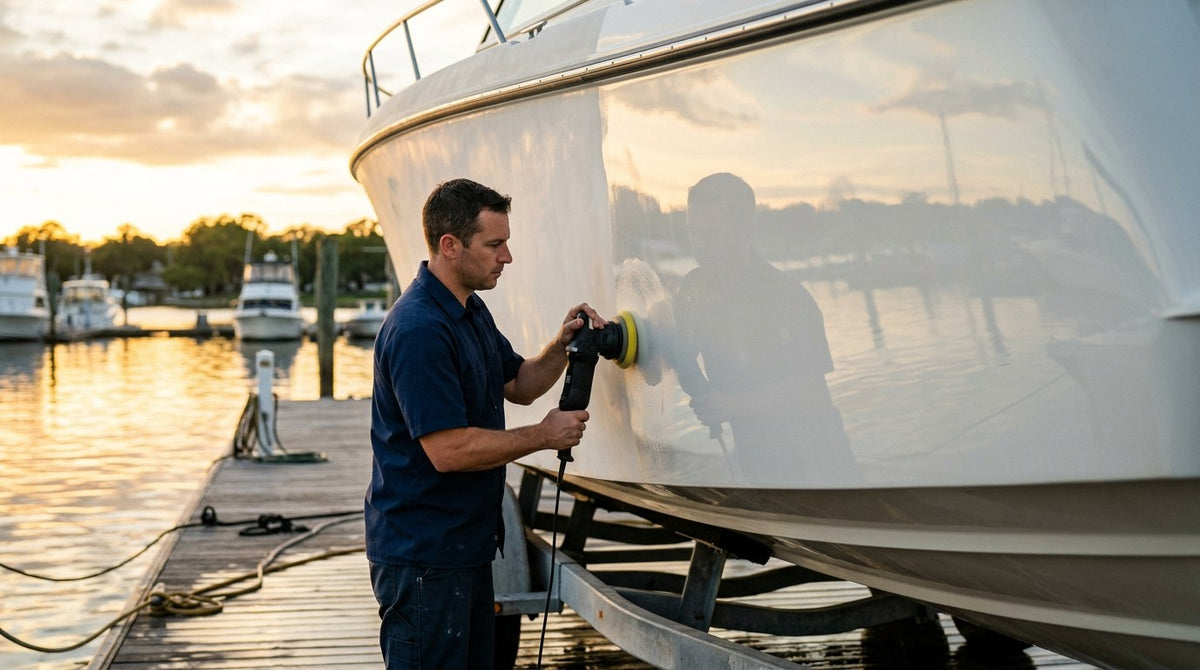
Divide the hull mentally into 2x2 foot sections. Squeeze 4–5 pea-sized drops of polish onto your pad. Dab the pad around the section with the polisher off, then run the polisher on medium speed (typically 3–4 on a DA polisher dial) in an overlapping crosshatch pattern — side-to-side passes first, then up-and-down passes over the same area.
Step 5: Check Progress
After 4–6 slow passes, wipe the residue off with a plush microfiber towel and inspect under angled light or a flashlight. If oxidation is gone and gloss is deep and even, move to the next section. If oxidation remains, do another pass — or step up to a more aggressive product if the polish clearly can't cut it.
Step 6: Complete the Hull
Work section by section around the entire hull. This is a slow process — expect 4–8 hours for a mid-size boat, longer for larger vessels or heavier oxidation.
Step 7: Apply Long-Term Protection
Once polishing is complete, the gelcoat is smooth and fresh but completely unprotected. Apply a marine ceramic coating, marine wax, or polymer sealant to lock in the shine. For a deep dive on marine coating options, see our boat wax vs ceramic coating vs polymer sealant comparison and how to polish a boat step-by-step guide.

Why Marine Protection Matters More Than Marine Polish
Here's the counterintuitive part: the polish is the easier decision. The protection layer over the polished gelcoat matters more for how long your work holds.
A boat polished and protected with a marine ceramic coating can hold gloss for 6–12 months. The same boat polished with the exact same marine polish but protected with a mismatched car wax will lose gloss within weeks under saltwater and UV exposure. Match your protection to the surface, and the polish work you did stays looking new.
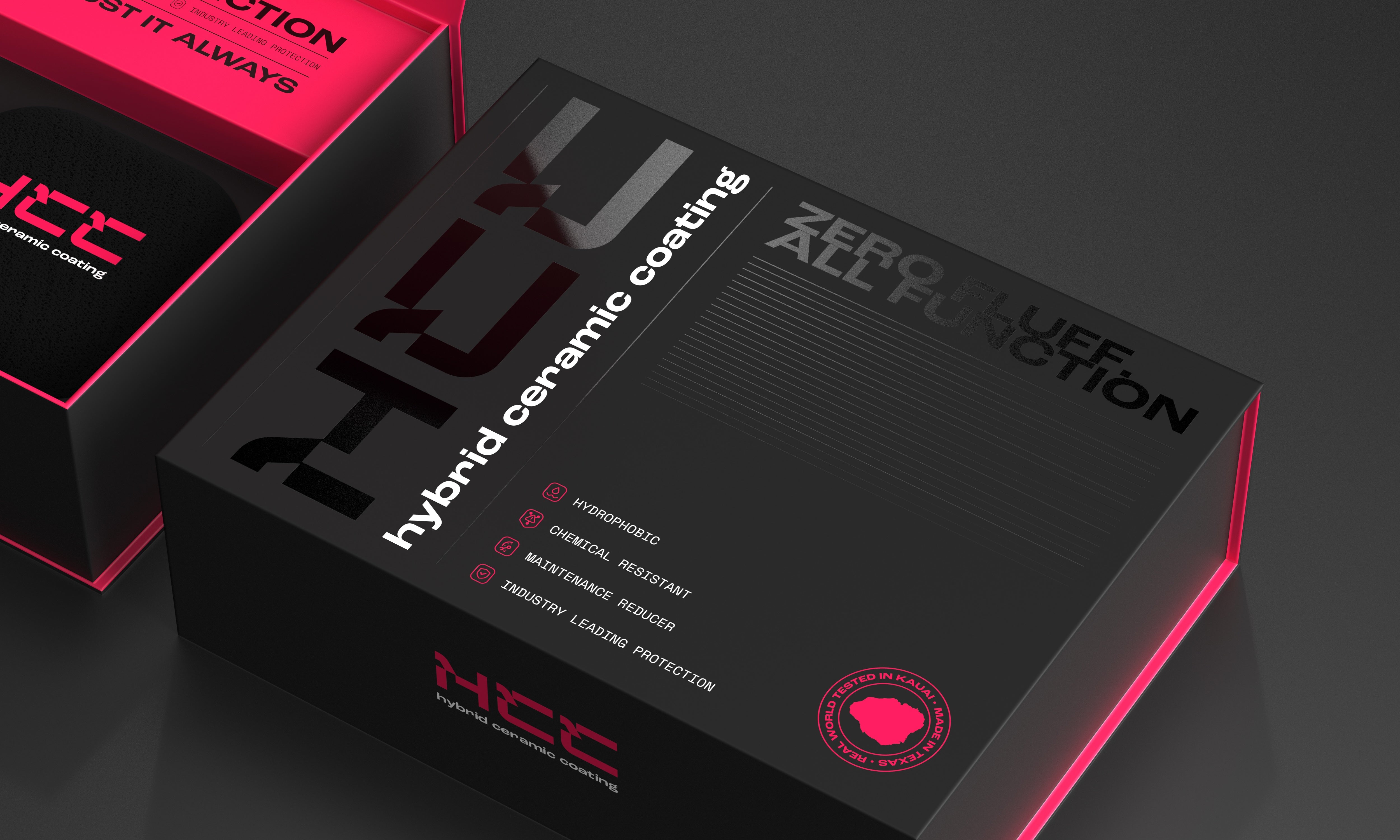
Undrdog Marine and Marine Plus are formulated specifically for gelcoat and painted marine surfaces — with the UV inhibitors, saltwater tolerance, and adhesion chemistry that automotive products don't include. For the flagship all-surface hybrid option that works on cars, boats, planes, and bicycles, HCC (Hybrid Ceramic Coating) is Undrdog's flagship coating and can be applied to gelcoat after proper polish and prep.
Protect the shine you just brought back.
HCC is Undrdog's flagship hybrid ceramic — designed to bond to gelcoat, paint, metal, and fiberglass. One-pass DIY application with the UV and saltwater tolerance a car polish simply doesn't provide.
Shop HCC →Car Polish on a Boat FAQ
Can I use car polish on a boat?
Technically yes, but usually you shouldn't. Car polish is too mild to remove gelcoat oxidation and lacks marine UV inhibitors and saltwater-tolerant chemistry. It might give a temporary gloss on lightly dulled gelcoat, but the shine won't hold once the boat sees water and sun.
Will car polish damage my boat's gelcoat?
Fine automotive polishes generally won't damage gelcoat because they're less aggressive than gelcoat can handle. Aggressive automotive compounds can cause damage if used incorrectly. The bigger risk is wasted time and product on a job that marine polish would finish in half the effort.
What's the difference between car polish and boat polish?
Car polish uses fine abrasives designed for thin automotive clear coat. Boat polish uses stronger abrasives designed for thick porous gelcoat that oxidizes faster. Boat polish also contains heavier UV inhibitors, saltwater-tolerant polymers, and sometimes anti-fouling additives that car polish doesn't include.
Can I use car wax on a boat after polishing?
You can, but it won't last. Car wax is formulated for clear coat and road conditions, not gelcoat and constant water exposure. It typically breaks down within weeks on a boat versus 3–6 months for a proper marine wax or ceramic coating.
Do I need to compound a boat before polishing?
Only if the gelcoat has moderate to heavy oxidation. Lightly dulled gelcoat can go straight to polish. Chalky, faded, or heavily oxidized gelcoat needs a marine rubbing compound first to cut through the oxidation layer, then polish to refine the surface.
How often should I polish my boat?
Full polish and protection once per season — spring or fall — is typical for boats stored properly. Boats in constant saltwater exposure or without garage storage may need polishing twice per season. If you can see chalkiness developing, it's time to polish.
Can I use a car polisher on a boat?
Yes. A standard dual-action polisher (DA) works fine on boat gelcoat. You may want more aggressive pads (wool or coarse foam cutting pads) and a longer extension cord than typical automotive work, but the tool itself is the same.
What happens if I don't wax or coat my boat after polishing?
Oxidation restarts within weeks. Polishing removes the damaged outer layer of gelcoat, leaving fresh, exposed material that UV and saltwater attack aggressively. Without a wax, sealant, or ceramic coating over that fresh surface, you'll be polishing again next month.
Is marine polish more expensive than car polish?
Similar price ranges. Quality marine polishes run $15–40 per bottle, similar to quality car polishes. The difference is in the formulation, not the cost. Skipping the right product to save a few dollars typically costs more in wasted time and repeat work.
Can I use HCC on a boat after marine polishing?
Yes. HCC (Hybrid Ceramic Coating) is Undrdog's flagship all-surface coating and works on gelcoat, painted marine surfaces, cars, planes, and bicycles. Apply to fresh, decontaminated, polished gelcoat following the manufacturer's application temperature and humidity guidelines for best bond and durability.


Leave a comment
This site is protected by hCaptcha and the hCaptcha Privacy Policy and Terms of Service apply.