
Clean marine vinyl seats with a pH-neutral marine vinyl cleaner and a soft brush, dwelling on seams and stitching where mildew starts. Never use household bleach, ammonia cleaners, dish soap, or magic erasers as your default — bleach damages stitching threads, alkaline residue causes permanent pink staining under UV, and abrasives scuff the vinyl's protective topcoat. After every cleaning, dry the vinyl completely, then apply a marine-grade UV protectant to slow the cracking, fading, and mildew regrowth that ends a seat's life.

Why Marine Vinyl Fails
Marine vinyl is a coated PVC fabric engineered for saltwater, UV, and constant wet-dry cycling — but it wears out. Three failure modes account for the vast majority of seat replacements: mildew infestation in the stitching and foam, pink staining under the surface, and UV-driven plasticizer loss that leads to cracking and fading.
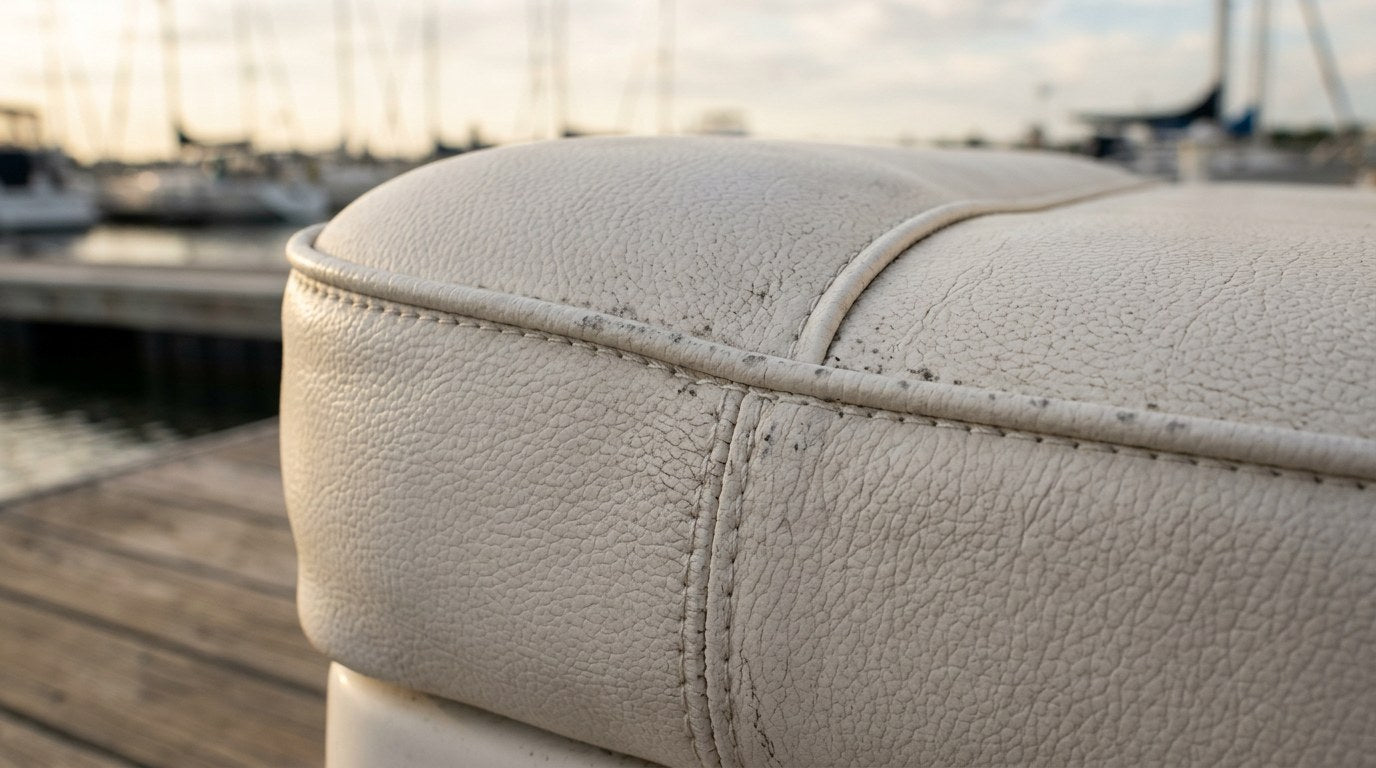
Mildew is the most visible problem. Fungal spores land on damp vinyl, feed on organic film left behind by sunscreen, sweat, body oils, and food residue, and multiply through the stitching threads and into the foam beneath. The black or gray spots you see on the vinyl surface are usually the tip — the real colony lives inside the cushion.
Pink staining is the sneakier problem. According to Aurora Marine's technical guidance, most household cleaners are highly alkaline, and if any residue is left behind (very common in seams), UV light drives a reaction with certain plasticizers and stabilizers in the vinyl that produces permanent pink discoloration. It comes from underneath the topcoat, not from the surface, which is why scrubbing harder makes it worse.
UV cracking is the slowest failure. Sun exposure gradually cooks off the vinyl's plasticizers — the soft, flexible components that keep it pliable. As plasticizers evaporate, the vinyl gets stiff and brittle, then hairline cracks appear, then those cracks open up and take on water, and the cushion is done.
The Rules That Save Your Seats
Rule 1: No Bleach as Your Default Cleaner
Household bleach kills mildew, but it also chemically attacks the polyester stitching threads that hold your seats together and can dry out the vinyl itself. Sea Ray's official vinyl maintenance guidance and Bennington Marine's cleaning instructions both call out bleach, ammonia, Windex, Simple Green, and other harsh cleaners as things to avoid because they strip the vinyl's protective coating and weaken threads.
When you inherit a boat with heavy set-in mildew, a diluted bleach step is sometimes the only chemical option. Follow the Sunbrella-published ratio — 1 cup bleach plus ¼ cup mild soap per gallon of water, no more than 5 minutes of dwell, rinse aggressively, and expect to redo the seat's stitching sooner. It's a rescue tool, not a maintenance one.
Rule 2: No Ammonia, No Dish Soap, No Windex
Mercury Marine's official care guide explicitly warns against dish soap, all-purpose sprays, and glass cleaners on marine vinyl. Ammonia degrades the vinyl's UV inhibitors. Dish soap is fine on paint but leaves alkaline residue in vinyl seams that feeds pink-stain chemistry. Household all-purpose sprays are often high-pH degreasers that break down the topcoat over time.
Rule 3: Rinse After Every Outing
The single most valuable habit for marine vinyl longevity is a fresh water rinse after every trip. Salt crystallizes on the vinyl surface and inside stitching threads as it dries, and those crystals scratch the vinyl every time you sit on the seat. Sunscreen, sweat, and food residue turn into fungal food if left overnight. A 30-second rinse with a garden hose and a soft microfiber wipe of anywhere you sat prevents 80% of the problems this guide addresses.
The Complete Marine Vinyl Cleaning Workflow

Step 1: Dry Debris Removal
Before any liquid touches the vinyl, remove loose debris with a soft-bristle brush or a vacuum with a brush attachment. Sand grains, salt crystals, and dried leaf fragments become abrasive when they get wet — brushing them off dry prevents them from grinding into the vinyl during the wash step. Pay attention to the crease between the seat and the piping, where debris hides.
Step 2: Pre-Rinse (Skip If Cushions Are Removable)
If your seats are permanently mounted, a light rinse with fresh water flushes surface dirt and dilutes any dried salt or sunscreen before you agitate anything. If cushions come off, remove them and work in the shade on a clean surface — you get better mechanical access to seams and can dry them properly in airflow afterward.
Step 3: Apply pH-Neutral Marine Vinyl Cleaner
Use a dedicated marine vinyl cleaner or a pH-neutral car soap diluted per the label. The point of a neutral cleaner is that it lifts organic film without leaving alkaline residue in the stitching. Undrdog Soap is a pH-neutral formulation that lubricates well on vinyl textures and rinses cleanly. Mix in a bucket or apply through a foam cannon at low pressure.
Spray or wipe the cleaner onto the vinyl and let it dwell 3–5 minutes so it can penetrate biofilm. Don't let it dry on the surface. On a hot day in direct sun, work in shade or in smaller sections so nothing flash-dries.
Step 4: Agitate Gently With a Soft Brush
Use a soft nylon brush or a dedicated marine vinyl brush — not a stiff scrub brush and not a green scouring pad. Work in small circular motions with light pressure. Focus on stitching, piping, and seams where mildew and dirt concentrate. On flat vinyl panels, a microfiber mitt is gentler than a brush.
Never grind hard with any tool. The vinyl's topcoat is the layer holding pigment and UV inhibitors — once you scuff through it, that section will fade, stain, and crack faster than the rest of the seat.
Step 5: Rinse Thoroughly
This is the step that prevents pink staining. Rinse until absolutely no cleaner residue remains in seams — you should not see any foam, film, or sheen when the water runs off. If you're seeing bubbles or streaks, rinse more. Alkaline residue trapped in stitching threads plus UV plus a few weeks of dwell time is the pink-stain recipe.
Step 6: Dry Completely
Mercury Marine emphasizes drying thoroughly — not just towel-dry, but towel-dry followed by airflow-dry. Trapped moisture at the seam-foam interface is the exact microhabitat mildew loves. Use a plush microfiber drying towel or a forced-air dryer, then open compartments to allow airflow. If cushions are removable, dry them off the boat in the shade with airflow.
Step 7: Apply UV Protectant
A clean, dry vinyl surface is the moment to lock in UV protection. Apply a marine-grade UV protectant with a soft microfiber cloth — not a sponge, which pushes product into pores unevenly. Work it into the vinyl in a thin, even layer, then buff off any excess with a second clean microfiber. The finish should be smooth and non-tacky, not glossy or slick — over-application leaves a greasy residue that attracts dirt.
According to multiple marine detailing sources, reapplication should happen monthly during active boating season, or after any deep cleaning. Skipping this step is the single most common reason seats fail before their expected 8–10 year lifespan.
Removing Set-In Mildew
Fresh, surface-only mildew comes off with the standard workflow above. Set-in mildew — the dark spots that have been sitting for a season or that have penetrated the stitching and foam — needs a targeted product and multiple passes.
The Marine Mildew Remover Approach
A dedicated marine mildew remover (Star Brite Mildew Stain Remover, 3M Marine Mildew Stain Remover, and similar products) is formulated to break down mildew stains without the collateral damage of household bleach. Spray directly on stains, let dwell 5–15 minutes depending on severity, agitate gently with a soft brush, and rinse. Expect two or three passes for anything set in longer than a season.
The EPA's mold cleanup guidance notes that porous materials that stay wet for extended periods may need to be replaced rather than cleaned — for marine vinyl this typically means if the foam underneath is heavily contaminated, you're looking at recovery rather than surface cleaning.
The DIY Vinegar Approach (Light Mildew)
For light mildew, a 1:1 white vinegar and water solution kills surface mold without the harshness of bleach. Spray on, dwell 15–20 minutes, agitate gently, and rinse. Follow with the standard cleaning workflow to remove any vinegar residue — trapped acid in seams isn't as damaging as trapped alkali, but you still want clean stitching before UV protectant goes on.
Pink Stain Treatment
Pink stains are a specific chemistry problem, not a surface stain, and they don't respond to normal cleaners. There are dedicated pink-stain treatments (Chic Marine and others) that use UV-activated chemistry to reverse the discoloration. Apply per label, expose to direct sun for the specified time, and repeat as needed. Some pink stains never fully clear — prevention (aggressive rinsing after every cleaner) is the only reliable fix.
What You Can and Can't Use on Marine Vinyl
| Product Type | Safe for Marine Vinyl? | Why |
|---|---|---|
| pH-neutral marine vinyl cleaner | Yes | Cleans without stripping topcoat or leaving alkaline residue |
| pH-neutral car soap | Yes | Safe and rinses cleanly with proper technique |
| Dedicated marine mildew remover | Yes, with rinse | Formulated for the material; still rinse thoroughly |
| 1:1 white vinegar and water | Yes, light duty only | Kills surface mildew without harsh chemistry |
| Household bleach (diluted, short dwell) | Rescue only | Damages stitching threads and dries out vinyl |
| Ammonia-based cleaners (Windex) | No | Degrades UV inhibitors in the topcoat |
| Dish soap | No | Alkaline residue in seams triggers pink staining |
| All-purpose degreasers (409, Simple Green) | No | Break down the vinyl topcoat over time |
| Magic Erasers | Spot use only | Melamine foam is abrasive — scuffs the topcoat |
| Alcohol wipes | Spot use only | Dries out the vinyl if used repeatedly |
| Pressure washer | No | Forces water into seams, blows out stitching, damages foam |
Preventing Mildew From Coming Back
Ventilation Is Everything
Mildew needs three things: warmth, moisture, and organic food. You can't do much about the first, but ventilation controls the second. Cover your boat, but use a breathable cover that lets moisture escape — never a solid tarp draped tight over seats. Prop up cushions when the boat is stored so airflow can reach the underside. If you can remove cushions and store them dry indoors during long layoffs, do it.
Dry Before Covering
Never put a cover on wet vinyl. Even towel-dry vinyl still has moisture in seams and under piping. If you're covering after a wash or a rain event, wait until the seats have had at least an hour of airflow-drying, ideally with the seats in sun and shade cycling. The most common way boat covers cause mildew is by trapping the initial moisture that was already there when the cover went on.
Set a Protectant Schedule
UV protectant every 30 days during active season. Mark it on your phone calendar. A skipped month during Hawaii summer or a Florida July puts your vinyl's clock forward months, not days. If your boat is uncovered on a lift or a mooring, halve that interval.
Salt Rinse After Every Saltwater Trip
Salt crystals abrade vinyl every time you sit down. A 30-second freshwater rinse after every saltwater outing prevents the cumulative wear that shows up as thin, dull vinyl on high-contact surfaces years later. This is the same discipline that saves your gelcoat and hardware — the seats need it just as much.
Coating vs Protectant: When to Step Up
Standard UV protectant sprays (303 Aerospace, Sea Fin, and marine-branded equivalents) work by depositing a thin sacrificial film that absorbs UV and washes off over weeks. That film is why monthly reapplication is standard.

For seats that live outside season after season without a cover, a longer-durability approach makes sense. Ceramic and hybrid coatings formulated for flexible substrates provide months of protection per application versus weeks. On the vinyl-flexible-substrate side, you want a product marketed for marine vinyl specifically — automotive paint coatings can crack when applied to flexible surfaces.
For hard marine surfaces around your seats — gelcoat, painted transom, stainless hardware, painted arches — Undrdog Marine is our dedicated marine coating and Undrdog Marine Plus steps up durability for boats that stay in slip year-round. For a single-bottle solution across gelcoat, painted metal, glass, and other hard boat surfaces (not vinyl), our flagship HCC Hybrid Ceramic Coating layers cleanly and cures fast.
End-of-Season Vinyl Care Checklist
If you're closing your boat for winter or extended storage, do a proper deep-clean before storage — not after. Mildew you leave for spring has all winter to burrow into foam and stitching. The end-of-season pass:
- Remove all removable cushions and inspect underneath for hidden moisture and mildew colonies
- Deep clean per the 7-step workflow above, being aggressive about seam access
- Dry fully — hours of airflow, not minutes
- Apply UV protectant to every vinyl surface, including the underside of cushions if they'll sit against fiberglass
- Store cushions off the boat if possible, in a climate-controlled space, propped on their edges for airflow
- If cushions must stay on the boat, use moisture-absorbing packets in enclosed compartments and check them monthly
- Use a breathable cover, never a solid tarp pulled tight
What to Do If Vinyl Is Already Damaged
Some damage is beyond cleaning. Cracked vinyl can sometimes be patched with vinyl repair kits for cosmetic recovery, but the crack will propagate along that seam eventually. Pink staining that survives multiple UV treatments is permanent — the pigment is embedded in the plasticizer layer. Foam that stays soft-wet and smells musty after thorough drying is contaminated at the interior and typically warrants recovery rather than continued cleaning.
Full seat recovery costs a fraction of new seats and gives you the chance to spec better vinyl. If you're recovering anyway, pay attention to the vinyl weight (ounces per square yard), the UV rating, and the antimicrobial treatment the fabric came with — the differences between OEM-grade and premium marine vinyl show up in year 3, not year 1.
Lock in ceramic protection on the hard surfaces around your vinyl.
A properly cured ceramic coating on your gelcoat, painted metal, and glass keeps salt, UV, and grime off the surfaces surrounding your seats — which means less runoff of that grime onto your vinyl and easier post-trip rinses. HCC Hybrid Ceramic Coating is our flagship all-surface ceramic for cars, boats, planes, and bicycles.
Shop HCC Hybrid Ceramic Coating →Frequently Asked Questions
How often should I clean my marine vinyl seats?
A quick freshwater rinse and microfiber wipe after every outing. A proper deep clean with pH-neutral cleaner at least twice a month during active season. UV protectant every 30 days. End-of-season deep clean plus protectant before storage.
Can I use a pressure washer on marine vinyl?
Not recommended. The high-pressure stream forces water into seams and behind piping where it takes days to dry, forces water past stitching threads and into foam, and can strip the topcoat if held too close. A garden hose at moderate pressure is all vinyl needs.
What causes pink stains on white marine vinyl?
Alkaline cleaning residue trapped in seams reacts with vinyl plasticizers under UV to produce permanent pink discoloration. The reaction happens underneath the topcoat, which is why surface scrubbing doesn't clear it. Prevention through aggressive rinsing after any cleaner is the reliable fix; some dedicated pink-stain treatments can partially reverse existing damage.
Is 303 Aerospace Protectant safe for marine vinyl?
Yes. 303 is a widely used marine and automotive UV protectant that many boat manufacturers explicitly recommend for their factory vinyl. It works by depositing a thin sacrificial UV-absorbing layer that needs monthly reapplication. Apply thin, buff off excess so the finish isn't slippery.
Can I ceramic coat marine vinyl?
Some ceramic coatings are formulated specifically for flexible substrates like vinyl and offer longer durability than standard UV protectant sprays. Standard automotive paint ceramic coatings are not appropriate — they cure hard and can crack on flexible surfaces. If you want a ceramic-grade solution for vinyl, use a product marketed for it specifically.
What's the best cleaner for removing sunscreen and body oil from vinyl?
A pH-neutral marine vinyl cleaner with a soft brush and 3–5 minute dwell will lift sunscreen and body oils cleanly. If oils have set in over multiple seasons, a second pass with the cleaner is usually enough. Avoid degreasers and ammonia-based cleaners — they lift oil but damage the topcoat.
Should I remove cushions to clean them?
Whenever practical, yes. Removing cushions gives you access to seams and to the underside where hidden moisture accumulates, lets you dry them properly in airflow, and prevents cleaning runoff from soaking into the boat's flooring or fiberglass. Bolted-in seats can be cleaned in place with more care about drying afterward.
How do I stop mildew from coming back after cleaning?
Control moisture and organic food. Rinse and wipe after every trip. Never cover wet vinyl. Use a breathable cover, not a solid tarp. Store cushions with airflow underneath. Apply UV protectant monthly — many marine-grade protectants include mildew inhibitors. Address any leaks or drainage issues that keep water pooling around seats.
Do I need special products for pontoon boat vinyl versus deck boat vinyl?
The vinyl chemistry is similar across most modern marine seats. The cleaning workflow is identical. Pontoons often see more direct overhead sun exposure without windshield shade, so protectant reapplication may need to be more frequent. The main difference is access — pontoon cushions are usually removable, which makes proper drying easier.
Can I use car interior cleaner on boat vinyl?
A pH-neutral automotive interior cleaner will work for the routine wipe-down. Avoid car-specific products marketed as "leather cleaners" (many contain conditioners meant for genuine leather that leave residue on vinyl) and anything marketed as a "leather protectant" that isn't UV-rated for marine use. Marine-specific products are formulated for saltwater and prolonged UV exposure.
Where This Fits in Your End-of-Season Marine Care
Marine vinyl is one part of the fall haul-out cycle. Our RV and boat fiberglass end-of-season restoration guide covers the parallel workflow for oxidized gelcoat and fiberglass. Our aluminum pontoon oxidation guide is the go-to for pontoon owners. And our marine finish comparison walks through when wax, sealant, or ceramic makes sense for the hard surfaces surrounding your vinyl.

Leave a comment
This site is protected by hCaptcha and the hCaptcha Privacy Policy and Terms of Service apply.