
A coating applicator and a microfiber leveling towel are not interchangeable. The applicator places and spreads the coating on the surface. The leveling towel follows as a separate step for working across the applied section. Using each tool for its intended role keeps application and leveling easier to distinguish and inspect.
The simplest organization is to keep the applicator in the application role and reserve clean microfiber towels for leveling. That distinction matters whether you are applying a coating yourself or setting up a professional detail. It also makes the process easier to follow because you know which tool was responsible for placing the product and which tool was reserved for the leveling step.
What the coating applicator is for
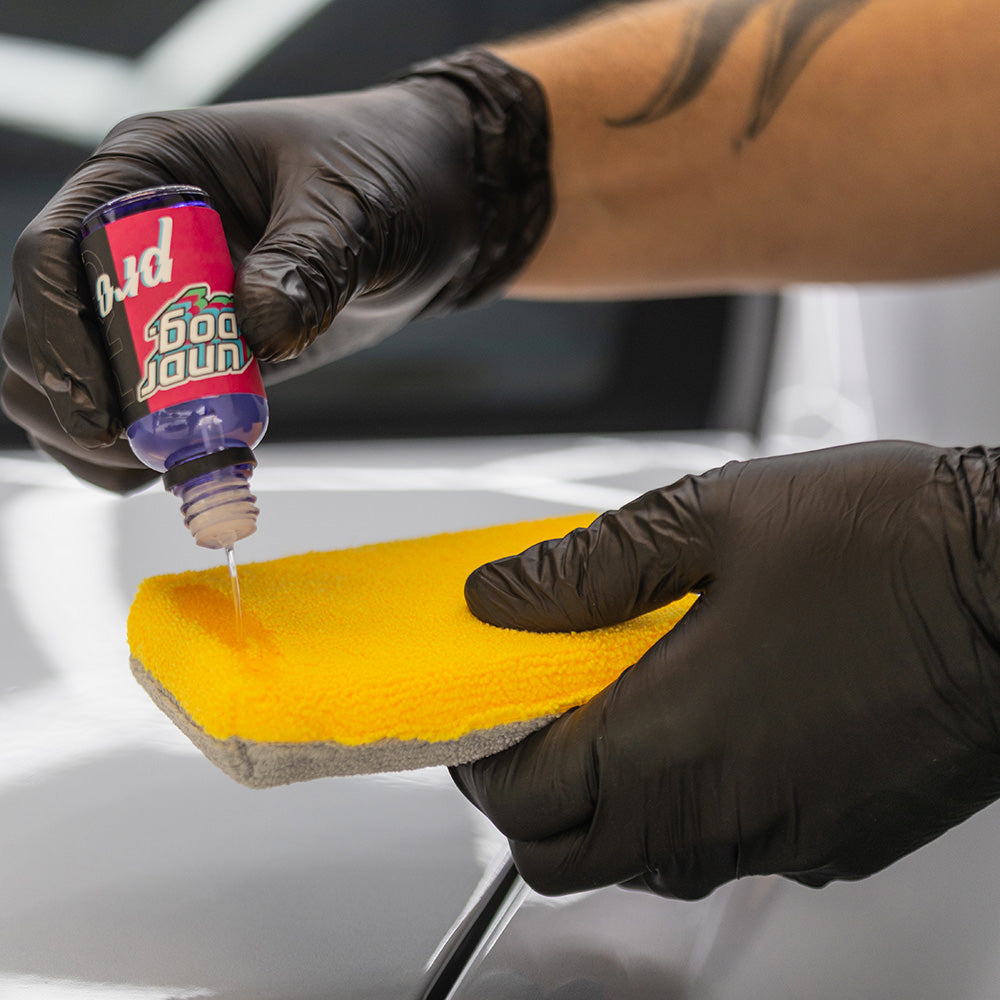
The Pad is Undrdog's microfiber applicator sponge used to apply coating. Its job is to help distribute the coating across the intended section in a deliberate, even manner. It is the tool you use when the product needs to move from the bottle or working area onto the prepared surface.
Think of the applicator as the placement tool, not the general cleanup tool. It should help you maintain a consistent working pattern and keep your attention on coverage. Once the coating has been spread, the applicator should not automatically become the tool used to handle every remaining trace of product. That is a separate task with a separate tool.
Before starting, decide how you will divide the surface into manageable sections. The exact section size depends on the product instructions, the surface and your working conditions. The important point is to avoid losing track of where product has been applied. A simple sequence can help: identify the section, spread the coating, level the section, inspect the result and decide whether to continue.
What a microfiber leveling towel is for
A microfiber leveling towel is used after the coating has been placed on the surface. The Pearl is a microfiber product specifically intended for coating leveling. Its role is distinct from the applicator role and should be treated as a separate step.
Keep the towel selected for leveling separate from towels assigned to unrelated work. Microfiber towels can be used for many detailing tasks, but the phrase “microfiber towel” alone does not identify the correct purpose for a coating project. A towel chosen for drying, general cleaning or another task should not automatically be treated as the leveling towel.
Assigning the towel to the leveling stage gives you a clear changeover point. The applicator is used while you are placing and spreading the coating. The leveling towel is used when you have finished that placement step and are working through the next part of the section-by-section process.

Applicator versus leveling towel at a glance
| Task | Primary tool | Decision to make | When to change tools |
|---|---|---|---|
| Place and spread coating | Coating applicator | Where the product goes and whether the section has been covered | After the intended section has been applied and it is time to level |
| Level the applied section | Microfiber leveling towel | Whether the section is even enough for your process to continue | After the section has been worked and inspected |
| Inspect your work | Clean viewing area and deliberate lighting | Whether to continue or give the current section more attention | When you have made a clear decision about the section |
This table describes a division of labor, not a rule that one tool replaces every other detailing tool. Its purpose is to prevent a common organizational mistake: applying with one tool and then continuing to use that same tool simply because it is already in your hand.
Why the tool change matters
Separating the two roles gives you a clearer stopping point. The applicator answers, “Has the coating been placed over this section?” The leveling towel answers, “Has the section received its separate leveling step?” Those questions are related, but they are not the same question.
This separation is also useful when a section does not look right. If the concern appears during application, return your attention to coverage and section control. If the coating has already been spread and the concern appears during leveling, keep the focus on that step. You do not need to treat every correction as a reason to redesign the entire process.
For a detailer, the distinction can make training more consistent. A new technician can be told which tool performs each job, where that tool belongs and what decision must be made before moving on. For a DIY user, the same arrangement reduces the chance of grabbing a towel that has already been assigned to another task.
How to organize the tools before application
Organization should make the next correct action obvious. Place the applicator where it can be reached during application, and keep leveling towels separate from towels assigned to unrelated work. The goal is not a complicated station. It is to avoid uncertainty about which tool is clean, which tool is in use and which tool is reserved for the next section.
- Identify the applicator before opening or dispensing the coating.
- Set aside the microfiber towel or towels intended for leveling.
- Keep towels for other tasks out of the immediate leveling area.
- Decide how you will track completed sections.
- Keep the product instructions available for the exact coating and surface.
- Plan an inspection pause after each section rather than relying on memory.
Replacement and reuse depend on the specific applicator, towel and coating instructions. Do not create a fixed towel count, replacement interval or timing schedule unless the relevant product directions support it.

A section-by-section decision process
Use the following sequence as a practical checklist while keeping the coating's current instructions in charge:
- Identify the section. Confirm where you are applying so the work remains organized.
- Apply with the applicator. Use the applicator to place and spread the coating over the intended area.
- Switch to the leveling towel. Treat leveling as its own step rather than an extension of application.
- Inspect the section. Look at the result deliberately instead of moving to the next area automatically.
- Make a decision. Continue only when the section is sufficiently even for your process, or keep your attention on it if further controlled work is needed.
- Reset the tools. Keep the applicator and leveling towel in their proper roles before beginning the next section.
The stopping criteria should be visual and process-based, not dictated by an invented universal time. If you are unsure whether a product has been leveled or whether a correction is appropriate, return to the exact application guidance for that product and surface.
Practical example: separating the roles
Imagine a DIY user working on a prepared exterior panel. The user identifies the panel as one section and uses the applicator to distribute the coating. After that placement step, the user picks up the designated leveling towel rather than continuing with the applicator. The user then inspects the panel and decides whether the visible finish is even enough to proceed.
This is a hypothetical example, not a universal section-size or timing rule. Its value is the decision structure: apply, switch, level, inspect and decide. That structure remains useful even when the product instructions require a different sequence or when a professional detailer adapts the process to the surface.
Common tool-selection mistakes
Using the applicator as the only tool
This blurs placement and leveling. You may no longer know whether you are spreading product, handling residue or simply moving product around. Assigning the towel a separate leveling role keeps the process easier to read.
Using any nearby towel
A towel being made of microfiber does not, by itself, explain how it should be used in a coating process. Keep the towel selected for leveling separate from towels used for drying or general cleaning, and follow the applicable tool and coating instructions for setup and reuse.
Moving on without inspection
Speed is not a substitute for a clear decision. A deliberate inspection after leveling helps you decide whether to continue or keep working on the current section. That pause is particularly useful when the product, surface or working conditions are unfamiliar.
Inventing a universal replacement schedule
Replacement and reuse should be handled according to the specific applicator, towel and coating instructions. Avoid presenting a personal preference as a universal technical rule.
Match the workflow to the coating and surface
The applicator-versus-towel distinction does not replace product-specific directions. A coating may have its own instructions for preparation, application, leveling, aftercare and suitability for a particular surface. Those directions determine the actual sequence and any timing requirements.
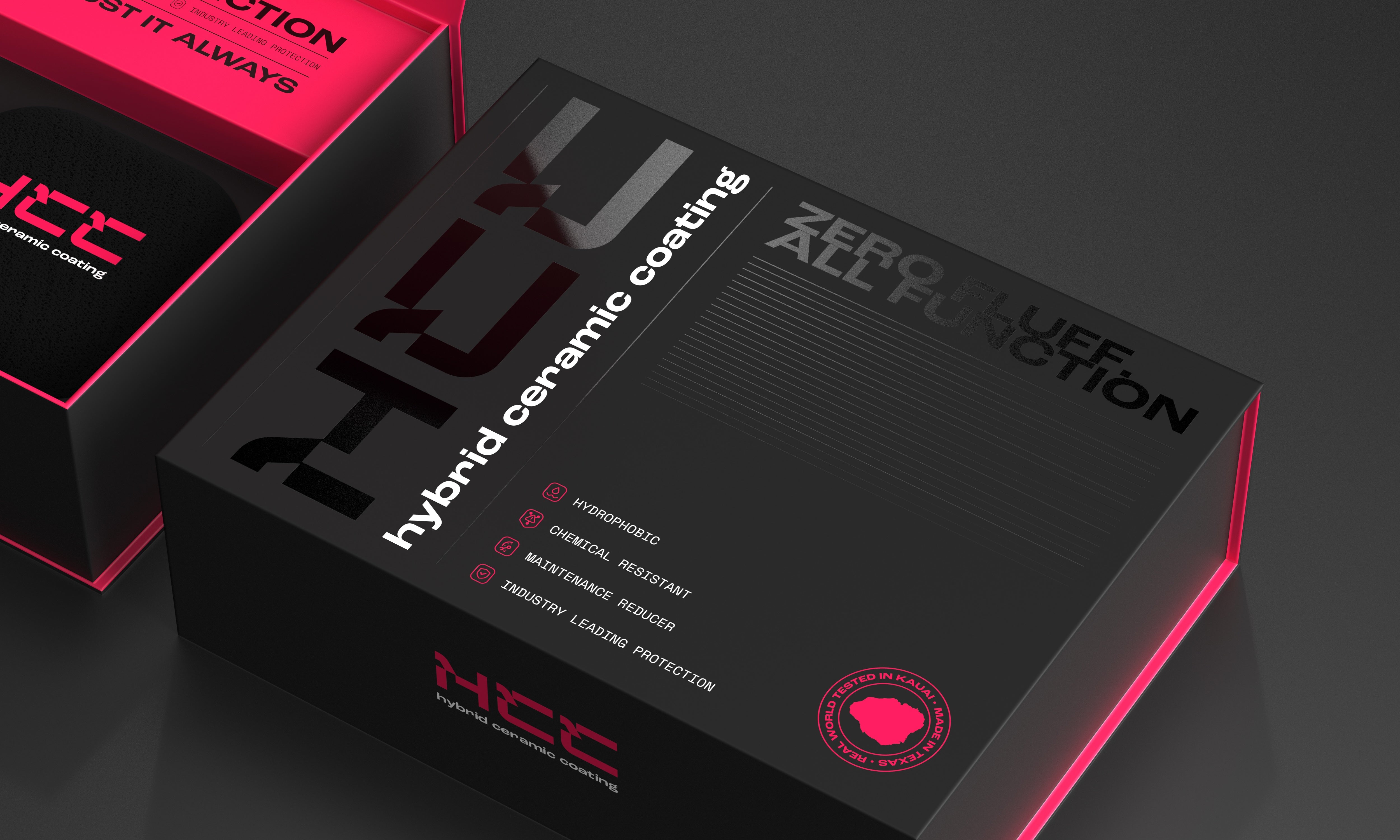
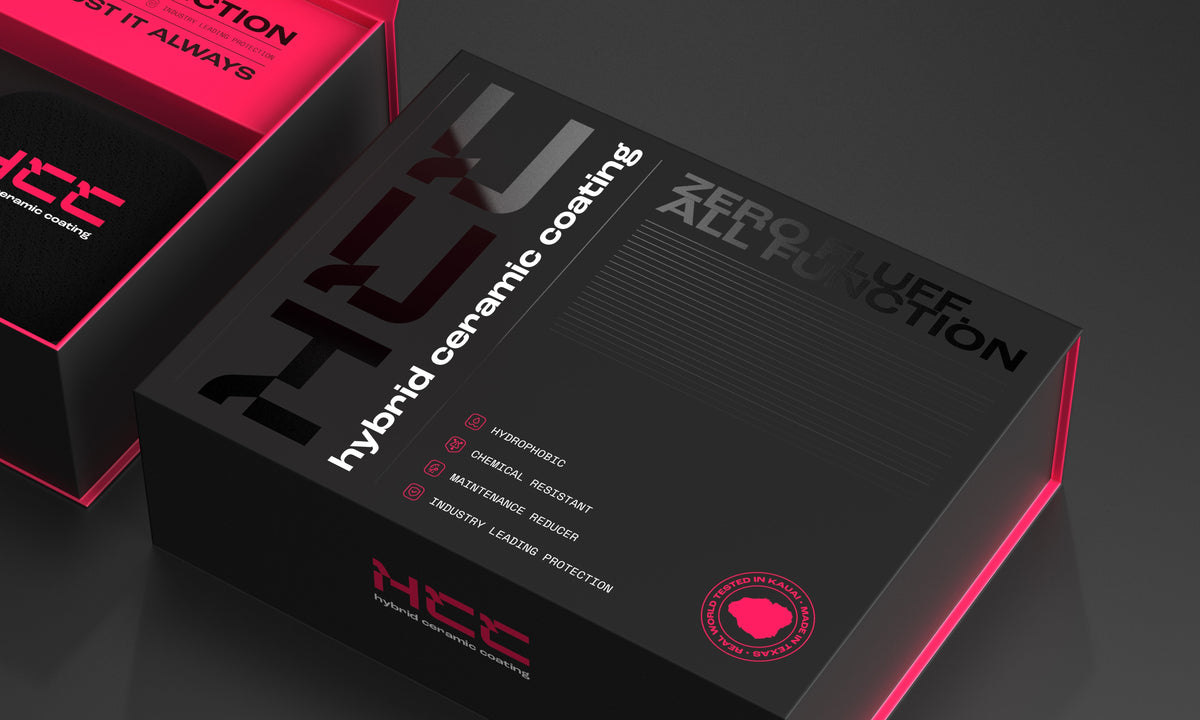
For exterior projects, the coating should also be matched to the intended surface. HCC, or Hybrid Ceramic Coating, is Undrdog's flagship all-surface coating for cars, boats, planes and bicycles. Its multi-year protection depends on preparation, exposure, use and maintenance, so confirm the exact surface suitability and current application instructions before beginning.
HCC should not be recommended for upholstery or touchscreens. The tool workflow matters only after the product and surface are appropriate for one another.
How Undrdog does it
Undrdog's tool and coating choices fit the same clear division of labor. Use The Pad to apply coating, then use a microfiber leveling towel for the separate leveling task. If HCC is suitable for the exterior surface, review its current directions before beginning.
For detailers and DIYers considering another coating, Undrdog Pro is available to both groups and is not certification-gated. Follow Undrdog Pro's own current application and aftercare instructions rather than transferring assumptions from another product.
Start with the product that suits the surface, organize the applicator and leveling towel as separate tools, and keep the product instructions close at hand. When you are ready to choose an exterior coating, review HCC and confirm its suitability for your project before application.
Further reading
For a broader process discussion, read How to Apply a DIY Ceramic Coating Without Streaks or High Spots. For towel characteristics in a different detailing context, see The Ultimate Car Drying Towel Guide: GSM, Weave, and Technique for Streak-Free Results.
Frequently Asked Questions
Is a coating applicator the same as a microfiber leveling towel?
No. The Pad is a microfiber applicator sponge used to apply coating, while a leveling towel is intended for the separate coating-leveling step. Organize them as different tools for different stages rather than treating one as a replacement for the other.
What does the applicator do during coating application?
The applicator places and spreads the coating over the intended section. It is the tool for controlling where the product goes and how the section is covered. After that placement step, switch to the designated microfiber leveling towel instead of assuming the applicator must perform every part of the process.
What does a microfiber leveling towel do?
A microfiber leveling towel is intended for the separate coating-leveling step after application. The Pearl illustrates this specific role. Keep the towel assigned to leveling separate from towels used for drying or general cleaning, and follow the applicable coating and tool instructions for setup, reuse and timing.
Can I use one towel for every detailing task?
It is better to assign towels by task than to assume any microfiber towel is suitable for coating leveling. Keep the towel selected for leveling separate from towels used for drying or general cleaning. The exact tool setup should follow the coating's current instructions and the needs of the surface.
When should I switch from the applicator to the towel?
Switch after the coating has been placed and spread across the intended section. The towel then handles the separate leveling step. Inspect the section afterward and decide whether it is sufficiently even to continue or whether it needs controlled attention before you move to another area.
Does every coating use the same applicator and towel process?
No universal process should be assumed. Product-specific instructions control the actual application, leveling, aftercare and surface-suitability requirements. The general distinction remains useful, but follow the current directions for the exact coating. For Undrdog Pro, use its own application and aftercare instructions.
Is HCC suitable for every surface inside a vehicle?
No. HCC is Undrdog's all-surface coating for cars, boats, planes and bicycles, but it should not be recommended for upholstery or touchscreens. Confirm suitability and current instructions for the exact surface before selecting a coating.
How should I decide whether to move to the next section?
After applying and leveling, inspect the current section and make a clear decision. Continue when the section is sufficiently even for your process. If it needs attention, stay focused on that section rather than moving on automatically. Do not substitute a universal timing rule for the coating's current instructions.
Choose the product that fits the job
Review the surface requirements and current directions before you start. Choose the right product for your project, not a bigger promise.
Explore HCC - Hybrid Ceramic Coating

Leave a comment
This site is protected by hCaptcha and the hCaptcha Privacy Policy and Terms of Service apply.