

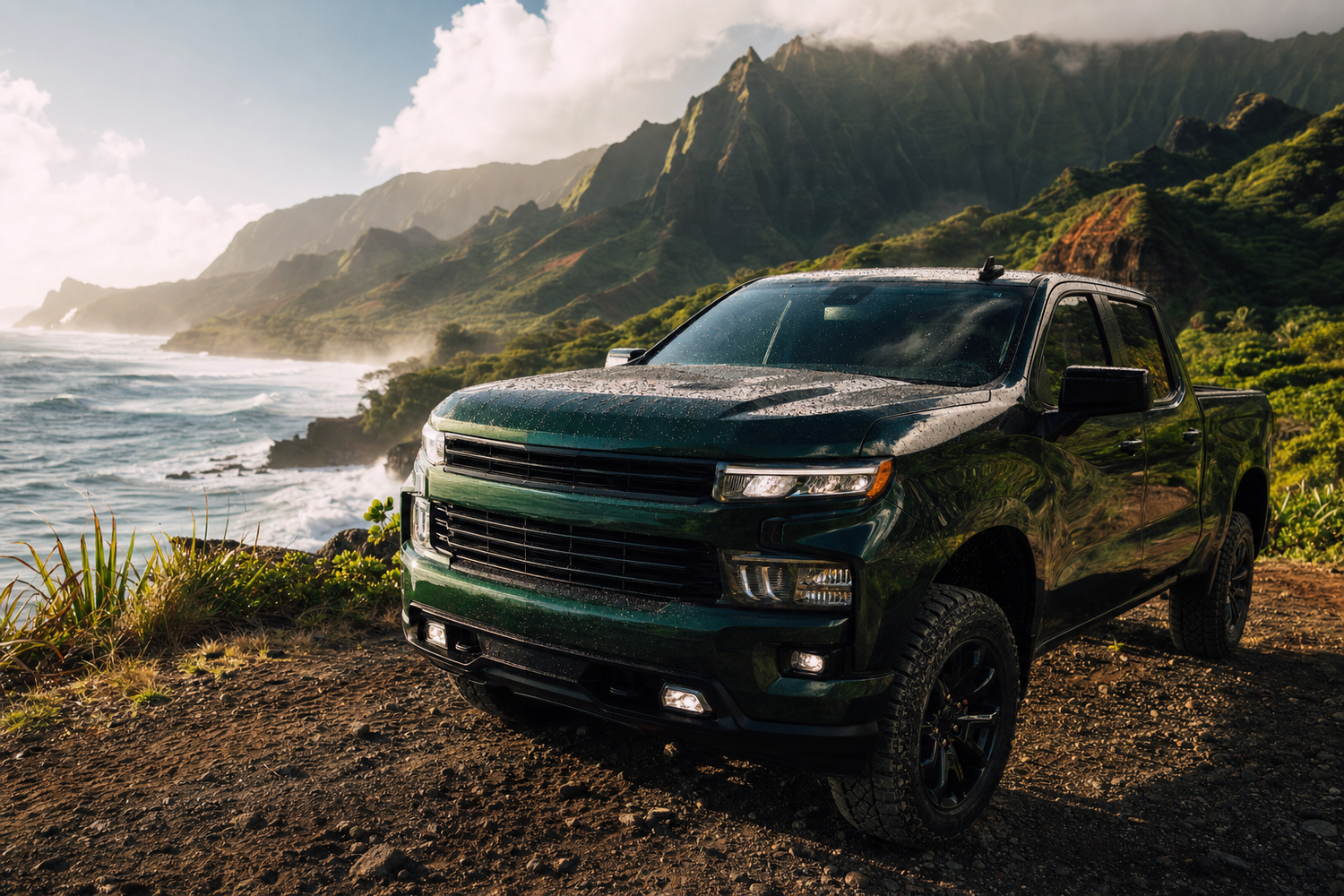
Hawaii's UV index runs 10 to 12 year-round with no winter dip, salt-laden trade winds carry corrosive particles well inland even away from the shoreline, and volcanic smog (vog) occasionally rains down chemistry comparable to dilute battery acid. Together, these three stressors mean a vehicle's clear coat on Kauai can oxidize 2 to 3 times faster than in a typical mainland city — which is why a five-year-old car in Hawaii can look older than a fifteen-year-old car in Seattle.

Why Hawaii's UV Load Is Different
UV radiation is responsible for the vast majority of gloss loss on a car's exterior — not road grime, not driving, just direct sun exposure breaking down the polymer structure of clear coat over time. Because Hawaii sees UV index readings of 10 to 12 year-round instead of dropping into the low single digits for several winter months like most of the mainland, local vehicles get zero seasonal recovery period. That's 365 days of accelerated oxidation instead of maybe 200. Detailers on Oahu report clear coat degrading an estimated 2 to 3 times faster here than in a typical mainland city, with the damage often invisible until fading is already noticeable on the surface — at which point real degradation has been happening underneath for a while. This is the same accelerated-exposure problem covered generally in our guide to protecting your car from sun, salt, and UV damage in coastal climates, just at a more extreme baseline.
Salt Air Doesn't Wait for You to Live on the Beach
You don't have to park at the shoreline for salt to be a factor. Ocean salt air carries mildly corrosive particles that bond to paint and metal surfaces and accumulate steadily between washes, and on an island the size of Kauai, trade winds carry that salt further inland than most people assume. Combined with UV exposure, salt accelerates oxidation and contributes to micro-etching on unprotected clear coat, and it's especially aggressive on wheels, chrome trim, and any spot where a chip has already exposed bare metal underneath.
Vog Adds a Layer Most Mainland Guides Never Mention
Volcanic smog, or vog, brings its own chemistry into the mix. Per the USGS, the sulfuric acid droplets suspended in vog have corrosive properties comparable to dilute battery acid, and when atmospheric moisture is high, those droplets combine with it and fall as acid rain that accelerates corrosion on cars, farm equipment, and building materials alike. Kauai isn't right next to an active vent the way parts of the Big Island are, but vog drifts across the island chain depending on wind direction, and a vehicle parked outside during a vog event is getting rained on by something meaningfully more corrosive than ordinary Hawaii rain.
The Three Stressors, Side-by-Side
| Stressor | What It Does | How a Coating Helps |
|---|---|---|
| UV (index 10–12 year-round) | Breaks down clear coat polymer structure, causing gloss loss and fading | Coating acts as a sacrificial UV-absorbing layer over bare clear coat |
| Salt air (trade winds carry it inland) | Corrodes metal, contributes to micro-etching on unprotected paint | Reduces how readily salt particles bond to the surface |
| Vog (sulfuric acid droplets) | Falls as acid rain, more corrosive than normal rainfall | Chemical resistance limits how aggressively vog residue etches in before rinsing |
What Actually Slows the Damage Down
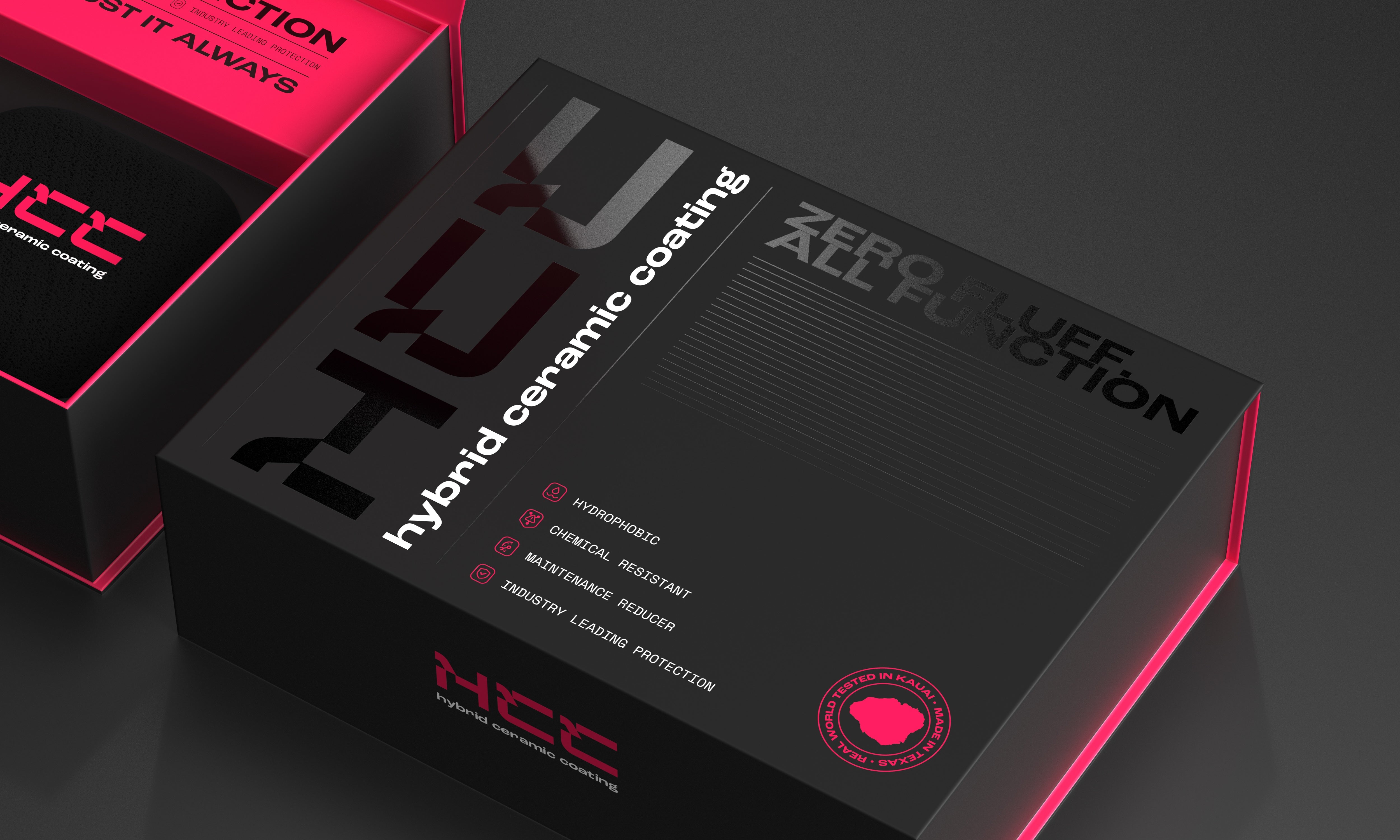
None of these three stressors — UV, salt, vog — are things you can out-wash your way past on their own. Washing removes surface contamination, which matters and should still happen every 1 to 2 weeks for a car parked outside near the coast, but it does nothing to block the UV radiation actively breaking down your clear coat's polymer structure between washes. That requires an actual barrier. A ceramic coating like HCC creates a sacrificial layer that absorbs UV exposure and resists salt adhesion instead of letting bare clear coat take the full hit directly, and because it's a hybrid formula built for cars, boats, and virtually anything else painted or gel-coated, it works across the mix of vehicles most Kauai households actually own — the daily driver, the boat, maybe a truck that spends its life in a gravel driveway with zero shade.

Between coating maintenance intervals, staying ahead of iron and mineral fallout with something like The Purps keeps embedded contamination from working its way into the coating's surface, and a quick topper application with Quick Detail after a rinse helps shed salt spray and vog residue before either has time to sit and do damage. Streaky, mineral-laden water is a related headache on glass specifically — our guide to getting streak-free glass on your car and boat covers that side of the routine.

Shade and Parking Habits Still Matter
Coating or not, where you park changes the math. A shaded carport or even a tree canopy cuts direct UV exposure meaningfully compared to a car baking in an open lot all day, and rotating which side of the vehicle faces the sun if you park in the same spot daily prevents uneven fading on just one panel. None of that replaces a coating, but it's a free lever that stacks with whatever protection you're already running.
Frequently Asked Questions
Is vog actually going to damage my car on Kauai, or is that mostly a Big Island problem?
Vog is more concentrated near active venting on the Big Island, but it drifts across the islands depending on wind patterns, and Kauai vehicles parked outside during a vog event are exposed to more corrosive rainfall than usual. It's a real, if inconsistent, factor here.
How often should I wash a car parked outside near the coast on Kauai?
Every 1 to 2 weeks is a reasonable baseline for a vehicle regularly exposed to salt air, with more frequent washing if you're right on the coastline or drive through vog conditions.
Does ceramic coating stop UV fading completely?
No coating stops UV exposure outright — it significantly slows the rate of oxidation and fading compared to unprotected clear coat by absorbing and reflecting UV before it reaches the paint directly, which buys you meaningfully more time before fading becomes visible.
Do boats on Kauai face the same UV, salt, and vog exposure as cars?
Yes, often more so, since boats spend extended time directly on or near the water with constant salt spray. HCC's cross-surface compatibility means the same coating logic applies to gelcoat as it does to car clear coat.
Can I tell if vog has damaged my car's finish?
Look for unusual dulling, spotting, or etching after a period of vog exposure, particularly after rain during a vog event. If you notice new dullness that wasn't there before, a decon and inspection are worth doing sooner rather than later.
Does parking in a garage eliminate the need for a coating?
It significantly reduces UV exposure, but doesn't eliminate salt air exposure during actual driving, or vog exposure if you're ever parked outside. A coating still adds meaningful protection even for garage-kept vehicles that see regular road use.
How is Hawaii's UV exposure different from other coastal climates?
Most coastal mainland climates see a seasonal UV dip in winter that gives clear coat a partial recovery window. Hawaii's consistent 10–12 UV index year-round removes that seasonal break entirely, which is why the degradation rate runs faster here.
If your vehicle spends its life outside on Kauai, getting ahead of UV, salt, and vog with HCC is one of the more effective ways to slow down what the island's climate is already working hard to speed up.

Leave a comment
This site is protected by hCaptcha and the hCaptcha Privacy Policy and Terms of Service apply.