

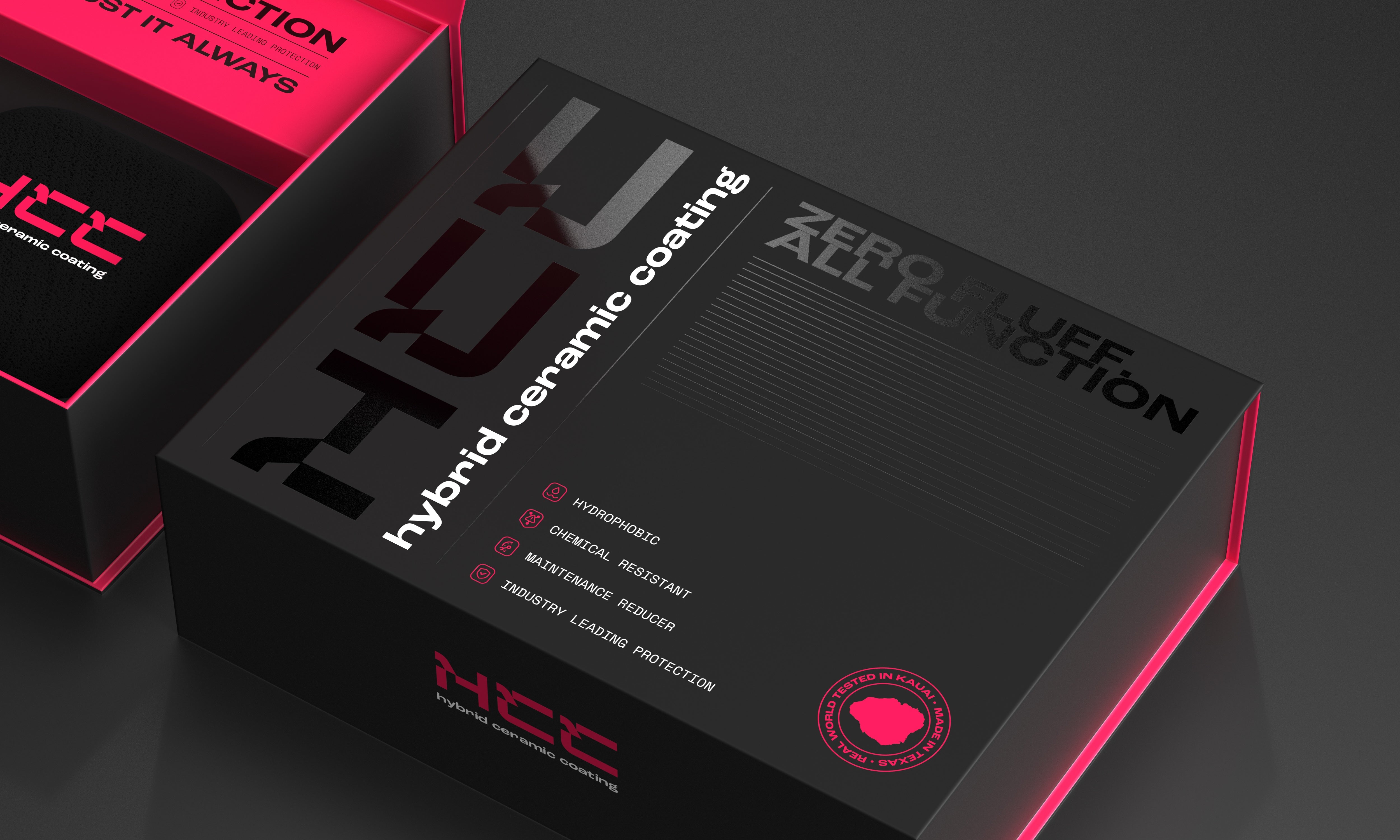
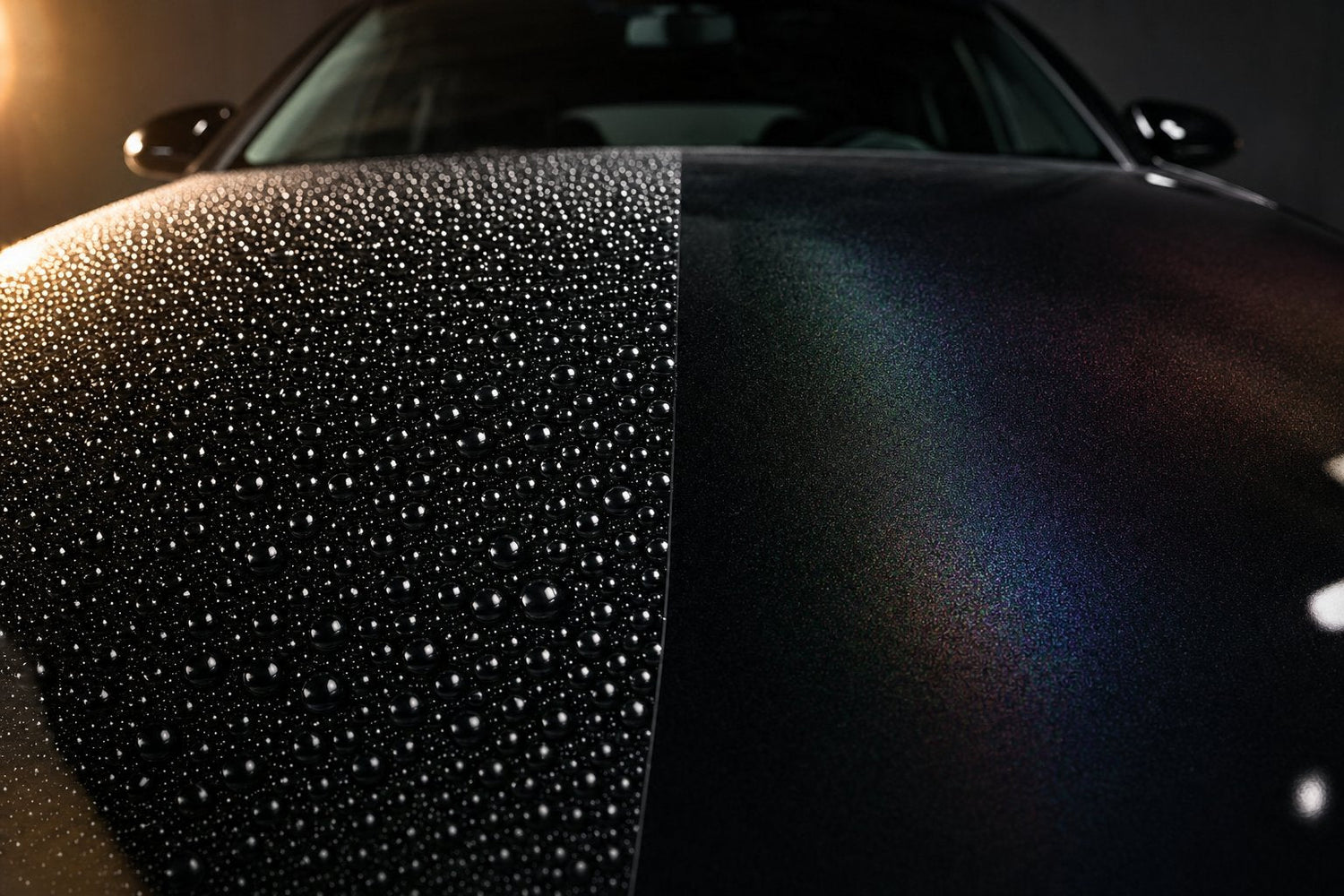
Graphene coating is not a rival technology to ceramic coating — it is a ceramic coating with graphene oxide blended into the resin as a performance additive, so it inherits ceramic's gloss, hydrophobicity, and UV protection while adding better heat dispersion, reduced water spotting, and anti-static dust behavior. HCC (Hybrid Ceramic Coating) is Undrdog's flagship hybrid SiO2 chemistry engineered to give you the same real-world hydrophobicity, gloss, and multi-surface durability people chase graphene coatings for — on cars, boats, planes, and even bicycles — without the graphene marketing premium. If you want the short answer: pick HCC when you want proven all-surface protection at a reasonable price; look at a true graphene product only if you're solving a very specific dark-paint water-spot or heat problem and you're paying attention to what's actually in the bottle.

The Chemistry: What's Actually in a Graphene Coating vs a Hybrid Ceramic
Most detailers hear "graphene" and picture a totally new coating category. It isn't. A graphene automotive coating is a SiO2-based ceramic coating with a small percentage of graphene oxide dispersed into the same silica and resin matrix that makes a ceramic coating a ceramic coating in the first place. That's why the industry sells them as "graphene ceramic" coatings — because they are ceramic coatings with graphene added, not a separate chemistry. Independent chemistry breakdowns from coating manufacturers like IGL Coatings and Adam's Polishes confirm the same: graphene shows up as an additive on top of a SiO2 base, not as a replacement for it.
HCC (Hybrid Ceramic Coating) takes a different route to the same real-world outcome. Instead of leaning on the graphene marketing story, HCC is engineered as a hybrid SiO2 system — silica polymers cross-linked with additional resins to build a thicker, more elastic protective layer than a single-molecule SiO2 spray. The result is a coating that beads like a premium ceramic, sheets water like a premium ceramic, and resists UV and chemical staining like a premium ceramic — because that's what it is. The "hybrid" in the name refers to the multi-polymer chemistry, not a marketing add-in.
The practical takeaway: when a graphene product claims better heat dispersion or reduced water spotting, those gains come from the graphene oxide additive on top of a ceramic base. When HCC claims strong beading, gloss, and durability, those come from a purpose-built hybrid ceramic base that's been formulated to do all of it well without needing an additive to compensate. Two different formulations, one shared outcome: a slick, glossy, easy-to-clean coated surface.
Water Behavior: Beading, Sheeting, and the Water-Spot Question
This is where most of the "graphene is better" claims live, so let's be specific. Graphene coatings often claim a slightly higher water contact angle and a "flatter" bead that sheets off faster, with less mineral residue left behind when the water dries. That behavior is real on very fresh applications and on flat surfaces like a hood or roof panel. The theory is that graphene's structure spreads heat across the surface faster, so water evaporates more evenly and drops less concentrated mineral residue as it goes.
HCC's water behavior is straightforward and well-understood: tight, tall beads on horizontal panels, aggressive sheeting on vertical panels, and rain that rolls off with almost no drag. In real-world driveway testing across cars, boats, planes, and bike frames, HCC's beading and sheeting are indistinguishable from premium graphene products at the level a normal owner cares about — which is: "does the water leave the paint alone?" Yes. It does.
If you park in the sun after a rain in a hard-water area (Southern California, most of Texas, parts of Florida, and yes, plenty of Hawaii), water spotting is really about two things: how fast water leaves the panel, and how quickly you can wipe it off if it doesn't. Both HCC and quality graphene coatings help with the first. Neither one eliminates the second — you still want a water spot remover in your kit for the days when a sprinkler tags your fender.

Heat, Dark Paint, and the Real Reason People Look at Graphene
Here's the actual honest case for graphene coatings: on very dark paint that lives in direct sun (black daily drivers in Phoenix, dark cobalt boats in Kauai marinas), some graphene products handle heat load a little better because graphene is a strong thermal conductor. The claim is that heat gets distributed across the panel faster instead of pooling in one spot, which in theory reduces the risk of water etching baked in by high panel temperatures.
In practice, this is a marginal, edge-case benefit unless you're leaving contaminated water sitting on a 130°F+ panel for hours. It's real, but it is not the primary reason 95% of owners are picking a coating. If you're a black-car-in-the-desert owner or you keep your boat in a slip with constant salt spray and 100°F afternoon panel temps, it's a legitimate consideration. Everyone else: the difference between a hybrid ceramic and a graphene ceramic on this metric doesn't show up in the driveway.
HCC handles high UV and heat loads well because the SiO2 backbone is inherently UV-stable — silica is not sensitive to sunlight the way carnauba or polymer sealants are. Combined with proper prep (decon with The Purps and a clean IPA wipe-down), HCC gives you multi-year UV protection on paint, gelcoat, and clearcoat without needing a graphene additive to survive the sun.
Dust and Static: Where Graphene Has a Real Edge
Graphene coatings are legitimately better at one specific thing: dust. Graphene is anti-static, so a coated panel picks up less airborne dust between washes. If your car parks under a construction zone, in a dusty desert climate, or under trees that drop fine yellow pollen, a graphene coating will look cleaner for longer between wash sessions.
How much difference does this make in real life? A driveway daily driver washed weekly will show maybe an extra day or two of "clean look" from graphene's anti-static behavior. A garaged weekend car — almost no observable difference. A car that gets washed every two weeks in a dusty environment — noticeable, but still not something most owners would pay a huge premium for.
HCC's answer to dust is different: because the surface is so hydrophobic and slick, dust that does land wipes off faster during your normal post-coating maintenance wash with Undrdog Soap. You may see slightly more dust on the panel between washes, but you spend less time removing it. Different tradeoff, similar end result: less time cleaning, more time driving.

Durability, Hardness, and What "10H" Actually Means
Both graphene and hybrid ceramic coatings are commonly marketed with hardness ratings — 9H, 10H, "harder than steel." The pencil hardness scale that most coating brands cite is a scratch-resistance test from the paint and pencil industry, not a materials-science test, and there is no legitimate rating above 9H on the standard scale. Any "10H" claim is marketing, not a real value on an industry test. This is well-documented across independent coating chemistry reviews, and a good rule of thumb is: ignore the hardness number and look at claimed durability windows, warranty terms, and actual application requirements.
Honest durability windows for consumer-applied coatings:
- HCC (DIY hybrid ceramic): 2–5 years on properly prepped paint, gelcoat, and clearcoat, with realistic care and semi-annual maintenance wipes.
- Quality graphene ceramic (DIY): 2–5 years, similar range, with the same prep and maintenance requirements.
- Pro-installed graphene: 5–7 years claimed under professional application conditions.
- Pro-installed Undrdog Pro / Pro Plus: comparable multi-year protection for pro-shop workflows.
The single biggest determinant of how long any coating lasts is not the chemistry — it's the prep. A perfectly-prepped surface with HCC will outlast a poorly-prepped surface with a premium graphene coating every time. Skip the decon process and it doesn't matter what's in the bottle.
HCC vs Graphene: Head-to-Head Comparison
| Feature | HCC (Hybrid Ceramic) | Typical Graphene Ceramic |
|---|---|---|
| Base chemistry | Hybrid SiO2 + multi-resin polymer | SiO2 base + graphene oxide additive |
| Water beading | Tall, tight beads on horizontals; strong sheeting | Slightly flatter beads, faster sheeting on some formulas |
| Water spot resistance | Strong — resistant to mineral etching with prompt care | Marginally better on dark hot panels in direct sun |
| Heat management | Excellent UV stability from SiO2 backbone | Slightly better thermal dispersion on dark paint |
| Dust and static | Slick surface, dust wipes off easily | Anti-static — attracts less dust between washes |
| Gloss | High gloss, deep wet look | High gloss, sometimes a slightly warmer tone |
| Durability (DIY) | 2–5 years with proper prep | 2–5 years with proper prep |
| Surfaces | Cars, boats, planes, bicycles — flagship all-surface | Mostly automotive, some marine formulas |
| Application difficulty | Beginner-friendly — long working time, easy leveling | Varies — some formulas flash fast and streak |
| Price positioning | Premium value, no graphene marketing surcharge | Often $30–$100 more per bottle for the graphene story |
Multi-Surface Reality: The Case for HCC on Boats, Planes, and Bicycles
This is where the graphene-vs-hybrid conversation actually gets interesting, and where most graphene marketing quietly falls off. Most graphene automotive coatings are formulated specifically for painted panels and clearcoat. They are not always safe or effective on marine gelcoat, aircraft paint systems, or bicycle frames with matte or satin finishes.
HCC is Undrdog's flagship all-surface hybrid ceramic — engineered for cars, boats, planes, and bicycles from the same bottle. That's not a marketing line; it's the chemistry. The hybrid SiO2 formulation cures on marine gelcoat with the same beading and UV protection it delivers on automotive clearcoat, and it plays nicely with the specialized paint systems used on general aviation aircraft and premium bicycle frames. If your household has a car in the driveway and a boat at the slip — or a car and a bike, or a plane and a car — HCC gives you one coating for all of it. That's a hard proposition to match with a graphene product designed around a specific paint system.
For pure marine applications where the boat lives in saltwater long-term, our recommendation stays specialized: Undrdog Marine or Marine Plus. For everything else — daily driver, weekend car, RV, motorcycle, general aviation aircraft, road bike, mountain bike — HCC is the flagship recommendation.
Application: What It's Like to Actually Apply Each One
Some graphene coatings are notoriously fussy to apply. They flash fast on hot panels, streak if you leave them too long, and can look worse than the bare paint if you don't level them within a tight window. Others are much friendlier. It depends heavily on the specific product.
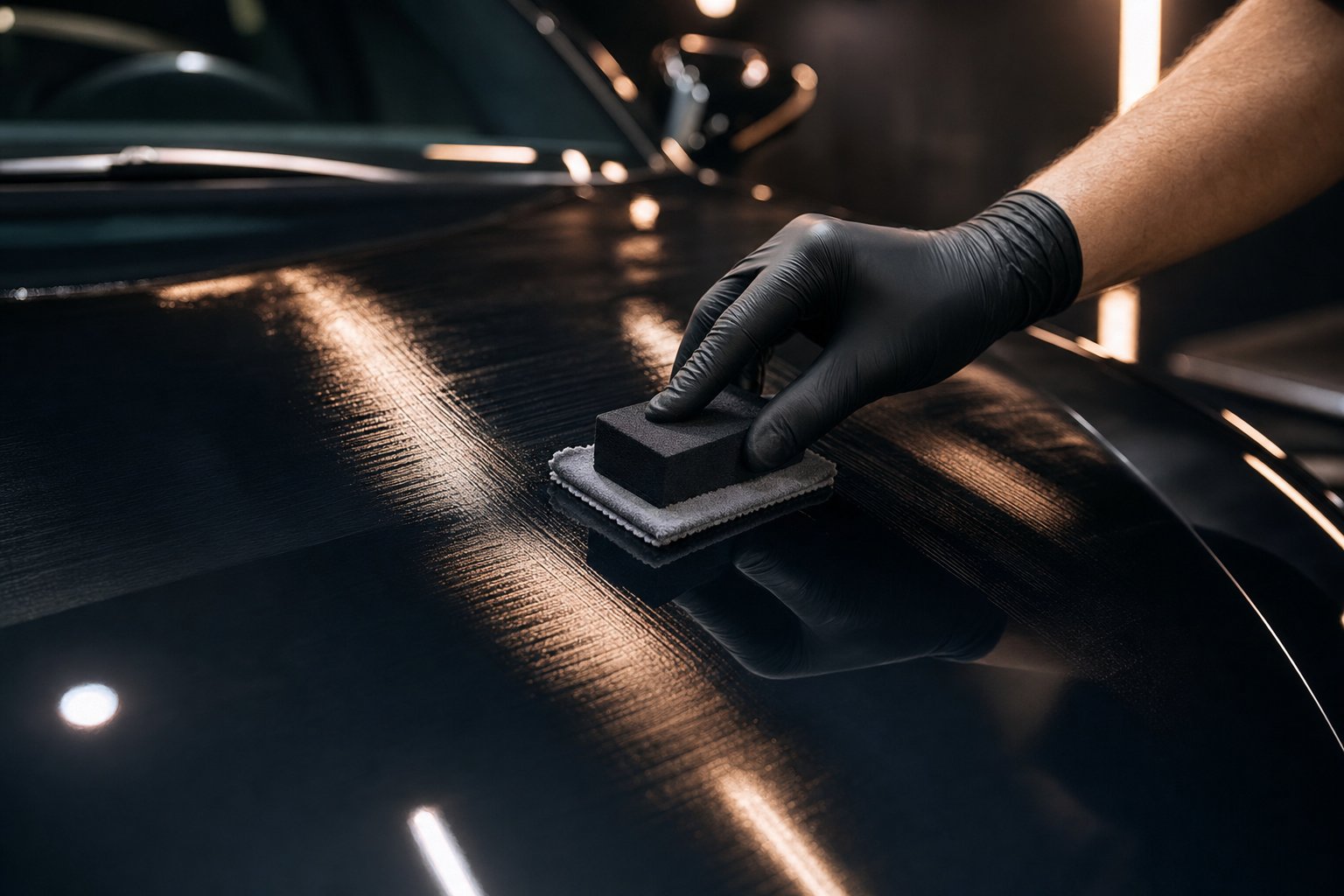
HCC is formulated to be forgiving. It gives you a comfortable working window, levels evenly under a suede or microfiber leveling towel, and doesn't require the perfect climate-controlled bay that some pro-only graphene coatings assume. If you're doing your first ceramic coating in your garage on a Saturday, HCC is designed for that scenario. Combined with the honest, real-world advice in our streak-free application guide, it's the closest thing to a "coating you can't mess up too badly" that we know of.
Which One Should You Actually Buy?
Pick a graphene ceramic coating if all of the following are true: you own a black or very dark car, you park in direct sun in a hot climate every day, you can't garage the car, you already have solid coating application experience, and you specifically want the anti-static dust benefit. In that narrow scenario, a quality graphene product is a defensible choice.
Pick HCC if any of the following are true (most owners fit here): you want a proven, easy-to-apply DIY ceramic that delivers all the practical benefits — beading, sheeting, gloss, UV, chemical stain resistance, and multi-year durability — without paying a marketing premium for a graphene additive you may or may not notice; you own more than one surface type (car plus boat, car plus bike, car plus plane); you want one coating chemistry that's been vetted across a huge range of vehicles; or you want a coating that's beginner-friendly enough to actually apply correctly on your first try.
The Undrdog Double Your Money Back guarantee applies to HCC and the rest of the Undrdog lineup, which is not something you'll get from most graphene brands. If you buy it, apply it correctly, and it doesn't do what we say — you get twice your money back. Try finding that language on a graphene product page.
Frequently Asked Questions
Is graphene coating actually better than ceramic coating?
Not categorically. Graphene coating is a ceramic coating with graphene oxide added as a performance additive, so it inherits ceramic's core benefits and adds marginal improvements in dust resistance and thermal management on dark panels in direct sun. For most owners, a well-formulated hybrid ceramic like HCC delivers the same real-world hydrophobicity, gloss, and durability without the graphene marketing premium.
Does HCC have graphene in it?
No. HCC is a hybrid ceramic coating built on a SiO2 + multi-polymer resin chemistry. It doesn't rely on a graphene additive because the hybrid formulation is engineered to deliver strong beading, gloss, UV protection, and multi-year durability on its own. Different chemistry philosophy, comparable real-world result.
Which coating lasts longer, HCC or graphene?
Both DIY-applied hybrid ceramic and DIY-applied graphene ceramic coatings realistically deliver 2–5 years of protection with proper prep and semi-annual maintenance. The single biggest factor is not the chemistry — it's how well the paint was decontaminated, polished if needed, and wiped down before application. Skip prep and both fail early.
Can I put a ceramic coating over a graphene coating (or vice versa)?
Not directly. Any coating needs a clean, contaminant-free, bare-clearcoat surface to bond properly. If you already have a graphene coating and want to switch to HCC, you'll need to either wait for the existing coating to fully wear off or lightly polish it off before applying a new coating. Coatings are not stackable like paint sealants.
Do graphene coatings actually reduce water spots?
Slightly, on dark paint in direct hot sun, because graphene's thermal properties distribute heat across the panel faster and reduce mineral concentration as water evaporates. In most other conditions the difference is not visible. Regardless of coating, if you get sprinkler water or hard water on a hot panel, wipe it off promptly with a Quick Detail spray to prevent etching.
Is a 10H hardness rating real?
No. The pencil hardness scale used for coating marketing tops out at 9H under the established industry test. Any "10H" or higher claim is marketing language, not a value from a legitimate hardness test. Focus on actual durability windows, prep requirements, and warranty terms instead of chasing hardness numbers.
Can I use HCC on my boat and my car?
Yes — that's exactly what HCC is designed for. HCC is Undrdog's flagship all-surface hybrid ceramic and cures correctly on automotive clearcoat, marine gelcoat, aircraft paint systems, and bicycle frames from the same bottle. For boats that live full-time in saltwater, you may prefer the specialized Undrdog Marine line, but HCC is the flagship for mixed-surface households.
Is a graphene coating worth the extra money?
For most owners, no. The graphene additive delivers marginal improvements in a narrow set of conditions (dark paint, direct sun, dusty parking environments), and those improvements do not scale linearly with the price premium graphene products often carry. A quality hybrid ceramic like HCC gets you the vast majority of the real-world benefit at a more honest price point.
What prep do I need before applying either coating?
The same prep either way: wash with a coating-safe soap like Undrdog Soap, iron and fallout decon with The Purps, clay bar if needed, light polish if there is swirling or oxidation, and a clean IPA or dedicated prep-spray wipe-down immediately before applying the coating. Skipping any of these steps is the fastest way to shorten the life of any ceramic coating, hybrid or graphene.
Can I apply HCC or a graphene coating in direct sun?
No. Both cure best on cool panels in shade, ideally between 60–80°F ambient. Hot panels will flash the coating too fast and leave streaks or high spots you'll have to polish off. Work in a shaded garage or apply early morning or evening when panels are cool to the touch.
The Bottom Line
Graphene coating is not a new category — it's a ceramic coating with graphene oxide added. Whether that additive is worth a price premium depends entirely on your climate, your paint color, your parking situation, and how much of the marketing you're willing to pay for. For the overwhelming majority of car, boat, plane, and bicycle owners, HCC gives you the same real-world hydrophobicity, gloss, and durability at a fair price, with the confidence of the Double Your Money Back guarantee behind it. Get the HCC bottle, prep the paint like it matters (because it does), apply it in a cool shaded workspace, and you'll have a coated surface that performs at or above what most owners get out of graphene products costing more.


Leave a comment
This site is protected by hCaptcha and the hCaptcha Privacy Policy and Terms of Service apply.