


Jet ski gelcoat fades and turns chalky when UV, salt, and oxidation attack the resin surface — because unlike car paint, gelcoat has no factory clear coat protecting the color layer. To prevent it, rinse with fresh water after every ride, wash with a marine-safe soap, and apply a UV-blocking sealant or ceramic coating like HCC Hybrid Ceramic Coating to lock out sun, salt, and oxidation for months at a time.
This guide breaks down exactly why gelcoat oxidizes, what happens if you ignore early chalking, how to protect a new ski, and how to bring a faded hull back to life without wrecking the finish. Peak season is exactly when the sun is doing the most damage — and exactly when most owners are riding hardest and cleaning least.

Why Jet Ski Gelcoat Fades and Oxidizes So Fast
Gelcoat is a pigmented polyester resin that sits on top of the fiberglass hull — it's the color layer, the gloss layer, and the sacrificial layer all in one. According to Jet Ski Lessons, the exterior of most personal watercraft is gelcoat with no clear coat above it, meaning UV rays, salt, and oxidation damage the color layer directly. That is a fundamentally different situation than automotive paint.
Three attackers do the actual damage:
- UV radiation — breaks down the resin binder over time, causing pigment to chalk and gloss to die.
- Salt and mineral deposits — dry into microscopic crystals that pit the surface and hold water against the resin.
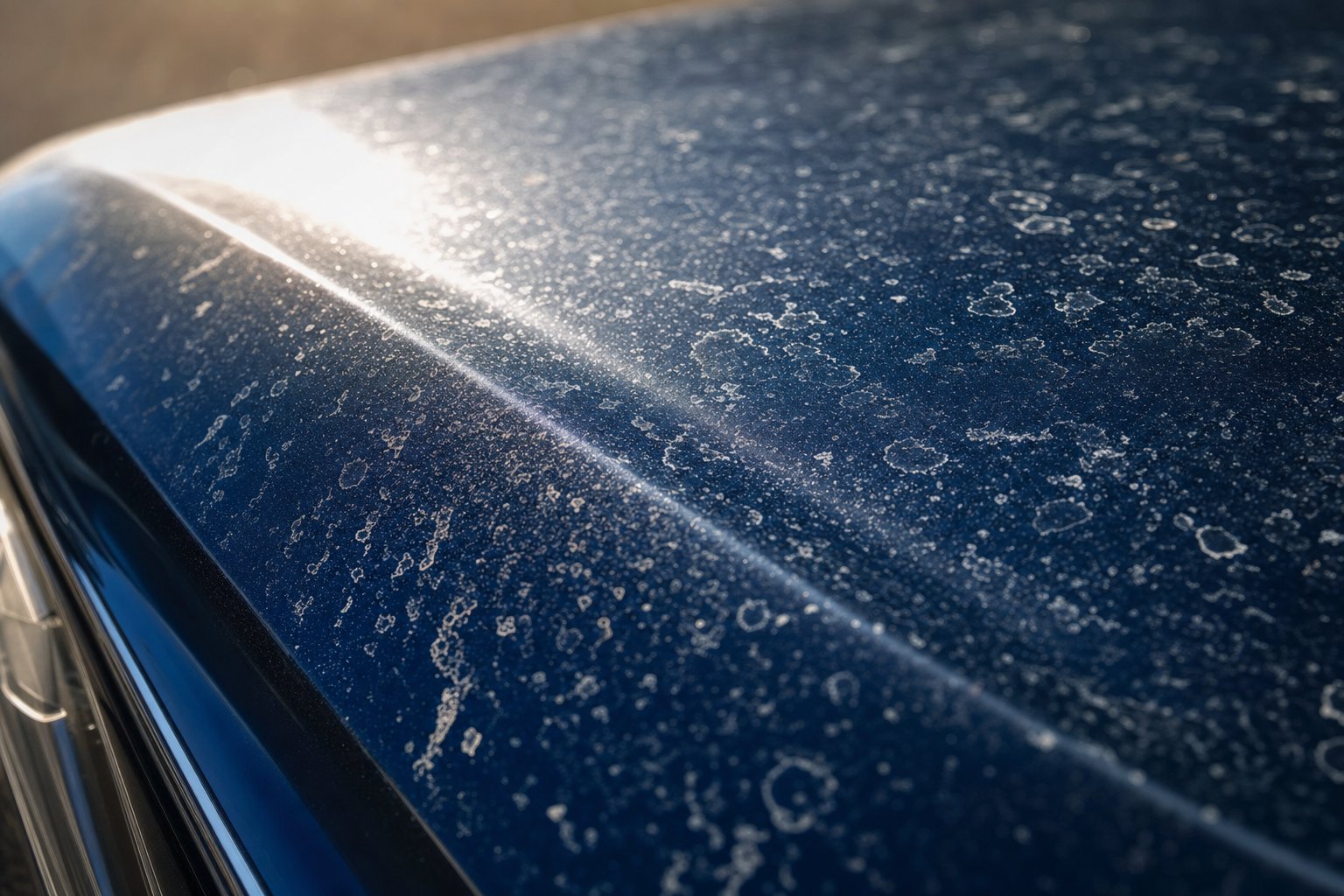
- Oxidation — a chemical reaction between air, moisture, and the resin that leaves a dull, white haze on the surface.
Fiberglass boat manufacturers have warned about the same failure mode for decades. BoatUS notes that oxidation is one of the most common finish complaints from owners of gelcoated hulls, and it happens fastest on skis stored outdoors uncovered.
Early Warning Signs You're Losing Gelcoat
Gelcoat rarely fails suddenly. It gives you plenty of warning — most owners just don't recognize the signs until the damage is baked in.

What to look for after a ride
- Dull spots that don't come back after drying — early oxidation, still recoverable with a sealant.
- Chalky residue on your microfiber when you wipe — pigment lifting off the surface. Serious.
- Water sheeting instead of beading — your last coat of protection has failed.
- Rough texture in areas that used to feel glass-smooth — salt or mineral etching.
- Faded stripes or graphics — pigment is oxidizing under UV.
Catch it in the first two stages and a wash-plus-coat cycle brings you back. Wait until pigment is transferring or texture is rough, and you're looking at compounding, polishing, and potentially a full restoration.
The Weekly Care Routine That Actually Works
Most gelcoat damage isn't from big events — it's from riding all summer and never doing the small things.
After every ride
- Rinse with fresh water while the hull is still wet, top to bottom. Focus on the intake grate, pump housing, and any recessed trim where salt collects.
- Wipe standing water off flat panels with a plush microfiber before it can sit and etch.
- Cover the ski if it's stored outdoors — even a cheap breathable cover cuts UV exposure dramatically.
Weekly (or every third ride, whichever is sooner)
- Wash with a pH-neutral marine-safe soap. Car wash soaps and household detergents can strip protective coatings and dry out rubber seals, per Jet Ski Lessons. Undrdog Soap is pH-neutral and ceramic-safe — it won't strip your coating.
- Use a soft wash mitt and clean microfibers. Never a scouring pad — those scratches become the perfect surface for oxidation to grab hold.
- Dry with a plush microfiber and check for water spots, especially if you ride in hard-water lakes or brackish water.
Once per season
- Decontaminate with a dedicated iron and fallout remover like The Purps to lift any embedded metallic contamination from trailer wheels, launch ramps, or brackish exposure.
- Clay bar any areas that still feel rough after decon.
- Reapply your primary protection — ceramic coating for multi-month, wax or spray sealant for shorter cycles.
Ceramic Coating vs Marine Wax vs Polymer Sealant
Three protection categories dominate the PWC market. They aren't interchangeable — durability, gloss, and workload differ significantly.
| Option | Durability | Prep required | Hydrophobic behavior | Best for |
|---|---|---|---|---|
| Marine wax | 1–3 months | Light — clean surface | Moderate beading | Owners who enjoy detailing and want to reapply frequently |
| Polymer / spray sealant | 3–5 months | Clean surface | Tight beading | Bridge coat between ceramic applications |
| Ceramic coating (HCC) | 12+ months on marine gelcoat with maintenance | Decon + IPA wipe | Sheeting + very tight beading | Riders who want to spend more time on the water than in the driveway |
Ceramic bonds chemically to the gelcoat, forming a hard, hydrophobic layer that repels UV, salt, and mineral deposits far longer than any wax. HCC is the flagship — it works on cars, boats, planes, bicycles, and yes, jet skis. One product, one workflow, one bottle covering the whole garage.

How to Ceramic-Coat a Jet Ski (Step-by-Step)
The process is essentially the same as coating a car, with two differences: gelcoat is more porous than paint, so cleanliness matters even more, and you're working around rubber seals and intake grates you don't want product on.
Step 1 — Decontaminate
Wash the ski with Undrdog Soap. Rinse. While the hull is still wet, spray The Purps across the gelcoat, let it dwell 3–5 minutes, and rinse. If the surface still feels rough after drying, clay bar it. For technique guidance, see our clay bar technique guide — the same rules apply to gelcoat.
Step 2 — IPA wipe-down
Wipe the coating surface with an isopropyl alcohol solution to remove any residual polish oils, soap surfactants, or fingerprints. Skipping this step is the number one reason ceramic coatings fail early. Our decontamination order guide walks through the full sequence.
Step 3 — Coat one panel at a time
Work in 2x2 ft sections in the shade, with the hull cool to the touch. Apply HCC to the coating applicator (never directly to the surface), lay it down in a cross-hatch pattern, then buff off with a plush microfiber before it flashes past the wipe-off window.
Step 4 — Cure
Keep the ski out of the water for 24 hours minimum, and out of direct rain for 48. Full hardness develops over 7–14 days. Don't wash for at least a week.
Restoring an Already-Oxidized Hull
If the gelcoat is already chalky, coating over the top won't fix it — you have to remove the oxidized layer first. According to BoatUS, gelcoat restoration is a graduated process:
- Mild oxidation (light haze) — a fine polishing compound and orbital polisher usually brings gloss back.
- Moderate oxidation (chalky, some pigment lifting) — start with a medium-cut compound, refine with a fine polish.
- Heavy oxidation (dead flat surface) — wet sand with 1500–2000 grit, then compound and polish. This is a full-day job.
Once you've restored the surface, protect it immediately. Restored gelcoat is more porous and vulnerable than factory gelcoat — a ceramic coating is the highest-ROI move at that point because it locks in the work you just did.
Trailer, Storage, and Off-Season Care
The ski spends more hours on the trailer than on the water. Trailer time is where most of the gelcoat damage actually happens.
- Cover it when parked outdoors. Even a mid-range cover blocks 90%+ of direct UV.
- Chock the trailer level so water doesn't pool in low spots and etch the gelcoat.
- Rinse the trailer after saltwater launches — trailer corrosion products can splash onto the hull.
- Winterize before storage — flush the engine, drain water, treat fuel, and top the protection layer so the ski enters storage with a fresh sacrificial barrier.
Common Mistakes That Trash Gelcoat
- Using car wash soap — many contain waxes, gloss enhancers, or degreasers that either strip your coating or bond to gelcoat and cause hazing.
- Pressure washing intake vents and electrical areas — forces water into places it shouldn't be.
- Scouring pads or stiff brushes — leaves micro-scratches that hold oxidation and salt.
- Letting salt dry on the hull — every hour of drying salt is another hour of etching.
- Storing uncovered in direct sun — the single biggest cause of premature gelcoat failure.
- Skipping decon before coating — coats over contamination bond poorly and fail early.
Frequently Asked Questions
How long does ceramic coating last on a jet ski?
With proper prep and marine-safe maintenance washing, HCC delivers 12+ months on gelcoat. Riders in tropical or hard-saltwater conditions should plan to top with a spray sealant like Quick Detail every couple of months to extend performance.
Can I use car wax on a jet ski?
You can, but marine gelcoat is more porous than automotive clear coat and eats wax faster. A marine wax or, better, a ceramic coating designed for mixed automotive/marine use like HCC gives you longer durability and less reapplication.
Is ceramic coating worth it if I only ride a few times a year?
Yes — because the damage isn't happening on the water, it's happening in storage. UV, humidity, and temperature swings degrade gelcoat 24/7. A ceramic coating protects during the 350+ days a year you aren't riding.
What's the difference between polishing and compounding gelcoat?
Compound is the aggressive step — it removes oxidized material and light defects. Polish refines what compound leaves behind, bringing back gloss and clarity. On a moderately oxidized ski, compound first, then polish. On a lightly hazed ski, polish alone usually works.
How do I know if my ski has a clear coat or bare gelcoat?
Most factory PWCs from Sea-Doo, Yamaha, and Kawasaki ship with pigmented gelcoat only, no clear coat. If yours has a factory clear coat applied over graphics or metallic finishes, the owner's manual will typically say so. In practice, treat it as gelcoat unless proven otherwise — the maintenance approach is nearly identical.
Can I coat over faded or oxidized gelcoat?
No — the coating will bond to the oxidized layer, not the healthy gelcoat underneath. You'll trap the damage in place. Restore the surface first with compound and polish, then coat.
What temperature and conditions do I need to apply ceramic to a jet ski?
Cool surface (not hot to the touch), shaded work area, low humidity when possible, and no direct sun during application or the first hour of cure. Early morning or evening on a covered driveway is ideal for most riders.
Does saltwater destroy ceramic coatings faster than freshwater?
It degrades them faster, yes — but a properly bonded ceramic still outlasts wax by many times. Saltwater riders should rinse after every session and top with a spray sealant every 8–12 weeks for maximum performance.
Can I apply ceramic coating to jet ski graphics and stripes?
Yes — HCC bonds to gelcoat, vinyl graphics, and painted trim. The main caveat is that heavily oxidized or lifting graphics should be addressed before coating, since the ceramic will lock them in place.
What about the seat, handlebars, and rubber parts?
HCC is formulated for gelcoat, paint, glass, and vinyl. For rubber seals, plastic trim, and marine vinyl seating, use dedicated dressings — a ceramic on flexible rubber can crack over flex cycles. Coat the hull, cover the trim separately.
The Bottom Line
Gelcoat protection is the highest-leverage move in PWC ownership. A weekend of prep and coating in mid-summer buys you a decade of hull that still looks new — and it prevents the compounding-and-polishing marathon that most owners face by year three. Start the routine now, before oxidation gets a foothold, and the ski you paid for stays the ski you rode home from the dealer.

Leave a comment
This site is protected by hCaptcha and the hCaptcha Privacy Policy and Terms of Service apply.