

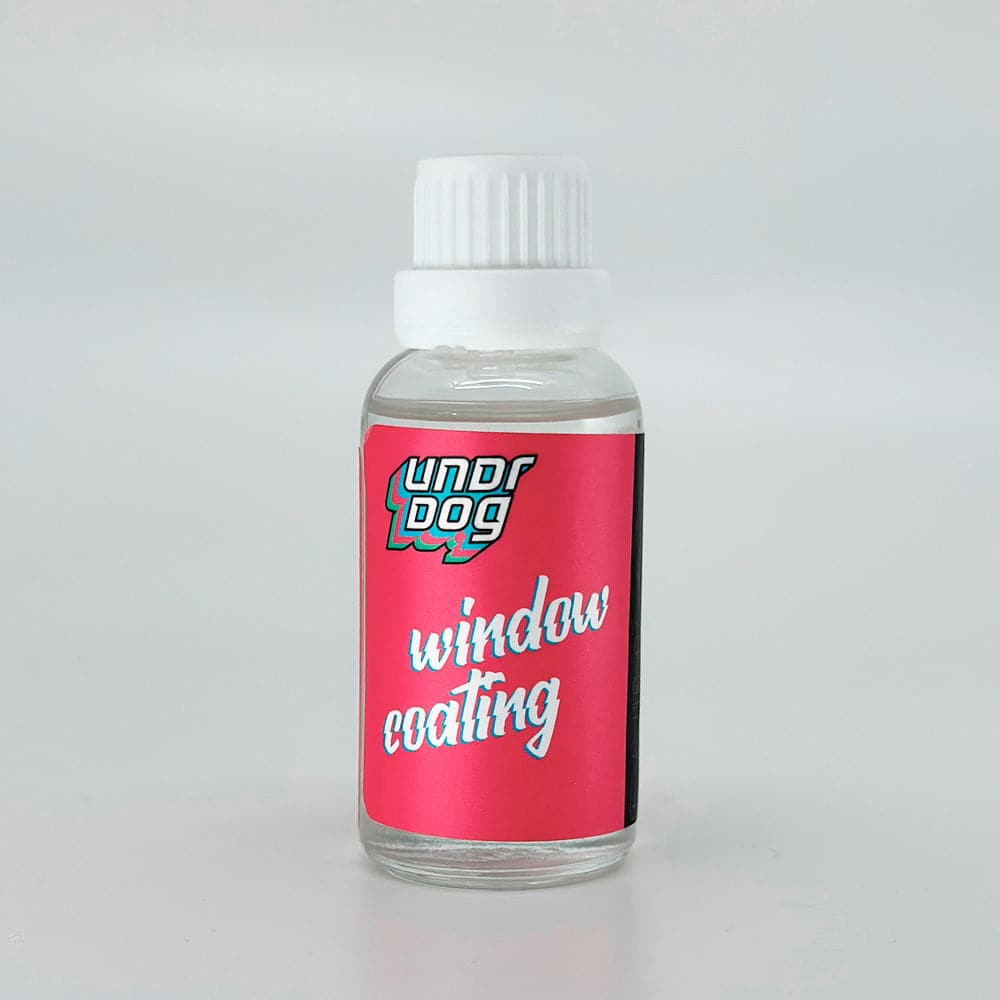
To apply Undrdog Window Coating, prepare suitable glass, spread the coating with an applicator in a crosshatch pattern, and follow the product's flash and towel-wipe instructions. Its current aftercare directions distinguish three hours of drying, 24 hours before water exposure, and one week before detergent washing. Those are different milestones, not interchangeable definitions of full cure.
The useful question is not simply whether you can put a coating on a window. It is whether you have identified the surface, completed the preparation, and made room in the schedule for the required aftercare. This guide turns the product directions into an organized workflow without promising that coating fixes damaged glass, replaces wipers, or makes every transparent surface suitable.
What Undrdog Window Coating is for
Window Coating is Undrdog's dedicated glass-protection product for automotive and residential applications; the product page describes its water-repellent role. Consider it when you want a protection step on confirmed suitable glass, not merely another round of cleaning. The application and aftercare commitments are part of that choice.
Keep that role separate from Window Warsh, the glass cleaner. If ordinary cleaning solves your problem, there is no need to call the result a coating installation. Our Window Warsh versus glass protection guide explains that distinction before you commit to another step.
Set a realistic acceptance standard: a clear view, no visible application residue, and a maintenance plan you can follow. Do not use water beading alone as permission to ignore poor visibility, and do not treat the product as a repair for cracks, chips, scratches, or unresolved marks. If your concern is damage rather than removable dirt, resolve that concern separately before choosing protection.
Confirm the glass before choosing your prep
Start with the exact component, not its appearance. Is it exterior vehicle glass, a residential pane, aftermarket film on the inside, a plastic screen, or a surface associated with a camera or sensor? Check the vehicle, window, film, or component instructions before treating it. This guide does not establish coating compatibility for every item that looks like glass.
For a straightforward automotive project, keep your plan focused on the confirmed glass surface. Do not extend the same solvent preparation to nearby rubber seals, unsealed plastics, trim, tint film, or interior materials. If you cannot identify a surface or an existing treatment, ask the relevant manufacturer and Undrdog before proceeding. A small test area is not a substitute for missing compatibility information.
The Window Coating instructions call for wiping the glass with denatured alcohol or a body-shop wax and grease remover using fresh, clean towels. Follow the selected prep product's own directions and restrictions as well; the category name does not make every formula interchangeable. Do not improvise a solvent mixture or a dilution from an unrelated coating tutorial.
Clean and inspect before that final preparation step. If spots, film, or other marks remain, stop to identify the problem rather than trying to hide it under coating. For a shop, photograph the remaining condition and agree on the next step with the customer. For a DIY project, the same inspection can prevent spending the afternoon coating a surface you were already unhappy with.

Set up the workspace and towels first
The product's application checklist calls for new microfiber towels, applicator pads, the appropriate glass-preparation product, adequate lighting, a timer, and protective equipment. It prefers a cool shaded area, specifies an environment above 45°F and below 110°F, and calls for a contamination-free, well-ventilated workspace. Use those product-specific limits rather than transferring a temperature range from another coating.
Lay out separate areas for preparation towels, the coating applicator, and wipe-off towels. Keep fresh replacements within reach and used cloths out of the clean pile. Decide how you will track the glass you have completed before opening the bottle. That is especially helpful when both sides of a pane look similar or several windows are being treated.
Protective equipment is not an optional finishing touch. The product safety information warns of flammable liquid and vapor, serious eye irritation, and possible drowsiness or dizziness; it calls for avoiding ignition sources and using protective gloves and eye protection. Keep the current label available, and obtain the product's safety data sheet if you need clarification about handling or the right protection for your setup.
In an SDS, Section 7 addresses handling and storage, while Section 8 addresses exposure controls and personal protection, as explained in OSHA's safety-data-sheet guide. Use the actual product SDS to select equipment; this article is not specifying a glove material, respirator cartridge, or ventilation design. If you cannot meet the required precautions, postpone the job rather than guessing.
Apply Window Coating in controlled sections
The following sequence follows the current manufacturer application directions. Keep those directions beside you, and resolve any difference between the instructions supplied with your bottle and the website before starting. A blog is a planning aid, not a reason to override the product label.
- Finish the glass preparation. Use the specified preparation approach on suitable glass with fresh, clean towels. Inspect the surface and surrounding area before moving to coating.
- Prime the applicator. The directions specify 15–20 drops initially. Keep the pad damp with product, adding more as needed for even application; that initial count is not a total dose for every window.
- Use a crosshatch pattern. Apply vertically and then horizontally, as directed. Choose an area you can cover, track, wipe, and inspect without losing control of the sequence.
- Follow the flash instructions. The page says to complete as much as possible within a five-to-seven-minute timeframe and to begin wiping once the coated area has flashed for no less than five to seven minutes. Keep track of each working area rather than coating every window and starting one timer at the end.
- Separate the towel passes. Undrdog suggests at least three towels: one for initial removal, one for remaining residue, and one for the final wipe. Keep each role distinct and bring in clean replacements when necessary.
- Inspect before moving on. Look deliberately for residue instead of assuming the final towel pass has finished the job. Continue only when the section is ready and you can confidently track the next area.
Do not turn those directions into an invented universal section size, a fixed number of windows per bottle, or a rule to leave product untouched for the length of the whole job. If your conditions make the instructions difficult to follow, stop and get product-specific advice. Adding more liquid or rubbing harder is not a substitute for resolving the problem.
For the basic division of labor between placement and wipe-off, see our coating applicator versus microfiber towel guide. Use its tool-organization principles alongside Window Coating's own timing and towel directions. A general coating tutorial should not replace this product's application sequence.

Drying, water exposure, and washing are different
The Window Coating aftercare directions give three separate intervals after application. Build the schedule around all three, not the shortest one. A window that has reached the stated drying interval has not automatically reached the later water-exposure or detergent-washing milestone.
| Milestone | Current product direction | What to plan | What not to infer |
|---|---|---|---|
| Drying | Wait three hours for drying | Leave the installation undisturbed and protected during this period | Rain, washing, or full chemical resistance is now approved |
| Water exposure | Wait 24 hours before getting the glass wet | Arrange protected parking and avoid sprinklers, rinsing, or a beading demonstration | The detergent-washing restriction has ended |
| Detergent washing | Do not wash with detergents for one week | Delay the routine detergent wash until that interval has passed | A guarantee about every chemical or a measured full-cure endpoint |
A practical handoff should include the completion time and the earliest water and detergent-wash times. Write them down instead of saying “let it cure overnight,” which does not communicate the separate restrictions. If a customer cannot provide protected parking, discuss rescheduling before the coating is applied, not after the car is ready to leave.
The product FAQ advises drying with soft microfiber after unexpected rain within the first 24 hours, once the rain stops; see the rain-exposure guidance. Treat that as a contingency, not permission to shorten the no-water interval. If residue or a visibility problem remains, contact Undrdog for a product-specific next step rather than automatically applying another layer.
Inspect the result and maintain the glass
Make the final inspection about the view through the glass, not just the appearance of its outer surface. Check while parked, from inside and outside where accessible, using lighting that makes residue visible. Do not begin a drive with an unresolved visibility problem. A coating purchase is not a reason to accept a smeared windshield.
After the one-week detergent restriction, the maintenance instructions call for a pH-balanced wash and emphasize drying. Follow both the coating directions and the cleaner's label, including applicable surface restrictions. Maintain the surrounding glass-care routine rather than treating coating as a substitute for cleaning or normal vehicle maintenance.
If performance seems to change, record what you actually observe: visible contamination, remaining streaks, or a change after an appropriate wash. Do not immediately translate one observation into a lifespan claim. For a shop, a dated maintenance note and photographs are more useful than a promise that every vehicle will behave identically.
Store the bottle cool and dry with its lid tightly closed, while observing the ventilation and ignition-source precautions in the storage and safety directions. Keep it out of children's reach. Handle used materials and disposal according to the product instructions and applicable local requirements, not an improvised cleanup routine.
How Window Coating fits an Undrdog protection plan
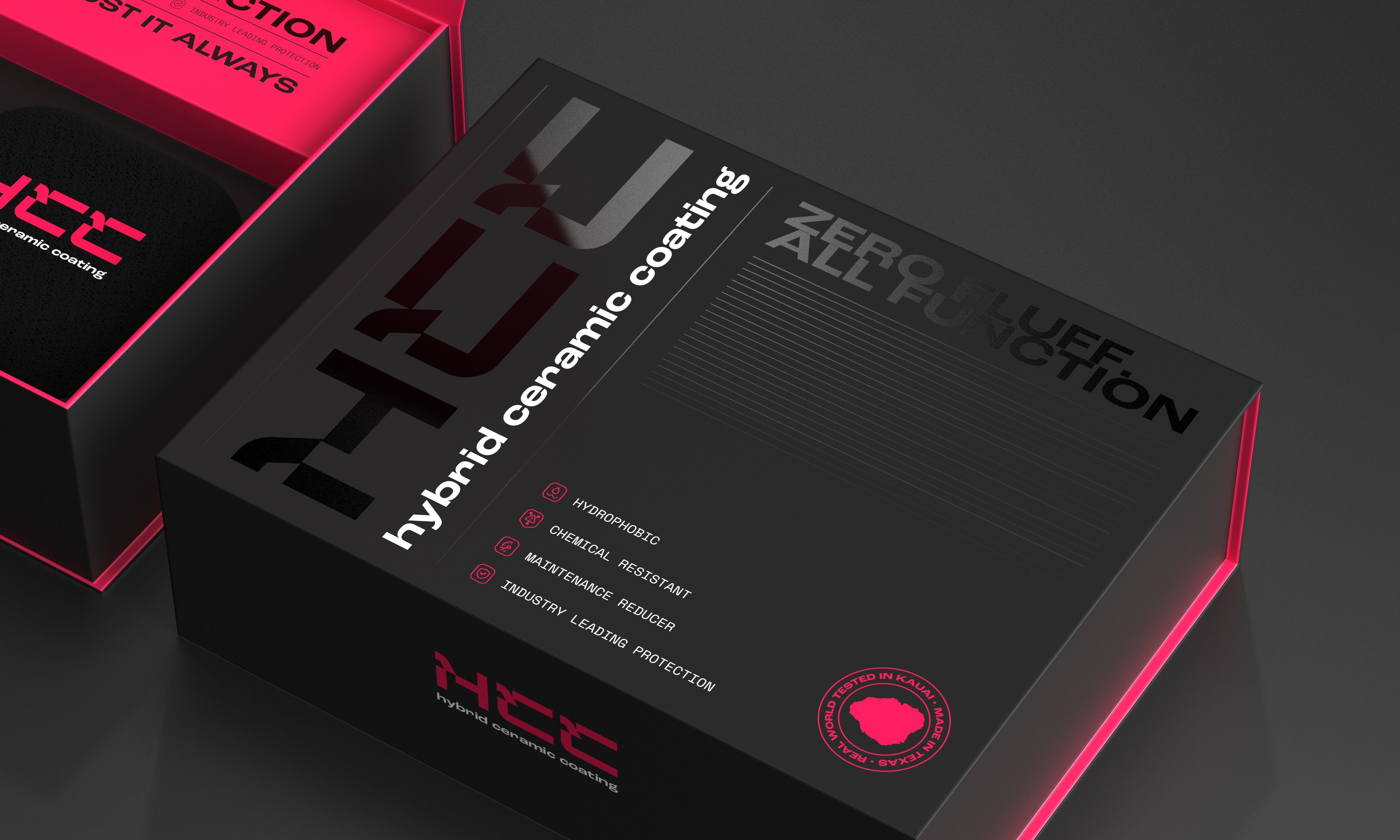
For a broader protection project, HCC Hybrid Ceramic Coating is Undrdog's all-surface flagship for cars, boats, planes, and bicycles. Its multi-year positioning depends on preparation, exposure, use, and maintenance; it is not one fixed lifespan for every installation. Confirm the exact surface and current instructions before choosing it.
This article focuses on Window Coating because it has a dedicated glass application and aftercare procedure. That does not establish that it outperforms HCC in every glass situation, or that either product belongs on every lens, film, sensor, or screen. Choose a confirmed application and follow the directions for the bottle you are actually using.
The most useful purchase checklist is short: suitable glass confirmed, remaining defects assessed, preparation instructions understood, clean applicator and towels ready, safe workspace arranged, and aftercare time available. If a box is missing, solve that part first. The bottle is one part of the job, not a substitute for the process.
Frequently asked questions
Is Window Coating the same product as Window Warsh?
No. Window Warsh is a glass cleaner, while Window Coating is the separate protection product. Cleaning the glass does not mean you have completed the coating's specified preparation, application, and aftercare.
What should I use to prepare the glass?
The current directions specify denatured alcohol or a body-shop wax and grease remover with fresh, clean towels. Confirm the glass and selected prep product are suitable, follow both sets of instructions, and keep that solvent process off adjacent materials unless their compatibility is established.
How many towels should I have ready?
Undrdog's application directions suggest at least three for wipe-off: one for initial removal, one for remaining residue, and one for the final wipe. Keep preparation towels separate and have clean replacements ready rather than treating three as a maximum for every job.
Can the coated glass get wet after three hours?
No. The product instructions give three hours for drying but require waiting 24 hours before water exposure. Do not use the earlier drying interval as permission for rain, rinsing, or a water-beading test.
When can I wash with detergent?
Wait one week, according to the Window Coating aftercare directions. The separate 24-hour water-exposure interval does not remove that restriction, and neither interval should be renamed a universal full-chemical-cure time.
Can I coat plastic windows or tint film using this guide?
Do not use this guide as approval for plastic windows, tint film, camera lenses, or displays. Identify the exact material and obtain suitable product and component guidance before proceeding; transparent appearance alone is not enough to make the glass workflow applicable.
What if I see streaks after the final wipe?
Stop and inspect rather than driving with impaired visibility or immediately adding another layer. The application directions require a residue check; if the problem remains unresolved, contact Undrdog for advice specific to the surface, application conditions, and elapsed time.
Do I need installer certification to apply Window Coating?
No. The product FAQ says certification is not required. That does not remove the need for compatible glass, correct preparation, protective equipment, controlled application, or the stated aftercare intervals.
Plan the glass protection step properly
Review Window Coating's current directions, confirm your surface, and leave room for the complete aftercare schedule.
Shop Window Coating

Leave a comment
This site is protected by hCaptcha and the hCaptcha Privacy Policy and Terms of Service apply.