

A heat-resistant ceramic coating claim needs a temperature, exposure conditions, tested surface, and a definition of what still worked afterward; the number alone does not establish protection for your entire vehicle. Heat resistance also should not be read as proof of thermal insulation: high-temperature coating guidance and thermal-barrier research address specific coating systems and outcomes, not interchangeable promises for anything called ceramic. See the ASTM high-temperature coating scope and NASA's thermal-barrier research summary for that distinction.
The practical question is not “Which bottle has the biggest temperature number?” It is “What evidence connects this coating, on this surface, to the job I need it to do?” Ask that before paying extra for a heat-related feature, and ask it about Undrdog too.
What does a ceramic coating heat rating actually say?
Start by preserving the exact wording. For example, Gtechniq's C5 Wheel Armour page says, “Withstanding temperatures up to 600°C (1112°F), C5 is built to endure even the most demanding conditions your vehicle encounters.” That is the manufacturer's published statement for that named product; this article is not an independent validation of its temperature performance. Read the original product description.
A reasonable next request is the evidence behind the temperature statement: what was coated, how it was prepared, how long it was exposed, and what property was checked afterward. The quoted sentence does not supply those details. That does not prove the product fails, or that supporting evidence does not exist; it means the sentence alone cannot answer those questions.
Resist adding your own promise to the wording. “The coating withstands heat” is not the same purchasing requirement as “the coated part stays cooler,” “the original finish cannot discolor,” or “the wheel assembly is safe at that temperature.” Write down the outcome you actually need and ask for evidence addressing that outcome rather than accepting the headline as a substitute.
| Claim or phrase | Question to ask | What not to assume |
|---|---|---|
| Heat resistant to a stated temperature | For how long, on what surface, and with what result? | That every coated part can operate at that temperature. |
| Retains its protective properties | Which properties were measured before and after exposure? | That appearance, adhesion, cleaning, and water behavior were all tested. |
| Thermal barrier or insulation | What heat-transfer or component-temperature measurement supports it? | That surviving heat proves insulation. |
| Suitable for a wheel or exhaust tip | Which finish, preparation, service conditions, and exclusions apply? | Approval for an entire braking or exhaust system. |
| Tested to a named standard | Which version, specimen, procedure, and result are documented? | That the standard's existence is a test report for this bottle. |
This is our buyer's checklist, not a statement that every advertisement makes every one of these claims. Use only the questions that match the feature being offered. A seller should have the opportunity to clarify what it means before you draw a conclusion.
Application temperature, cure conditions, and service heat are different
Keep three questions separate: the conditions for applying the liquid, the conditions for curing the applied film, and the conditions the finished system is intended to tolerate in use. A useful documentation example is the Jotatemp 1000 technical data sheet, which treats application, drying and curing, and heat resistance in separate sections. It is an industrial coating document, not a procedure for installing a consumer automotive coating.
For your own job, request the actual installation instructions as well as the performance claim. Do not use a finished-film temperature number to decide that application to a hot wheel is acceptable. Ask when the part can be coated, what environment is required afterward, and when the manufacturer permits the intended service exposure.
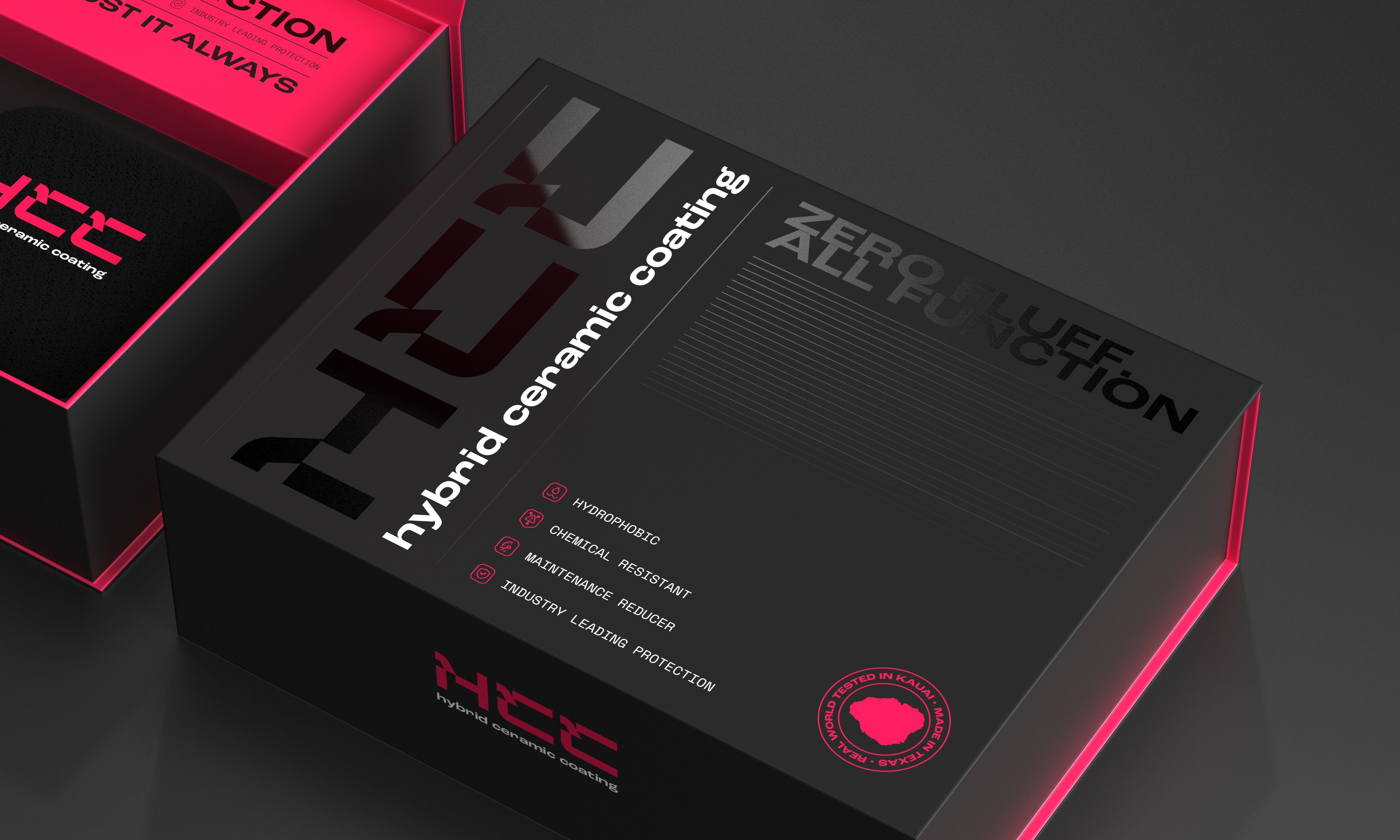
Also separate cured-film claims from liquid handling hazards. The current HCC Hybrid Ceramic Coating page identifies the liquid and vapor as highly flammable and instructs users to keep it away from heat, hot surfaces, sparks, open flames, and other ignition sources. A heat-related marketing claim does not cancel those handling instructions.
Our recommendation is simple: no torch demonstrations, improvised oven tests, or attempts to speed an installation with an unapproved heat source. If a professional process uses heating equipment, ask for the product-specific approved procedure and qualified supervision. Do not turn an evidence question into a hazardous experiment on your vehicle.

The surface underneath is part of the claim
A coating rating cannot be interpreted responsibly while ignoring the surface used for the rating. The industrial technical sheet provides a particularly clear qualification: “The continuous operational temperature limits are based on the substrate’s heat resistant properties.” That wording comes from Jotun's Jotatemp 1000 sheet; it is not a temperature limit for automotive paint or an endorsement of using that industrial coating on your car.
Apply that reading discipline to a detailing quote. Ask whether the evidence concerns bare metal, a particular painted panel, a refinished wheel, or another specified material. If your wheel has a different finish or repair history, request confirmation for that situation rather than treating the word metal as the entire specification.
Write the proposed application narrowly. “Outer wheel faces with this finish” is a more useful description than “all wheel parts.” “The visible exterior of this exhaust tip” is more useful than “exhaust protection.” Our recommendation is to avoid extending a cosmetic surface-care recommendation into a safety-critical or internal component application without explicit approval for that exact part.
The same discipline applies when requesting a professional installation. A detailer who pauses to identify the finish, inspect damage, or check the maker's restrictions is doing useful work. Do not pressure the shop to replace that judgment with an impressive temperature number from an unrelated test surface.
Heat resistance is not the same as thermal insulation
Thermal-barrier research addresses a distinct objective: changing heat transfer and component temperature. NASA's 1978 summary describes a two-layer, plasma-sprayed coating system with a ceramic layer over a metallic layer and investigations involving engine parts, including measured temperatures with and without the coating. It does not evaluate a wipe-on automotive detailing product. NASA technical report summary.
That is why we would ask for different evidence for “survives heat” and “keeps the part cooler.” For the first, request the exposure conditions and retained performance. For the second, request the thermal measurement, the comparison setup, and the boundary conditions. Evidence for one question should not silently become an answer to the other.
Do not transfer the reputation of an engineering category to an unrelated product simply because both use the word ceramic. The NASA work identifies a particular system and application; it supplies no HCC temperature-reduction result, no comparison between detailing brands, and no reason to assume your cabin or wheel will run cooler after a detailing service.
If your goal is reduced component temperature, say so before buying. Ask the seller whether the proposed product was evaluated for that goal. If the answer only repeats its maximum temperature rating, the insulation question remains unanswered; you can decline to pay for that unestablished benefit without declaring the product useless for its intended purpose.
What evidence should accompany a heat-resistance claim?
The public scope of ASTM D2485-26 covers evaluation of heat-resistant properties of coatings designed to protect steel surfaces at elevated service temperatures. It distinguishes interior-service and exterior-service methods. We are referring to the publicly available scope, not claiming access to the full paid procedure or that a particular retail coating passed it.
That example shows why the method name needs context. Ask for the tested item, method version, surface preparation, coating system, cure conditions, exposure schedule, and results. If a report concerns a particular steel specimen, ask what supports applying the conclusion to the finish you own.
Specify the result you want to understand. Was the coating merely still visible? Was appearance assessed? Was adhesion evaluated? Was a particular cleaning or water-behavior property measured? These are questions to put to the supplier, not a claim that the cited ASTM scope requires every measurement on this list.
Request time and exposure details too. Ask whether the number describes continuous exposure, a short peak, repeated cycles, or another defined condition. Do not choose a product by comparing two headline numbers until you know whether the underlying conditions are comparable. If one supplier provides details and another does not, record that difference as an evidence gap rather than inventing a performance ranking.
Once someone supplies a report, our guide to verifying a ceramic coating lab report covers document identity and the scope of the work. Keep this purchase decision focused on heat-specific relevance: a genuine report can still address a different product, surface, or outcome from the one you need.
Finally, avoid converting a heat-exposure result into a guaranteed number of years on your car. Our test-hours-versus-years explainer addresses that separate inference. For this decision, ask which observed result the supplier is willing to support, not how large a lifespan claim you can build from it.
Use the claim to make a better buying decision
Consider a hypothetical wheel-coating quote. The seller offers easier routine cleaning and mentions a high-temperature rating. You want a finish-care service, not a cooling-system modification. Ask which wheel finish is covered, how the product is prepared and cured, what maintenance is required, and what evidence supports the heat-related wording.
Now change the hypothetical goal: you want a component to operate at a lower temperature. That is a different requirement. Ask for the relevant thermal measurements and the exact component application. If the offered evidence only describes the coating surviving heat, do not treat it as a demonstrated answer to your new goal.
There is a useful middle position between accepting every number and dismissing all specialist products. You can recognize that the supplier may have a valid, limited claim while declining to infer broader protection. You can also value a detailer's preparation, careful installation, and clear aftercare without pretending those services prove a thermal measurement.
Here is a message you can adapt: “Please confirm the exact product and surface this heat rating applies to, the exposure duration, and what property was retained afterward. Is this a coating-survival claim or a measured reduction in component temperature? Please also provide the applicable installation, curing, and handling instructions.”
Save the response with the quote or purchase record. If the supplier cannot answer a question that is essential to your intended use, postpone that use or choose a product with appropriate documentation. An unanswered question is not permission to fill in the missing conditions yourself.

Frequently asked questions
Does a high heat rating mean ceramic coating keeps paint cooler?
Not by itself. Ask for a measured temperature or heat-transfer comparison if cooling is the benefit you need. NASA's thermal-barrier research concerns a specific engineered system and measured component behavior, not an automatic benefit of every product called ceramic. NASA research summary.
Can I apply a heat-resistant coating to a hot part?
Do not use the finished-film rating as application permission. Follow the exact product's application and safety directions. HCC's current safety information instructs users to keep the liquid away from hot surfaces and ignition sources, regardless of its metal-surface thermal marketing claim. HCC instructions and safety.
What should I ask when a rating says “up to” a temperature?
Ask what was coated, how it was prepared and cured, how long it was exposed, whether exposure was repeated, and what result counted as acceptable. Also ask whether the rating applies to your exact finish and use. Do not supply those missing conditions from guesswork.
Does a named test standard mean a particular coating passed?
No product-specific result is established just by naming a method. The public ASTM D2485-26 scope describes evaluation of heat-resistant coatings for steel surfaces; a supplier still needs to identify the tested item and its results. ASTM public scope.
Can a metal-surface rating be used as a paint-temperature limit?
Do not make that transfer without relevant evidence. Ask for confirmation for the actual coating system and finish. The industrial technical-sheet example explicitly ties continuous operating limits to substrate properties, illustrating why the surface qualification matters. Technical-sheet example.
Does this article verify HCC's advertised temperature tolerance?
No. It identifies the current product-page claim and applies the same evidence questions used for other coatings. It does not provide a new HCC heat-test report, a verified insulation result, or a temperature limit for every surface. Current HCC page.
Should I test a coating with a torch or household oven?
No. Our recommendation is to request documentation rather than improvise a destructive heating test. Do not heat the product, coated parts, or contaminated applicators as an experiment. Follow the manufacturer's handling precautions and use qualified testing services when a formal thermal evaluation is necessary.
Is a heat-resistance claim useless without a public report?
Not necessarily. Ask whether the supplier can provide relevant documentation or clarify the intended use. If evidence is unavailable to you, record the limitation and decide whether the unresolved point is essential to your purchase; do not automatically convert missing information into either a performance guarantee or a failure verdict.
How Undrdog does it
HCC is Undrdog's all-surface flagship for cars, boats, planes, and bicycles, sold to professional detailers and DIY users without a purchase-certification requirement. Its intended positioning is multi-year protection, with actual service life depending on preparation, exposure, use, and maintenance. Start with the current HCC product information and confirm suitability for your particular project.
The same evidence rule applies here. HCC's current public specifications state “Up to 1,200°F on metal surfaces.” That is product-page wording, not a new independently verified result supplied by this article, and we are not extending it to painted panels, plastics, every vehicle component, or a claim of reduced operating temperature. Read the claim in its original context.
If thermal performance determines whether your application is suitable, ask Undrdog for the relevant conditions and supporting documentation before proceeding. We are not publishing a temperature leaderboard, disclosing proprietary formulation, or using a general material study as an HCC test. For an ordinary surface-protection project, choose based on the confirmed surface, preparation, application requirements, and maintenance plan, not an assumption attached to a large number.
Choose protection for the job you actually have.
Review HCC's current instructions and confirm your surface and service conditions before beginning a coating project.
Shop HCC Hybrid Ceramic Coating

Leave a comment
This site is protected by hCaptcha and the hCaptcha Privacy Policy and Terms of Service apply.