

A ceramic coating add-on is worth considering when it covers a surface you actually want treated, includes clearly defined preparation and application, and adds a cost you are comfortable paying. Compare the same base service with and without each extra instead of treating the longest package list as the best value. If the scope, compatibility, or future care is unclear, get those answers before adding it.
This guide focuses on choosing wheel, glass, trim, and interior extras from a detailer's proposal. It is not a price survey, a claim that all extras are necessary, or a claim that a professional's labor should cost the same as a bottle. The useful decision is what additional job you want done, by whom, and under what terms.
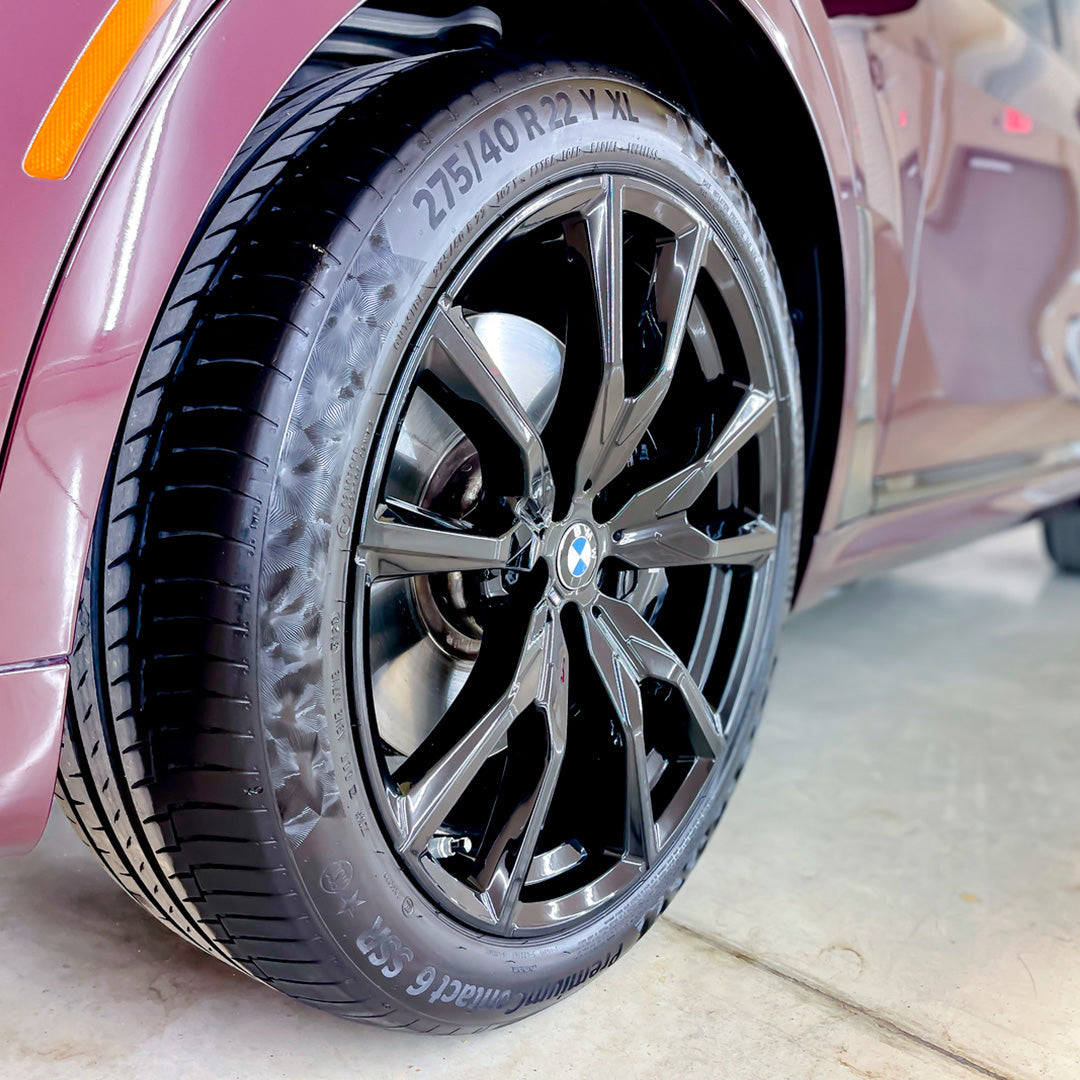
Photography note: these are authentic Undrdog product and vehicle-care images used for context. The hero shows a wheel and tire; it does not establish that a wheel ceramic coating was installed, identify a customer's package, or demonstrate the result of an add-on.
Start with an unchanged base coating quote
Before comparing extras, write down the base service you intend to buy. Identify the vehicle, surfaces, preparation, desired finish, coating, handover conditions, and exclusions. Our recommendation is to hold that scope steady while asking what changes when you add or remove a particular service.
That approach follows a useful recordkeeping principle from outside detailing: the FTC's auto-repair guidance recommends written estimates that identify the work and anticipated labor charges, plus approval before exceeding a specified time or cost (FTC Auto Repair Basics). We are borrowing that model for a clear proposal, not claiming that every coating transaction falls under the same legal rules as a mechanical repair.
Ask for three versions if needed: the base job, the base plus the one extra you most want, and the proposed bundle. If the correction allowance, preparation, or coating changes between versions, mark that difference. You cannot isolate the price of an extra when the underlying job has also changed.
Keep your desired finish separate from package prestige. “I want the agreed paint work and easier-to-understand wheel coverage” is a useful request. “Give me the highest tier” leaves too much of the decision inside a package name.
Wheel add-ons: faces, barrels, and who removes the wheels
Ask the shop to show you exactly which parts of each wheel are included. Is the proposal for the visible faces only, or does it also include inner barrels and accessible backs of spokes? Record the answer rather than assuming that the phrase “wheel coating” settles every boundary.
Next ask how the shop will access the agreed areas. If removal is part of the service, identify who handles it, whether removal and refitting are included in the quoted total, and what information or hardware the shop needs from you. A wheel-lock key request should be resolved before the appointment, not left as a surprise when work is scheduled to begin.
The reinstallation step deserves respect: Tire Rack's published installation guidance says, “Set wheel lug torque to the recommended specification per vehicle using the proper crisscross pattern.” (Tire Rack installation guidance) This is a reason to clarify responsibility and vehicle-specific procedures, not a do-it-yourself wheel-removal tutorial.
Ask what the wheel preparation includes and what it does not fix. If you are concerned about curb damage, an altered finish, corrosion, or an earlier repair, have that condition assessed before accepting a coating-only answer. The decision to purchase protection should not stand in for determining whether another service is needed first.
Finally, separate the wheel service from tire appearance and any proposed work on other nearby components. Require the exact product and approved application scope for each. Do not infer approval for brakes, mounting interfaces, hardware, or every visible material from a broad “all wheels treated” description.
Our value test is specific: would you still want the stated wheel coverage at its actual additional price if it were not called part of a premium package? A smaller, accurately described faces-only job may fit one owner's goal; another owner may prefer a documented, more extensive scope. Neither choice needs a claim that the other is pointless.
Glass add-ons: specify the windshield and every other surface
Ask whether “glass” means the windshield alone, selected exterior windows, exterior mirrors, or another explicit list. Ask what preparation is included and whether existing marks or earlier treatments need separate assessment. Do not let a single word replace a surface map.
A product-specific example shows why the details matter: Rain-X's Original Glass Water Repellent Trigger directions say, “Wipe onto exterior glass using a firm, circular and overlapping motion.” (Published product directions) The quotation defines an application surface and method for that named product; it does not establish the scope or performance of whichever glass add-on is on your quote.
For the proposed treatment, request its actual instructions, suitability for the exact surface, required preparation, and aftercare. Ask the installer how the finished glass will be inspected and how concerns about visibility or wiper operation will be handled. Keep any existing chip, crack, haze, or operating problem on the work record rather than assuming a treatment includes repair.
Our recommendation is to choose a glass extra for a defined goal, not because “full exterior” sounds incomplete without it. If the quote covers only the windshield, decide whether that is the surface you wanted addressed. If it covers more, ask whether the additional areas are worth the additional cost to you.

Use a surface-by-surface worksheet for the remaining extras
Apply the same questions to trim, door jambs, upholstery, or another proposed treatment. The table below is our recommended buying worksheet, not a list of services that every shop offers or every vehicle needs.
| Extra on the proposal | Scope to confirm | Decision to make |
|---|---|---|
| Wheel treatment | Faces, barrels, spoke backs, preparation, removal and refitting responsibilities. | Which areas do you actually want treated, and what does that version add to the total? |
| Glass treatment | Windshield or named exterior glass areas, product, preparation, inspection and care. | Does the stated scope match your goal, or were you expecting different surfaces? |
| Exterior trim | The exact pieces and finishes, product suitability, existing condition and exclusions. | Is this protection work, appearance restoration, or a combination that needs separate explanation? |
| Door-jamb or hidden-area work | The specific accessible surfaces and the difference between cleaning and coating. | Do you value the named additional work at the quoted increment? |
| Interior treatment | Identified materials and areas, cleaning included, application limitations and aftercare. | Are you buying a defined material-specific service rather than an unspecified “interior protection” label? |
For an interior proposal, ask for named materials instead of “all surfaces.” For trim, ask whether the agreed appearance can be achieved and whether the existing condition changes the plan. These are compatibility and expectation questions to answer before work, not reasons to prescribe one product to everything.
Mark each item as included, excluded, separately priced, or unresolved. Do not turn an unanswered question into an assumed inclusion. Once the list is clear, compare only the choices you would realistically buy.
Do the bundle math using what you actually want
Start with the added cost: the quoted total with the selected extra minus the quoted total for the unchanged base job. Then compare that increment with the option you would otherwise choose. A discount against buying every separate item is not the same as a saving against buying fewer items.
Here is a fictional, pre-tax example solely to illustrate arithmetic. These figures are not market averages, Undrdog prices, or a quote from an installer.
| Hypothetical choice | Added amount | Total with the same base job |
|---|---|---|
| Base paint service only | $0 | $1,200 |
| Base plus wheel extra | $240 | $1,440 |
| Base plus glass extra | $160 | $1,360 |
| Base plus both at separate prices | $400 | $1,600 |
| Base plus the wheel-and-glass bundle | $350 | $1,550 |
If you want both extras, the hypothetical bundle costs $50 less than the separate-price combination. If you only want glass, the bundle costs $190 more than your preferred base-plus-glass choice. The question is whether the additional wheel work is worth that $190 to you, not whether the offer contains the word “save.”
For an actual proposal, compare totals on the same basis, including applicable taxes and quoted charges, and confirm that the service has not changed between rows. If the shop does not sell an extra separately, record that limitation rather than inventing a standalone price. A bundled offer can still be evaluated against declining the bundle.
Do not use a guessed coating lifespan to make the calculation look cheaper per year. Work with the price and obligations you can verify, then keep any uncertain benefit separate from the arithmetic.
Account for future care without inventing a lifetime budget
Ask for the care requirements for each added treatment, not just the paint coating. Request the relevant cleaning instructions, inspection or service terms if any, and current pricing for any separately chargeable follow-up the provider proposes. Leave unknown future costs marked as unknown.
Use our coating-maintenance budget guide for the broader planning framework. Here the narrow question is what changes because you selected this particular extra. Do not charge the same ordinary wash to every add-on in your worksheet and accidentally count it several times.
We recommend separating required actions from optional services and noting who supplies each instruction. If a package includes a written warranty, read the applicable document rather than assuming all added surfaces share the same terms. Ask who answers service questions and what evidence should be retained after installation.
A useful handover record connects the original proposal to the completed work. In its auto-repair context, the FTC recommends obtaining a completed order describing the work and charges (FTC recordkeeping guidance). For detailing, our recommendation is similarly practical: keep the agreed surface list, product identification, completed-work notes, and care instructions together.
Choose now, defer, or decline without devaluing the detailer
Choose an extra now when you want its defined scope, compatibility is confirmed, the provider can explain the process, and the complete price fits your plan. Defer when you still need a condition assessment, material identification, or a decision about which areas matter. Decline when the service is clear but simply not worth the additional spend to you.
Those are buying decisions, not verdicts on the installer's skill. Ask what work the extra contains rather than estimating profit from the apparent amount of liquid used. If you want a less expensive scope, ask whether the shop offers one and what would be excluded.
If you consider postponing an extra, request the later-service scope rather than assuming the same price will remain available or that a discount must be offered today. Record any proposed difference in preparation, scheduling, or charges. The provider can then explain the actual trade-off instead of defending an imagined one.
Before paying to reserve the job, confirm that the final selections are reflected in the booking record. Our coating-deposit checklist covers that separate payment step. A verbal decision to remove an extra is not a useful endpoint if the written scope still includes it.

How Undrdog does it
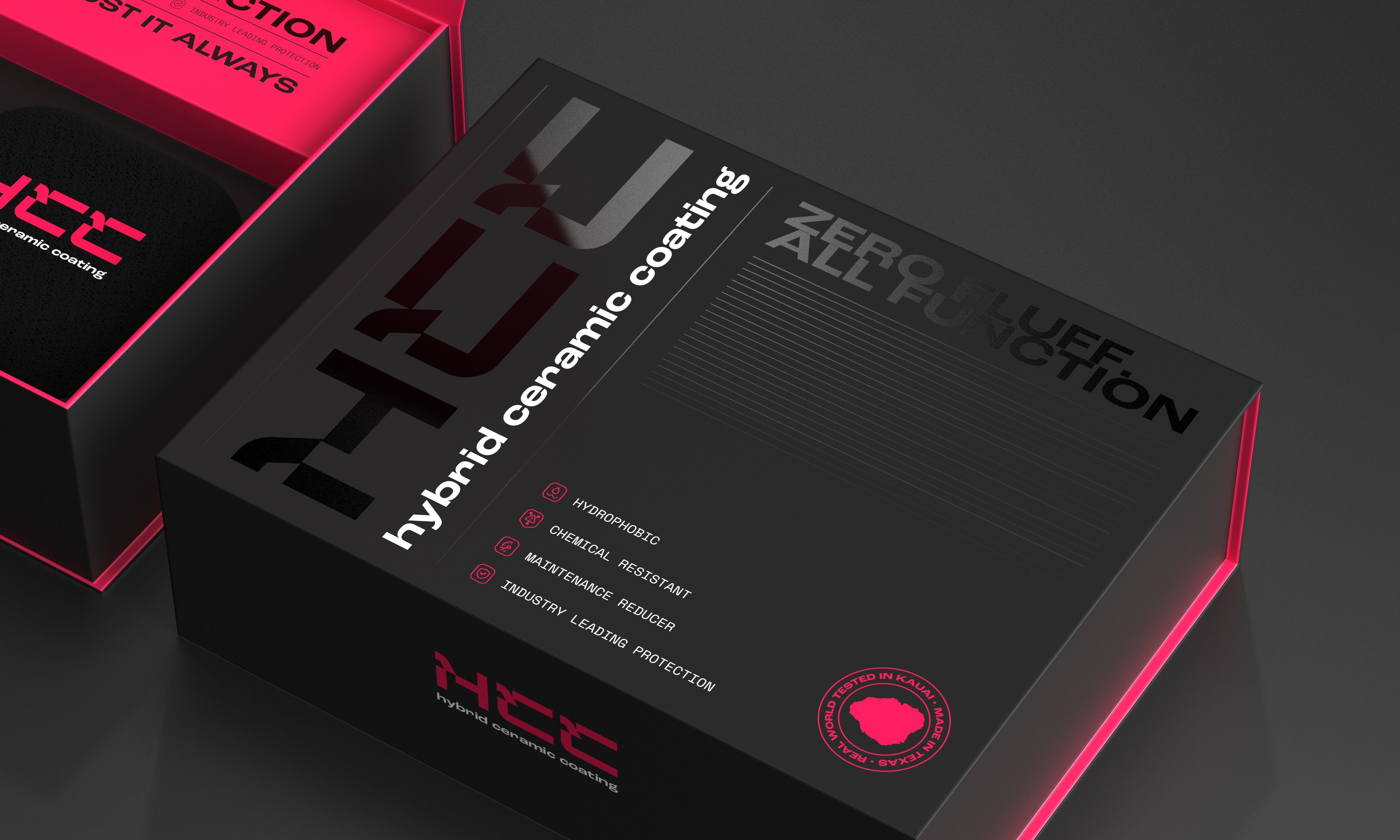
HCC Hybrid Ceramic Coating is Undrdog's all-surface flagship for cars, boats, planes, and bicycles. It is positioned for multi-year protection with service life dependent on preparation, exposure, use, and maintenance, not a fixed lifespan invented for a package calculation (HCC product information).
Undrdog sells HCC to both detailers and DIY buyers without a certification class or minimum purchase requirement. The direct purchase option is available through the HCC product page; buying the bottle is not the same transaction as commissioning a professional installation.
For a suitable new coating project, HCC is our starting recommendation. Confirm the exact surface, condition, preparation, application, and safety requirements before extending the plan to another area. “All-surface flagship” is not permission to treat every component indiscriminately or a claim that every service in a package uses one identical process.
This guide does not set independent installers' prices, promise that an extra is included, or assign a labor allowance to their work. Ask the provider for its actual scope and terms. The objective is a purchase you understand, whether that means the base service, a carefully chosen extra, or a broader package you genuinely want.
Frequently asked questions
Are ceramic coating add-ons always worth buying?
No automatic answer applies to every buyer. Our recommendation is to compare the exact added surfaces, preparation, product suitability, price, and future care against what you actually want, then choose only the work whose value is clear to you.
Does “wheel coating” mean the entire wheel is included?
Do not assume that from the label alone. Ask whether the quote covers faces, barrels, and spoke backs, whether removal is planned, and who handles removal and refitting; write the agreed scope into the proposal.
What should I ask if the wheels will be removed?
Ask who is responsible for removal and reinstallation, what is included in the price, and which vehicle-specific instructions govern the work. Tire Rack's installation guidance states, “Set wheel lug torque to the recommended specification per vehicle using the proper crisscross pattern.” (Installation guidance)
Does a glass add-on include every window?
Ask for a named surface list rather than assuming every window, mirror, or glass-like material is included. Confirm the actual treatment and instructions, the preparation, and how the finished work and any visibility concerns will be checked.
Is a discounted bundle cheaper than choosing one extra?
Not necessarily. In the fictional example above, the bundle saves $50 compared with buying both extras separately but costs $190 more than choosing glass alone; compare the offer with your actual alternative, not only the largest possible purchase.
Should I divide the package price by a promised year count?
Do not treat an unverified lifespan as a reliable denominator. Keep the confirmed purchase price and care obligations separate from uncertain durability assumptions, and ask for the actual applicable terms rather than creating an artificially precise annual cost.
Is the FTC estimate guidance a universal detailing-contract rule?
No. The cited FTC page concerns auto repair, and this article uses its written-estimate and completed-work recordkeeping model as a practical analogy, not a legal conclusion about every coating sale (FTC Auto Repair Basics).
Does buying HCC include a shop's wheel or glass service?
Buying a product is not the same as booking a provider's installation package. Confirm the provider's surfaces, work, price, and terms separately; this guide does not promise that any independent shop includes an extra or uses a particular package structure.
Start with the right coating and a clear scope
Review HCC for a suitable coating project, then choose preparation and extras around the surfaces you actually want treated.
Shop HCC Hybrid Ceramic Coating

Leave a comment
This site is protected by hCaptcha and the hCaptcha Privacy Policy and Terms of Service apply.