

More ceramic coating layers do not automatically mean more years of protection. A manufacturer-designed base-and-topcoat system can assign different jobs to different products, but the number of application steps is not a lifespan calculation. Judge the exact system, its intended benefit, and the evidence for that benefit rather than multiplying a durability claim by the layer count.
That is not an argument against an extra coat or against paying a detailer to install one properly. It is an argument for knowing what you are buying. “Another application for coverage,” “a dedicated topcoat for surface behavior,” and “twice the useful life” are three different propositions; ask the shop to explain which one belongs to your quote.
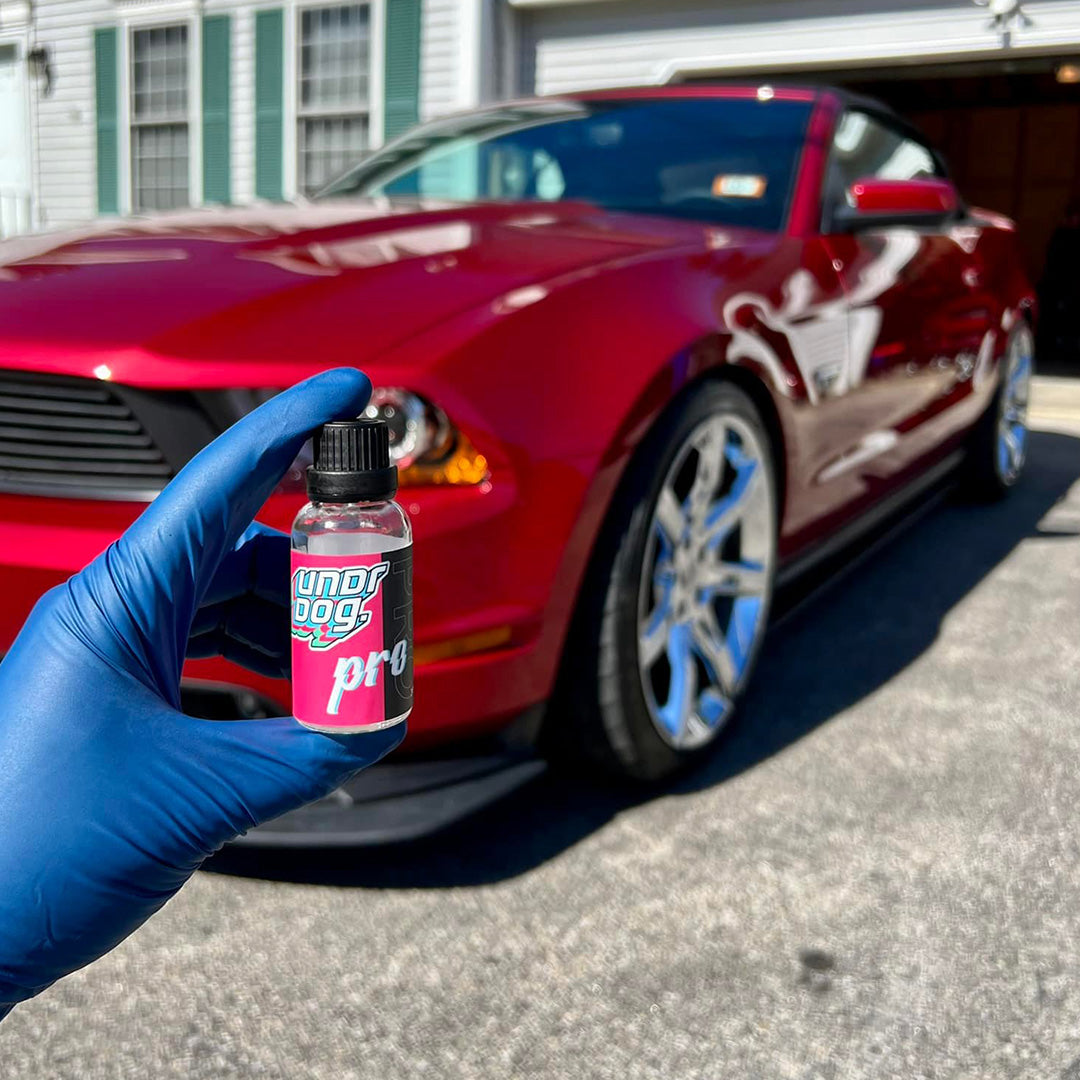
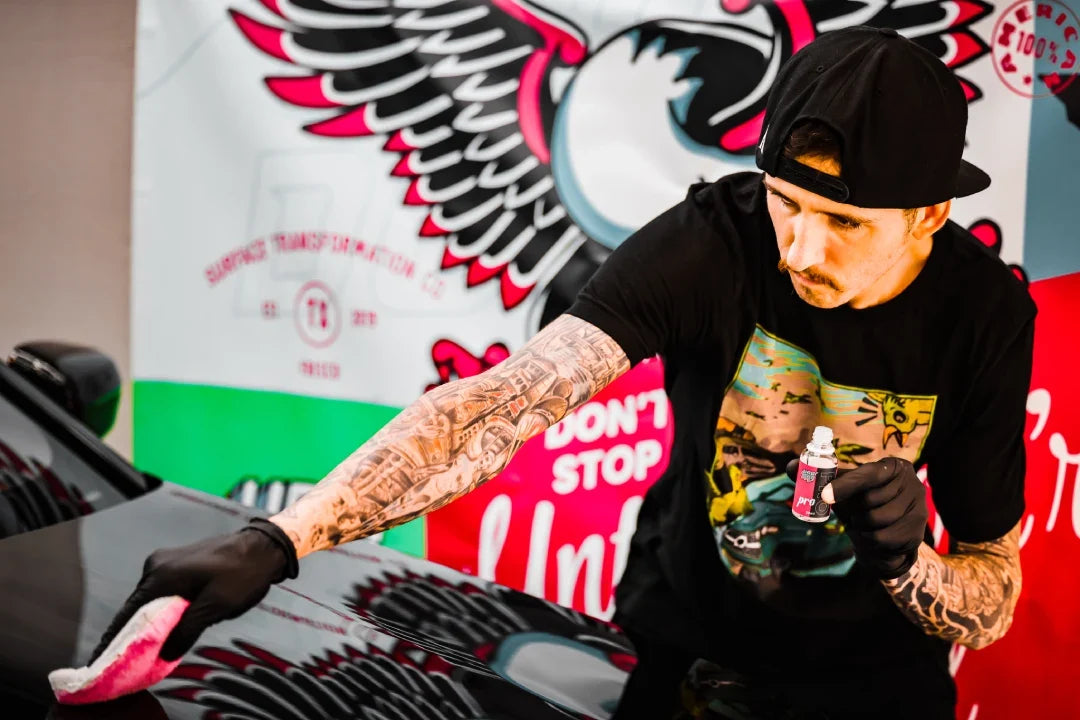
The photographs in this article are official Undrdog product and vehicle-care images. They provide context, not measurements of layer count, a controlled comparison, or proof of a particular vehicle's remaining coating life.
What does a ceramic coating layer mean in the quote?
Before debating the number, ask the seller to define it. Does “two layers” mean two applications of the same bottle, one base product followed by a different topcoat, or a coating followed by a maintenance spray? Does the count describe the whole exterior, or different products on different surfaces? Request product names and the application sequence in plain language.
Also ask what counts as a separate application. Do not assume vertical and horizontal passes within one crosshatch application represent two independently completed coating layers. The practical question is how the seller's count maps to the manufacturer's directions, not how many times an applicator crossed the panel.
A two-bottle package does not answer that question by itself. Read the instructions to determine whether the products are used separately, combined before application, or assigned different surfaces. Keep the advertised layer count tied to the actual workflow instead of inferring a system from the packaging.
| If the quote says | Ask what it means | Do not assume |
|---|---|---|
| Two coats of one product | Is the repeat application specified or permitted, and what is its purpose? | Twice the service life or exactly twice the retained film thickness |
| Base coat plus topcoat | What does each named product contribute, and is this the intended combination? | Both products make the same contribution to durability |
| Coating plus maintenance spray | Is the spray part of installation or later upkeep, and what benefit is claimed? | The base coating's service-life clock restarts |
| Multiple layers across the vehicle | Which products and applications are on each surface? | The advertised total is the number of coats on every panel |
Use this table as a clarification checklist, not a verdict on any package. A clear answer can make a multi-stage service easier to justify. An undefined count simply leaves you without enough information to compare it.
What manufacturers actually say about layered systems
A useful example comes from GYEON's EVO page: “Both Q² INFINITE BASE COATS are one layer stand-alone solutions. You are not obliged to use the top coat.” That is a statement about those named base products, not a rule that every coating should receive one application. It establishes why the exact system matters before you call an additional product mandatory.
On its Q² Syncro EVO page, GYEON answers the two-layer question with: “The base layer gives strength and durability, while the top layer improves gloss and hydrophobic behaviour.” Here, the stated roles differ. The buyer should preserve that distinction rather than translate two roles into two equal blocks of service life.
These are examples of published manufacturer descriptions, not independent test findings and not a ranking of brands. They support a narrow conclusion: a stand-alone coating and a specified base-and-topcoat system can be described differently, even within one manufacturer's lineup. They do not establish that any two products can be stacked or that more applications always improve every property.
When you read a claim about “enhanced durability,” finish the question: durability of what? Ask whether the seller means a longer-lasting water-repellent effect, retained gloss, resistance to a named exposure, or a longer interval before a particular maintenance action. Request the supporting information for that specific outcome.
Why two layers are not a two-times lifespan calculation
Suppose a fictional quote describes one application with a stated service-life estimate, then offers a second application. You cannot calculate a new lifespan just by doubling the first number. To make that conclusion, you would need evidence connecting that second application to the claimed change under relevant conditions.
This is an evidence question, not a claim that extra material can never help. The FTC's advertising substantiation policy says advertisers should have a reasonable basis for objective express and implied claims before disseminating them. It also explains that the type of support required depends on the claim and other circumstances; this article is not making a legal finding about a particular coating seller.
Apply that principle to the proposed benefit. Evidence for a fresh appearance is not automatically evidence for longer service life. Evidence comparing an entire system with an uncoated surface does not, by itself, isolate how much the optional extra application contributes over the base system alone. Ask for the comparison that matches the upgrade you are considering.
The same caution belongs beside thickness language. If a quote promises more film build, ask how that was measured on the specified system and what demonstrated benefit follows. Do not assume that an application count supplies a measurement, or that a thickness figure comes with its own conversion to calendar years. This article is not assigning a thickness to any coating or proposing a destructive measurement on your car.
Ask for the comparison behind the longer-life claim
You do not need to design a laboratory study at the counter. Ask for a concise explanation of the evidence supporting the actual upgrade. The following questions are a buyer's screening framework, not a formal testing standard or a demand that every shop run its own laboratory.
- Compared with what? Was the proposed multi-layer system compared with the same prepared surface using the base option, or with something else?
- Which products and process? Does the information concern the current products, recommended sequence, and number of applications in your quote?
- Which outcome? Was the comparison about appearance, water behavior, a specific resistance test, or observed service life?
- Under what conditions? What preparation, curing conditions, exposure, cleaning, and maintenance were included?
- What counted as the end? Was there a defined performance threshold, or did someone simply decide one sample looked better?
- What remains unknown? Which part of the claim is supported, and which part is an estimate for your use?
If a report is supplied, use our guide to verifying a coating lab report to check the document and its scope. For this decision, concentrate on whether the comparison addresses the extra layer you are being sold. A genuine report can still answer a different question.
Consider a hypothetical example: a seller shows water behavior on a completed base-and-topcoat system but offers no comparable base-only observation. You can note the demonstrated behavior of that finished system. You cannot calculate the topcoat's added years from that demonstration alone, and the absence of that comparison does not prove the topcoat has no benefit.
That last distinction matters. “Not established by the evidence I have” is a more accurate conclusion than either “it must double the life” or “it cannot work.” Keep the uncertainty visible while deciding whether the documented benefits are worth the price to you.

Separate installation quality from a lifespan promise
An installer may recommend an application step for process consistency or a desired finished result rather than promise a specific increase in years. Ask the installer to state that purpose directly and show how it fits the manufacturer's instructions. You can value a well-executed process without turning every step into a separate durability guarantee.
For a proposed repeat application, ask whether it is recommended, optional, or outside the documented procedure. Confirm the allowable timing and conditions from the exact product instructions. This article deliberately supplies no universal wait time between coats, maximum layer count, or rule for combining different products.
Do not pressure a detailer to add an improvised extra coat because a different package advertised a larger number. Instead, ask what they would install on your surface, why they would choose that system, and which outcome they are willing to describe in writing. Respect a clear explanation of the process more than a large number without one.
Compare preparation and inspection separately from coating count. If one quote includes correction and another does not, you are not comparing only layers. Request an itemized scope so you can distinguish the surface work, coating applications, final inspection, and aftercare handoff without assigning all of the price difference to an extra bottle pass.
Decide whether the extra layer is worth buying
Use three decisions rather than one blanket yes or no. First, confirm that the proposed application belongs to a documented system. Second, decide whether its stated purpose addresses something you actually want. Third, evaluate the added price, time, and care commitments against that purpose.
An extra step may be worthwhile for a clearly described finish or maintenance preference even when you do not have evidence for additional years. Conversely, if the only reason you are considering it is a longer-life promise, ask for support for that promise before treating it as the deciding benefit. Keep your purchasing rationale as specific as the evidence.
Here is a practical question to send a shop: “Please identify the base product and any repeat coat or topcoat, explain what the additional application is intended to improve, and tell me what support exists for the longer-life estimate. Please also keep the preparation scope and aftercare requirements visible in both options.” That is a request for clarity, not an accusation.
Keep warranty terms in a separate line of the comparison. Ask who provides any coverage, what conditions apply, and what remedy is actually described. Do not treat the length of a coverage period as a measured increment of life contributed by each coat. This guide does not determine whether a specific contract applies or how a claim would be decided.
Keep the installation record separate from later maintenance
At handoff, request a simple installation record: product names, treated surfaces, documented application sequence, completion date, relevant care restrictions, and the agreed service scope. Save the version of any written durability claim supplied with the job. You will then have something concrete to reference instead of trying to reconstruct what “the premium package” meant months later.
Use a separate log for subsequent cleaning, inspections, and any maintenance product applications. That keeps the original installation from becoming confused with later work. Our article on boosters and durability resets addresses the later-maintenance question; today's layer-count decision concerns what you are buying at installation.
Do not deliberately neglect the finish or strip it just to settle an advertising argument. Follow the applicable care instructions and ask for help when the condition changes. A sensible record of actual use is more useful to a service discussion than an improvised challenge designed to produce a dramatic result.

How Undrdog does it
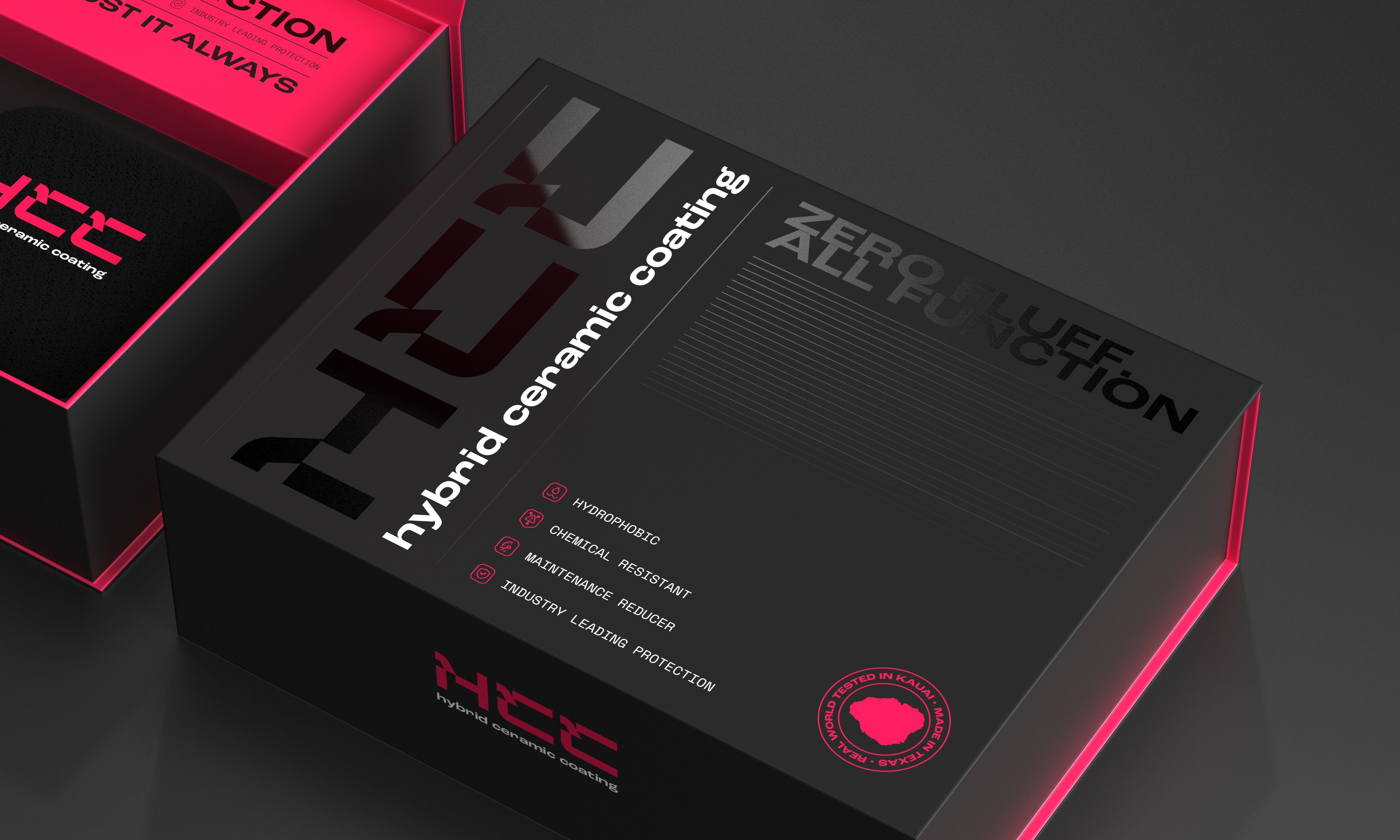
HCC Hybrid Ceramic Coating is Undrdog's all-surface flagship for cars, boats, planes, and bicycles. Its multi-year positioning is qualified by preparation, exposure, use, and maintenance, not a fixed calendar promise for every installation. Confirm the actual surface and current instructions before choosing a coating process.
Undrdog sells its professional-grade coatings to detailers and DIYers without a certification or class requirement to purchase. That open access is not a claim that every application is effortless or that professional installation lacks value. A detailer's preparation, controlled application, inspection, and clear handoff remain work you can evaluate and pay for.
We do not turn a layer count into a lifespan multiplier for HCC. We are also not publishing a new HCC comparative layer test in this article. If you are considering an additional application or a different product over it, ask Undrdog for the current system-specific guidance rather than borrowing a procedure from another brand.
The same questions belong on our side of the counter: what product, what surface, what procedure, what intended benefit, and what supports the claim? Choose HCC for a suitable, justified coating project. Do not buy more product solely because an unexplained layer count sounds more substantial.
Frequently asked questions
Does a second ceramic coating layer double durability?
Do not assume it does. A doubled-life claim needs support for that outcome under relevant conditions; the application count alone does not provide it. The FTC's substantiation policy explains the general reasonable-basis principle for objective advertising claims.
Are multi-layer coating systems pointless?
No blanket conclusion is justified. A specified system may assign different roles to the base and top products, as illustrated by the manufacturer description quoted above. Evaluate the intended benefit and supporting information instead of dismissing the system or assuming every extra application extends service life.
Is a topcoat the same as another coat of the base product?
Do not treat them as interchangeable without the exact instructions. Ask for both product names, their intended roles, and the documented sequence; the quoted base-and-topcoat description is one example in which the manufacturer describes different roles.
How many layers should I ask a detailer to apply?
Ask for the process appropriate to the selected product and surface, not an arbitrary maximum. Have the detailer distinguish required, recommended, and optional steps and explain what any additional application is intended to improve.
Can a glossy photograph prove the benefit of an extra coat?
A photograph alone does not establish how much additional service life an extra coat provides. Request a comparison tied to the claimed outcome and conditions, and do not turn an attractive finished appearance into a calendar-life calculation.
Should I pay more if extra years are not established?
Possibly, if another clearly described benefit matters to you and justifies the added cost and work. Decide on that supported benefit rather than mentally adding unverified years to make the upgrade seem worthwhile.
Does a maintenance spray count as a new installation layer?
Ask the provider to distinguish the original installation from later maintenance and explain exactly what was applied. Keep separate records and do not assume a maintenance application restarts the original coating's service life.
Does Undrdog recommend stacking coatings for more years?
This article makes no layer-to-year promise for HCC and gives no universal stacking procedure. Follow the current HCC product guidance and ask Undrdog about the exact proposed application; preparation, exposure, use, and maintenance still belong in the durability discussion.
Choose a coating plan, not a layer-count shortcut
Review HCC for your next suitable protection project, then confirm the surface, application process, and care plan.
Shop HCC Hybrid Ceramic Coating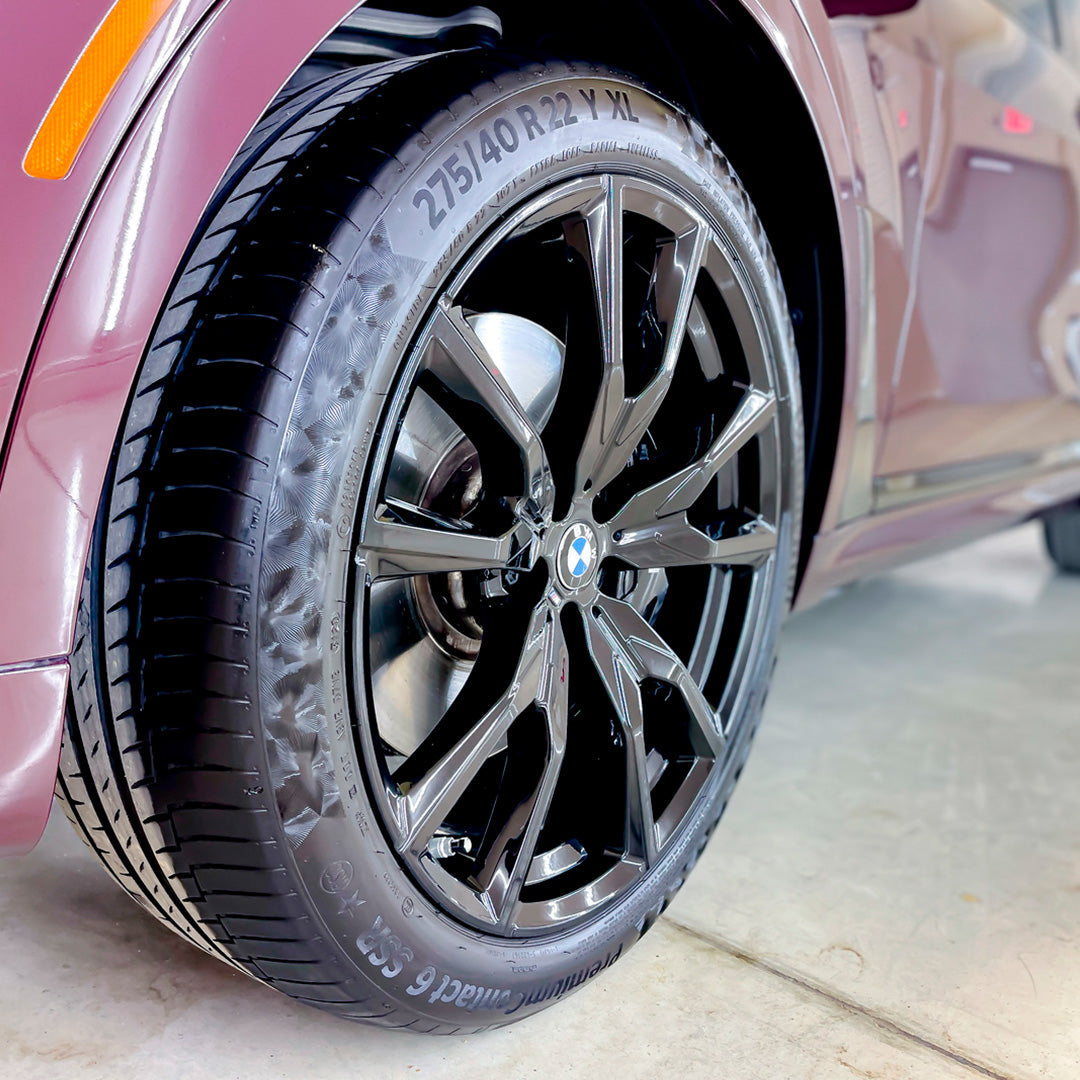

Leave a comment
This site is protected by hCaptcha and the hCaptcha Privacy Policy and Terms of Service apply.