
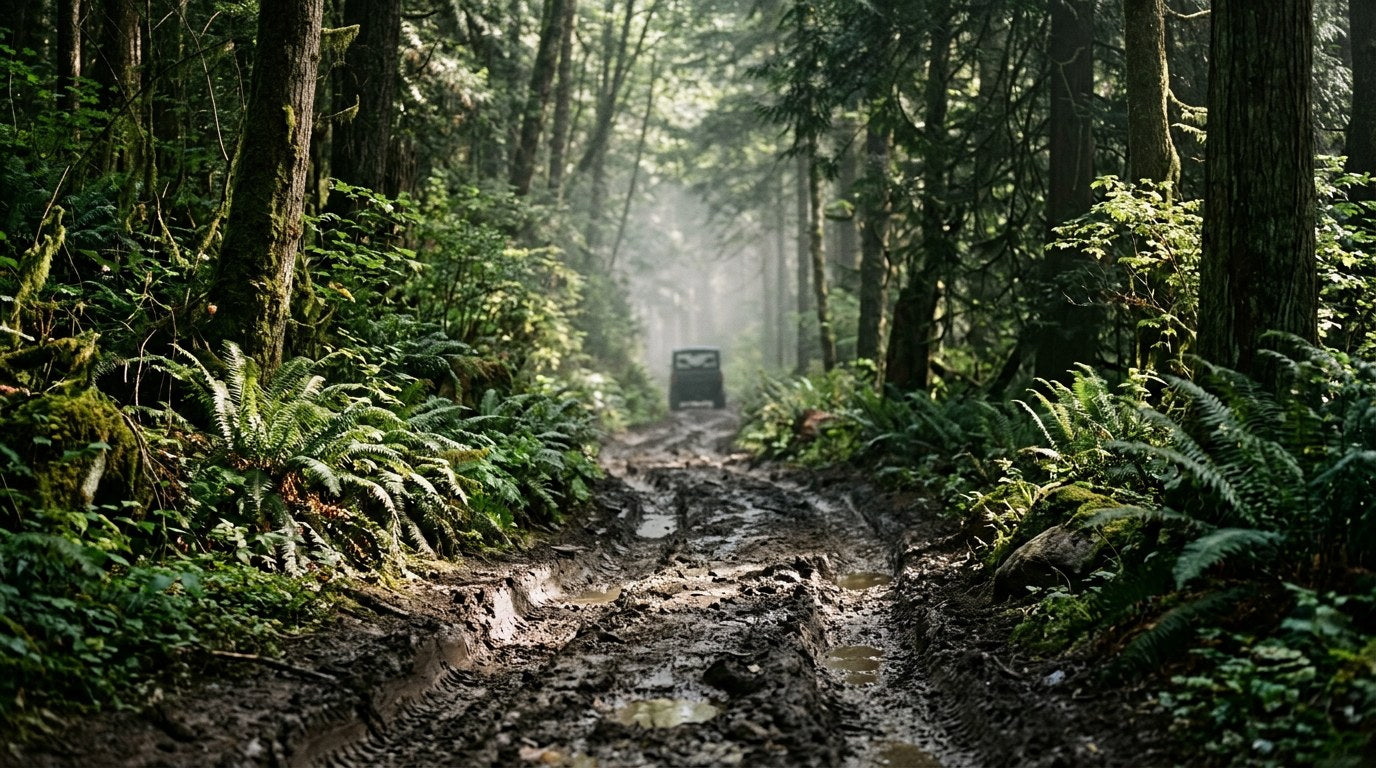
Short answer: yes, ceramic coating works on ATVs, UTVs, and side-by-sides — and it's arguably a bigger win here than on street cars. Off-road machines get abused by mud, UV, tree branches, water crossings, and pressure washing that no daily driver ever sees. A ceramic coating on the plastic body panels, painted metal, and windshield makes cleanup dramatically faster, slows plastic UV fade, and reduces the abrasion swirls that come from constant pressure washing.

Why ATV and UTV Plastics Need More Help Than Car Paint
Off-road machines are built to be abused, but the finish takes the hit long before the mechanicals do. Three things wear down side-by-side and ATV surfaces faster than automotive paint:
1. UV degradation on unpainted plastic
Most side-by-side body panels aren't painted — they're pigmented polypropylene or ABS with the color molded through the plastic. That saves manufacturing cost but sacrifices UV protection. Without a clear coat or coating on top, UV oxidizes the surface polymers and turns black plastic chalky-grey within a few seasons.
2. Pressure-washing abrasion
Off-roaders pressure wash their machines. It's the only way to remove trail mud. But high-pressure water blasted at plastic pushes embedded grit across the surface and creates fine surface marring that scatters light and dulls the finish over time.
3. Chemical exposure
Trail mud isn't clean dirt. It contains iron oxide (rust particles from equipment), decomposing organic matter, and sometimes fertilizer or pesticide residue if you ride farm roads. Iron particles in mud oxidize into little rust spots on white or light-colored plastics. Organic matter can stain porous plastic textures over time.
Where Ceramic Coating Actually Helps on an ATV/UTV

Plastic body panels
The biggest win. Ceramic coats the porous textured plastic, dramatically slows UV oxidation, and gives mud a slick surface to slide off instead of embedding into the texture. Pressure washing removes mud in a fraction of the time.
Painted metal (frames, roll cages, cargo boxes)
Same benefits as automotive: UV, chemical, and light scratch resistance. Coated metal panels resist the chip corrosion that eats bare-metal wear points.
Windshield and headlight lenses
Coated glass repels water for better visibility in the rain and slows the yellowing of polycarbonate headlight lenses caused by UV.
Aluminum wheels and skid plates
Ceramic on aluminum reduces oxidation from wet trail exposure and makes trail grime rinse off cleanly. Combined with iron/fallout removal like The Purps, you keep aluminum bright with minimal effort.
Where it doesn't help
Ceramic coating doesn't stop rock chips (see our PPF vs ceramic guide for why) and it can't restore already-oxidized plastic on its own — you need a plastic restoration or dye before coating that surface. It also doesn't fix worn brake components or fluid leaks. Coating is protection, not repair.
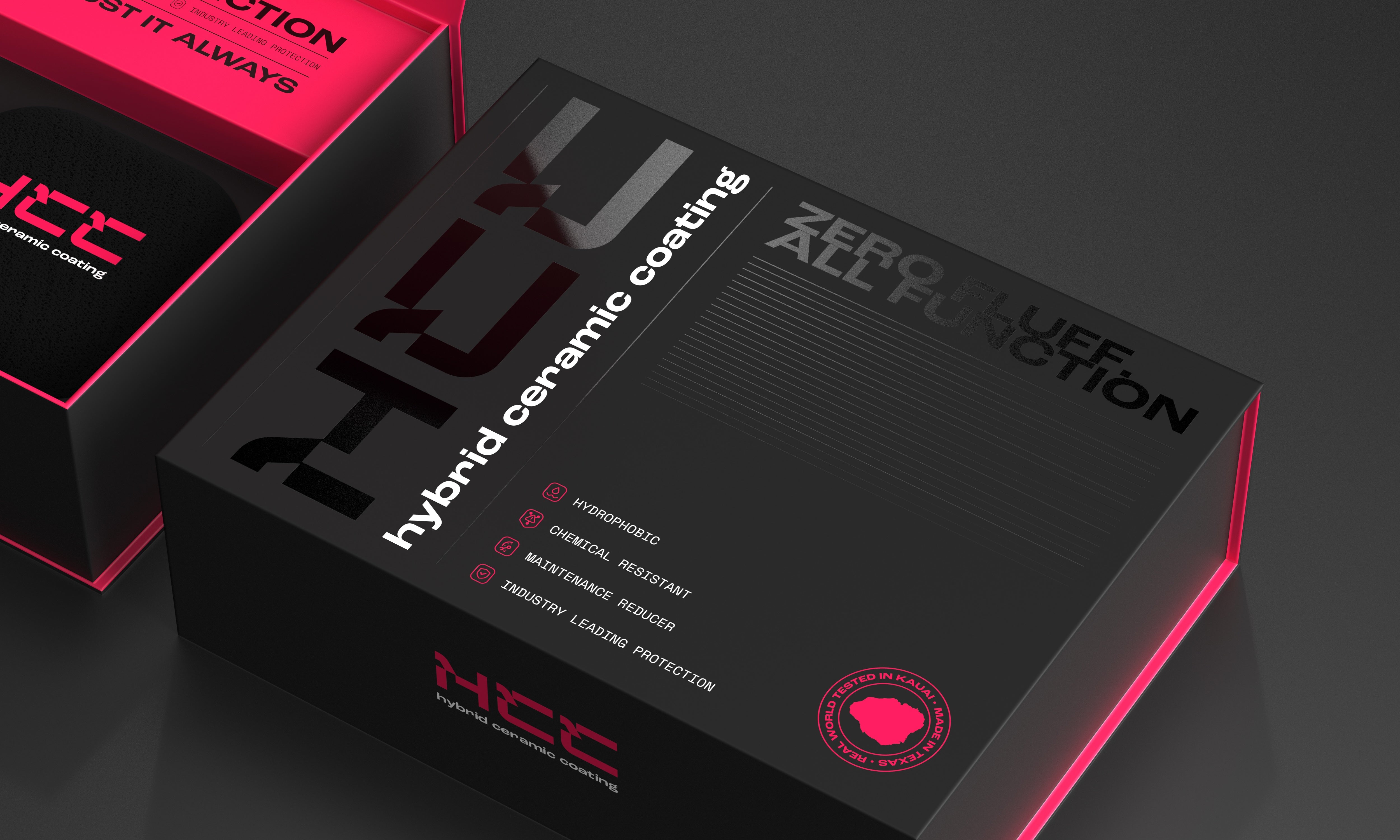
The Right Coating for the Job: HCC
Our flagship HCC Hybrid Ceramic Coating is engineered to bond across paint, plastic, metal, and glass — the exact multi-surface challenge an ATV or UTV presents. It's the same coating we recommend for automotive, marine, aircraft, and bicycles, which means it handles the polypropylene body panels, the powder-coated roll cage, the aluminum wheels, and the polycarbonate windshield with one application.
For riders who want ceramic-level performance without a full installation, applied over the machine after wash keeps the plastic UV-protected and easy-cleaning. Pair it with Undrdog Quick Detail after each wash to refresh hydrophobicity and add gloss to plastic panels.
Prep: The Difference Between a 6-Month Coating and a 3-Year Coating
Off-road machines are almost never clean enough for a coating to bond properly on the first pass. Prep is the difference between a coating that lasts and one that comes off with the next pressure wash.
Step 1 — Full mud removal
Pressure wash all mud off. If mud is caked and dry, soak with a garden sprayer first for 15 minutes to soften before pressure washing. Get inside wheel wells, cargo boxes, and under the belly pan.
Step 2 — Degrease
Trail machines pick up grease and oil residue that ceramic can't bond over. A dedicated all-purpose cleaner or degreaser applied to plastic panels and rinsed thoroughly is essential.
Step 3 — Iron and fallout decon
Spray The Purps on all painted metal and coated aluminum surfaces. Watch for purple color change indicating embedded iron particles. Rinse thoroughly.
Step 4 — Plastic restoration (if needed)
If your plastic is already faded, chalky, or oxidized, you need to restore or dye it before coating — a ceramic coating over faded plastic locks in the faded look. Options include:
- Heat-gun restoration (light oxidation only): careful heating brings surface oils back to the plastic; works on medium fade, not deep oxidation.
- Plastic dye or trim restorer: chemical products that bond a new pigmented layer to worn plastic. Best long-term option before coating.
- Sanding and buffing: aggressive but effective on deep oxidation. Requires patience.
Restore first, then let cure per product instructions, then coat.
Step 5 — Panel wipe
A dedicated panel wipe or 1:1 IPA/water solution across every surface to be coated. This removes oils from prior products and reveals bare surface for the coating to bond to.
Step 6 — Coat
Apply HCC per label instructions with the applicator provided. Work in 2ft x 2ft sections; wipe off with a plush microfiber before the coating flashes. Multiple thin coats on plastic gives better durability than one thick coat.
Coating Different Surfaces on the Same Machine
| Surface | Prep Notes | Coating Approach |
|---|---|---|
| Textured plastic body panels | Restore if faded, then IPA wipe | Two thin coats, 12hr cure between |
| Painted or powder-coated metal | Iron decon + IPA wipe | Standard automotive process |
| Polycarbonate windshield | Wash + IPA (skip abrasive polish) | Single coat; refresh yearly |
| Aluminum wheels/skid plates | Acid-free wheel cleaner, iron decon | Standard coating; extra thin coats |
| Vinyl decals/graphics | Alcohol wipe, no aggressive polish | Single thin coat OK; boost with QD |
| Fabric seats/covers | N/A | Use fabric protectant instead |
The After-Trail Wash Routine

Coated or uncoated, the after-trail wash follows the same sequence — but on a coated machine it takes half the time.
Step 1 — Pressure-wash the mud
Keep pressure nozzle 12–18 inches from surfaces to avoid blowing seals out or forcing water into electrical connectors. Start from the top and work down. Avoid direct spray on wheel bearings, engine electronics, and radiator fins.
Step 2 — Foam and dwell
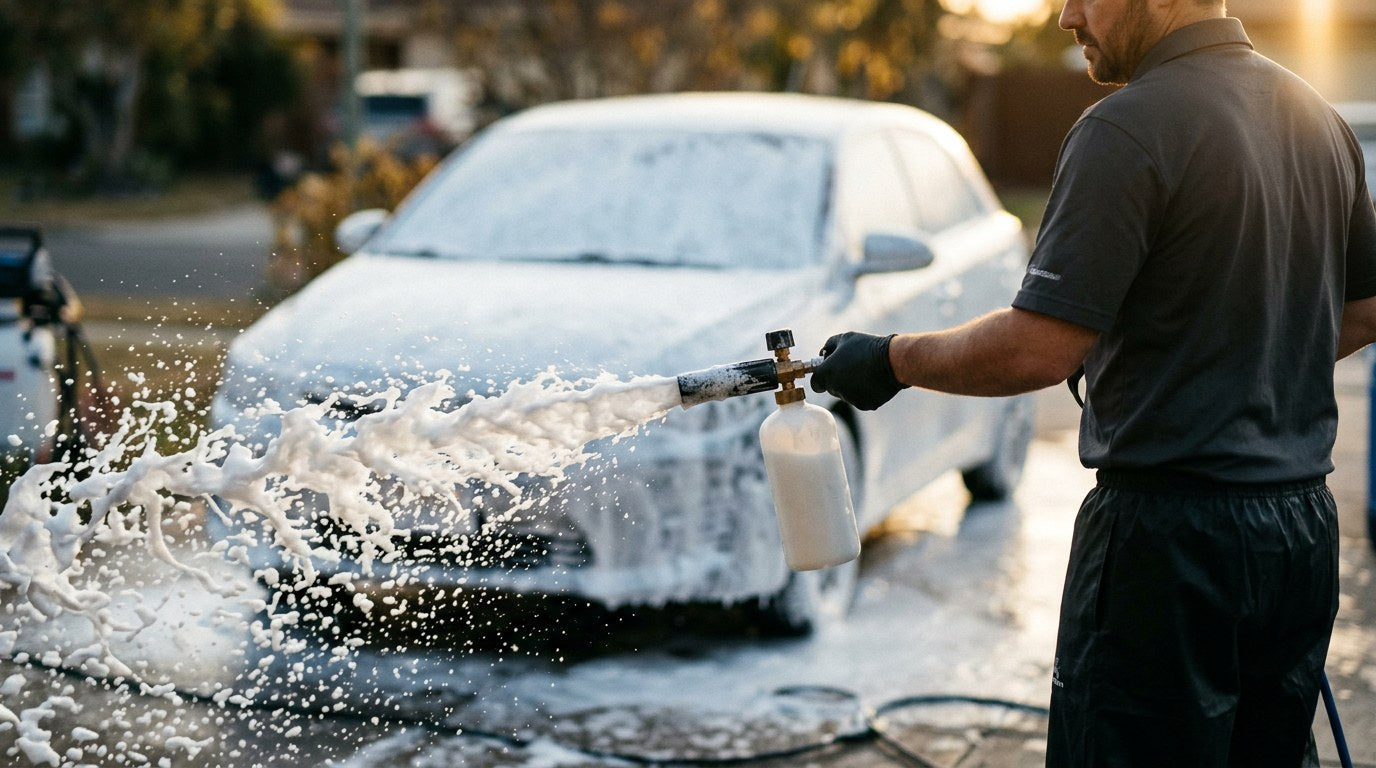
Foam cannon with a pH-neutral soap like Undrdog Soap. Let dwell for 3–5 minutes to lift the remaining grime that pressure washing missed.
Step 3 — Rinse and wipe
Rinse thoroughly from top down. On a coated machine, most residue rinses cleanly. On an uncoated one, you'll need a wash mitt and elbow grease to get streaks off plastic.
Step 4 — Dry
Blow dry with a leaf blower or compressed air where possible — particularly around body seams and electronic connectors. Follow with a microfiber towel on visible surfaces. Water spots on textured plastic are harder to remove than on paint, so drying matters.
Step 5 — Refresh the coating
A quick pass of Undrdog Quick Detail on plastic and painted surfaces boosts hydrophobicity for the next ride.
Common Off-Road Cleaning Mistakes
- Pressure washing at close range. Blows out drive-belt seals, forces water into CVT clutches, and pushes water past headlight seals into the reflector housing.
- Using dish soap or degreaser as a wash soap. Strips wax and coating; leaves plastic vulnerable to UV.
- Ignoring the underside. Trail mud packs onto skid plates, exhaust shielding, and frame tubes, holding moisture against metal until it rusts.
- Waxing over dried mud. Locks abrasive grit against the surface for the next wash to grind in.
- Using tire shine on plastic body panels. Silicone from tire shine looks good short-term but degrades the plastic and prevents proper coating adhesion long-term.
- Skipping post-wash lubrication. Pressure washing displaces grease from suspension bushings and CV joints. Regrease per the service manual after aggressive washing.
For general side-by-side and ATV maintenance guidance, the ATV Riders comprehensive cleaning breakdown covers the operational side. Our approach layers surface protection on top of good mechanical care.
Do You Need It on a Utility UTV vs a Sport Side-by-Side?
Both benefit, but the priorities differ:
Sport side-by-sides
Priorities are looks retention, easy cleanup between rides, and preserving resale value. Full coating including plastics, painted parts, and windshield.
Utility UTVs (ranch, farm, hunting)
Priorities are corrosion resistance and easy mud removal. Focus coating on body panels and painted metal; skid plates and undercarriage benefit from lanolin-based rust preventive instead of ceramic.
Racing/competition machines
Frequent pressure washing and body changes mean coatings get worn faster. Plan on refreshing with QD after every race and full recoating annually.
One coating for every surface on your side-by-side.
HCC is our all-surface hybrid ceramic — the same flagship formula we recommend for cars, boats, and aircraft. Plastic body panels, painted frames, windshields, and wheels all get UV protection and easy-cleaning hydrophobicity from one bottle.
Shop HCC →Frequently Asked Questions
Can I put ceramic coating on ATV plastic body panels?
Yes — and it's arguably the best use for ceramic on an ATV or UTV. The coating bonds to textured pigmented plastic, slows UV oxidation, and gives mud a slick surface to slide off. Prep matters more than on painted surfaces because plastic pores hold contamination.
Will ceramic coating restore faded ATV plastic?
No. Ceramic is optically clear and locks in whatever's underneath. If your plastic is already chalky, restore or dye it first (plastic trim restorer, heat gun, or dedicated dye) then coat over the restored surface.
How long does ceramic coating last on a side-by-side?
1–3 years typically on plastic body panels, longer on painted metal and glass. Aggressive off-road use, frequent pressure washing, and mud abrasion shorten lifespan compared to a garaged street car. Refreshing with a topper spray after every wash extends useful life significantly.
Can I pressure wash a ceramic-coated UTV?
Yes. Ceramic tolerates pressure washing fine — that's part of the point. Keep the nozzle 12–18 inches from the surface and avoid direct spray on seals and electronics. The coating survives; those parts may not.
What about the windshield — can I coat polycarbonate?
Yes, HCC bonds to polycarbonate windshields and headlight lenses. Prep with alcohol only — do not use aggressive polishing compounds meant for glass, which can scratch polycarbonate. A single thin coat is enough; refresh annually.
Do I need a different coating for the roll cage than the plastic?
No. HCC bonds to both painted/powder-coated metal and plastic. One coating covers the whole vehicle. Approach powder-coated metal like automotive paint — iron decon then IPA wipe. Approach plastic with the plastic-restore-first workflow above.
Is ceramic coating worth it for a farm/utility UTV that gets abused?
Yes, arguably more than for a sport UTV. Utility machines see constant mud, manure, fertilizer, and chemical exposure. Ceramic makes the daily cleanup dramatically faster and slows the corrosion that turns a five-year utility UTV into a rusted-out heap.
Can I coat over stickers and graphics?
Yes, as long as the sticker is well-adhered and clean. Coating slightly extends decal life by shielding the vinyl from UV. Alcohol-wipe the sticker only — no polishing over it.
What if my UTV has a windshield rain-x-style water repellent already?
Strip it before coating. Rain-X and similar products leave a silicone residue that ceramic won't bond over. Wash thoroughly with dish soap (this is the one place dish soap is appropriate), rinse, then IPA wipe, then coat.
Can I coat the interior plastic and dash?
Some brands sell interior-specific products. HCC works on interior hard plastic but skip fabric, foam, and rubber seals — use an interior cleaner and dedicated fabric protectant instead. Our interior cleaner guide covers the interior side of any vehicle.

Leave a comment
This site is protected by hCaptcha and the hCaptcha Privacy Policy and Terms of Service apply.