

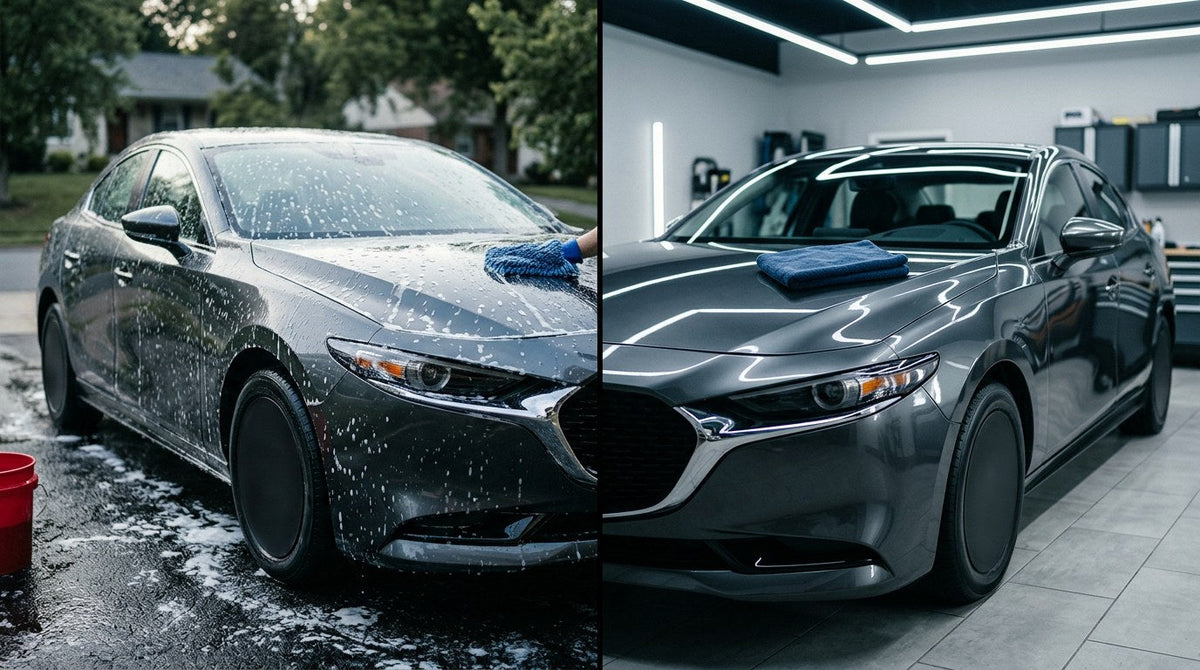
A car wash removes surface dirt in 10–30 minutes for $15–$50. A car detail is a multi-hour, multi-step reset that decontaminates the paint, corrects light defects, deep-cleans the interior, and applies real protection — typically 2–8 hours for $150–$500 in most US markets. They're not competing services. A wash is maintenance you do every 1–2 weeks. A detail is a periodic reset every 3–6 months. Skip either one for too long and the car goes downhill fast.
This guide breaks down exactly what a car wash includes vs what a detail includes, current 2026 US pricing, honest time estimates, how often to do each, when you can DIY a detail-level result at home, and how a good ceramic coating changes both sides of the equation. If you've ever paid $200 and wondered whether you got a "detail" or a glorified wash — this is how to tell.

The Short Version: Car Wash vs Car Detail at a Glance
The single-sentence difference: a wash cleans what's on top of the paint right now, a detail addresses what's bonded to and underneath the paint and inside the interior.
| Feature | Car Wash | Car Detail |
|---|---|---|
| Purpose | Remove surface dirt, dust, road film | Deep clean, decontaminate, correct, protect |
| Typical time | 10–30 minutes | 2–8 hours (full detail can hit 12+) |
| Typical US cost (2026) | $15–$50 | $150–$500 (concours or coating packages higher) |
| Frequency | Every 1–2 weeks | Every 3–6 months |
| Interior work | None or brief vacuum | Full vacuum, steam, shampoo, condition |
| Paint decontamination | No | Yes (iron remover + clay bar) |
| Paint correction | No | Often (light polish or multi-stage) |
| Long-term protection | Sometimes light spray sealant | Ceramic coating, sealant, or premium wax |
| What you get afterwards | Clean car | Reset paint + interior + protection package |
What Actually Happens in a Car Wash
A car wash — automatic, express, hand-wash, or DIY at home — is a fast maintenance service. It's designed to remove loose contaminants before they cause damage, not to fix existing damage. Depending on the tier you pick, a wash typically includes:
- Pre-rinse or foam pre-soak to soften and lift dirt
- Soap application (touchless or with brushes/cloth)
- Rinse to remove soap and dislodged dirt
- Wheel and tire rinse
- Air dry or towel dry
- Optional add-ons: wax spray, tire shine, rain-X-style spray sealant, undercarriage rinse
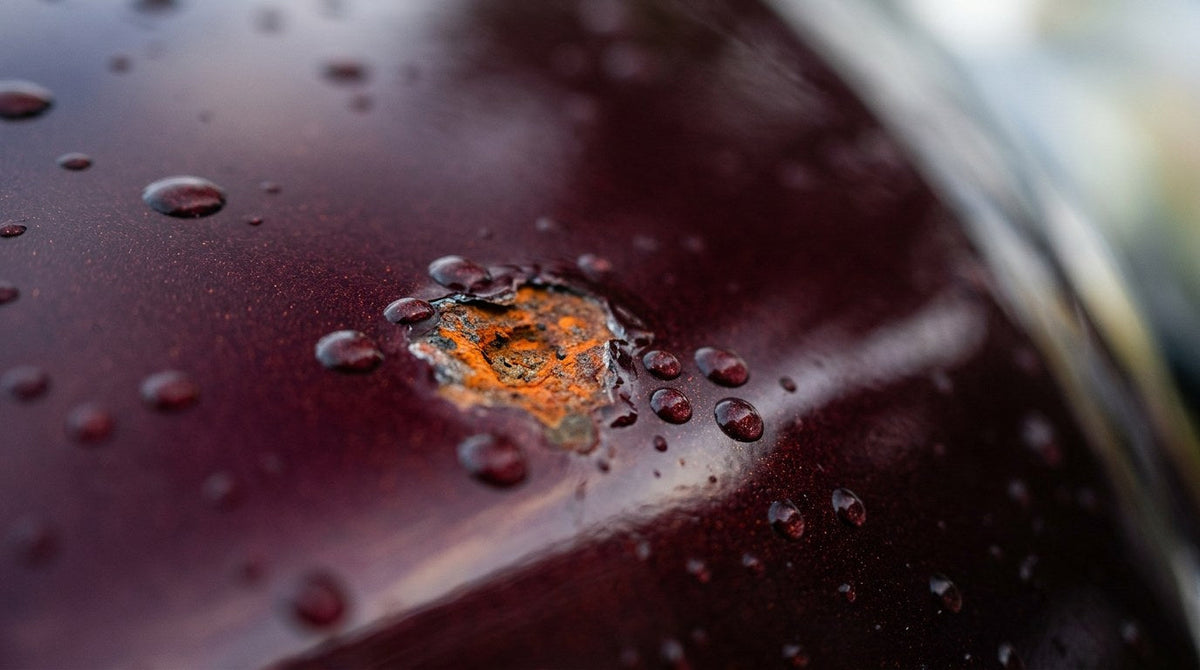
What a wash does not do: remove iron fallout embedded in your clear coat, remove tar or tree sap that has bonded to paint, remove swirl marks or fine scratches, deep-clean interior fabrics or leather, or apply meaningful long-term protection. According to Safari Car Wash's comparison, express washes run $15–$40 and take 5–20 minutes — quick, cheap, and appropriate to their purpose. If you drive daily on paved roads and park somewhere reasonably clean, a wash every 1–2 weeks is the correct maintenance cadence.
Where Car Washes Can Actually Damage Paint
Not all washes are safe. Older automatic washes with hard brushes and touchless washes that rely on heavy alkaline chemistry to compensate for no mechanical action both introduce risk. Automatic brush washes are the primary cause of the swirl-mark spider-webbing you see in direct sun on any car older than a few years. Even soft-touch washes can hold grit between customers and swirl your paint.
Safer options: touchless (chemistry only, no brushes, but pricier and less thorough), professional hand wash, or a proper DIY two-bucket wash with quality soap. Our 2-bucket and rinseless wash guide walks through the technique that prevents wash-induced swirls.

What Actually Happens in a Car Detail
A detail is a systematic, multi-step reset. A real full detail typically runs 2–6 hours for a standard-condition vehicle and can extend to 8–12 hours or longer on neglected cars, larger vehicles, or paint-correction packages. The steps flow in a specific order because each one depends on the last being complete.
Standard Full-Detail Workflow
- Foam pre-wash and rinse — softens and lifts road film without contact.
- Two-bucket contact wash — with a quality pH-neutral soap like Undrdog Soap and a clean wash mitt.
- Wheel and tire deep clean — wheel cleaner, brushes, and tire scrub.
- Iron and fallout decontamination — an iron remover like The Purps chelates embedded iron particles and rinses them away.
- Clay bar or clay mitt — pulls out remaining bonded contamination (tar, tree sap, overspray) that survived the chemical decon.
- Second wash and dry — flushes decon residue off the paint.
- Light paint correction or polish — depending on paint condition, a one-step polish removes light swirls and enhances gloss. Multi-stage correction is a separate service tier.
- Panel wipe — removes polishing oils so protection bonds properly.
- Protection layer — sealant, hybrid ceramic like HCC, or professional-grade coating like Undrdog Pro.
- Interior vacuum — floors, seats, trunk, headliner, vents.
- Interior deep clean — an all-purpose cleaner like Undrdog Interior Cleaner on plastics and dash; steam on fabric; leather cleaner + conditioner on leather.
- Glass, trim, and finish — streak-free glass, plastic trim dressing, tire dressing, final QD wipe-down.
That's the standard mid-tier detail. Premium packages add multi-stage paint correction, engine bay detailing, ozone treatment, headlight restoration, PPF prep, or multi-year ceramic coating. Concours-level detailing can hit 20+ hours and $1,000+.

Real 2026 US Detail Pricing
Prices vary widely by market, but the 2026 US ranges are consistent across pricing surveys. Per Houseler's 2026 cost analysis of Yelp data, the US national average for a full car detail is $176 across 3.1 million quotes, with typical ranges landing between $150 and $500. HouseCall Pro's 2026 pricing guide reports interior details at $50–$350, exterior details at $100–$350, and full details at $150–$500 or higher for specialty services.
| Service tier | Typical 2026 US price | Time | What's included |
|---|---|---|---|
| Express car wash | $15–$40 | 5–20 min | Exterior rinse, soap, air dry |
| Hand wash + dry | $30–$75 | 30–45 min | Hand wash, wheels, hand dry |
| Wash + light wax | $50–$100 | 1–2 hr | Wash, wheels, spray wax |
| Basic detail | $100–$250 | 2–3 hr | Wash, decon, light interior, sealant |
| Full detail (interior + exterior) | $180–$400 | 4–6 hr | Decon, clay, one-step polish, full interior, sealant or hybrid coating |
| Premium detail + ceramic | $400–$1,200+ | 6–12+ hr | Multi-stage correction, multi-year ceramic coating, deep interior |
| Concours / showroom | $1,000+ | 12–20+ hr | Full correction, paint measurement, engine bay, deep restoration |
Regional markets matter. Coastal cities and luxury metros run 20–40% above these averages. Rural and low-cost-of-living areas often run 15–25% below. Always ask for a written scope: which specific decon products, whether the paint correction is one-step or multi-stage, and what protection is being applied.
How Often You Actually Need Each
Most sources converge on the same cadence for a typical daily driver. Golden Bay Detailing's real-world cadence guide summarizes it well: wash every 1–2 weeks, maintenance interior clean every 1–2 months, full detail every 4–6 months. Adjust up if you park outside, near the coast, under trees, or on salted winter roads. Adjust down if the car lives in a garage and only sees weekend driving.
Recommended Cadence by Use Case
| Driver profile | Wash | Interior refresh | Full detail |
|---|---|---|---|
| Garaged weekend car | Every 3–4 weeks | Every 3–4 months | Once a year |
| Typical daily driver | Every 2 weeks | Every 1–2 months | Every 4–6 months |
| Street-parked daily driver | Weekly | Monthly | Every 3 months |
| Coastal / salt-air daily driver | Weekly (with underbody rinse) | Monthly | Every 3 months |
| Family SUV with kids/pets | Every 2 weeks | Every 2–3 weeks (interior) | Every 4 months |
If you live in Hawaii, coastal California, or anywhere with heavy salt and UV exposure, our coastal car care guide walks through the additional steps between details that keep salt from etching your paint.
When a Wash Is Enough (and When It Isn't)
A wash is enough when the only thing on your paint is loose dirt, dust, pollen, or light road film — the kind of stuff that rinses off with soap and water. A wash is not enough as soon as any of the following are true:
- The paint feels gritty when you run a plastic sandwich bag over it after washing (iron fallout)
- You can see swirl marks or spider-webbing in direct sun (needs polish, not wash)
- Tar spots on lower panels don't come off with regular soap
- Tree sap or bug residue is bonded to the paint
- Water no longer beads on a coated or waxed car (protection is failing)
- Interior smells or has visible fabric staining
- The car looks dull even when it's clean and dry
These are all detail territory. A wash won't fix them — in some cases (dragging a wash mitt over grit or iron fallout), a wash actively makes them worse.
Can You DIY a Detail at Home?
Yes, and it's genuinely worth doing on a car you plan to keep. A DIY exterior detail plus interior refresh takes 3–5 hours the first time and about 2–3 hours once you know the workflow. You'll save $200–$400 vs a shop detail, and once you have the products you can maintain the car indefinitely at a shop-detail level for pennies per session.
What you need to get started:
- pH-neutral car soap, two buckets with grit guards, and a plush wash mitt
- Iron and fallout remover for chemical decon
- Clay bar or clay mitt with clay lubricant — see our clay bar step-by-step
- Microfiber drying towel (600+ GSM twist-loop is the sweet spot)
- Optional: dual-action polisher and one-step polish for light correction
- A protection layer — hybrid ceramic like HCC is the most user-friendly starting point and works across cars, boats, planes, and bicycles
- Interior all-purpose cleaner, microfiber cloths, and a vacuum
- Glass cleaner and a waffle-weave glass towel
See our 4-step paint decontamination guide for the exact wash-and-decon workflow before any protection layer.
How Ceramic Coatings Change the Wash-vs-Detail Equation
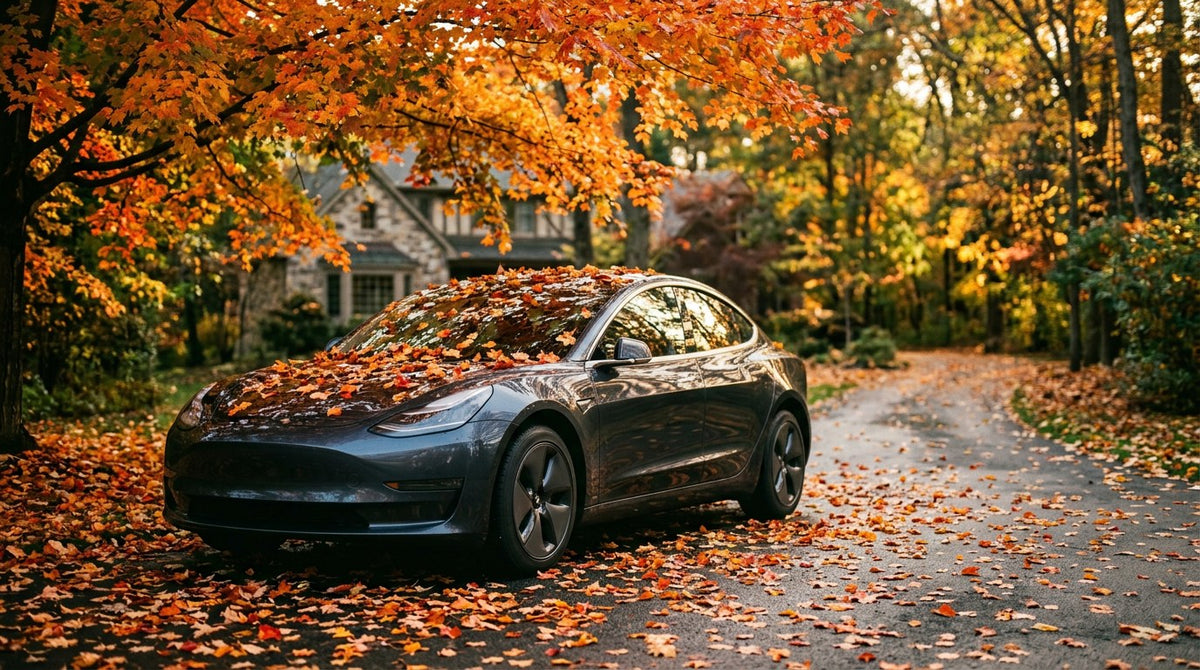
A quality ceramic coating shifts the maintenance economics dramatically. Once paint is coated, water and contamination sit on top of the coating instead of bonding to your clear coat. That means:
- Weekly washes are faster because dirt releases with light pressure
- Iron fallout wipes off during regular washes instead of requiring an iron-remover decon
- Bird droppings, bugs, and sap come off without etching if you address them within a few days
- Full-detail intervals stretch from 3–4 months to 6–12 months
- Paint stays looking freshly detailed for the life of the coating (typically 2–5+ years for a quality hybrid ceramic)
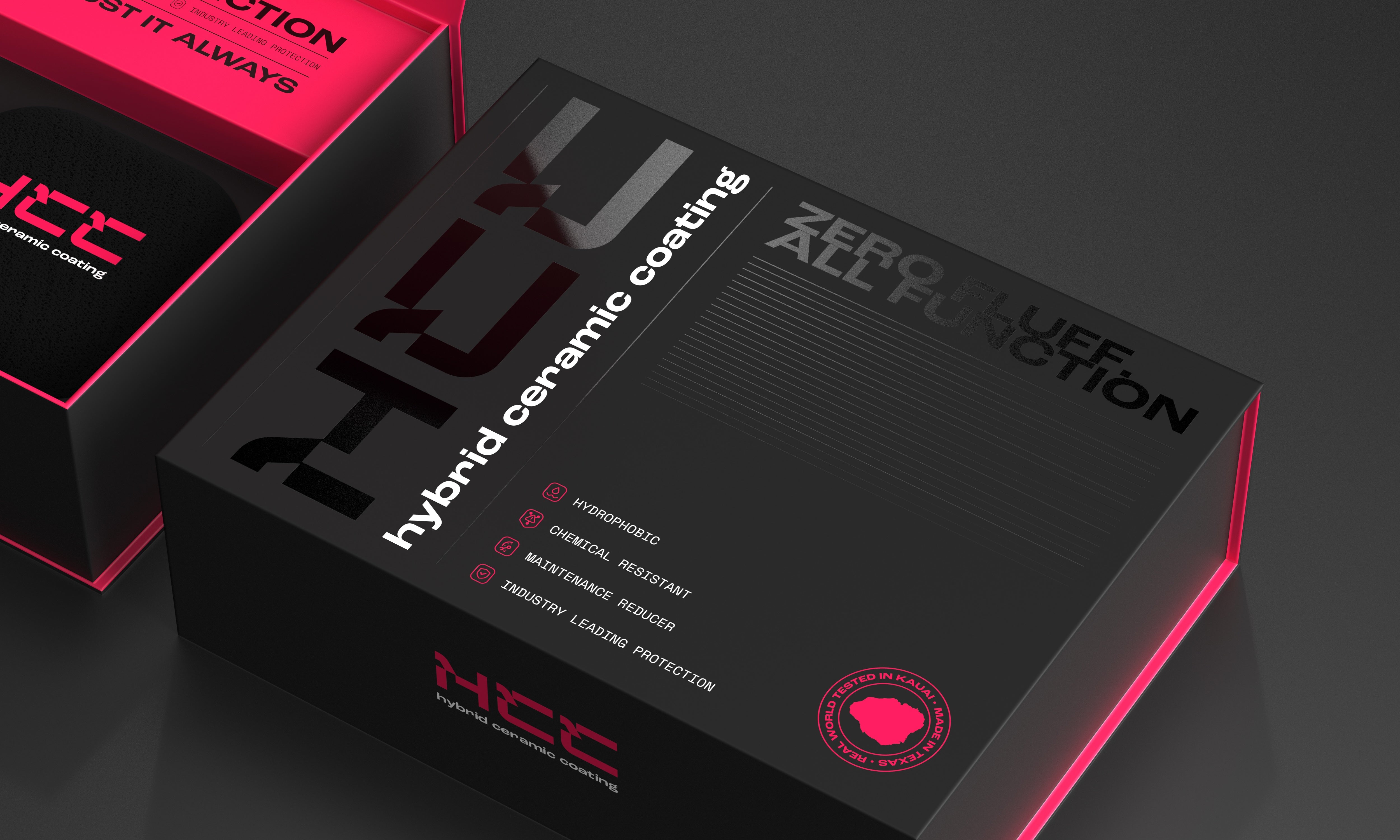
HCC is Undrdog's flagship hybrid ceramic — cars, boats, planes, bicycles, one product. It's a DIY-friendly application that gives you meaningful hydrophobic protection and slick, easy-to-wash paint for a fraction of the cost of a professional ceramic install. For heavier use or if you want a longer-lasting professional-grade application, Undrdog Pro and Pro Plus step up in durability and gloss.
Skip the shop detail — coat it yourself.
HCC is Undrdog's flagship hybrid ceramic coating. One DIY application, cars boats planes bicycles, and paint that stays looking freshly detailed between washes for years instead of months.
Shop HCC →Frequently Asked Questions
What is the main difference between a car wash and car detailing?
A car wash removes surface dirt in 10–30 minutes for $15–$50. Car detailing is a multi-hour, multi-step process that decontaminates the paint, corrects light defects, deep-cleans the interior, and applies real protection — typically 2–8 hours and $150–$500. A wash is maintenance; a detail is a periodic reset.
How much does car detailing cost in 2026?
US 2026 pricing lands between $150 and $500 for a full interior-and-exterior detail on a typical vehicle, with a national average around $175. Basic packages start at $100, and premium ceramic-coating packages can exceed $1,000. Larger vehicles, neglected paint, and coastal or metro markets push prices higher.
How long does a full car detail take?
A standard full detail takes 2–6 hours on a typical vehicle in good condition. Larger vehicles, heavier neglect, multi-stage paint correction, and ceramic coating applications extend to 8–12 hours or longer. Concours-level details can take 20+ hours over multiple days.
Is car detailing worth it?
For a vehicle you plan to keep, yes. Detailing removes bonded contamination that plain washing can't reach, restores gloss lost to swirl marks and oxidation, and applies protection that extends the life of the paint and interior. For a lease you're returning in six months, a wash and basic interior clean is usually the more rational spend.
How often should you get your car detailed?
Every 4–6 months for most daily drivers, every 3 months for coastal or street-parked cars, and once or twice a year for garaged weekend vehicles. Wash every 1–2 weeks between details to maintain protection and remove contamination before it bonds.
Can I detail my own car at home?
Yes. A DIY detail takes 3–5 hours the first time and 2–3 hours once you know the workflow. You need pH-neutral soap, an iron remover, a clay bar, microfiber drying towels, interior cleaner, and a protection layer like a hybrid ceramic coating. The initial product outlay is $150–$250 and lasts through 10+ details.
Does a car wash count as detailing?
No. A car wash cleans the exterior surface. Detailing is a deeper process that decontaminates the paint, addresses defects, deep-cleans the interior, and applies protection. Every detail includes a wash, but no wash includes what makes a detail a detail.
Are automatic car washes bad for your paint?
Automatic brush washes are the primary cause of the swirl-mark spider-webbing visible on most cars in direct sun. Touchless washes are gentler on paint but rely on strong chemistry that can strip wax and sealants. The safest options are a hand wash at a reputable detailer, a soft-touch wash on a car with a good ceramic coating, or a DIY two-bucket or rinseless wash at home.
What's included in a basic vs full detail?
A basic detail typically includes hand wash, wheel clean, interior vacuum, glass, and a spray sealant — 2–3 hours for $100–$250. A full detail adds iron decontamination, clay bar, one-step paint polish, interior deep clean (steam, shampoo, leather conditioning), engine bay wipe-down, and a durable sealant or hybrid ceramic coating — 4–6 hours for $180–$400.
How does a ceramic coating change how often you need to detail?
A quality ceramic coating stretches full-detail intervals from every 3–4 months to every 6–12 months for most drivers, because contamination sits on the coating instead of bonding to your clear coat. Weekly washes stay easier, and iron fallout wipes off during normal washes instead of requiring a chemical decon session.
Bottom Line
A wash and a detail are the same category — clean car — but two very different jobs. A wash is fast, cheap, and frequent maintenance to keep loose dirt off the paint. A detail is a slow, thorough reset that decontaminates, corrects, deep-cleans, and reprotects. Do them both on the right cadence and your car looks freshly detailed year-round. Skip the detail side and you'll pay for it in swirl marks, faded interior, and premature clear-coat failure. Coat the paint with a quality hybrid ceramic and both jobs get easier, cheaper, and less frequent for years at a time.

Leave a comment
This site is protected by hCaptcha and the hCaptcha Privacy Policy and Terms of Service apply.