

Matte and satin paint finishes are washed by hand, in shade, with a pH-neutral matte-safe soap, a soft microfiber wash mitt, and straight-line strokes — never circular motions, never a clay bar, never a machine polisher, never traditional wax, and never an automatic car wash. Get any of that wrong and you don't just risk a swirl mark you can polish out — you risk permanent shiny spots in your matte finish that can only be fixed by respraying the panel. This is the full DIY workflow for keeping matte and satin paint looking factory-fresh, based on official manufacturer guidance from PPG, Jaguar, NHTSA technical service bulletins, and AAA.

Why Matte and Satin Paint Is Fundamentally Different From Gloss
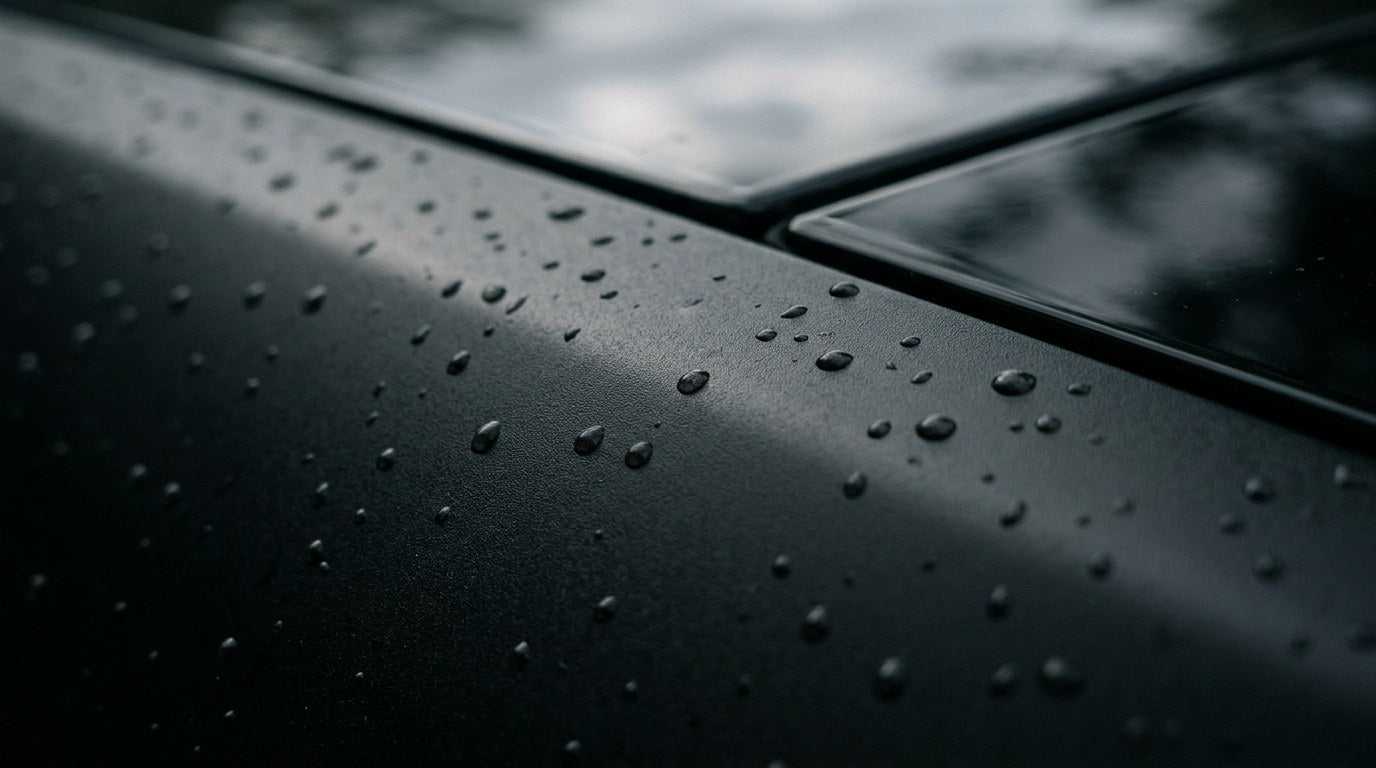
Gloss paint has a smooth, mirror-flat clearcoat that reflects light uniformly — that's why you can see the sky in a well-detailed hood. Matte and satin finishes have an intentionally rough microscopic clearcoat texture that scatters light in every direction, which is what creates the flat, non-reflective appearance. Every rule of matte paint care comes back to protecting that microscopic texture.
Any product or technique that fills in, flattens, or burnishes that texture creates permanent shiny spots. Once a matte panel has a shiny spot, no amount of washing brings it back — the panel has to be resprayed. That's why the official PPG matte finish care guide and the NHTSA technical service bulletin on satin finish care both list the same set of hard prohibitions.
The four things that permanently destroy matte paint
- Traditional wax, polish, glaze, sealant, or gloss-formulated ceramic coating — these all fill in the matte texture with a gloss layer.
- Clay bar or aggressive chemical decontamination — the abrasive action on a clay bar flattens the matte peaks. As Bowden's Own notes in their official matte care guide, "any kind of clay medium will wear away the matte surface and leave shiny spots underneath."
- Machine polishing, rotary, or DA polisher — friction and heat burnish the surface to gloss.
- Automatic car washes with brushes or towels, or any commercial "shine enhancement" product — mechanical rubbing burnishes matte texture.
The Safe Matte Wash Setup
Before you touch the car, get the setup right. According to AAA's matte paint care guidance, the equipment list is short but rigid.
What you need
- pH-neutral car wash soap — either explicitly matte-safe or a genuine pH-neutral formula with no wax, sealant, or gloss-enhancement additive. Undrdog Soap is pH-neutral, coating-safe, and free of gloss enhancers — safe for use on matte paint.
- Two buckets with grit guards — one for soap, one for rinsing the mitt.
- Soft microfiber wash mitt — never a sponge, never a natural sea sponge, never terry cloth.
- Foam cannon or pump sprayer — helps you loosen contaminants without contact.
- Pressure washer at 1,500 PSI or less with a fan tip, kept at least 12 inches from the surface.
- Plush high-GSM microfiber drying towel — for patting dry, not dragging.
- Optional: leaf blower or handheld air dryer for the safest possible dry.
What you don't touch
- Wash and wax combo soap (contains gloss enhancers).
- Dish soap (aggressive and can dull the matte texture).
- Clay bar or clay mitt.
- Buffing/polishing machine of any kind.
- Automatic car wash — no exceptions.
- Terry cloth towels, paper towels, or old t-shirts.
- Any product labeled "shine," "gloss," or "detail spray for glossy paint."
The 6-Step Matte Wash Workflow
Location and conditions matter as much as technique. Always wash matte paint in the shade, on cool panels, with panels below 85°F. Direct sun on matte paint accelerates soap drying and creates streaks that can etch permanently.

Step 1 — Pre-rinse thoroughly
Use a hose or pressure washer at 1,500 PSI or less with a fan tip, keeping the nozzle 12+ inches from the paint. Rinse top-down, front-to-back, to remove all loose grit before any contact wash. According to the Jaguar official satin matte finish ownership guide, this is the single most important step — any grit still on the panel during contact wash becomes an abrasive that scratches the matte surface.
Step 2 — Foam the vehicle
Apply pH-neutral matte-safe soap through a foam cannon or pump sprayer. Let it dwell 2–4 minutes to lift and encapsulate contaminants. Do not let foam dry on the panel — matte paint shows streaks from dried soap that a gloss finish would forgive.
Step 3 — Rinse the foam off
Rinse the foam completely before contact washing. Most contact damage on matte paint happens because grit was still floating in the pre-wash soap when the mitt hit the panel.
Step 4 — Two-bucket contact wash
Fill one bucket with fresh soap solution, one with plain rinse water, both with grit guards at the bottom. Load your microfiber wash mitt from the soap bucket.
- Wash in straight lines, top to bottom, one 2 ft × 2 ft section at a time.
- Light pressure only — you're floating the mitt across the surface, not scrubbing.
- Absolutely no circular motions — swirls in matte paint are burnished shiny circles that don't polish out.
- After each section, rinse the mitt in the plain-water bucket, agitate against the grit guard, reload from the soap bucket, and continue.
- Wash lower panels (rocker panels, bottom of doors) last — they hold the most grit.
Step 5 — Final rinse
Rinse the entire vehicle completely from the top down. Soap residue that dries in the matte texture creates streaks and blotchy sheen shifts. Rinse until the water runs off completely clear.
Step 6 — Pat dry, do not drag
This is where a lot of matte owners make their last mistake. Take a clean plush microfiber drying towel, fold it into quarters, lay it flat on the wet panel, and pat down. Lift the towel, move to the next area, pat again. Never drag the towel across matte paint — dragging burnishes the microscopic texture and creates faint gloss streaks over time.
The safest possible dry uses a leaf blower or dedicated automotive air dryer at low pressure, removing water without any surface contact.

Contaminant Removal on Matte Paint: Bird Droppings, Sap, Bugs, Tar
Contact wash is only half the job. Matte paint is more vulnerable to acid etching from bird droppings, sap, and bug residue than gloss paint because there's no thick sacrificial polymer layer sitting on top. According to National Geographic's reporting on bird droppings and paint damage, uric acid begins etching most clearcoats within a few hours in warm weather. On matte paint, that etch becomes a shiny spot.
Safe contaminant removal on matte
- Never rub. Never scrub. Never use a clay bar.
- Soak a clean microfiber cloth with a matte-safe detail spray or a diluted pH-neutral soap solution.
- Lay the soaked cloth flat over the contaminant. Leave it in place for 2–5 minutes.
- Gently lift the cloth. The softened contaminant should come off with it.
- If any residue remains, repeat rather than rubbing.
For heavier contamination like tree sap or road tar, use only chemical decontamination — never mechanical. Our tree sap removal guide and road tar removal guide both apply on matte paint if you follow the same "soak, don't scrub" principle. Products should be matte-safe; test on an inconspicuous panel first.
Matte-Safe Protection: Ceramic Coatings Made for Matte Paint
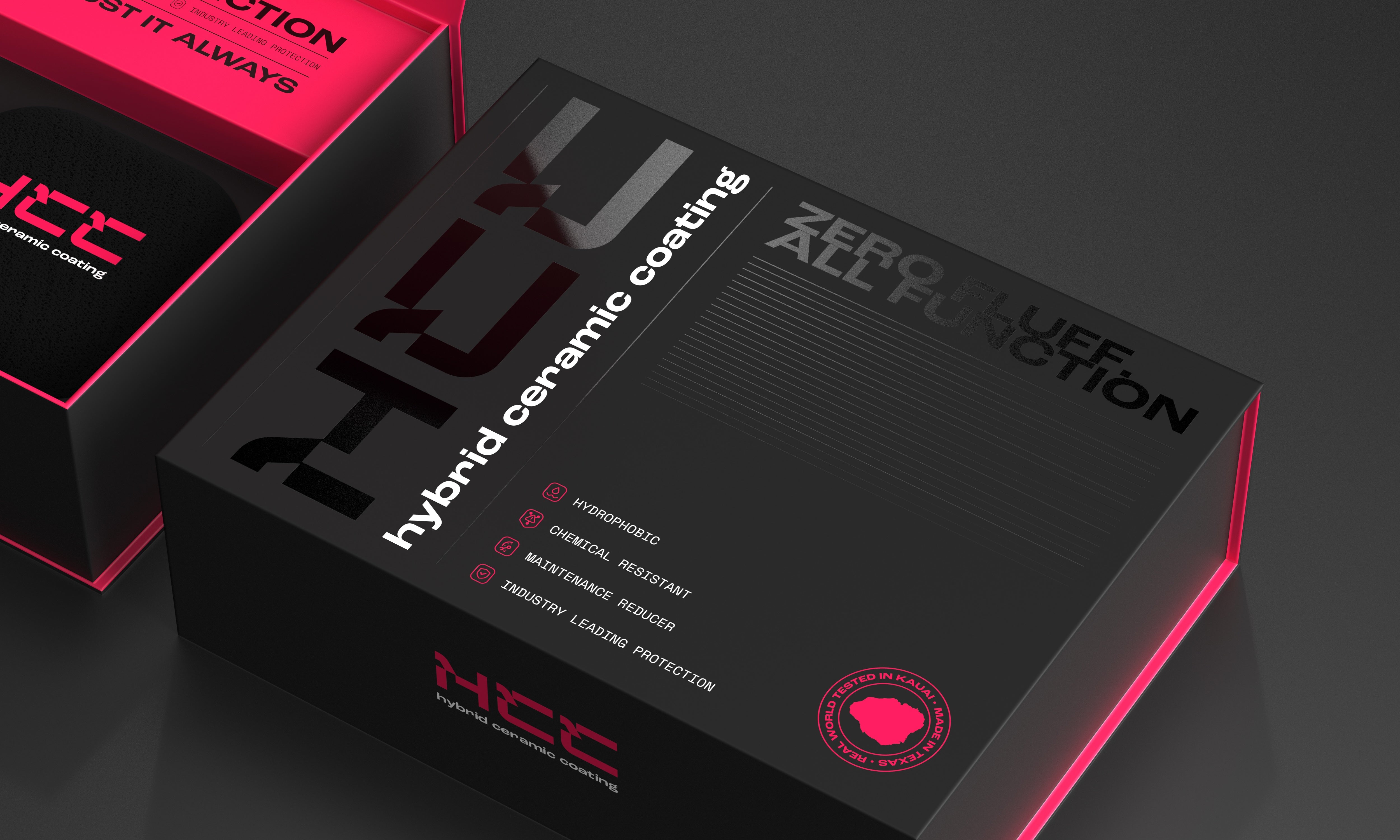
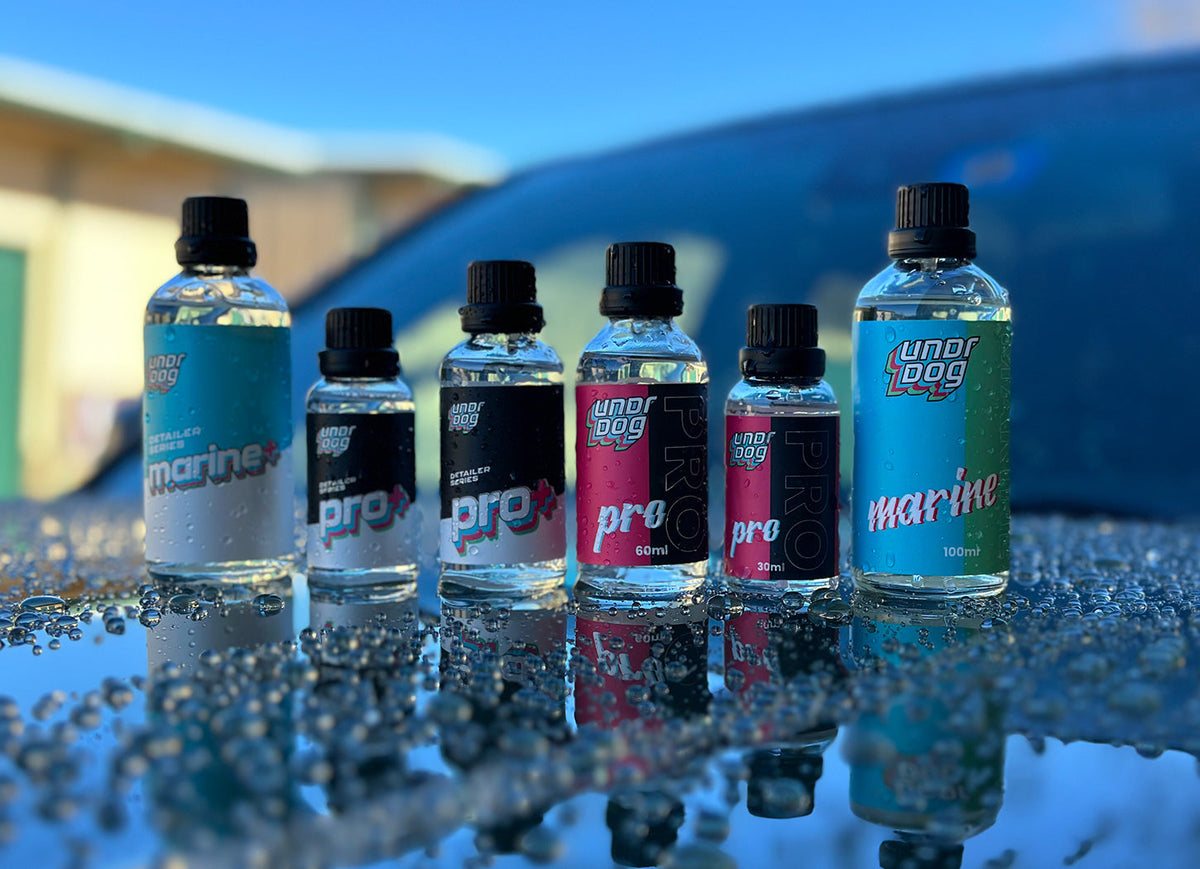
Yes, you can protect matte paint with a ceramic coating — but only with a coating specifically formulated to preserve the matte sheen. Standard gloss-formulated coatings, including standard consumer ceramics like Undrdog Pro, Pro Plus, and HCC Hybrid Ceramic Coating, are formulated to enhance gloss and will change the appearance of matte paint. Use a matte-specific coating instead — read the label carefully, and if in doubt, test on an inconspicuous panel first (interior of the fuel door, edge of a rocker panel).
What a matte-safe coating does
- Adds hydrophobic behavior — water beads and rolls off, taking dirt with it.
- Blocks UV damage that fades matte paint over time.
- Preserves the matte sheen — no shift in appearance under different lighting.
- Reduces contamination bonding — bird droppings and sap sit on top instead of etching into the paint.
Matte vs Satin vs Gloss: Care Rules Compared
| Care Action | Gloss Paint | Satin Paint | Matte Paint |
|---|---|---|---|
| Automatic car wash | Touchless OK | Not recommended | Never |
| Clay bar / mitt | Recommended annually | Not recommended | Never |
| Machine polishing | For correction only | Not recommended | Never |
| Wax or gloss sealant | Optional layer | Only matte-safe | Never |
| Ceramic coating | HCC / Pro / Pro Plus | Matte-specific only | Matte-specific only |
| Wash motion | Straight or gentle circular | Straight lines only | Straight lines only |
| Drying technique | Drag or pat | Pat only | Pat only, or air-dry |
Wash Frequency for Matte Paint
Matte paint punishes neglect harder than gloss paint. Contaminants bond faster because the microscopic texture holds more surface area for dirt to lock into. Wash frequency should be higher than a gloss vehicle:
- Daily driver, garage-kept: Every 1–2 weeks.
- Daily driver, parked outside: Weekly if possible, especially in urban environments with heavy road film.
- Weekend car: After every use, or every 2 weeks maximum during storage.
- After a rain: Rinse the same day — dried mineral rain leaves spots that etch faster on matte than gloss.
Wash your matte paint the safe way
Undrdog Soap is pH-neutral, free of gloss enhancers, and safe for matte, satin, gloss, and ceramic-coated finishes. The same bottle covers every vehicle you own.
Shop Undrdog Soap →Frequently Asked Questions
Can I use Undrdog Soap on matte paint?
Yes. Undrdog Soap is pH-neutral and free of the wax, silicone, and gloss-enhancement additives that damage matte finishes. It's safe for matte, satin, gloss, PPF, vinyl wrap, and ceramic-coated paint.
Can I clay bar a matte car if I'm gentle?
No. According to Bowden's Own's matte paint guide, any clay medium — including soft "starter" clay — will wear away the matte surface texture and leave shiny spots underneath. Use chemical decontamination only, and only if absolutely necessary.
Can I use a ceramic coating on matte paint?
Only a matte-specific ceramic coating designed to preserve the flat sheen. Standard gloss-formulated consumer ceramics — including Undrdog Pro, Pro Plus, and HCC — will change the appearance of matte paint. Look specifically for a coating labeled matte-safe or matte-specific.
Can I use a pressure washer on matte paint?
Yes, at 1,500 PSI or less, with a fan tip (never a rotating or zero-degree nozzle), kept at least 12 inches from the paint surface. Higher pressures or closer distances can strip edges of decals and force water past trim seals.
What happens if my matte paint develops a shiny spot?
Once a matte panel has been burnished to a gloss spot from rubbing, waxing, polishing, or an automatic car wash, that spot is permanent. The only fix is to have the panel professionally resprayed with a matte clearcoat. This is why matte care is prevention-focused — one mistake costs a paint job.
Can I use a rinseless wash on matte paint?
Yes, if the rinseless wash formula is pH-neutral and free of gloss enhancers or wax additives, and only with a plush clean microfiber. Our rinseless wash guide covers technique — the same rules for matte paint apply: straight lines only, no rubbing, one wipe per surface.
Do I need to wax my matte car?
No. Traditional wax will destroy the matte finish by filling in the microscopic texture with a gloss layer. Skip waxes entirely on matte. If you want added protection, use only a matte-specific ceramic coating.
Can I wash my matte car in direct sunlight?
Never. Direct sun causes soap and water to dry on the panel before you can rinse, leaving streaks and mineral spots that etch into the matte texture. Always wash in shade or in a covered area.
What's the safest way to dry a matte car?
Air-drying with a leaf blower or automotive air dryer is the safest option — zero surface contact. If you're using a microfiber towel, use a high-GSM plush drying towel and pat down flat rather than dragging across the surface.
Can I use waterless wash spray on matte paint?
Only if the product is explicitly matte-safe. Most waterless wash products contain wax, silicone, or optical brightener additives designed to enhance gloss, which will create shiny spots on matte finishes. Read every label carefully and test on an inconspicuous area first.

Leave a comment
This site is protected by hCaptcha and the hCaptcha Privacy Policy and Terms of Service apply.