

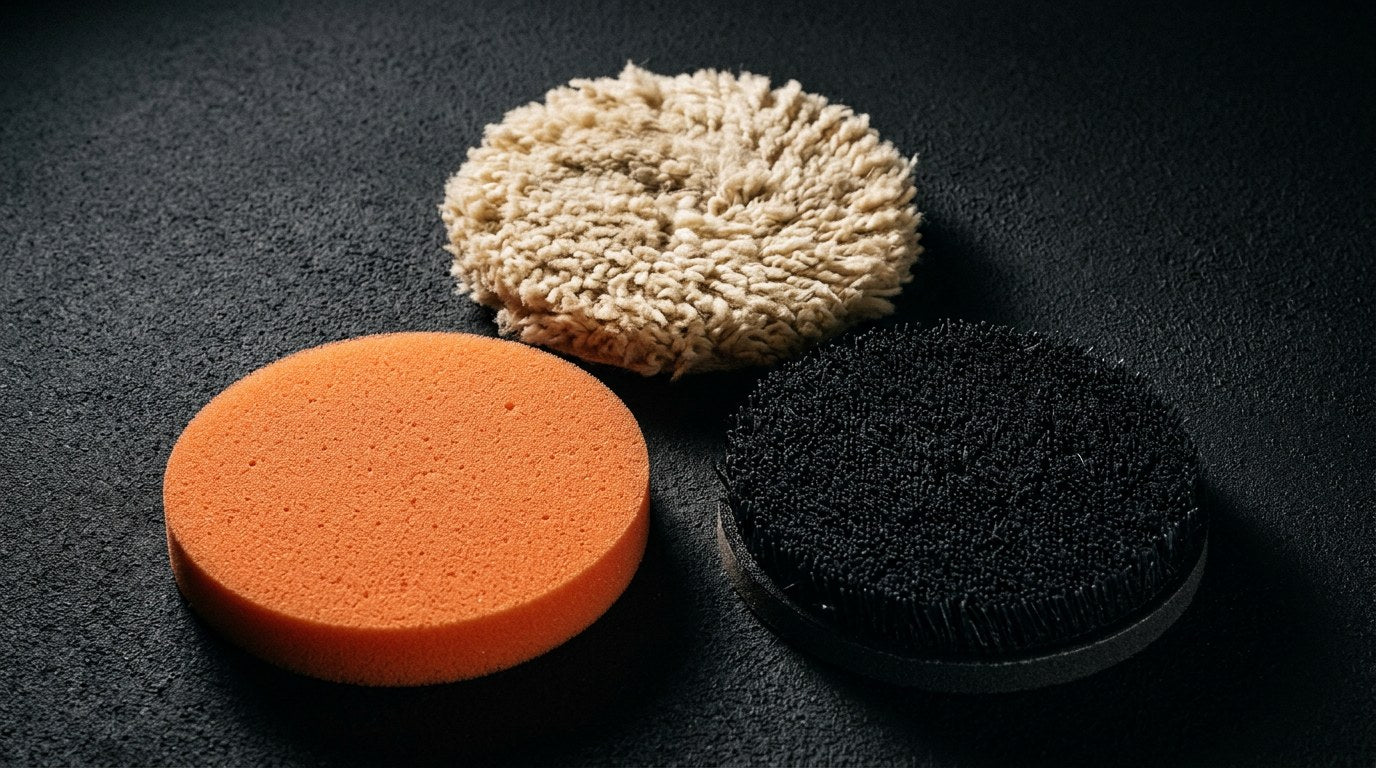
Wool cuts fastest and stays coolest but leaves haze that must be refined with foam. Foam is the safest all-rounder — slower cut, cleaner finish, easiest for DIY dual-action work. Microfiber sits between the two: it cuts nearly as hard as wool but runs hotter and almost always needs a foam finishing pass. If you're running a DA polisher at home in 2026, foam is the pad you'll use 80% of the time.

Why Pad Choice Matters More Than Compound Choice
Detailers spend hours debating which cutting compound is fastest. The truth is that the pad drives 60–70% of the cut. The compound provides the abrasive; the pad decides how hard those abrasives are pressed into your clear coat, how much heat is generated, and how the finish looks when the polisher stops. If you're still deciding between machines, our DA polisher vs rotary comparison walks through which polisher belongs in a DIY garage.
Your clear coat is thin — DeFelsko documents that most auto manufacturers recommend removing no more than 0.3 mils (8 microns) of clear coat over the paint's lifetime to preserve UV blockers. A factory clear coat is roughly 30–50 microns thick, and heavy compounding removes 3–5 microns per session. Pick the wrong pad and you're not just doing more work — you're burning through your correction budget faster than the defect requires.
The Three Pad Materials Explained
Wool: The Original Heavy Cutter
Wool pads are twisted natural or synthetic wool fibers stitched to a foam or fabric backing. Each fiber acts as a flexible carrier for abrasive particles, letting the compound "shear" defects rather than plow through them.
3M's own Perfect-It wool compounding pad documentation confirms two things that most people get wrong: wool cuts faster than foam, and wool runs cooler than foam because the fibers vent heat between the pad and the paint. The tradeoff is finish quality. Wool leaves micro-marring and light haze that requires a follow-up foam polishing step — always.
Wool historically belongs on rotary polishers because the yarn pile absorbs the orbital action of DA machines. Short-nap DA-specific wool pads exist, but they cut noticeably less than the same wool pad on a rotary.
Foam: The Versatile All-Rounder
Foam pads are molded open-cell or closed-cell polyurethane. Density and cell size determine aggressiveness — firm dense foam cuts, medium foam polishes, soft foam finishes. Because the foam contacts the paint as a broad uniform surface, it distributes pressure evenly and produces a cleaner finish than either fibered pad.
The downside: at any given aggressiveness level, foam cuts slower and builds more heat than wool. On DA polishers you'll need more passes to remove the same defect. But because 3M's own polishing pad engineering documentation notes that foam waffle-face designs are specifically designed to minimize heat buildup during buffing, modern cutting foams have closed much of the speed gap.
Microfiber: The One-Step Correction Specialist
Microfiber pads use split polyester or polyamide fibers (roughly 10–15 microns thick) attached to a firm foam backing. Each split-fiber tip acts like a tiny cutting blade, which is why microfiber cuts nearly as aggressively as wool at DA speeds.
The problem is heat. Because the fiber pile is dense and traps compound residue, microfiber runs hotter than either wool or foam at equal pressure. On soft paints (many Japanese, Korean, and Tesla clear coats), that heat plus the aggressive fiber tips produces visible haze that requires a foam refining step. On hard paints (German, some domestic clear coats), microfiber can complete a one-step correction with acceptable finish.
Head-to-Head Comparison Table

| Attribute | Wool | Foam (Cutting) | Microfiber |
|---|---|---|---|
| Cutting speed | Fastest for aggressiveness level | Slower — needs more passes | Nearly as fast as wool |
| Heat buildup | Lowest (fibers vent heat) | Moderate | Highest (dense pile traps heat) |
| Finish quality | Leaves haze — requires foam refining | Cleanest — often no follow-up needed | Light haze — foam refining recommended |
| Best machine | Rotary (or short-nap DA) | DA (long-throw or short-throw) | Long-throw DA |
| Best defect type | Deep scratches, oxidation, wet-sanding refinement | Swirls, moderate defects, one-step polishing | Heavy swirls on hard paint, one-step correction |
| Product usage | High (fibers absorb compound) | Low (surface loads product) | High (fibers absorb compound) |
| Cleaning during use | Compressed air ideal | Brush or claw tool | Compressed air required |
| Skill level | Advanced (heat and burn risk) | Beginner-friendly | Intermediate |
| Follow-up step needed | Yes (foam polish + finish) | Sometimes (foam finish) | Usually (foam finish) |
| Longevity per pad | Shortest — matting, tangles | Longest — cleans easily | Medium — clogs quickly |
What Each Pad Actually Does to Your Clear Coat
All three pads work by pressing abrasive particles from a cutting compound into your clear coat. The difference is how deep and how evenly.
Wool creates thousands of individual point contacts through its bristly fibers. Each fiber tip carries compound and shears micro-slices off the clear coat surface. Because the contact isn't uniform, wool produces small variations in depth — that's why it leaves haze. It's a shredding action rather than a smoothing action.
Foam creates one broad continuous contact patch. The cellular structure holds compound uniformly, and the pad flexes to conform to panel contours. Every square millimeter under the pad sees roughly the same pressure, so foam removes clear coat in a much more uniform layer. That uniformity is what produces the finish.
Microfiber combines both approaches: thousands of tiny cutting fingers plus a firm foam backing. The fibers cut fast, the backing keeps pressure even. But those fibers also trap abraded clear coat and used-up compound, which is why microfiber pads heat up so quickly if you don't clean them every panel.
How Much Clear Coat Each Pad Removes Per Session
Rough per-session clear coat removal on a DA polisher with an appropriate compound:
- Foam finishing pad + fine polish: 0.5–1 micron
- Foam polishing pad + medium polish: 1–2 microns
- Foam cutting pad + heavy compound: 2–3 microns
- Microfiber cutting pad + heavy compound: 3–4 microns
- Wool pad on rotary + heavy compound: 3–5 microns
Multiple independent sources place these numbers within tight ranges. EuroLuxe Detailing's data on single-stage correction cites 0.3–0.5 mils (roughly 7–13 microns) removed on heavy multi-stage work. The takeaway isn't that any pad "destroys" your paint — a single correction leaves 85–90% of your clear coat intact. It's that the wrong pad-and-compound combo is measurably more expensive against your lifetime paint budget than the right one.
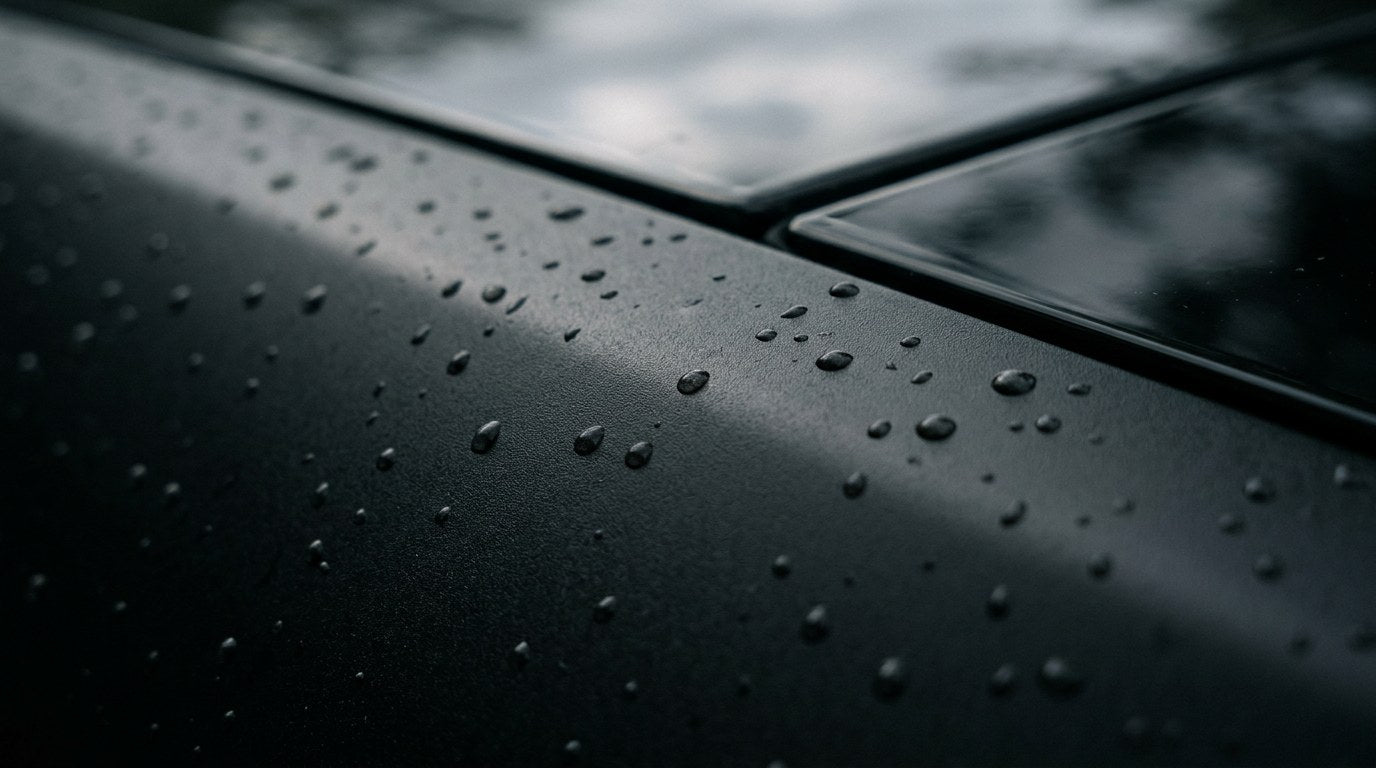
For context on how correction actually looks on a real hood, here's a heavily swirled panel next to the same panel after a foam-pad two-step:

Which Pad Should You Actually Buy?
If You're a First-Time DIY Detailer
Buy a set of foam pads: one cutting (orange or firm), one polishing (medium — usually yellow or white), one finishing (soft — usually black or blue). Skip wool and microfiber entirely for your first year. Foam is forgiving. It won't burn your paint if you park the polisher for a second, it doesn't require compressed air to clean, and the finish comes out of the pad clean enough that many one-step corrections don't need a follow-up pass. Pair it with a long-throw DA and a medium-cut compound.
If You're Doing Neglected Paint or Deep Scratches
A microfiber cutting pad on a long-throw DA is the fastest DIY-safe way to correct heavy defects. You'll need to clean the pad with compressed air (or a pad brush) after every panel to keep heat down. Plan on following with a foam polishing pad plus a fine polish to remove the haze. If you're comfortable on a rotary, a short-nap wool pad on that machine cuts faster than any DA setup — but rotaries have a much steeper learning curve and burn paint quickly.
If You're Doing One-Step Enhancement Details
Microfiber is designed for this workflow — moderate defect removal plus reasonable finish in one pass. On hard paints, a microfiber pad with an all-in-one compound finishes acceptably on its own. On soft paints, you'll still want a foam refining pass. This is where microfiber's speed advantage really pays off for professional detailers who need to move through vehicles fast.
If You're Refining After Wet Sanding
Wool on a rotary is still the professional workflow to remove sanding marks quickly, followed by foam polishing to refine and foam finishing to bring back gloss. This is not a DIY workflow — wet sanding removes 5–10+ microns of clear coat in a single session, which is a significant chunk of your total paint budget. Pay a professional if the defect requires wet sanding.
The Right Compound for Each Pad
Pad and compound aggressiveness need to match. A rough guide:
- Wool + heavy compound: Maximum cutting workflow for compounding and oxidation removal
- Microfiber cutting pad + heavy compound: DIY-safe heavy correction on a DA polisher
- Foam cutting pad + medium-cut polish: Standard one-step or first-of-two-step correction
- Microfiber polishing pad + medium polish: Alternative one-step for hard paints
- Foam polishing pad + fine polish: Second-of-two-step correction, haze removal
- Foam finishing pad + gloss polish: Final refining pass, jeweling, gloss enhancement
The rule that saves paint: start with the least aggressive combination that removes the defect. Do a test spot on an inconspicuous panel — if a foam polishing pad and a medium polish clear the swirls, don't reach for a microfiber cutting pad and heavy compound. Detailers call this "walking up the aggressiveness ladder." Skipping steps costs you clear coat you can't get back.
Ceramic Coating After Paint Correction
The whole point of paint correction is to make your clear coat look its best right before you seal it under a coating. Correction removes defects; coating locks in that appearance for years. If you skip the coating step, your corrected paint is unprotected and starts marring again on the first wash.
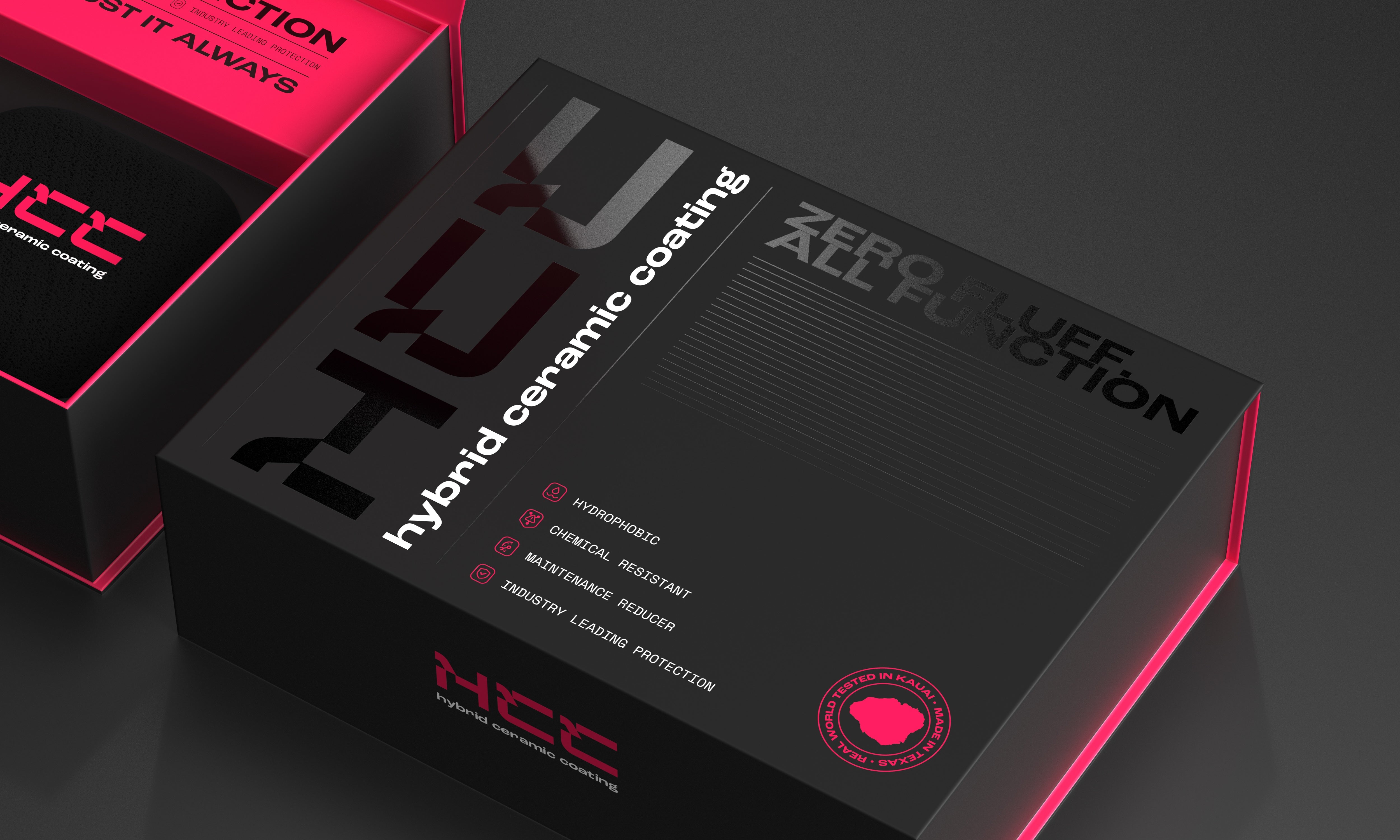
For a corrected daily driver, the flagship recommendation is HCC Hybrid Ceramic Coating. It goes on with a suede applicator, cures in a few hours, and works across cars, boats, planes, and bicycles — one bottle for the whole garage. For DIY users who want a ceramic that's specifically forgiving during application, Undrdog Pro is the entry-point option with a longer flash time. For maximum durability under harsh conditions, Undrdog Pro Plus steps up the ceramic content.
Whichever coating you choose, do the correction with the right pad first. A coating over swirled paint just seals the swirls in place — they don't magically disappear under a ceramic layer. If you've already got swirl marks, our DIY swirl removal walkthrough pairs perfectly with the pad recommendations above.
Common Mistakes That Waste Pads and Clear Coat
Using the same pad for multiple compounds. Cross-contamination between a cutting compound and a finishing polish leaves haze that looks like a technique problem. Dedicate pads to specific compound aggressiveness levels.
Not cleaning the pad between panels. Every pad accumulates removed clear coat and spent abrasive. Wool and microfiber need compressed air; foam needs a brush or claw. A loaded pad heats up 30% faster and cuts unpredictably.
Running too much pressure. A DA polisher is designed to work with pad rotation, not user pressure. Push too hard and the pad stops orbiting — you're just spinning a hot pad in one spot. Let the machine and the compound do the work.
Skipping the test spot. Every car's clear coat responds differently to pad-and-compound combinations. A 30-second test on a hidden panel tells you whether you're using too much or too little aggressiveness before you're 40 minutes into a hood.
Reusing dirty pads on a new car. Contamination from a previous vehicle's paint (particularly if that vehicle had aftermarket paint or heavy rust) can transfer particles into new clear coat. Clean pads thoroughly between vehicles, or dedicate pads to specific projects.
Pad Longevity and Care
Foam pads last longest — clean them with pad cleaner between uses, air dry face-up, and store in a sealed container. Expect 30–50 corrections per foam cutting pad.
Microfiber pads clog quickly. Wash after every full detail with a mild detergent (not fabric softener — softener destroys the cutting fibers). Expect 15–25 corrections per pad.
Wool pads are the shortest-lived. The fibers mat down and tangle. Use a pad spur or wire brush during use to reset the fibers, and wash gently after every job. Expect 10–20 heavy corrections per pad before performance drops noticeably.
How This Ties Into the Rest of Your Detailing Workflow
Paint correction only matters if the paint underneath is clean. A three-step decon before correction — soap wash, iron remover, clay bar or mitt — removes contamination that would otherwise get ground into the clear coat during compounding. If you haven't decontaminated your paint recently, The Purps iron and fallout remover pulls embedded metal particles that clay can't. Wash first with Undrdog Soap, then Purps, then clay, then correct. Our full 4-step paint decontamination guide covers each stage in order.
After correction and coating, maintain the finish with pH-neutral washes and a booster spray. Never use a wax-loaded car soap after correction — most consumer waxes fill swirls temporarily and mask the correction you just did.
Lock in your paint correction with a real ceramic coating.
Corrected paint without protection starts marring again on the first wash. HCC Hybrid Ceramic Coating is our flagship all-surface ceramic — one bottle for cars, boats, planes, and bicycles, DIY-friendly application, and years of gloss under real-world conditions.
Shop HCC Hybrid Ceramic Coating →Frequently Asked Questions
Is a wool pad better than a microfiber pad on a DA polisher?
For DA polishers, a microfiber cutting pad usually outperforms a wool pad. Wool needs the higher RPMs and continuous rotation of a rotary polisher to reach its full cutting potential — the orbital motion of a DA gets partially absorbed by the wool nap. Short-nap DA-specific wool pads exist and cut reasonably well, but a good microfiber cutting pad on a long-throw DA is faster for most DIY users.
Can I use a foam pad for heavy paint correction?
A firm-density foam cutting pad with a heavy compound will remove moderate to heavy defects on a DA polisher. It takes more passes than microfiber or wool. If you're new to correction, this is the safer route — foam is more forgiving, generates less heat, and won't burn through clear coat as quickly if you make a mistake. For seriously neglected paint with deep scratches, microfiber is faster.
Do I need three different pad types?
No — most DIY users only need foam. A three-pad foam set (cutting, polishing, finishing) handles 90% of home correction jobs. Add microfiber only if you're regularly working on neglected paint. Add wool only if you own a rotary and understand how to use it. Owning tools you don't need won't make your paint look better.
How many times can I polish my car before running out of clear coat?
Depends on how aggressive each correction is. Opti-Coat cites the industry consensus that removing more than 25% of your clear coat (roughly 8–12 microns) compromises long-term UV protection. Practically that means most cars have 2–3 real corrections in them over a 15-year lifetime, plus occasional light polishing to remove new swirl marks. A paint thickness gauge takes the guesswork out.
Why do microfiber pads leave haze on soft paint?
The thousands of tiny cutting fingers in a microfiber pad each remove clear coat at slightly different depths. On soft paint (many Japanese and Korean vehicles, Teslas, older Hondas), those depth variations show up as micro-marring or a light gray haze. Hard paint (many German vehicles, some domestic clear coats) is less sensitive to that variation. Follow every microfiber cutting pass with a foam polishing pad if you're not sure what your paint hardness is.
Should I wash new pads before using them?
Foam pads: not strictly necessary, though rinsing with a pad cleaner removes any manufacturing residue. Microfiber pads: prime them with a shot of compound before the first pass — the fibers need to be saturated with product before they cut properly. Wool pads: always break in with a light session on a scrap panel first; new wool sheds fibers that can create their own micro-marring.
Can I use the same pads for compound and polish?
Not the same physical pad — cross-contamination between an aggressive compound and a finishing polish leaves haze that's hard to diagnose. Dedicate individual pads to compound aggressiveness levels. You can, however, use the same pad type across multiple compounds if the pad is thoroughly washed and dried between products.
Do microfiber pads work on rotary polishers?
Yes, but they run very hot on rotary machines because of the higher continuous RPM. Most detailers reserve microfiber for DA polishers where the orbital motion helps manage heat. If you're running microfiber on a rotary, keep RPMs low (1000–1200), work small sections, and clean the pad frequently with compressed air.
How often should I clean the pad during a correction?
Every panel minimum. Wool and microfiber need a burst of compressed air or a pad brush after every 2x2 foot section. Foam can go 2–3 sections between cleanings. If you feel more resistance from the pad, hear the polisher slowing down, or see compound splatter increase, stop and clean immediately.
Are cheap pads a false economy?
Yes for microfiber and wool — the fiber quality matters enormously. Cheap microfiber pads shed and clog fast; cheap wool pads mat and tangle within a single detail. Foam pads have less quality variance — even mid-priced foam pads perform reasonably well if the density rating matches your intended use. Where to save: entry-level foam pad sets. Where to spend: microfiber cutting pads and wool if you use them.


Leave a comment
This site is protected by hCaptcha and the hCaptcha Privacy Policy and Terms of Service apply.