


Short answer: soften tree sap and aphid honeydew with warm water first, then dissolve it with a dedicated bug & tar remover or 50/50 diluted isopropyl alcohol on a clean microfiber. Never scrape or scrub — hardened sap bonds chemically to the clear coat, and force is what actually causes the damage. After removal, reseal the spot with a ceramic booster or full coating so the next round of sap can't grab a foothold.

Why Late Summer Is the Worst Time for Tree Sap on Your Car
By early August, three overlapping seasonal factors turn tree canopies into paint hazards. First, deciduous trees like maple, birch, oak, and pine are actively producing sap through their bark, and warm-weather microcracks release droplets that fall on anything below. Second, aphid populations peak in mid-to-late summer, and aphids secrete a sticky sugar-based liquid called honeydew — often mistaken for "tree sap" because it falls from the leaves above. Third, panel temperatures in August routinely exceed 130°F under sun exposure, which bakes both substances into the clear coat faster than you can wash them off.
That combination is why so many owners notice sap spots in August that weren't there in June, and why the spots feel harder to remove now than earlier in the summer. Time on paint plus heat plus UV is what does the damage — not the sap itself.
Tree Sap vs Honeydew: Are They the Same Thing?
No, and it matters for removal. Understanding what's actually on your paint helps you pick the right solvent and the right timing.
| Type | Source | Appearance | Removal Difficulty |
|---|---|---|---|
| Tree sap (resin) | Pine, spruce, fir, and other conifers | Amber, thick, hardens into rigid droplets | High — needs solvent |
| Tree sap (water-based) | Maple, birch, walnut, other deciduous | Sticky, clear-to-yellow, softer | Medium — warm water often works |
| Aphid honeydew | Aphids feeding on leaves above the car | Fine, glossy, sticky spray pattern across large area | Medium — sugar dissolves in warm water |
| Sooty mold on honeydew | Fungus growing on old honeydew | Black spotting on top of sticky base | High — often etches clear coat |
Conifer resin is the hardest to remove because it's actually a hydrocarbon-based substance that polymerizes as it dries. Honeydew is sugar-based, so warm water alone dissolves most of it if you catch it early. If honeydew sits long enough for sooty mold to grow on top, you're now dealing with an organic acid problem that can etch the clear coat — similar to what happens with bird droppings.
Why You Can't Just Wash It Off
Regular car wash soap is engineered to lift loose dirt and grime, not to break down resin or dissolve sugar bonds. If you run a fresh car through a two-bucket wash after two weeks of tree canopy exposure, you'll pull off the loose contamination and find the sap spots still there — sometimes now feathered around the edges from the wash mitt dragging across them.
Worse, if the sap has already hardened, dragging a wash mitt or foam gun over it can create swirl marks and micromarring around each droplet. That's the invisible damage most owners don't notice until they polish the paint and see hazing patterns radiating outward from every sap spot.
The correct order of operations is: wash the whole vehicle first, then treat the sap spots individually with a targeted solvent, then reseal.
Step-by-Step: The Safe Removal Method
Step 1 — Wash and Dry the Whole Vehicle First
Use a pH-neutral ceramic-safe wash to lift all surface contamination. Undrdog Soap is our default recommendation because it's ceramic-safe and doesn't strip existing protection. Rinse thoroughly and dry with a plush microfiber. This gives you a clean starting canvas so the solvent can attack only the sap.
Step 2 — Park in Full Shade and Let the Panel Cool
Never work on a hot panel. Both solvents (isopropyl alcohol and bug/tar removers) flash off too quickly on hot paint, leaving streaks and dry solvent residue. Cool panel — below about 90°F to the touch — is the correct working temperature.
Step 3 — Soften the Sap With Warm Water
Soak a clean microfiber in comfortably warm (not hot) water and lay it on the sap spot for 30–60 seconds. Fresh honeydew and softer deciduous sap will often dissolve at this stage. Wipe with a fresh face of the microfiber and reassess.
Step 4 — If Sap Remains, Apply Solvent
Two safe options for clear coat:
- Isopropyl alcohol diluted 1:1 with water — effective on both resin and honeydew, evaporates cleanly. This is also standard pre-coating prep chemistry, so it's proven paint-safe when used in moderation.
- Dedicated bug & tar remover — formulated for petroleum-based contamination and works well on conifer resin. Spray onto a folded microfiber, not directly on the paint, so you control dwell time.
Never use acetone, lacquer thinner, brake cleaner, or paint thinner. Those solvents will strip the clear coat's protective additives and can etch modern water-based paints.

Step 5 — Dwell, Don't Scrub
Apply the solvent to the microfiber, lay it on the sap, and give it 30–60 seconds to work. Then wipe in one direction with light pressure. Do not scrub back and forth — that's how you create swirl marks around every removal spot. If the sap doesn't lift on the first pass, reapply and dwell again.
Step 6 — Clay Bar for Anything Stubborn
For hardened resin that resists solvent, a detailing clay bar with plenty of lubricant will shear the top off without abrading the clear coat. Our full clay bar guide covers the technique. Clay only after solvent has softened the spot — going straight to clay on hardened conifer resin can pull the resin into the paint and mar the clear coat.
Step 7 — Wipe Clean and Reseal
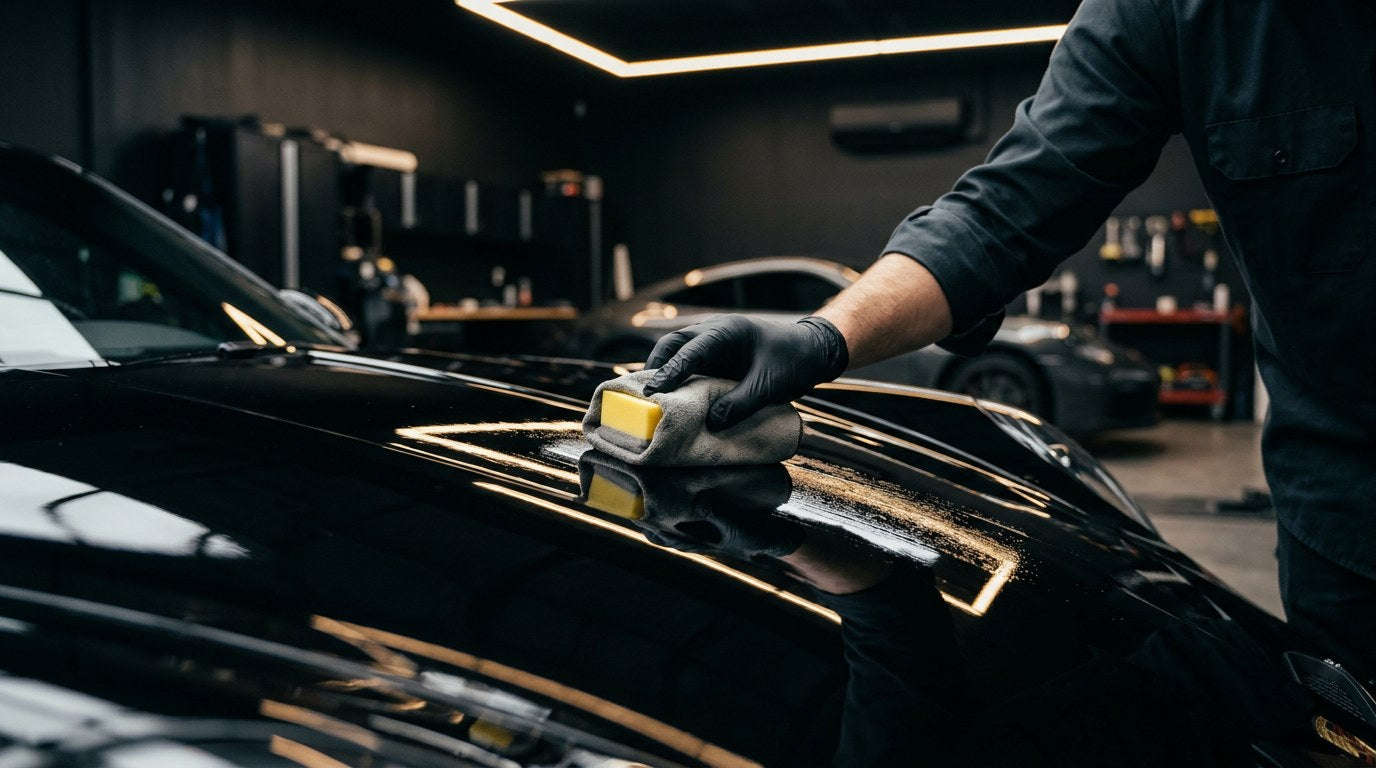
Any solvent or clay work strips the wax, sealant, or ceramic booster on that spot. Follow up with a hydrophobic booster like Undrdog Quick Detail to refresh the surface, or plan a full ceramic reapplication if the paint is bare.

Mistakes That Turn Small Sap Spots Into Permanent Damage
- Working in direct sun. Solvents flash off too fast, leaving streaks and dry residue that bond to the paint.
- Picking at hardened sap with your fingernail. The sap has bonded to the clear coat. Pulling it off pulls clear coat with it. Always soften first.
- Using a razor blade. Even carefully — the odds of gouging the clear coat are too high, and the resin will spread under the blade.
- Reusing the same microfiber face. Sap and honeydew embed into the towel. Fold the towel into quarters and rotate to a clean face every pass.
- Skipping the wash step first. Grit on top of the sap becomes an abrasive when you start wiping.
- Using kitchen degreasers or "citrus" cleaners on paint. Many are alkaline and strip protective coatings; some are acidic enough to etch.
The Real Solution: Coat the Paint So Sap Can't Bond Directly to the Clear Coat
The reason sap does the most damage on unprotected clear coat is that it makes direct chemical contact with the paint. A properly applied ceramic coating puts a hard, hydrophobic film between the sap and the clear coat — so when sap lands, it sits on top of the coating, not on the paint itself. Removal becomes easier, and the risk of clear coat etching drops dramatically.
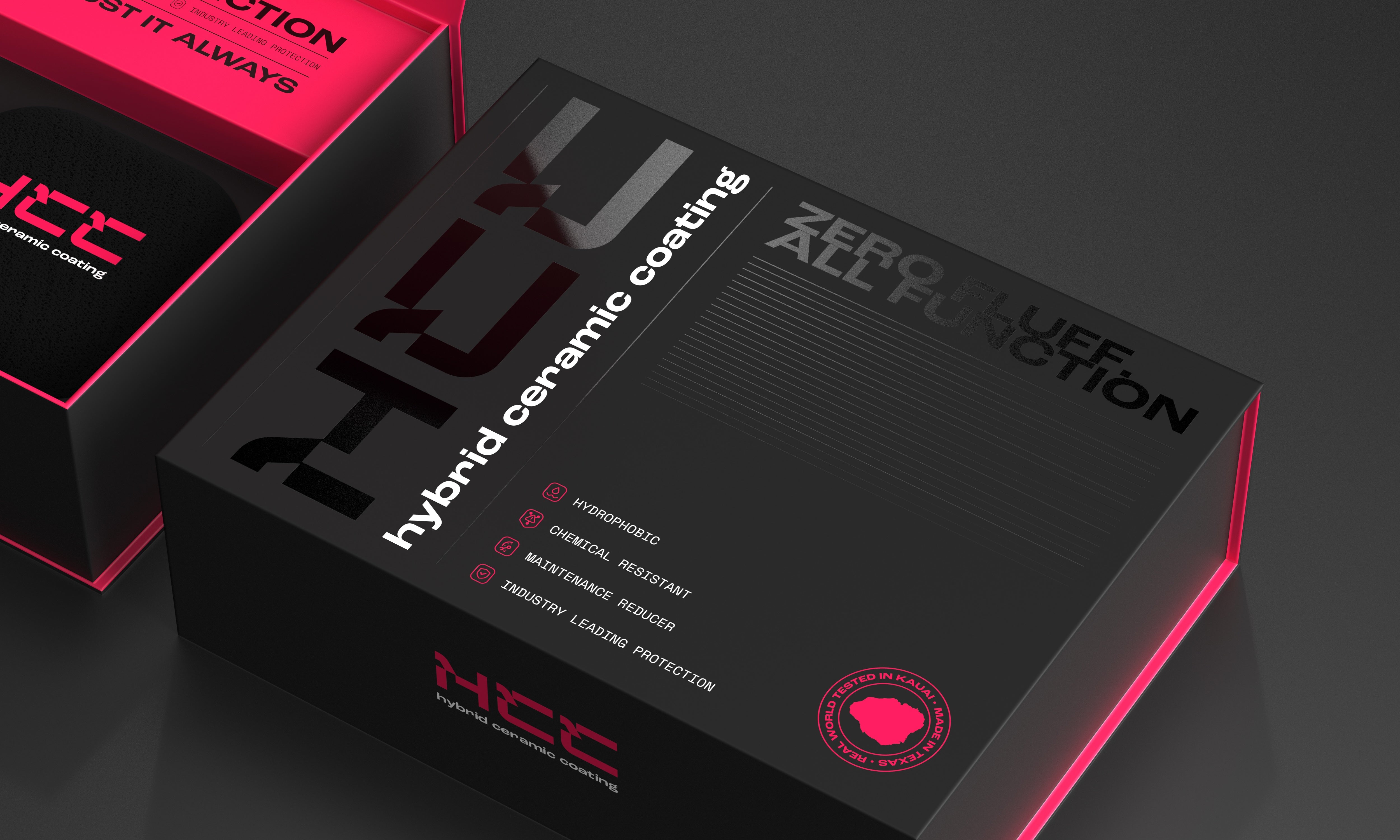
HCC Hybrid Ceramic Coating is our flagship all-surface hybrid ceramic, tuned for exactly this kind of environmental contamination. With a documented pH resistance range of 2–13 and thermal tolerance up to 1,200°F on metal, HCC handles honeydew, tree sap, bird droppings, bug splatter, and hard water residue in the same envelope. If you park under trees regularly, coating the vehicle is the single highest-leverage move you can make before next summer's canopy season.
For a full breakdown of how ceramic coating changes contaminant behavior on paint, see our post on HCC vs Undrdog Pro.
When Sap Has Already Etched the Clear Coat
If the sap has been sitting on hot paint for weeks, you may find a permanent ring or discoloration after removal. This is the same mechanism as bird dropping etching — the acidic byproducts have physically deformed the clear coat surface. Options:
- Light etching: A single-step machine polish with a light cutting compound will often level the ring back into the surrounding clear coat.
- Medium etching: A two-step compound + polish process, then coat.
- Deep etching: Wet sanding by a professional detailer is the only remedy. Beyond that, respray.
The correct order after any correction is: decon (The Purps for iron/fallout, clay bar for embedded contamination), polish, IPA wipe, then ceramic coating. Skipping decon before polishing grinds contamination into the paint.
Preventing the Next Round
Beyond ceramic coating, three habits keep sap damage minimal:
- Don't park under known sap trees. Pine, walnut, maple, and any tree with visible aphid activity above the parking spot. If you have to, cover the car.
- Rinse the car every 3–5 days during peak season. A fresh water rinse washes off honeydew before it hardens. No soap needed for a quick rinse.
- Keep a spray booster in the car. A quick hit of Undrdog Quick Detail after each wash refreshes hydrophobic behavior, so honeydew and sap slide off with the next rain.
Coat once. Deal with sap the easy way for years.
HCC is our flagship hybrid ceramic. It puts a hard, hydrophobic layer between your clear coat and everything the trees drop on it — sap, honeydew, bird droppings, pollen. Works on cars, boats, planes, and bikes.
Shop HCC →Frequently Asked Questions
Can I use WD-40 to remove tree sap from car paint?
WD-40 will dissolve the sap, but it also leaves an oily residue that attracts dust and contaminates the paint for future coating or waxing. If you use it in an emergency, you must follow up with a paint-safe degreaser and IPA wipe. Isopropyl alcohol diluted 1:1 or a dedicated bug & tar remover is a cleaner option.
Does hand sanitizer remove tree sap?
Yes — hand sanitizer is typically 60–70% isopropyl alcohol with added moisturizers, so it works as an emergency solvent. Apply to a microfiber, dwell, wipe. Rinse the spot afterward to remove the moisturizer residue.
Will a car wash remove aphid honeydew?
Fresh honeydew, yes. Older honeydew that has hardened or grown sooty mold on top, no — you'll need warm water dwell time and often a solvent to break the bond.
Is tree sap the same as tree resin?
They're related but different. Sap is the water-based fluid that carries nutrients through the tree. Resin is the thick, sticky, aromatic substance conifers release from wounds. In everyday language "tree sap" usually covers both, but resin is what causes the hardest-to-remove droplets on car paint.
How long can I leave sap on my paint before it causes damage?
In hot summer conditions, resin can start bonding to the clear coat within a few hours. Honeydew is more forgiving — days rather than hours — but sooty mold growth starts within about a week if it's not rinsed off. Sooner is always better.
Can a ceramic coating actually stop tree sap from sticking?
It doesn't stop sap from landing, but it changes what sap lands on. A cured ceramic coating puts a slick, chemically resistant layer over the clear coat, so sap sits on the coating surface rather than bonding into the paint. Removal is much easier and the risk of clear coat etching is significantly reduced.
Should I clay bar after every sap removal?
Only if the sap left visible residue or the paint feels rough after solvent removal. For clean removal on a smooth panel, skip claying that spot and go straight to reseal. Clay bar is best used as part of a full detail rather than spot-by-spot.
Do I need to reapply ceramic coating after removing sap?
Not if the coating is intact. A quick hit of Undrdog Quick Detail refreshes hydrophobic performance on the treated spot. Only reapply a full ceramic if the coating was already at end of life or if aggressive solvent/clay work stripped the coating in that area.
Are microfiber towels or paper towels safer for sap removal?
Always microfiber. Paper towels are made of short wood fibers that will scratch clear coat, and they can't absorb solvent evenly. Use a folded 300–500 GSM microfiber, rotate to a clean face every pass, and retire the towel when it's saturated.
What if my paint already has clear coat etching from old sap?
Light rings can be polished out by hand or with a machine and a light compound. Medium etching needs a two-step compound and polish. Deep etching typically requires professional wet sanding. Once the surface is level, decon and reseal with ceramic so the same spot doesn't get hit again.

Leave a comment
This site is protected by hCaptcha and the hCaptcha Privacy Policy and Terms of Service apply.